
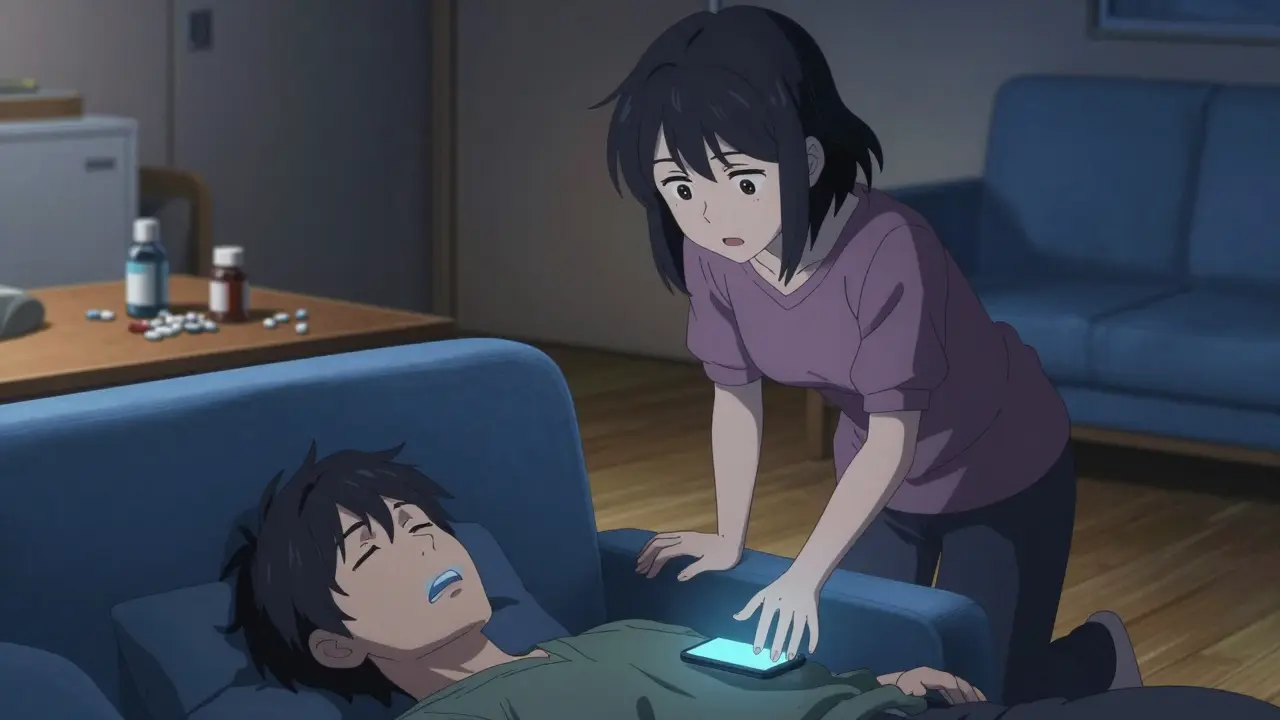
Imagine finding someone unresponsive on the couch. Their breathing is shallow, their lips are tinged blue, and they won't wake up no matter how much you shake them. In that split second, your instinct might be to grab the phone and call for help-but which number do you dial? Do you call Poison Control, a service designed to provide expert guidance on toxic exposures, or do you scream for an ambulance by calling 911, the universal emergency number in the United States? The difference between these two choices can mean the difference between life and death.
This isn't just about knowing phone numbers; it's about understanding the physiological red flags that signal immediate danger versus situations where expert triage can prevent unnecessary hospital visits. Every year, Americans make millions of calls to poison centers, but thousands more end up in emergency rooms because people didn't know who to call first. Let’s break down exactly when to use each resource so you’re prepared if this ever happens to you or someone you love.
The Golden Rule: Life-Threatening Symptoms Mean 911
If the person is struggling to breathe, unconscious, or seizing, stop reading this article and call 911 immediately. These are not situations for advice over the phone; they require physical intervention, advanced airway management, and rapid transport to a hospital. According to data from the Centers for Disease Control and Prevention (CDC), respiratory failure is present in nearly 30% of fatal poisoning cases. This means the body is literally shutting down its ability to oxygenate the blood.
You need to call 911 if you observe any of the following critical signs:
- Respiratory Arrest or Severe Difficulty Breathing: If their chest isn’t rising normally, or if they are gasping irregularly, their brain is starving for oxygen. Seconds count here.
- Unresponsiveness: If you cannot wake them up with painful stimuli-like shaking their shoulders firmly or rubbing the center of their chest-they are at high risk of aspiration (vomiting while unconscious) and cardiac arrest.
- Seizures: Generalized tonic-clonic seizures lasting longer than five minutes indicate severe neurological toxicity that requires IV medication to stop.
- Cardiovascular Instability: Signs like extreme dizziness, fainting, or a pulse that is too fast or too slow suggest the heart is under stress from toxins.
There is also a specific rule for age. Medical protocols often mandate bypassing Poison Control entirely for infants under one year old and adults over 79 years old. Why? Because pharmacokinetics-the way the body processes drugs-changes drastically at these ages. Infants have immature liver and kidney function, while older adults often have reduced metabolic clearance and take multiple medications that interact dangerously. Studies show these populations face a 37% higher mortality rate from identical exposures compared to healthy adults. When in doubt with very young or very old patients, always choose the ambulance.
When Poison Control Is the Right First Step
Poison Control exists to de-escalate panic and prevent unnecessary trips to the emergency department. The national Poison Help hotline, 1-800-222-1222, connects you to one of 55 regional centers staffed by specially trained nurses and pharmacists 24/7. They handle roughly 2.1 million human exposure cases annually. For stable patients, this service is incredibly effective and saves the healthcare system billions of dollars by avoiding redundant ER visits.
You should call Poison Control if:
- The person is awake, alert, and breathing normally.
- The exposure involved a single substance, and you know exactly what it is.
- The ingestion was accidental, such as taking a double dose of painkillers by mistake.
- No symptoms have appeared yet, but you are worried about potential toxicity.
For example, if a toddler swallows a single vitamin tablet or an adult accidentally takes two ibuprofen instead of one, Poison Control can assess the risk based on weight and dosage. They can tell you whether home observation is safe or if you still need to go to the hospital. However, this only works if the patient is currently stable. If symptoms develop after you speak to them, hang up and call 911.
The Intentional Overdose Exception
Here is a hard truth: if the overdose was intentional-meaning it was a suicide attempt or a deliberate act of self-harm-you must call 911. Do not call Poison Control. Intentional overdoses are statistically far more dangerous because people rarely ingest just one pill. Data from the Substance Abuse and Mental Health Services Administration (SAMHSA) shows that nearly 70% of suicide attempts involve multiple substances. Mixing different drugs creates unpredictable chemical reactions that can cause delayed respiratory collapse.
In these cases, 41% of patients will develop severe breathing problems within 15 minutes, even if they seem fine initially. An ambulance ensures that paramedics can monitor vital signs continuously during transport and administer antidotes like naloxone if needed. Poison Control operators are not equipped to manage the psychiatric and medical complexity of intentional overdoses on the scene.
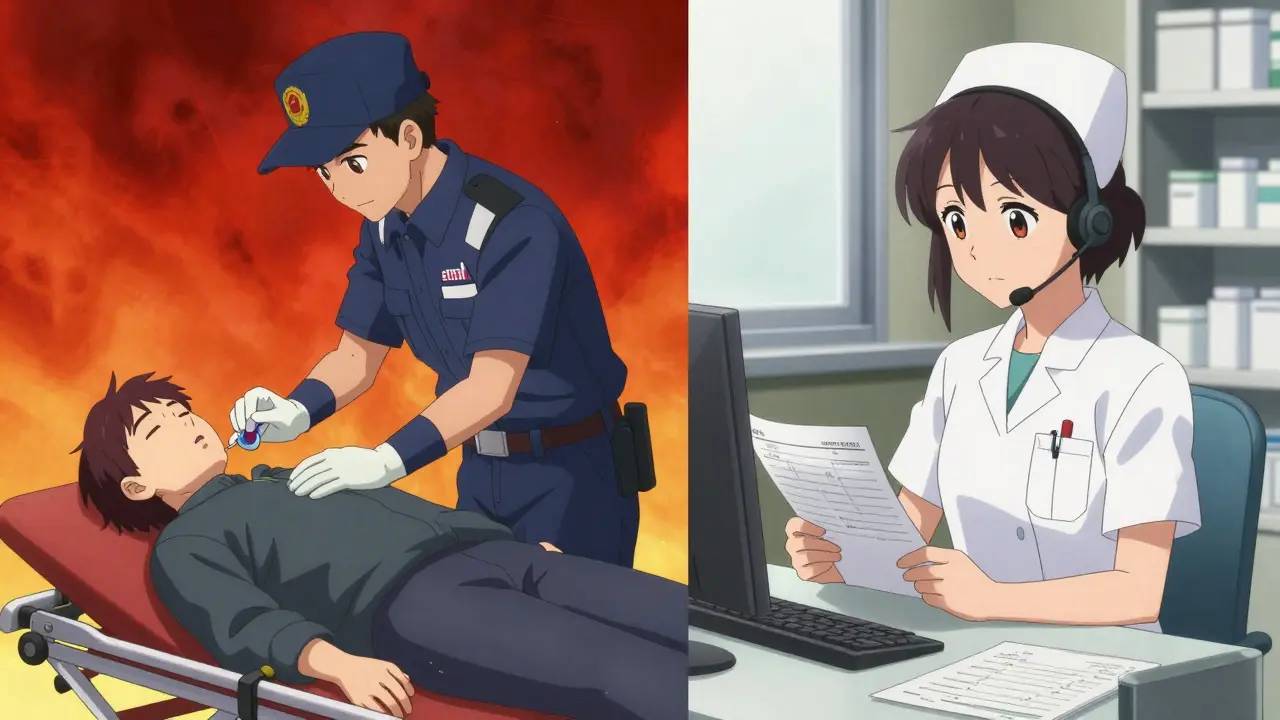
Preparing for the Call: What Information You Need
Whether you call 911 or Poison Control, being prepared saves time. Panic makes it hard to think, so having the facts ready helps responders make faster decisions. Before you dial, try to gather the following information:
- Exact Product Name and Concentration: Look at the bottle or container. Is it regular strength or extra strength? Knowing the milligram (mg) or milliliter (ml) amount is crucial.
- Quantity Ingested: How many pills were in the bottle, and how many are missing? If it was liquid, how much was poured out?
- Time of Exposure: When did the ingestion happen? Toxicity often depends on how long ago the substance entered the body. Try to be accurate within 15 minutes.
- Patient’s Weight: Dosing calculations rely heavily on weight. If you don’t know their exact weight, estimate it closely. Errors greater than 10% can lead to incorrect risk assessments.
- Current Symptoms: Note any vomiting, drowsiness, confusion, or changes in skin color. Record when each symptom started.
If possible, bring the pill bottles or containers with you to the hospital or have them nearby when you call. Formulations matter. An extended-release version of a drug releases chemicals slowly over hours, whereas an immediate-release version dumps them all at once. This difference can change peak concentration times by up to 600%, drastically altering the treatment plan.
Opioid Overdoses: The Naloxone Factor
Opioid overdoses require a specific protocol. If you suspect someone has overdosed on opioids like fentanyl, heroin, or prescription painkillers, and you have access to Naloxone, also known by brand names like Narcan, administer it immediately. Then call 911. Do not wait to see if they wake up before calling for help.
Naloxone is an opioid antagonist that rapidly reverses the effects of opioids on the brain. However, it is not a cure-all. Some synthetic opioids, like certain fentanyl analogs, are so potent that a single dose of naloxone may only wear off temporarily. In fact, reports from emergency medical services indicate that over 60% of suspected opioid overdoses treated with naloxone still required subsequent 911 activation because the reversal was temporary. This is why calling 911 is non-negotiable, even if the person wakes up after receiving naloxone. They need monitoring in a hospital setting to ensure they don’t slip back into respiratory arrest.
| Situation | Action | Reason |
|---|---|---|
| Person is unconscious or unresponsive | Call 911 | Risk of airway obstruction and cardiac arrest |
| Difficulty breathing or gasping | Call 911 | Immediate oxygen support required |
| Accidental single-pill ingestion, patient alert | Call Poison Control | Expert triage can determine if ER visit is needed |
| Intentional overdose (suicide attempt) | Call 911 | High risk of multi-substance interaction and delay |
| Infant under 1 year or adult over 79 | Call 911 | Vulnerable physiology increases mortality risk |
| Seizures lasting >5 minutes | Call 911 | Requires IV anti-seizure medication |

Technological Tools and Limitations
Technology has changed how we access poison information. The webPOISONCONTROL website and mobile app allow users to get instant answers without waiting on hold. In 2022, nearly 29% of consultations happened online. This is great for minor issues, like a child licking a cleaning product. However, these digital tools have strict limitations. They cannot be used for intentional overdoses, multiple substance ingestions, or anyone showing symptoms. If you fall into those categories, the app will likely direct you to call 911 anyway.
Additionally, language barriers remain a challenge. While Poison Control is free and confidential, only a fraction of centers offer real-time interpretation in languages other than English. If you are not fluent in English, consider calling 911, as dispatchers often have broader access to translation services, or ask a bilingual friend to assist you during the Poison Control call.
Common Mistakes to Avoid
One of the biggest errors people make is trying to induce vomiting unless explicitly told to do so by a medical professional. Vomiting can cause caustic substances like bleach or ammonia to burn the esophagus a second time. It also increases the risk of choking if the person becomes unconscious. Another mistake is assuming that "natural" or herbal supplements are harmless. Many plant-based toxins can cause severe liver damage or heart rhythm disturbances. Always treat unknown substances with caution and seek expert advice.
Finally, don't ignore delayed symptoms. Some drugs, like acetaminophen, may not show immediate effects but can cause massive liver failure days later. If you are unsure, call Poison Control. They can guide you on whether blood tests are necessary to catch toxicity early.
What is the Poison Control number in the US?
The national Poison Help hotline is 1-800-222-1222. This number is free, confidential, and available 24 hours a day, 365 days a year. It connects you to your nearest regional poison center.
Should I call Poison Control if my child swallowed a button battery?
No. Button batteries are a medical emergency because they can burn through the esophagus in as little as two hours. Call 911 or go to the nearest emergency room immediately. Do not wait for Poison Control advice.
Can Poison Control send an ambulance?
No. Poison Control provides medical consultation and triage. They cannot dispatch emergency services. If they determine that your situation is life-threatening, they will instruct you to call 911 immediately.
Is it okay to use webPOISONCONTROL for an intentional overdose?
No. Online triage systems are not designed for intentional overdoses, multiple substance ingestions, or symptomatic patients. These cases require immediate emergency medical attention via 911.
Why should I call 911 for elderly patients even for small overdoses?
Adults over 75 often take multiple medications and have slower metabolism. A small overdose can trigger dangerous drug interactions or organ failure due to reduced kidney and liver function. Immediate evaluation is safer.