

AGI Tolerance & Titration Planner
Your Titration Schedule
Based on the "Start Low, Go Slow" strategy to reduce the 73% initial risk of flatulence.
25mg once daily (Largest meal)
25mg twice daily
25mg three times daily
Guidance & Analysis
Imagine taking a pill to keep your blood sugar steady, only to find yourself avoiding social gatherings because you can't stop bloating. For many people with Type 2 diabetes, Alpha-Glucosidase Inhibitors is a class of oral medications designed to stop blood sugar spikes after eating by slowing down how your body digests carbs. Commonly known as AGIs, these drugs include options like acarbose and miglitol. While they are great for avoiding hypoglycemia and weight gain, they come with a well-known trade-off: a very noisy digestive system.
Why These Medications Cause Digestive Chaos
To understand why you're feeling bloated, you have to look at how AGIs work. Most diabetes meds enter your bloodstream to do their job. AGIs are different. They stay mostly in your gut-only about 1-2% of acarbose actually enters your systemic circulation. Their primary goal is to block enzymes in your small intestine that break down complex carbohydrates into simple sugars.
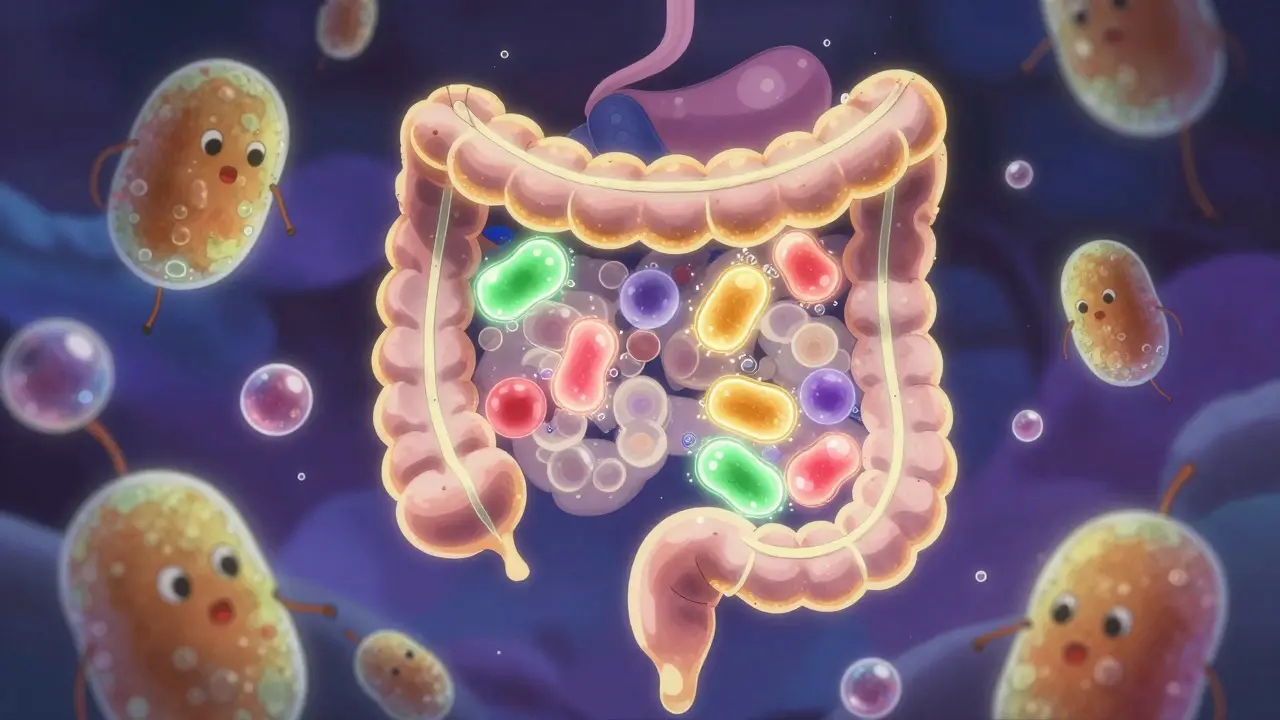
Because these carbs aren't absorbed early on, they travel further down your digestive tract into the colon. This is where the trouble starts. The bacteria in your colon see these undigested carbs as a feast. As they ferment these sugars, they produce a significant amount of gas. This fermentation process creates an osmotic effect, drawing water into the bowel, which is why many users experience a combination of flatulence and loose stools.
| Medication Class | Primary GI Symptom | Typical Frequency | Systemic Risk |
|---|---|---|---|
| Alpha-Glucosidase Inhibitors | Lower GI (Gas, Bloating) | High (up to 73% initially) | Very Low Hypoglycemia |
| Metformin | Upper GI (Nausea, Vomiting) | Moderate (20-30%) | Low |
| GLP-1 Receptor Agonists | Upper GI (Nausea) | High (35-50%) | Weight Loss |
| SGLT2 Inhibitors | Minimal GI | Low (5-10%) | Genital Infections |
Dealing with the "Big Three": Gas, Bloating, and Diarrhea
If you've just started on acarbose or miglitol, the first few weeks can feel overwhelming. It's not just in your head-clinical data shows that up to 73% of people deal with flatulence in the first month. However, there is a light at the end of the tunnel. Your gut microbiome eventually adapts to this new way of processing carbs, and symptoms typically drop to around 25% after six months.
Here is how to handle the specific symptoms:
- Gas and Flatulence: This is the most common complaint. Some find relief using simethicone (like Gas-X) before meals. However, be cautious with products like Beano; because it contains alpha-galactosidase, it can actually work against the AGI and make your medication less effective.
- Bloating: That feeling of your clothes getting too tight usually happens because of the trapped gas in the colon. Walking after meals can help move the gas through your system faster.
- Diarrhea: This happens when too many undigested carbs pull water into the colon. If it becomes unmanageable, doctors often suggest loperamide (Imodium) as needed, but it's best to discuss this with your provider first to ensure it doesn't interfere with your overall treatment.
The "Start Low, Go Slow" Strategy
One of the biggest mistakes people make is jumping straight into a full dose. A 2021 trial in Diabetes Care highlighted that timing is everything: taking the medication with the first bite of your meal is 37% more effective than taking it 15 minutes before. But the dose is where the battle for tolerance is won or lost.
Most experts recommend a gradual titration. Instead of starting at 100mg, a typical path looks like this:
- Start with 25mg once daily with your largest meal for a few weeks.
- If your stomach handles it well, move to 25mg twice daily.
- Gradually work up to the full dose of 25mg three times daily over a period of 4 to 6 weeks.
This slow ramp-up gives your gut bacteria time to adjust, which significantly lowers the chance that you'll want to quit the medication entirely-a common outcome since about 20% of patients stop using AGIs within three months due to these side effects.
Dietary Tweaks to Quiet Your Gut
You can't just take the pill and eat as many carbs as you want. In fact, your diet determines how much gas you produce. The more simple sugars and refined starches you eat, the more "fuel" you are giving to the bacteria in your colon.
To reduce symptoms, try shifting your carbohydrate choices. Swap white bread, white rice, and sugary snacks for whole grains and legumes. Aiming for about 30-45 grams of carbs per meal is a good rule of thumb. Interestingly, users who limit carbohydrates to roughly 45-50% of their total daily calories report far fewer side effects than those on a standard high-carb diet.
Focus on "slow carbs"-the ones that take longer to digest. When you combine these with AGIs, the glucose-lowering effect is more stable, and the explosive gas production in the colon is minimized. Data from the London Diabetes Centre shows that patients who get specific dietary counseling are twice as likely to stick with the medication for more than six months.

Is it Still Worth the Trouble?
With newer, flashier drugs like GLP-1s and SGLT2s on the market, some might wonder if AGIs are obsolete. While they aren't the first choice for everyone, they have a unique advantage: they don't cause hypoglycemia (dangerously low blood sugar) when used alone, and they don't cause weight gain. This makes them a lifesaver for elderly patients who can't risk a sugar crash or for people with renal impairment where other drugs are risky.
Moreover, for those in a prediabetic stage, AGIs can be powerful. The STOP-NIDDM trial showed a 25% reduction in the progression to full-blown diabetes when using acarbose. If you can push through the first 8 to 12 weeks of digestive adjustment, you get a cost-effective tool that keeps post-meal sugars in check without the systemic side effects of more aggressive drugs.
How long do the gas and bloating side effects last?
For most people, the worst symptoms occur in the first month. While up to 73% of users experience flatulence initially, this usually drops to about 25% after six months as the gut microbiome adapts to the presence of the medication.
Can I take Beano while using acarbose?
It is generally recommended to avoid Beano. Beano contains alpha-galactosidase, which may counteract the effects of alpha-glucosidase inhibitors, potentially making your diabetes medication less effective at controlling your blood sugar.
What is the best way to take these medications for maximum effect?
You should take the medication with the very first bite of each main meal. Research shows this is significantly more effective than taking the pill 15 minutes before you start eating.
Do these drugs cause weight gain?
No, unlike some other diabetes medications (such as certain sulfonylureas), alpha-glucosidase inhibitors typically do not cause weight gain, making them a good option for patients who are overweight.
What should I do if the diarrhea becomes severe?
If you experience severe diarrhea, consult your doctor. They may suggest over-the-counter options like loperamide (Imodium), but it is also important to review your diet to ensure you aren't eating high-fat foods or excessive simple sugars that could be triggering the reaction.
Next Steps for Better Tolerance
If you're currently struggling with AGIs, don't give up immediately. Start by tracking your symptoms on a scale of 1-10 for a week. This gives you concrete data to show your doctor. If you are at a 9 or 10 for gas every day, ask about slowing down your titration schedule or reducing your carbohydrate intake for a few weeks while your body adjusts.
For those who simply cannot tolerate these medications despite gradual dosing and diet changes, talk to your provider about alternatives. Depending on your health profile, an SGLT2 inhibitor or a GLP-1 agonist might provide the glucose control you need without the lower GI distress.
Comments
Man, that "start low, go slow" advice is absolute gold! 😊 I wish my doc had explained it that way from the start instead of just handing me the bottle and a prayer. Definitely helps to know we aren't alone in the bloat struggle! 👍
shouldve just told us to eat lss carbs from the getgo lol why do we always wait for the side effects to hit befor changing the diet its basic common sense rly
Oh, wonderful. Another "miracle" drug that turns your intestines into a balloon animal. Truly a pinnacle of modern medicine, isn't it?
I really feel for anyone going through that first month of adjustment. It can be so isolating when you're afraid to go out because of how your stomach is acting. Just hang in there, it does get better!
It is quite fascinating to consider how the specific biochemical interaction between the undigested carbohydrates and the colonic microbiota creates such a visceral physical response, although I must admit that the prospect of spending several weeks as a human wind-instrument is not particularly appealing to my personal sensibilities.
The lack of discipline in modern dietary habits is the primary cause of these complications. One must adhere strictly to a regimen of whole grains if they expect the medication to function without causing such unsightly abdominal distension.
Please! As if anyone with an actual understanding of pharmacology would dare start at a full dose! It's absolutely preposterous to even suggest that some people make this mistake; it's a tragedy of medical illiteracy!
honestly i dont get why people complain about a litle gas when we got real problems in this country like healthcare costs and bad insurance but yeah the bloatin is totaly brutal i felt like a balloon for like three weeks straight and i la verdad almost quit the whole thing cuz i couldnt even sit in my car without feelin like i was gonna pop!!
literally just eat a salad and stop whining about the gas lol its not that deep
we are all just trying to find balance in our bodies and it takes time for the nature inside us to accept the medicine
The tip about taking it with the very first bite is a total game-changer! I've noticed that the timing creates a sort of metabolic shield that keeps the spikes at bay while the slower carbs keep the gut-flora from going into a feeding frenzy. It's like a choreographed dance for your digestion! I've also found that incorporating a bit of ginger tea in the evenings helps soothe the systemic turbulence. For those struggling, try pairing the meds with a high-fiber breakfast like steel-cut oats, which seems to create a more stable transit time. It's all about finding that sweet spot where the chemistry and the cuisine align perfectly. Many people overlook the sheer power of a walking routine, but a brisk ten-minute stroll post-meal really does act like a manual release valve for that trapped air. If you're still feeling like a beach ball, maybe try a low-FODMAP approach for a couple of weeks just to calm the storm. Once the microbiome settles into its new rhythm, the benefits of avoiding those sugar crashes far outweigh the initial turbulence. Just keep a journal of your triggers and you'll be a pro in no time. It's a journey of patience and persistence!
The osmotic effect... is real!!! I experienced the hyper-fermentation phase... and it was... brutal!!!
I'm curious... did you try the 25mg start... or just jump in...?