
QT Prolongation Risk Calculator
Medication Selection
Select medications you're taking to assess combined risk.
Risk Factors
When you’re taking an antipsychotic for schizophrenia, bipolar disorder, or severe depression, your mind might feel more stable-but your heart could be under silent stress. Many of these medications, while effective for mental health, can slow down the electrical recovery of your heart muscle. When combined with other common drugs-like certain antibiotics, anti-nausea meds, or even some antidepressants-that same effect adds up. The result? A dangerous stretch in your heart’s electrical cycle called QT prolongation. And in rare but deadly cases, it can trigger a life-threatening rhythm called torsades de pointes.
What QT Prolongation Really Means
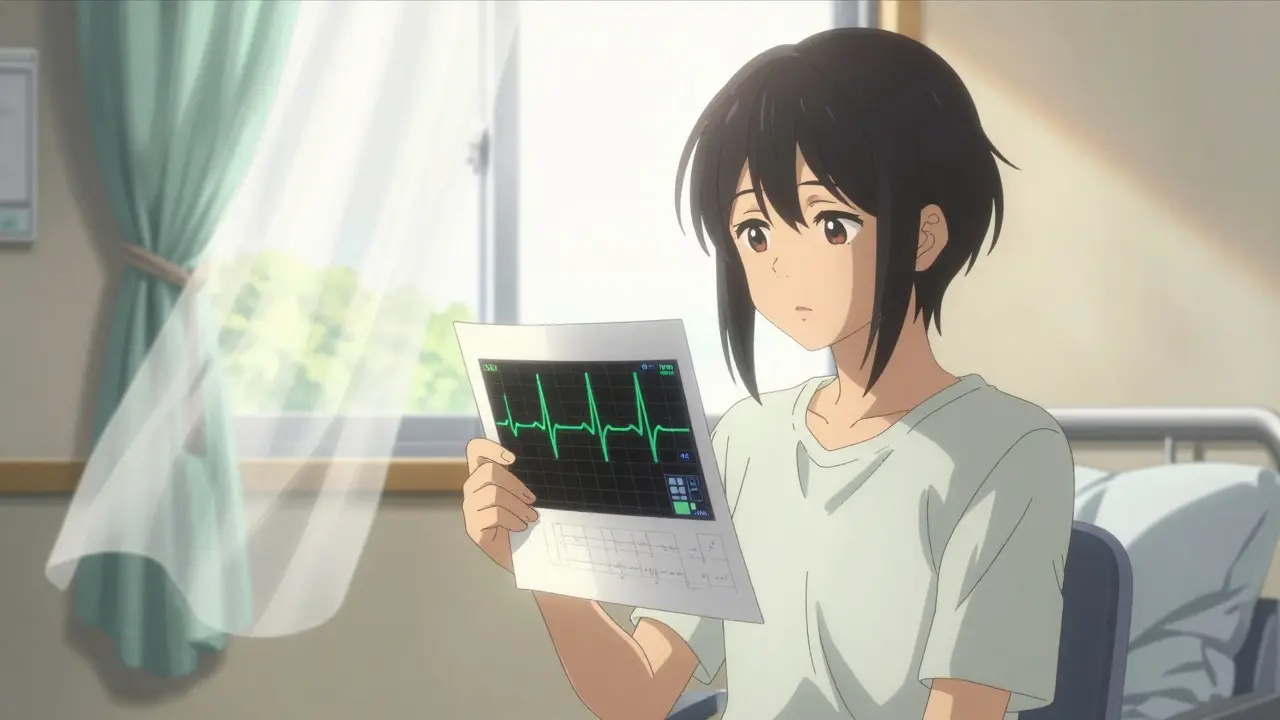
Your heart beats because of electrical signals. After each beat, it needs time to reset before the next one. That reset phase is measured as the QT interval on an ECG. If it lasts too long-over 450 milliseconds in men, 460 in women-it creates a window where the heart can misfire. This isn’t just a lab number. It’s a real, measurable risk for sudden cardiac arrest. The problem starts with how antipsychotics work. Many block a specific potassium channel in heart cells called hERG. When this channel is blocked, the heart takes longer to recharge. That’s why drugs like thioridazine, ziprasidone, and haloperidol carry higher cardiac risk. Even common ones like quetiapine and risperidone can do it, especially when stacked with other QT-prolonging meds.Which Drugs Make the Risk Worse?
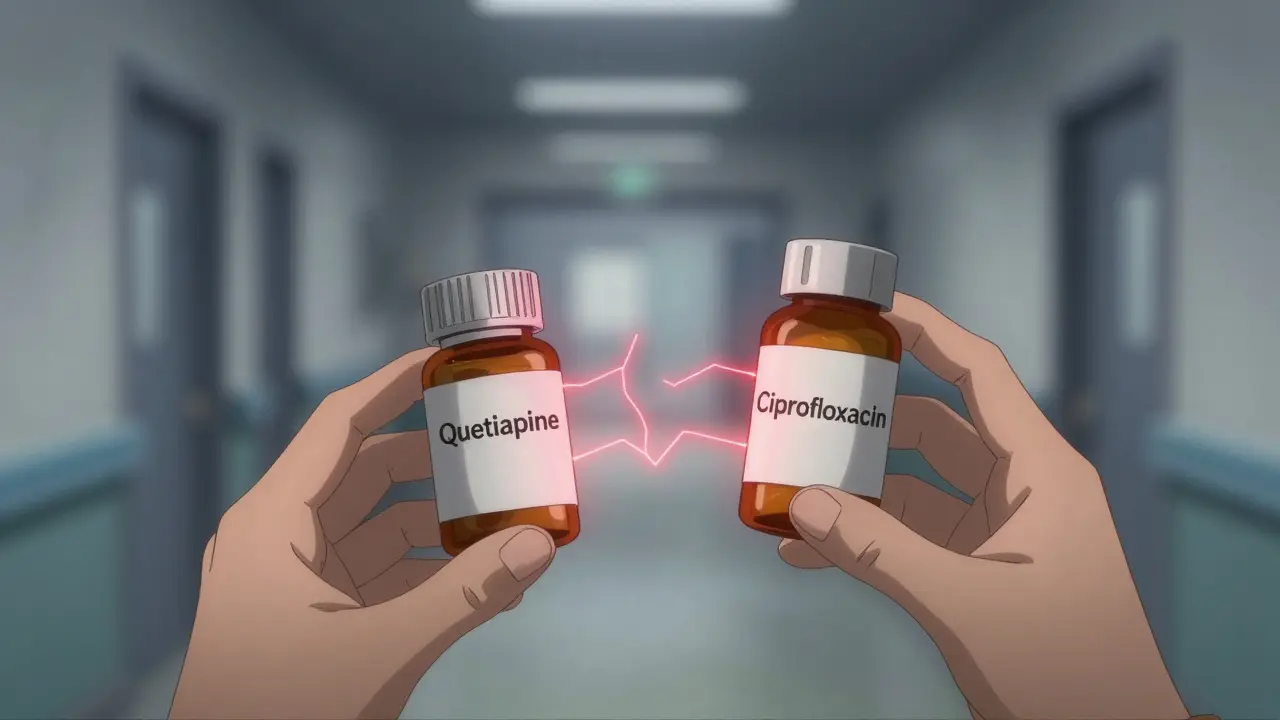
It’s not just antipsychotics. Think about how many people take multiple prescriptions. A patient on quetiapine for mood swings might also get ciprofloxacin for a sinus infection, ondansetron for nausea, or sertraline for anxiety. Each of those has its own QT-prolonging effect. Together, they don’t just add up-they multiply. Here’s what the data shows:- Thioridazine: High risk. Withdrawn in the U.S. in 2005 but still used elsewhere. Linked to nearly 8 times higher risk of sudden death.
- Ziprasidone and haloperidol: Moderate to high risk. Both strongly block hERG channels.
- Quetiapine and risperidone: Moderate risk. Widely prescribed, but dangerous in combination.
- Aripiprazole, brexpiprazole, lurasidone: Low risk. Much safer for the heart.
Who’s Most at Risk?
Not everyone who takes these drugs will have a problem. But some people are sitting on a ticking clock.- Women: Their hearts naturally take longer to repolarize. Add a QT-prolonging drug, and the risk jumps.
- People over 65: Aging slows heart recovery. One study showed age adds 15 milliseconds to QTc.
- Those with low potassium or magnesium: Electrolytes keep the heart’s electrical system running. Low potassium (<3.5 mmol/L) can add over 22 milliseconds to QTc.
- People with slow heart rates (bradycardia): Fewer beats per minute means longer time between beats, which can artificially lengthen QT.
- Patients on multiple QT-prolonging drugs: The risk isn’t linear-it’s exponential. Studies show a 2.3 to 4.7 times greater QT prolongation when two or more are used together.
What Doctors Should Be Doing
Guidelines from the American Heart Association and American Psychiatric Association are clear: baseline ECG before starting high- or moderate-risk antipsychotics. Follow-up ECGs at 1 week, 4 weeks, and then quarterly if you’re on a single drug. If you’re on two or more QT-prolonging drugs? Weekly ECGs for the first month. But here’s the reality: in community clinics, ECG compliance is below 35%. Why? Insurance denies coverage. Rural clinics don’t have the equipment. Clinicians are overwhelmed. One psychiatrist in Massachusetts told a forum she avoids disasters by checking potassium levels weekly and never prescribing combinations where QTc is already over 470 ms. There’s a better way. Electronic health records can flag dangerous combinations before they’re prescribed. One study showed this cut risky prescriptions by over half. But the system also spat out 17.8 false alarms per 100 alerts-meaning doctors waste hours sorting through noise.The Real Cost of Ignoring the Risk
In 2021, the FDA reported that 78% of torsades de pointes cases happened within 72 hours of starting a new combination. That’s not a slow burn-it’s an emergency waiting to happen. One case from Cleveland Clinic: a 68-year-old woman on quetiapine 300 mg daily got a 5-day course of ciprofloxacin. Her QTc jumped from 448 ms to 582 ms in just three days. She went into torsades. She survived. But only because her ECG was checked early. And it’s not just about saving lives. The National Alliance on Mental Illness found that 29% of patients stopped taking their antipsychotic because they were scared of heart damage. Many didn’t even know their actual risk. One patient said, “My doctor said it was ‘rare,’ but didn’t say how rare. I didn’t know if it was 1 in 100 or 1 in 10,000.”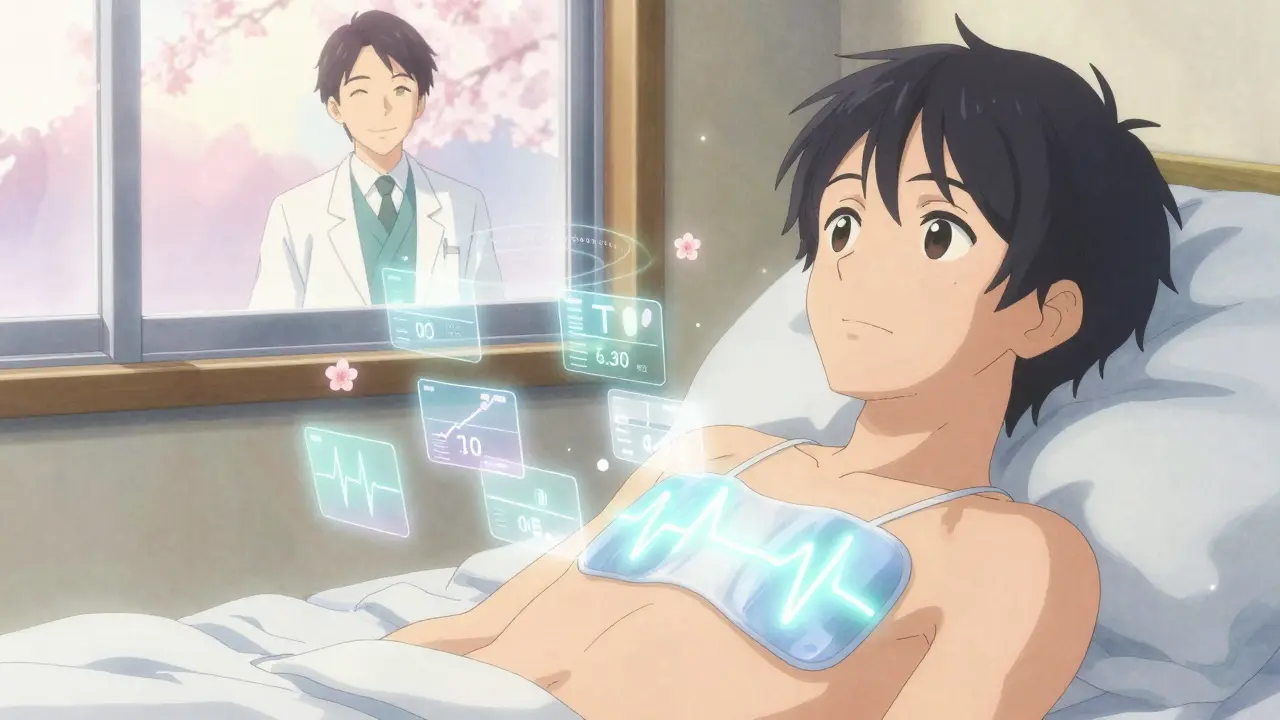
What You Can Do
If you’re on an antipsychotic, here’s what to ask your doctor:- Is my medication high-risk for QT prolongation?
- Am I taking any other drugs that could add to this risk?
- Can we check my QTc with an ECG before I start or after any new prescription?
- Should I get my potassium and magnesium levels checked?
- Is there a lower-risk alternative? Aripiprazole, brexpiprazole, or lurasidone might be options.
The Future Is Safer
Change is coming. In May 2024, the FDA approved the first digital ECG patch designed for psychiatric patients. It’s small, wearable, and sends real-time QTc data to your doctor. No more waiting for clinic appointments. By 2025, the American Psychiatric Association will roll out a risk calculator that factors in age, sex, electrolytes, and drug combinations to give you a personalized risk score. And by 2026, a genetic test will identify people who metabolize antipsychotics slowly-making them more vulnerable to buildup and toxicity. Medicare is already tying 2.3% of payments to proper QT monitoring. That means hospitals and clinics will have financial reasons to get it right. Low-risk antipsychotics like aripiprazole are growing in use. In 2019, they made up 22% of new prescriptions. By 2027, that’s projected to hit 52%. The tide is turning-not because the old drugs don’t work, but because we now know how to use them safely.Bottom Line
QT prolongation isn’t a myth. It’s a measurable, preventable risk. The good news? You don’t have to choose between mental health and heart health. With the right checks, the right meds, and the right questions, you can manage both. Don’t wait for a crisis. Ask for an ECG. Ask about your meds. Ask about alternatives. Your heart is worth it.Can antipsychotics really cause sudden cardiac death?
Yes, but it’s rare. Antipsychotics alone carry a small risk-about 1 in 25,000 patient-years for torsades de pointes. But when combined with other QT-prolonging drugs like antibiotics or anti-nausea meds, the risk jumps 4 to 5 times. Most cases happen within 72 hours of starting a new combination, especially in older adults, women, or people with low potassium. The absolute risk is low, but the outcome can be fatal if not caught early.
Which antipsychotics are safest for the heart?
Aripiprazole, brexpiprazole, and lurasidone are considered low-risk for QT prolongation. They block the hERG potassium channel much less strongly than drugs like thioridazine, ziprasidone, or haloperidol. Studies show aripiprazole has almost no increased risk of sudden cardiac death compared to people not taking antipsychotics. These are now the preferred first-line options for patients with heart disease or those on multiple medications.
Should I get an ECG if I’m on an antipsychotic?
Yes-if you’re on a moderate or high-risk antipsychotic, or if you’re taking another drug that prolongs QT. Guidelines recommend a baseline ECG before starting, then one at 1 week and 4 weeks. If you’re on two or more QT-prolonging drugs, weekly ECGs for the first month are advised. Even if you feel fine, silent QT prolongation can build up without symptoms. An ECG is the only way to know for sure.
Can low potassium make QT prolongation worse?
Absolutely. Low potassium (below 3.5 mmol/L) adds nearly 23 milliseconds to your QT interval on its own. That’s enough to push someone from safe to dangerous territory. Magnesium deficiency does the same. Many psychiatric patients have poor diets, take diuretics, or have gastrointestinal issues that lower these minerals. Regular blood tests for potassium and magnesium are just as important as ECGs in preventing torsades de pointes.
Are there alternatives to antipsychotics that don’t affect the heart?
For some conditions, yes. Non-pharmacological approaches like cognitive behavioral therapy (CBT) or transcranial magnetic stimulation (TMS) can help with psychosis or mood disorders. But for many, antipsychotics remain essential. The goal isn’t to avoid them-it’s to pick the safest one. Aripiprazole, brexpiprazole, and lurasidone offer similar symptom control with far less cardiac risk. Talk to your doctor about switching if you’re on a high-risk drug and have other heart risk factors.
Why aren’t more doctors checking QT intervals?
Many reasons. Insurance often denies ECGs unless symptoms are present. Rural clinics don’t have ECG machines. Some doctors think the risk is too low to warrant testing. But studies show that routine monitoring reduces torsades cases by 67%. The problem isn’t lack of knowledge-it’s system failure. New tools like wearable ECG patches and automated alerts in electronic records are starting to fix this. Until then, patients need to advocate for themselves.
Comments
They're hiding this on purpose. Big Pharma knows these drugs kill people but they keep pushing them because the money's too good. I know a guy who dropped dead after his psychiatrist added Zyprexa to his cocktail. No autopsy, no questions asked. They don't want you to know how many people vanish because of this.
And don't even get me started on the ECGs-they only check them if you beg. Otherwise, you're just a number on a spreadsheet. I've seen it. It's not paranoia, it's paperwork.
They'll say 'rare' but rare doesn't mean 'never.' And when it happens to you? Too late.
Why do you think thioridazine got pulled? Because bodies started piling up. Same drugs, just rebranded. Wake up.
They call it 'mental health treatment' but it's really chemical containment. Your heart's just collateral damage.
They don't warn you because if you knew, you'd say no. And they need you to say yes.
Next time your doctor says 'it's fine,' ask them if they'd take it themselves. Watch them squirm.
I’m from a country where these meds are rarely monitored. We don’t have routine ECGs. People just get the script and go. I’ve seen elderly patients on three QT-prolonging drugs at once-no labs, no follow-up. It’s terrifying. We need global standards.
Not everyone has access to a cardiologist. That’s the real inequality here.
The entire psychiatric pharmaceutical model is predicated on the assumption that biological reductionism is sufficient to treat phenomenological suffering. This is not medicine-it is pharmacological authoritarianism disguised as care.
By pathologizing emotional distress and medicating it into submission, we outsource moral responsibility to ion channels. The hERG blockade is merely the molecular manifestation of a deeper epistemological failure: the refusal to engage with the human condition outside the lens of DSM criteria.
QT prolongation is not a side effect. It is the inevitable cardiac echo of a society that confuses compliance with cure.
And yet, we praise the psychiatrist who 'stabilized' the patient while ignoring the silent arrhythmia ticking beneath the skin. This is not progress. It is necropolitics with a prescription pad.
HOW DARE YOU act like this is some kind of 'risk'-it's a massacre. They're poisoning people and calling it treatment. I’ve been on this crap for 12 years and I’ve lost three friends to sudden cardiac arrest. All on antipsychotics. All told 'it's safe.'
They don't care. They don't even look at your ECG unless you're rich. My cousin died at 34. They didn't even test her potassium. She was just 'non-compliant.'
And now they want to push more of this? On kids? On the poor? On women? You’re not helping. You’re murdering people and calling it science.
STOP. IT. NOW.
QT prolongation is real. So is the need for these drugs.
Balance matters.
This is what happens when you let foreigners design your meds. We used to have real doctors who knew what was safe. Now it’s all corporate labs in Switzerland and India pumping out chemical soup. Our veterans, our kids-they’re guinea pigs.
And who gets blamed? The patient. 'You didn't get your blood work.' Like we have time or money.
It’s not a medical issue. It’s a betrayal.
They don’t care about our hearts. They care about our votes. And our prescriptions.
I’m a nurse and I see this every week. A 70-year-old on risperidone for psychosis, plus ondansetron for chemo nausea, plus sertraline for depression... and no one checks her QT.
I asked the doc twice. He said 'she’s stable.'
She coded two days later.
Don’t wait for the crash. Ask for the ECG. Even if they say no. Push.
It saved my mom’s life.
❤️
The discourse surrounding QT prolongation is emblematic of a broader epistemic collapse in biomedical hegemony. The reduction of affective disorders to neurochemical imbalances, coupled with the commodification of pharmacological intervention, produces a pathological feedback loop wherein cardiac risk is not merely an adverse event-it is a structural inevitability of capitalist psychiatry.
The hERG channel blockade, while mechanistically well-documented, functions as a semiotic placeholder for the systemic erasure of psychosocial determinants of mental suffering.
One must interrogate not merely the pharmacokinetics, but the political economy of the antipsychotic industrial complex.
And yet, we continue to prescribe as if the body were a machine that could be tuned without consequence. The body remembers. The heart remembers.
Perhaps the real question is not whether the drug prolongs QT-but whether our society prolongs suffering in ways far more lethal.
People always say 'it's dangerous' but they never say what to do instead. If you take these drugs, you can't work, you can't take care of your family, you might hurt yourself or others. So you take them. And if you die? Well, at least you were calm at the end. That's better than screaming in a hospital bed with no meds. I've seen both. The meds are bad, but the alternative is worse. You think the system is broken? It is. But you don't fix it by stopping the medicine. You fix it by fixing the system. Until then, you take the risk. You have no choice.
And don't tell me to go to therapy. I tried. They didn't have a slot for six months. And I needed help yesterday.
So yeah, my heart might be at risk. But my mind? It's quiet. And that's worth something.
To anyone reading this and feeling scared-you’re not alone. This is heavy stuff. But you’re not powerless.
Bring this info to your doctor. Ask for an ECG. Ask about safer options like aripiprazole. Ask for electrolyte checks.
You deserve to be safe. And you deserve to be heard.
Keep asking. Keep showing up. Your life matters more than any prescription.
I believe in you.
My sister’s on lurasidone. No QT issues. No crashes. Just peace.
Not all antipsychotics are equal.
Ask for the safe ones.
And yet, the ones who need them most are often the least monitored.
That’s the real tragedy.