
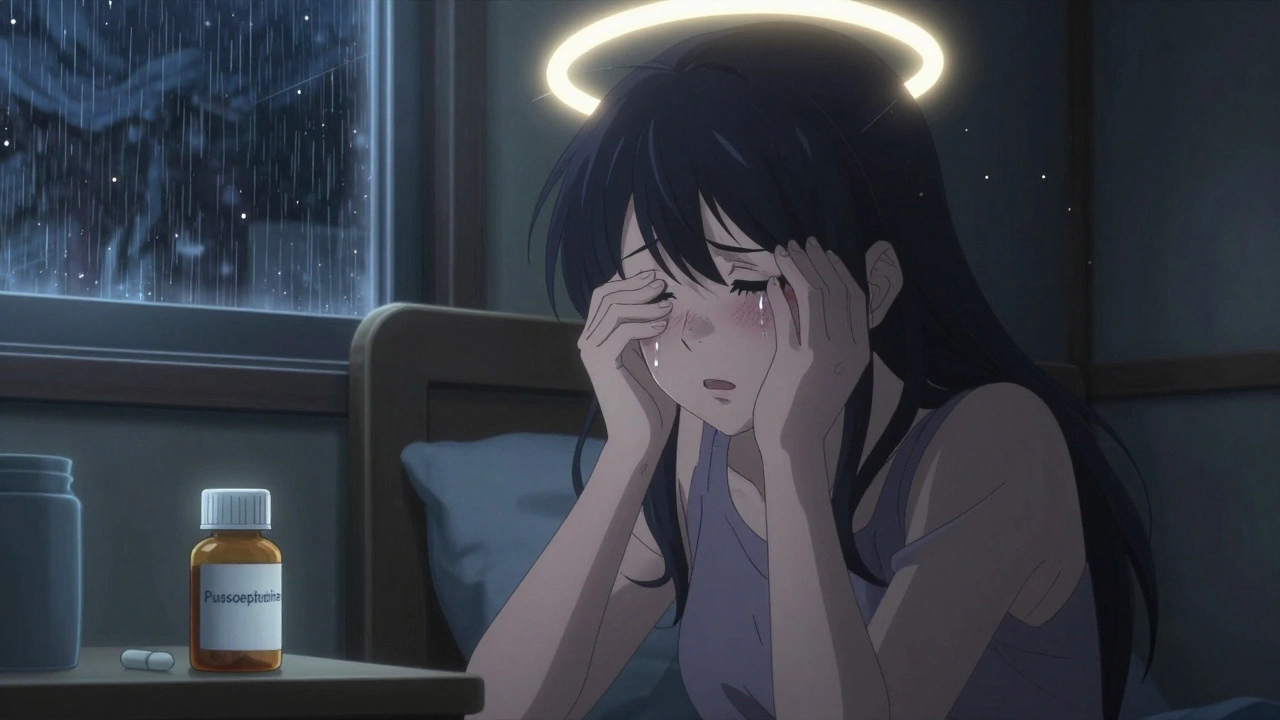
One moment you’re taking a common cold medicine for a stuffy nose. The next, your eye feels like it’s bulging out of your head, your vision is blurry, and light feels like it’s stabbing your skull. This isn’t a migraine. It’s not just a bad headache. It’s acute angle-closure glaucoma - and it’s happening because of a medication you thought was harmless.
Every year, thousands of people develop sudden, severe eye pressure spikes triggered by everyday drugs. Many don’t know they’re at risk. Their eyes have narrow drainage angles - a hidden anatomical trait - and a single pill or eye drop pushes them over the edge. Within hours, vision can start to vanish. If treatment doesn’t start within 24 to 72 hours, the damage is permanent.
How a Medication Can Blind You Overnight
Acute angle-closure glaucoma (AACG) doesn’t creep up slowly like the more common open-angle type. It slams shut. The drainage channel inside your eye - the trabecular meshwork - gets blocked. Fluid builds up. Pressure rockets from normal (10-21 mm Hg) to dangerous levels (40-80 mm Hg). At that point, the optic nerve starts dying. You can lose up to 20% of your peripheral vision in just 12 hours.
This isn’t random. It’s triggered by specific medications that cause your iris to swell or your pupil to dilate, physically blocking the flow of fluid. Think of it like a door slamming shut in a tiny room. Once closed, pressure builds fast.
The most common culprit? Pupil-dilating drops used during routine eye exams. Tropicamide, a standard dilating agent, causes 28% of medication-induced AACG cases. People walk out of their eye doctor’s office feeling fine - then wake up hours later with blinding pain and halos around lights. Others take pseudoephedrine for allergies, amitriptyline for depression, or sulfa drugs for infections. None of these are labeled as "dangerous to your eyes" on the bottle. But they can be.
Who’s Most at Risk - And Why They Don’t Know It
You might think only older adults or people with known glaucoma are at risk. That’s not true. The real danger lies in people with narrow iridocorneal angles - a structural trait most never know they have until it’s too late.
Studies show 8.5% of East Asian populations have narrow angles, compared to just 3.8% of White populations. People who are farsighted, have shorter eyeballs, or are over 40 are also at higher risk. But here’s the problem: 75% of these people have never had their angles checked. No one told them. No screening was done.
Dr. E.Y. Ah-kee, a leading glaucoma researcher, says: "Most attacks occur in subjects unaware that they are at risk." That’s the tragedy. Someone takes a simple antihistamine for hay fever, and suddenly their vision is slipping away. They go to the ER. They’re told it’s a migraine. Hours pass. By the time an ophthalmologist sees them, the damage is done.
Patients on Reddit and Glaucoma Foundation forums tell the same story: "I was never warned." "I didn’t know my eyes were narrow." "My doctor didn’t ask about my medical history before giving me the drops."
Medications That Can Trigger an Eye Emergency
Not all drugs are created equal when it comes to eye pressure. Some are far more dangerous than others - especially if you have narrow angles. Here are the top offenders, based on clinical data:
- Adrenergic agents - like phenylephrine (found in nasal decongestants and some eye drops). Causes 35% of cases.
- Anticholinergics - tropicamide (eye dilation), diphenhydramine (Benadryl), oxybutynin (for overactive bladder). Cause 28% of cases.
- Sulfonamide-based drugs - acetazolamide, sulfamethoxazole, topiramate. Cause 15% of cases. These can swell the ciliary body, pushing the iris forward.
- SSRIs and tricyclic antidepressants - paroxetine, amitriptyline. Cause 12% of cases. They block acetylcholine, which keeps the pupil constricted.
- Antihistamines and decongestants - pseudoephedrine, phenylephrine in cold medicines. Responsible for 10% of cases.
Some medications cause problems through multiple pathways. Anticholinergics don’t just dilate the pupil - they also make the iris thicker and bunched up. Sulfa drugs cause inflammation in the ciliary body, which physically pushes the iris forward. The mechanism changes depending on the drug - which means treatment must be tailored.
What the Symptoms Really Look Like
If you’re reading this because you’re wondering whether you’re having an attack, here’s what to watch for:
- Sudden, severe eye pain - often described as "burning" or "pressure behind the eye"
- Blurred or cloudy vision, with halos around lights
- Red eye - not just slightly pink, but deeply inflamed
- Nausea and vomiting - yes, your eye can make you sick
- Headache, often mistaken for migraine
- A fixed, mid-dilated pupil (4-6 mm) that doesn’t react to light
These symptoms don’t come on gradually. They hit hard and fast. If you’ve taken any of the high-risk medications listed above and experience even one of these signs, don’t wait. Go to an emergency room - and specifically ask for an ophthalmologist. Don’t settle for a general ER doctor unless they call one immediately.
What Happens in the ER - And Why Time Is Everything
When you arrive with suspected AACG, the clock starts ticking. The goal? Lower eye pressure before the optic nerve dies.
First, they’ll measure your intraocular pressure. If it’s above 40 mm Hg, it’s an emergency. Treatment begins immediately:
- Pilocarpine eye drops (2%) - given every 15 minutes for an hour. This shrinks the pupil and pulls the iris away from the drainage angle.
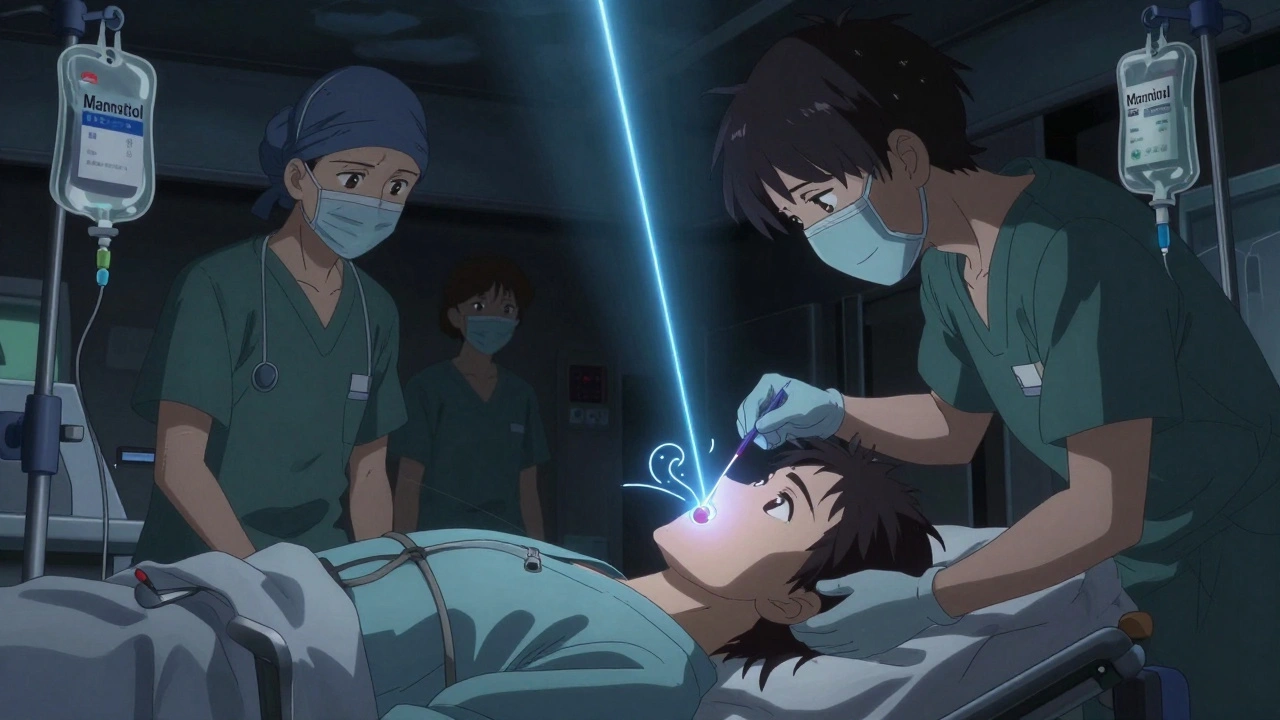
- Intravenous mannitol - a powerful osmotic agent that pulls fluid out of the eye.
- Acetazolamide (oral or IV) - reduces fluid production in the eye.
- Laser peripheral iridotomy - performed within 24 hours. A tiny hole is burned in the iris to create a new drainage path. This is the definitive fix.
Without these steps, the pressure stays high. The optic nerve dies. Peripheral vision is lost forever. Even with treatment, 44% of patients still report permanent vision changes, according to the BrightFocus Foundation.
How to Prevent This From Happening to You
The good news? This is one of the most preventable causes of sudden blindness.
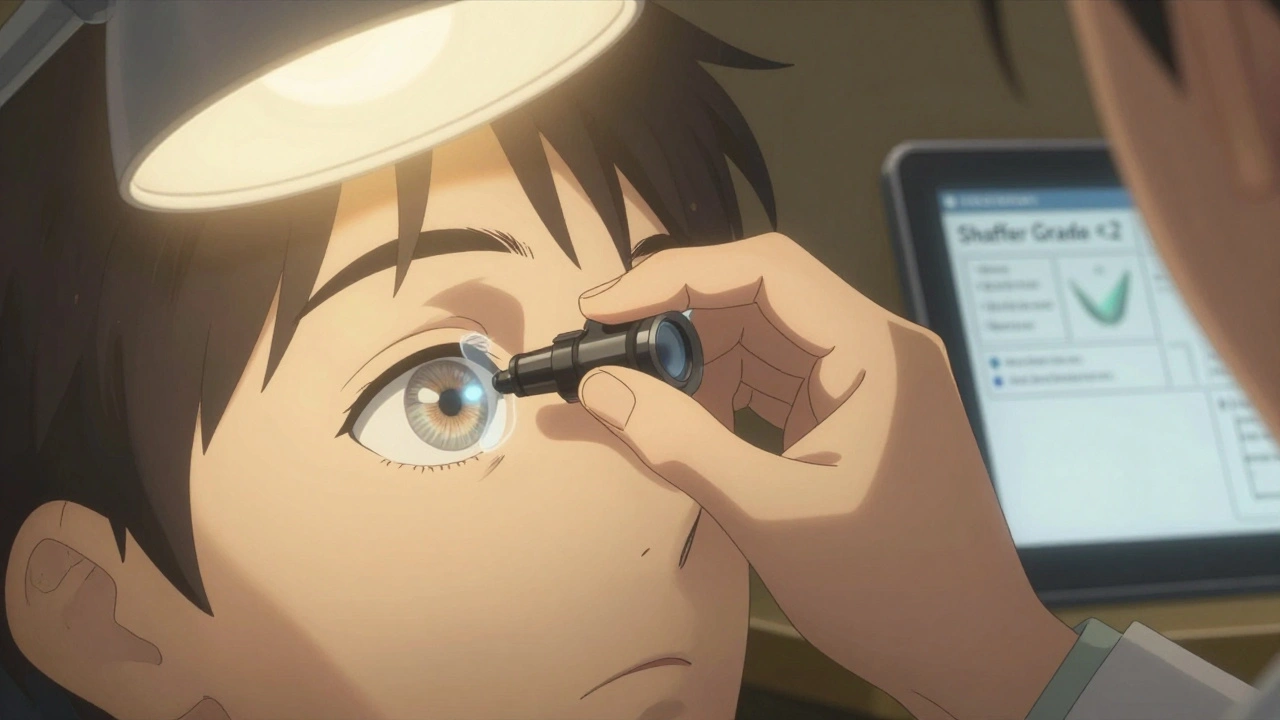
The American Academy of Ophthalmology recommends a simple test called gonioscopy for anyone over 40 before prescribing high-risk medications. It takes 5-7 minutes per eye. A special lens is placed on the eye to directly view the drainage angle. If it’s narrow (Shaffer grade ≤2), doctors should avoid triggering drugs.
Here’s what you can do:
- Ask your doctor: "Do I have narrow angles?" If they don’t know, ask for a gonioscopy.
- If you’re prescribed tropicamide for an eye exam, ask if your angles have been checked. If not, request the test before the drops.
- Replace high-risk meds with safer alternatives: use loratadine instead of diphenhydramine; use formoterol instead of epinephrine for asthma; choose non-sulfa antibiotics if you’re at risk.
- Keep a list of all medications you take - and share it with every doctor, even your dentist.
- If you’re Asian, farsighted, or over 40, assume you’re at risk until proven otherwise.
Electronic health records now include alerts for high-risk prescriptions. Epic Systems added glaucoma risk flags in 2022. But that only helps if your doctor is paying attention. You need to be your own advocate.
The System Is Failing - But You Can Still Protect Yourself
A 2023 survey found only 42% of primary care doctors routinely screen for glaucoma risk before prescribing high-risk meds. Sixty-eight percent of patients say they were never warned about eye risks. That’s not negligence - it’s systemic ignorance.
Regulations have improved. The FDA now requires black box warnings on topiramate and sulfa drugs. The AMA mandates screening for patients with known risk factors. But enforcement is weak. Many providers still don’t know the guidelines.
That’s why your role matters. If you’re scheduled for an eye exam, ask: "Will you check my drainage angles?" If you’re prescribed a new medication, ask: "Can this raise my eye pressure?" If you have a family history of glaucoma or are over 40, insist on a simple, painless gonioscopy. It’s not optional. It’s life-saving.
Acute angle-closure glaucoma doesn’t care if you’re healthy, young, or active. It only cares if your angles are narrow - and if someone forgot to check.
Can over-the-counter cold medicine cause acute angle-closure glaucoma?
Yes. Medications containing pseudoephedrine or phenylephrine - common in decongestants and allergy pills - can trigger acute angle-closure glaucoma in people with narrow iridocorneal angles. These drugs cause pupil dilation, which physically blocks fluid drainage in the eye. Even a single dose can lead to a sudden pressure spike. If you have risk factors like farsightedness or are over 40, avoid these medications unless cleared by an eye doctor.
Is acute angle-closure glaucoma reversible?
The pressure spike can be lowered with emergency treatment, but any damage to the optic nerve is permanent. Vision loss - especially in the peripheral field - cannot be restored. That’s why immediate treatment within 24 hours is critical. The goal isn’t to reverse damage, but to stop it from getting worse. Delaying care increases the risk of permanent blindness.
Do I need to get tested for narrow angles if I’ve never had eye problems?
Yes - especially if you’re over 40, farsighted, or of East Asian descent. Most people with narrow angles have no symptoms until a medication triggers an attack. Routine eye exams don’t automatically check for this. You need a specific test called gonioscopy. It’s quick, painless, and can prevent a medical emergency. If you’ve ever had dilating drops during an eye exam, ask if your angles were checked.
What should I do if I think I’m having an attack?
Go to the nearest emergency room immediately. Tell them you suspect acute angle-closure glaucoma and list any medications you’ve taken in the past 24-48 hours. Don’t wait for a general doctor - insist on seeing an ophthalmologist. Time is critical: optic nerve damage can begin within 6 hours and become irreversible within 24. Delaying care could mean permanent vision loss.
Are there safer alternatives to high-risk medications?
Yes. For allergies, use loratadine (Claritin) or cetirizine (Zyrtec) instead of diphenhydramine (Benadryl). For asthma, use formoterol instead of epinephrine. For depression, discuss non-anticholinergic SSRIs like sertraline with your doctor. For glaucoma, use non-sulfa diuretics like furosemide instead of acetazolamide. Always ask your provider: "Is there a safer option for my eyes?"
If you’ve ever had a sudden eye pain after taking a new medication - even if it was years ago - talk to an eye specialist. Your vision is worth the 5-minute test.
Comments
Bro, I took Sudafed last winter for a sinus thing and woke up with my left eye feeling like a balloon about to pop. Thought it was a migraine till I saw the halos around my lamp. Went to ER, turned out I had narrow angles. No one ever told me. Now I carry a card in my wallet that says "NO PSEUDOEPHEDRINE". This post saved my vision.
so u mean my benadryl is gonna blind me?? lmao i use it to sleep bro
Of course this is a problem. America lets Big Pharma push drugs without proper warnings. We don’t even screen for eye angles? That’s criminal negligence. My grandma lost her vision because her doctor gave her diphenhydramine. No one gets punished for this. Wake up people.
As someone who’s done gonioscopy on hundreds of patients, I can’t stress this enough: if you’re over 40, farsighted, or East Asian, get checked before ANY dilating drops or cold meds. It’s a 5-minute test that costs $50 at most - and it prevents permanent blindness. Most primary care docs don’t know this. You have to ask. And if they say "we don’t do that here," go to an ophthalmologist directly. Your eyes aren’t replaceable.
I’ve had patients come in crying because they thought their blurry vision was just aging. One guy took a Zyrtec-D and lost 30% of his peripheral vision in 8 hours. He didn’t even know he had narrow angles. That’s not bad luck - that’s systemic failure. But it’s 100% preventable.
And yes, even if you’ve never had eye issues. That’s the whole point. You don’t feel it until it’s too late. Think of it like a silent aneurysm - but in your eye. No symptoms. No warning. Just a pill, and then - boom.
Also, if you’re on antidepressants like amitriptyline and get sudden eye pain, don’t wait. Go now. Don’t call your therapist. Go to the ER. Tell them you’re on an anticholinergic and suspect AACG. That phrase will get you seen faster than "headache" or "dizziness."
And for the love of god, if you’re a pharmacist, put a warning sticker on every box of pseudoephedrine and diphenhydramine. We’re not asking for much. Just a tiny label that says: "May cause acute angle-closure glaucoma in susceptible individuals. Ask your eye doctor if you’re at risk."
I used to think "eye problems" meant needing glasses. Then I read this. Now I see it’s about survival. I’m 43, farsighted, and took Benadryl for allergies last year. I’m booking a gonioscopy tomorrow. If this saves one person’s sight, it’s worth sharing. We’re all just one bad pill away from losing something we can’t get back.
It’s wild how many things we trust without asking - pills, vaccines, eye drops. But our eyes? We take them for granted until they scream. This isn’t fearmongering. It’s a quiet emergency happening in living rooms across America. Someone’s mom, dad, sibling, friend - they’re all one dose away from blindness. And nobody’s telling them.
Let’s make gonioscopy as normal as a blood pressure check. It’s that simple. And if you’re reading this and you’re young and healthy - you’re still at risk. Your eyes don’t care how fit you are. They only care if the angle’s narrow.
Thank you for writing this. I’m sharing it with my whole family tonight.
So let me get this straight - my allergy medicine is secretly trying to blind me? And no one told me? This is why I don’t trust doctors. They’re all just selling pills and pretending they care.
Man, I just had my eyes dilated last month. No one asked me anything. I’m gonna call my doc tomorrow and ask if my angles were checked. I’m 45, super farsighted, and I’ve been popping Sudafed since college. I didn’t know any of this. This post literally made me sweat.
Also, if you’re on topiramate for migraines and your vision gets weird - don’t ignore it. That’s not just "side effects." That’s your eye screaming.
Just got my gonioscopy today - turns out I’ve got narrow angles. No symptoms ever. Just a quick light scan and bam. Doctor said "you’re lucky you asked." I’m switching all my meds now. Thank you for this. Seriously.