
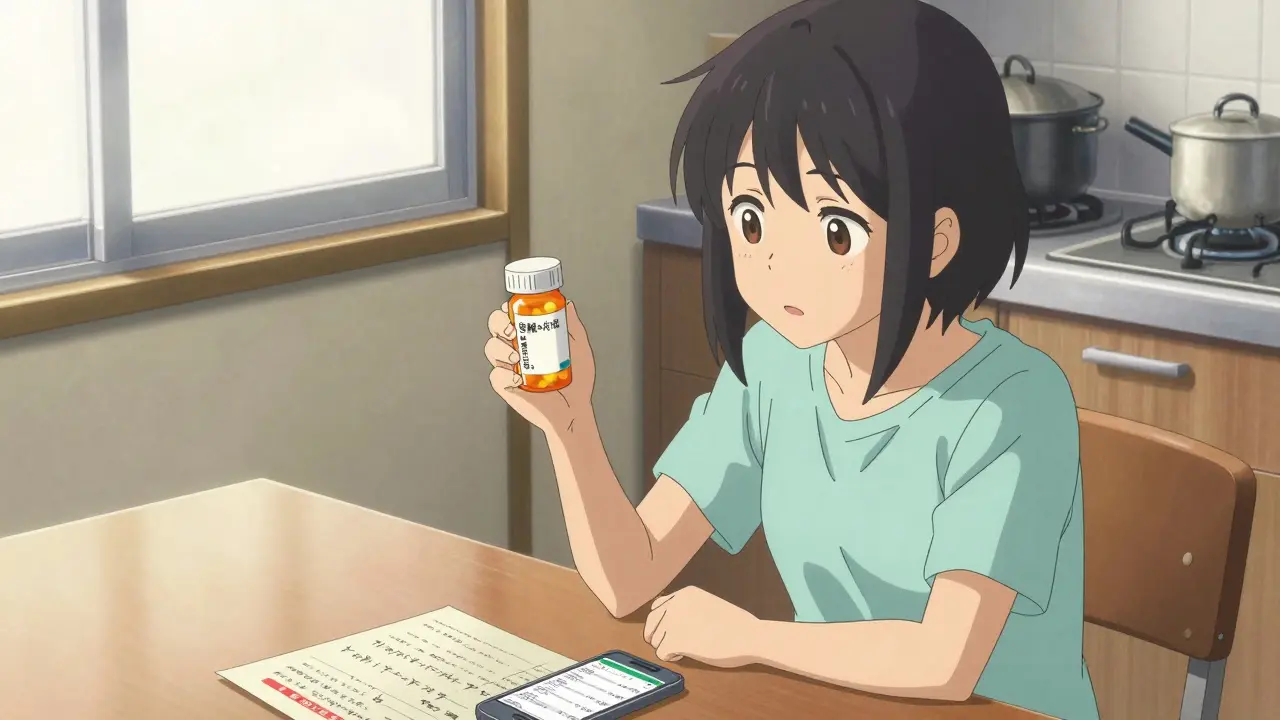
When you take a medication, you expect it to help-not hurt. But mistakes happen. A pharmacist gives you the wrong dose. A nurse administers the wrong drug. Your doctor prescribes something that clashes with your other meds. These aren’t just small slips. They’re medication errors, and they injure over 1.3 million people in the U.S. every year. The good news? You don’t have to stay silent. Reporting these errors isn’t just your right-it’s a critical step in protecting yourself and others.
Recognize the Error Before It’s Too Late
The first step is knowing when something’s wrong. Medication errors don’t always look like obvious mistakes. Sometimes, it’s a subtle change: a new rash after starting a pill, sudden dizziness when you’ve never felt that way before, or a prescription label that doesn’t match what your doctor told you. Don’t brush it off. If you feel off after taking a medication, write it down. Note the time, what you took, and how you felt. Take a photo of the pill bottle if the label looks off. Keep a symptom log-even if it’s just a few notes on your phone. These details matter. Studies show that patients who document symptoms before reporting are 64% more likely to have their concerns taken seriously.Start with Your Provider-But Don’t Stop There
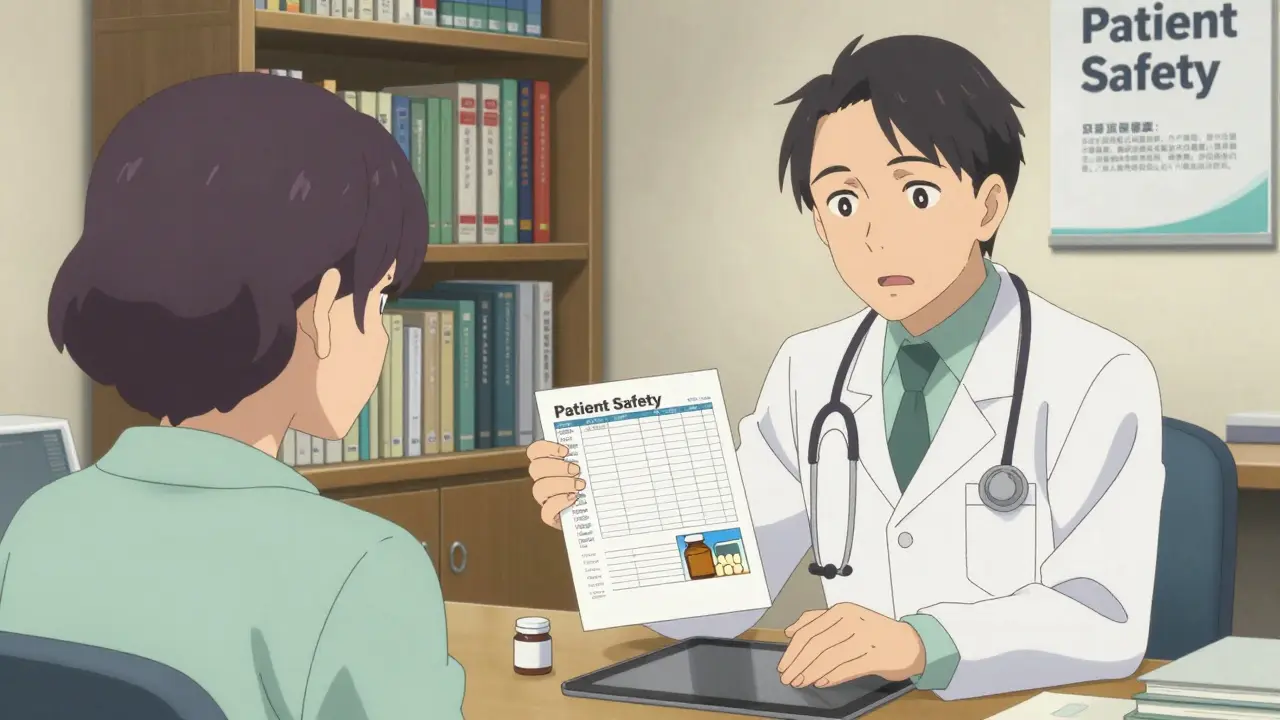
Your first call should be to your doctor, pharmacist, or nurse. Don’t wait. Call during business hours. If it’s after hours and you’re having a severe reaction-trouble breathing, swelling, chest pain-go to the ER. But for most cases, talk to your provider first. Be clear. Say: “I think there was a medication error. Here’s what happened.” Bring the pill bottle, your symptom log, and any paperwork. If they dismiss you, don’t walk away. Ask: “Can I speak to someone in patient safety or quality improvement?” Most hospitals have these roles. They’re trained to handle this stuff. And if your provider reacts defensively? That’s a red flag. You’re not accusing them-you’re helping them fix a system that’s broken.Know the Reporting Channels
There are three main ways to report a medication error. Each has a different purpose.- Internal hospital or clinic reporting: This is what your provider’s office uses to track mistakes. It’s fast, but only 14% of nurses report errors here because they fear punishment. Don’t let that scare you. If your provider has a “just culture” policy, they’re supposed to focus on fixing the system-not blaming you.
- FDA MedWatch: This is the federal system that tracks drug safety across the country. You don’t need to be a doctor to file here. Anyone can. In 2023, the FDA updated the form to take under 9 minutes. You’ll need: the drug name, dosage, your symptoms, and when it happened. This is how recalls happen. One patient submitted a photo of a mislabeled pill bottle. The FDA investigated. The drug was pulled from shelves within three days.
- ISMP (Institute for Safe Medication Practices): This nonprofit accepts confidential reports from patients and providers. They don’t share names. They publish safety alerts that hospitals and pharmacies use to prevent future mistakes. In 2022, they received over 12,000 reports-and turned 67% of them into public warnings.
What to Include in Your Report
A strong report has details. No fluff. Just facts. Here’s what you need:- Medication name: Exact spelling. Brand or generic?
- Dosage: How much? Milligrams? Milliliters?
- Route: Was it swallowed? Injected? Applied to skin?
- When it happened: Date and time.
- Your reaction: Symptoms. How bad? Did you go to the ER?
- Who was involved: Doctor’s name? Pharmacist? Nurse?
- Documentation: Photos of the bottle, prescription slips, or lab results.
Don’t guess. If you don’t know the exact dose, write “I think it was 50 mg.” Better than nothing. The more precise you are, the faster they can act.
What Happens After You Report?
Most people assume reporting leads to a phone call or apology. It doesn’t always. Only 36% of patients get a formal written response. But that doesn’t mean your report didn’t matter. When you file with the FDA, your report goes into a national database. If 10 other people report the same error with the same drug, the FDA flags it. That’s how recalls start. When you report to ISMP, they analyze patterns. Did 50 people get the wrong dose from the same pharmacy? They notify the state board. Your report might not change your life-but it could save someone else’s.Don’t Get Stuck in Bureaucracy
You’ll hit roadblocks. Medical records take forever to get. One study found patients wait an average of 22 days for records-even though HIPAA says they should be given within 30. If your provider delays, send a certified letter. Say: “I’m requesting my complete medical records related to the medication error on [date]. Per HIPAA, I expect them within 30 days.” Keep a copy. If they still don’t respond, file a complaint with your state’s medical board. You’re not being difficult. You’re holding them to the law.Special Cases: Schools and Children
If your child was given the wrong medicine at school, act fast. In 48 states, schools are required to report medication errors within 24 hours. But only 32% of districts actually improve their processes afterward. Don’t assume they’ll fix it. Demand a written incident report. Ask: “What steps are you taking to prevent this from happening again?” If they can’t answer, escalate to the school district’s superintendent. Keep records. Parents who followed up saw a 65% increase in prevention training at their child’s school.
Why Reporting Matters More Than You Think
Some people think, “It was just one mistake. It won’t happen again.” But that’s how systems stay broken. The Institute of Medicine found that 90% of medication errors come from flawed processes-not bad people. A nurse who gives the wrong dose might be tired. A pharmacist might be overwhelmed. A label might be misprinted. Reporting turns a personal tragedy into a system fix. Hospitals that use reporting data to improve reduce repeat errors by up to 75%. That’s not theory. That’s data from the Agency for Healthcare Research and Quality.What to Do If You’re Scared to Speak Up
Fear is normal. You worry you’ll be blamed. You think, “What if they stop treating me?” But research shows something powerful: hospitals with non-punitive reporting cultures see 300-400% more error reports. Why? Because people feel safe. And when errors are reported, fewer people get hurt. If you’re nervous, write your report anonymously. Use ISMP or MedWatch. You don’t need to name names. Your voice still counts.Next Steps: Your Action Plan
1. Document everything: Take photos. Write down symptoms. Save labels. 2. Talk to your provider: Be clear, calm, and direct. Ask for a safety review. 3. File with MedWatch: Go to fda.gov/medwatch. Takes under 10 minutes. 4. Send a copy to ISMP: Visit ismp.org/report. Confidential. No names needed. 5. Follow up in 14 days: Call the facility or check your MedWatch submission status online. 6. Request your records: If you don’t get them in 30 days, file a HIPAA complaint.You’re not a troublemaker. You’re a safety advocate. Every report you file adds to a growing body of evidence that makes healthcare safer-for your kids, your parents, and strangers you’ll never meet.
What if my doctor says the error wasn’t real?
If your provider dismisses your concern, ask for a second opinion from another clinician or request a peer review through the hospital’s patient safety office. You have the right to your medical records-use them to show the discrepancy between what was prescribed and what was given. If they still refuse to acknowledge the error, file a report with the FDA or ISMP. Your report doesn’t need their approval to be valid.
Can I report a medication error even if I didn’t get hurt?
Yes. In fact, you should. These are called “near misses”-events that could have caused harm but didn’t. The Institute for Safe Medication Practices says near misses are the best early warning signs. Reporting them helps catch system flaws before someone gets seriously injured. A wrong dose that was caught before being taken? That’s worth reporting.
How long do I have to report a medication error?
There’s no strict deadline for patients reporting to the FDA or ISMP. But the sooner you report, the better. Hospitals typically require internal reports within 24-72 hours. For the FDA, reports filed within days of the event are more likely to trigger a fast investigation. Delaying can make it harder to prove what happened, especially if labels are thrown away or records are updated.
Will reporting a medication error get me in trouble?
No-not if you’re the patient. Reporting a mistake you experienced is protected under patient rights laws. Healthcare providers are not allowed to retaliate against patients for speaking up. Even if you’re a healthcare worker, many institutions now use “just culture” models that protect those who report in good faith. The goal is to fix the system, not punish the person.
Is it worth reporting a small mistake?
Absolutely. Small errors are often the warning signs of bigger problems. A label that’s slightly misprinted might mean a whole batch is wrong. A nurse giving a dose 10 minutes late might indicate understaffing. The FDA and ISMP analyze patterns-not just single events. One report might seem small. But 50 similar reports? That’s a red flag that gets fixed.
Comments
This is the kind of systemic failure that keeps me up at night. You think you're trusting your life to professionals, but half the time they're operating on autopilot with outdated protocols. I've seen pharmacists miss drug interactions because they're rushing through 40 prescriptions an hour. And don't even get me started on how hospitals treat patient reports like administrative clutter. If you're not documenting everything-photos, timestamps, witness names-you're playing Russian roulette with your health. This isn't paranoia. It's survival in a broken system.
It is imperative to recognize, on a foundational level, that the architecture of modern healthcare delivery is predicated upon a series of cascading vulnerabilities-each one amplified by institutional inertia, underfunding, and a pervasive culture of deflection. The patient, as the primary stakeholder in therapeutic outcomes, occupies a paradoxical position: simultaneously the most vulnerable and the most empowered agent of systemic change. The act of reporting a medication error transcends mere procedural compliance; it becomes an ontological assertion of human dignity within a technocratic apparatus that often reduces individuals to data points. When one submits a report to MedWatch or ISMP, one does not merely catalog an incident-rather, one participates in the epistemological reconfiguration of medical safety paradigms. The aggregation of these reports constitutes a distributed intelligence network, one that, when properly leveraged, can dismantle the very structures that enable harm. We must not underestimate the cumulative power of individual agency in the face of institutional opacity.
just report it. dont overthink it. they dont care anyway.
I'm from the U.S. but my mom's from India, and she had a near-miss with a blood pressure med last year. The pharmacist gave her the wrong dosage because the label was smudged. She didn't say anything at first-thought it was her being forgetful. But after she started feeling dizzy, she wrote it down, took a pic, and called the clinic. They were super nice, apologized, and even called her back the next day to check in. I think if more people just spoke up gently but clearly, things could get better. Also, ISMP is a lifesaver-no names needed, just facts.
you think this is bad? wait till you see what happens when a nurse misreads a handwritten script in a 12-hour shift with 3 breaks. i work in a hospital. we get 8 minutes per med pass. 8 minutes. to verify 12 meds, check allergies, document, talk to the patient, answer their 50 questions, and not get sued. so yeah, mistakes happen. and yeah, you should report. but dont act like you're some hero for doing it. the system is rigged. you're just another cog trying to scream through the gears.
Let’s be real: this whole ‘reporting culture’ is performative virtue signaling wrapped in a glossy FDA brochure. You think your 9-minute MedWatch form changes anything? Nah. It just makes you feel like you’ve done your civic duty while the same pharmacist, same nurse, same hospital keeps doing the same thing tomorrow. The real issue? Accountability is a myth. The system doesn’t punish errors-it punishes patients who dare to speak up. And the people who *should* be held responsible? They get a seminar, a pat on the back, and a promotion. Your report? It gets buried under 300 others. But hey-go ahead. File it. Make yourself feel better. The machine doesn’t care.
Oh wow, another ‘save the world by filling out a form’ manifesto. How quaint. You’re telling me that a single mom working two jobs, who just watched her kid get the wrong antibiotic, is supposed to take 10 minutes to document everything-while also grieving, panicking, and trying to pay rent? And you think the FDA’s gonna care? Please. That form is a digital black hole. The only thing it’s good for is making hospitals look proactive while they quietly rewrite the chart to say ‘patient misreported.’ If you really want to change things, start by demanding mandatory staffing ratios, not self-reporting guilt trips. This isn’t empowerment. It’s exploitation dressed up as activism.
I’m from India, and here, medication errors are rarely reported because people fear losing access to care. But I’ve seen families suffer silently-especially in rural areas. One neighbor’s grandfather died because the pharmacy gave him the wrong diabetes pill. No one reported it because they didn’t know how. This post is a gift. I’m sharing it with my community in Hindi and Tamil. We need more of this-simple, clear, no jargon. Reporting isn’t about blame. It’s about love-for your family, for strangers, for the next person who walks into that pharmacy. Thank you for writing this. It’s the kind of truth that saves lives.
Typical Western performative activism. You think documenting symptoms and sending a PDF to the FDA makes you a ‘safety advocate’? Please. In most developing nations, this level of documentation is a luxury. People die because they can’t afford the meds, not because of mislabeled bottles. This whole post reads like a corporate compliance training video written by a consultant who’s never stepped foot in a clinic. The real problem? Underfunded healthcare systems. Not your 9-minute form.
While the procedural guidelines enumerated herein are ostensibly sound, one must interrogate the epistemological assumptions underlying the entire reporting paradigm. The assumption that patient-reported data is inherently reliable, objective, and unmediated by cognitive bias or emotional distress is not only empirically dubious but clinically perilous. Studies in medical psychology demonstrate that patients frequently misattribute symptoms, misremember dosages, and conflate temporal sequences under stress. Consequently, the uncritical valorization of lay reporting as a primary mechanism for systemic improvement risks the institutionalization of noise over signal. A more rigorous approach would require standardized triage protocols, clinician-verified intake forms, and algorithmic pattern detection-rather than relying on anecdotal submissions from emotionally compromised individuals. The integrity of pharmacovigilance depends not on volume, but on validity.