
When a drug allergy strikes, it can feel like a dead end. You need a life-saving medication-maybe it’s chemotherapy, a critical antibiotic, or a biologic for rheumatoid arthritis-but your body says no. Allergic reactions like hives, swelling, low blood pressure, or even anaphylaxis make continuing treatment seem impossible. But here’s the truth: drug desensitization isn’t a last resort-it’s a proven, safe, and often life-saving option when done right.
Forget the old idea that once you’re allergic to a drug, you’re allergic forever. That’s not how it works. Drug desensitization is a carefully controlled process that temporarily resets your body’s reaction to the very drug that once threatened you. It’s not a cure. It doesn’t erase the allergy. But it lets you get the treatment you need, right now, under medical supervision.
What Exactly Is Drug Desensitization?
Drug desensitization is a step-by-step method where you’re given tiny, gradually increasing doses of the drug you’re allergic to-over hours, not days. The goal? To trick your immune system into tolerating the full therapeutic dose without triggering a reaction. It’s not guessing. It’s not risky. It’s science.
This technique works best for IgE-mediated reactions-the kind that cause hives, swelling, or anaphylaxis. It’s also used for non-IgE reactions, like those from aspirin or NSAIDs that trigger asthma or skin rashes. The most common applications? Antibiotics (like penicillin or vancomycin), chemotherapy drugs (like carboplatin or paclitaxel), monoclonal antibodies (like rituximab or infliximab), and even local anesthetics.
It’s not magic. It’s math. And timing. And monitoring.
How It Works: The Step-by-Step Process
Every desensitization protocol is custom-made. But most follow a pattern based on decades of clinical data. Here’s what happens in a typical IV desensitization, like for antibiotics or chemo:
- You start at 1/10,000th of your full therapeutic dose.
- That tiny amount is given slowly, over 15-30 minutes.
- Then, you get a dose that’s double the last one.
- This doubling continues-step by step-until you reach the full dose.
- Most protocols use 12 or 16 steps. Each step takes 20-30 minutes. The whole process? Usually 5-6 hours.
For oral drugs-like aspirin or NSAIDs-it’s slower. Doses are given every hour. It might take 2-3 days to reach the full dose. The slower pace gives your body time to adjust.
At every step, your vital signs are watched like a hawk:
- Blood pressure checked
- Pulse oximetry every 5 minutes
- Heart rate monitored
- Respiratory tests if you have asthma
- Physical exam for rashes, swelling, or wheezing
If you react-even mildly-the team pauses. They might go back to the last dose you tolerated, extend the time between doses, or increase the dose more slowly. No one pushes through a reaction. Safety is built into every step.
Who Can Do This? Not Everyone
Desensitization is powerful-but it’s not for everyone. There are hard rules.
DO NOT attempt desensitization if you’ve had:
- Stevens-Johnson syndrome
- Toxic epidermal necrolysis
- Erythema multiforme with blistering
- Drug-induced hepatitis
- Nephritis (kidney inflammation)
- Serum sickness
These are not just allergies-they’re severe organ-threatening reactions. Desensitization won’t work here. It could kill you.
Also, this isn’t something a general doctor can do. It requires:
- An allergist or immunologist trained in desensitization
- A nurse with advanced allergy experience
- Immediate access to epinephrine, antihistamines, and corticosteroids
- A monitored setting-like a hospital or specialized allergy clinic
Brigham and Women’s Hospital and the Asthma Center have led this field for years. Their protocols are used worldwide. But access? It’s still limited to major medical centers. If you’re in a small town, you’ll likely need to travel.
Why It Works: The Science Behind Temporary Tolerance
Why does this work? Because your immune system doesn’t “forget” the drug-it just gets overwhelmed.
When you get a tiny dose, your immune cells don’t have time to mount a full attack. As the dose slowly increases, your body’s response gets dampened. Mast cells stop releasing histamine. Inflammatory signals quiet down. Your body adapts. It’s not immunity-it’s temporary suppression.
And here’s the catch: the tolerance lasts only as long as you keep taking the drug daily. If you stop for more than 48 hours, the allergy can come back. That’s why patients on long-term antibiotics for cystic fibrosis or daily chemo for cancer can stay desensitized. But if you miss a dose? You’re back to square one.
This is why desensitization isn’t used for occasional meds. It’s for drugs you need to take every day-or every few days-for weeks or months.
Real-World Impact: Stories Behind the Protocol
Think this is theoretical? Think again.
At Brigham and Women’s, a patient with ovarian cancer had a severe reaction to carboplatin. Her oncologist said: “We have no other option.” She went through a 6-hour desensitization. She completed her full chemo course. Her tumors shrank. She’s alive today.
A teenager with severe asthma and an aspirin allergy couldn’t take pain relief without triggering life-threatening bronchospasm. After a 3-day oral desensitization, she now takes aspirin daily to control her asthma-something doctors thought impossible.
Patients with rheumatoid arthritis or Crohn’s disease who react to biologics like infliximab? Desensitization lets them stay on treatment. Without it, many would face disability or surgery.
These aren’t rare cases. They’re routine in specialized centers. The success rate? Over 90% when done by experienced teams.
What Happens If You React During the Process?
Reactions during desensitization aren’t rare-but they’re manageable.
If you get hives, itching, or mild wheezing? The team stops. They give you antihistamines or steroids. Then they drop back to the last safe dose and try again, slower.
If you have low blood pressure or trouble breathing? Epinephrine is ready. The team treats it like anaphylaxis-and pauses the protocol until you’re stable.
Most reactions are mild. Severe ones? Rare. But every clinic has a plan. Every nurse knows the drill. That’s why you never do this at home.
Alternatives? There Aren’t Many
People ask: “Can’t you just use a different drug?”
Sometimes, yes. But not always.
Some antibiotics have no effective substitute for cystic fibrosis patients. Some chemo drugs are the only ones that work for certain cancers. Biologics like cetuximab or tocilizumab? Their structure is unique. Alternatives often don’t exist-or they’re less effective, more toxic, or way more expensive.
Desensitization isn’t about convenience. It’s about access. It’s about survival.
What to Expect Before, During, and After
Before: You’ll have a full allergy workup. Skin tests? Blood tests? They’ll check if your reaction is IgE-mediated. They’ll review your history. A written protocol is made-just for you.
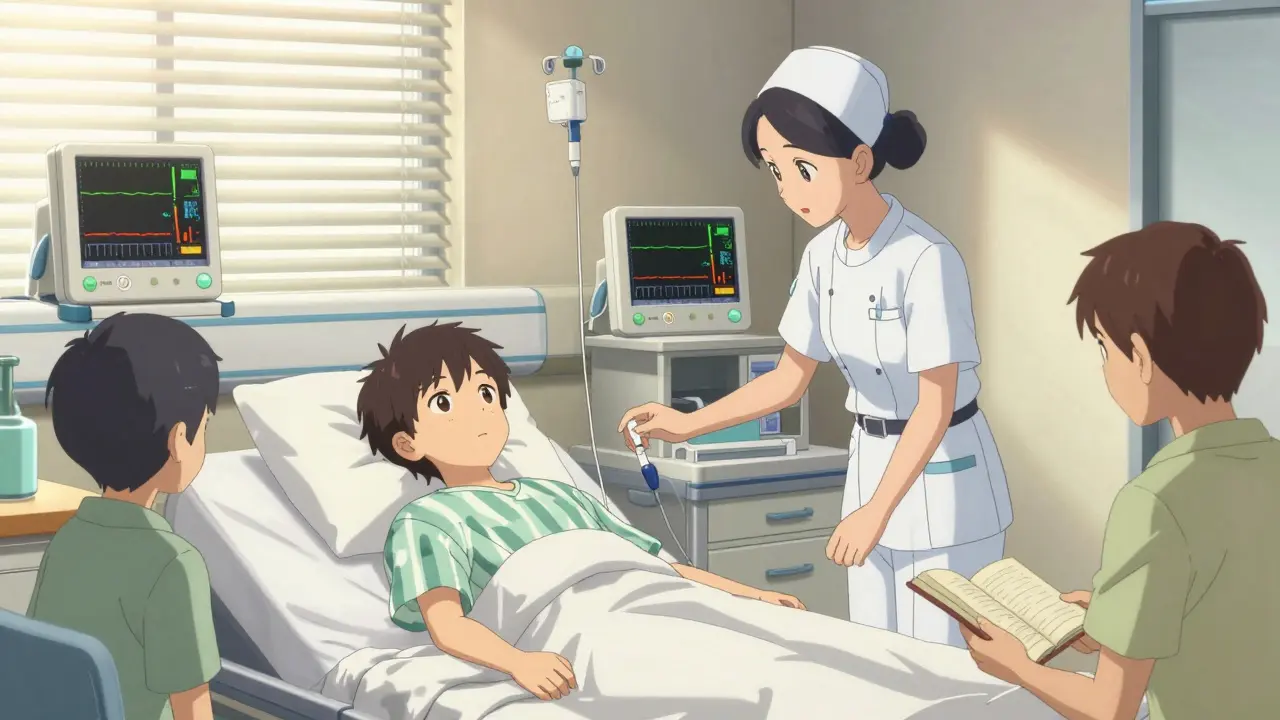
During: You’ll be in a room with monitors, IV lines, and a team ready to act. You can bring a book, music, or a person to sit with you. You’ll be awake the whole time. You’ll feel the drip. You might feel warm. You might feel nothing. That’s normal.
After: Once you reach the full dose, you’ll continue on that dose as prescribed. You’ll be monitored for at least 30 minutes after the last dose. Then you go home. You’ll need to take the drug daily to stay desensitized. No breaks. No skipping.
FAQ
Can I desensitize to any drug I’m allergic to?
No. Desensitization works for certain drug classes-like antibiotics, chemotherapy, NSAIDs, and biologics-but not for severe skin reactions like Stevens-Johnson syndrome or toxic epidermal necrolysis. It also doesn’t work for drugs that cause organ damage like hepatitis or nephritis. Your allergist will determine if your specific reaction is a candidate.
How long does the desensitization process take?
It varies. IV desensitization for antibiotics or chemo usually takes 5-6 hours. Oral desensitization for aspirin or NSAIDs can take 2-3 days, with doses given every hour. The length depends on the drug, your reaction history, and the protocol used.
Is desensitization permanent?
No. The tolerance is temporary. If you stop taking the drug for more than 48 hours, your allergy can return. That’s why patients on long-term therapy-like daily antibiotics or ongoing chemo-stay desensitized. But if you only need the drug once, desensitization isn’t practical.
Can I do this at home?
Absolutely not. Desensitization requires constant monitoring, emergency medications, and trained staff. It must be done in a hospital or specialized allergy clinic. Attempting this at home is extremely dangerous and can be fatal.
What if I have asthma? Is it riskier?
Yes. Patients with asthma are at higher risk for respiratory reactions. That’s why spirometry (breathing tests) is done before and after each dose. The team will adjust the protocol to go slower and monitor lung function closely. Many asthmatics have been successfully desensitized-but only under expert care.
Are there side effects during desensitization?
Mild side effects like flushing, warmth, or itching are common and usually manageable with antihistamines. More serious reactions-low blood pressure, wheezing, or swelling-are rare but possible. That’s why the procedure is done in a monitored setting with emergency drugs ready.
Can children be desensitized?
Yes. Children with severe allergies to antibiotics or chemotherapy can be desensitized using modified protocols. Pediatric allergists at major centers have successfully treated infants and teens. The process is slower and more cautious, but it works.
What if I react after the procedure is done?
If you react after completing the protocol but are still on daily therapy, your team may repeat the desensitization. Sometimes, the reaction means you need to adjust your dose or add preventive medications like steroids. Never ignore a reaction-even after you’ve been desensitized.
Next Steps If You Need This
If you’ve had a drug allergy and need to take that same drug again:
- Ask your doctor for a referral to an allergist or immunologist.
- Bring your full reaction history: symptoms, timing, treatment given.
- Ask if your medication is on the list of drugs with proven desensitization protocols.
- Find a center with experience-Brigham and Women’s, Asthma Center, or a major university hospital.
- Don’t wait. If you’re on chemo or a critical antibiotic, time matters.
Drug desensitization isn’t experimental. It’s standard care for people who have no other options. It’s not about avoiding the allergy. It’s about beating it-safely, under expert supervision, so you can live.
Comments
So let me get this straight-you’re telling me we can just *trick* the immune system into ignoring a life-threatening reaction? That’s not science, that’s a magic trick with IV drips. What if the body’s just playing dead until the dose is full? Then it wakes up and goes full nuclear? I’ve seen autoimmune flares after chemo where people got better… then dropped dead two weeks later. No one talks about that. They just pat themselves on the back for ‘success rates.’
Drug desensitization protocols are grounded in decades of peer-reviewed clinical research, primarily from institutions such as Brigham and Women’s Hospital and the National Institutes of Health. The underlying mechanism involves transient mast cell anergy and downregulation of FcεRI receptors, which suppresses IgE-mediated degranulation. This is not a theoretical construct-it is an evidence-based intervention with documented safety profiles when conducted under strict monitoring protocols. Failure to acknowledge this undermines patient trust in medical innovation.
Used this for my mom’s vancomycin allergy. 6 hours. No reaction. She finished chemo. Still alive. That’s all you need to know.
yo i had a penicillin rash when i was 8 and now i need it for a staph infection. did the desensitization thing at ucla med. it was kinda boring tbh. they let me watch netflix. got a little warm but no hives. now i take it every day like clockwork. no big deal. docs are kinda scared of it but it works. just find a good allergist. they know what they’re doing.
They’re lying. This is all a pharmaceutical scam. They want you addicted to the drug so you keep coming back. The ‘tolerance’? That’s just the drug numbing your nerves. Next thing you know, they’re putting microchips in the IV. You think they care if you live? They care if you keep paying. Read the fine print. They don’t test for long-term organ damage. They just want your insurance.
Anyone who thinks this is safe is an idiot. You’re literally forcing your body to accept poison. If you had a real allergy you’d avoid it forever. This is just people being too lazy to find alternatives. You want to live? Then don’t take the drug. Simple. No one’s forcing you to gamble with your life. And if you’re too stupid to know that then maybe you deserve what happens.
Y’all act like this is some holy grail ritual. Nah. It’s just medicine doing what it does best-pushing boundaries until something breaks. I’ve seen nurses sweat through these protocols like it’s a damn warzone. And yeah, 90% work. But that 10%? They don’t come back. They’re the ones in the obits. No one talks about them. They just move on to the next patient. This ain’t science. It’s a high-stakes game of Russian roulette with a stethoscope.
I’ve spent years listening to people who’ve been told they’re allergic to something they need to survive. What’s remarkable isn’t the procedure-it’s the courage it takes to walk into that room knowing you could die. Not for fun. Not for convenience. But because the alternative is worse. That’s humanity. Not science. Not statistics. Just a person, willing to be scared, and still showing up.
For anyone thinking about this-reach out. Don’t wait until you’re out of options. I’ve helped three people get through this, and every single one said they wished they’d asked sooner. It’s not scary because it’s dangerous-it’s scary because you’re trusting strangers with your life. But that’s what doctors are for. Find one who listens. Bring your history. Ask for the protocol. You’re not alone. And you don’t have to choose between death and a drug. There’s a third way. It’s called hope. And it’s in the clinic.