
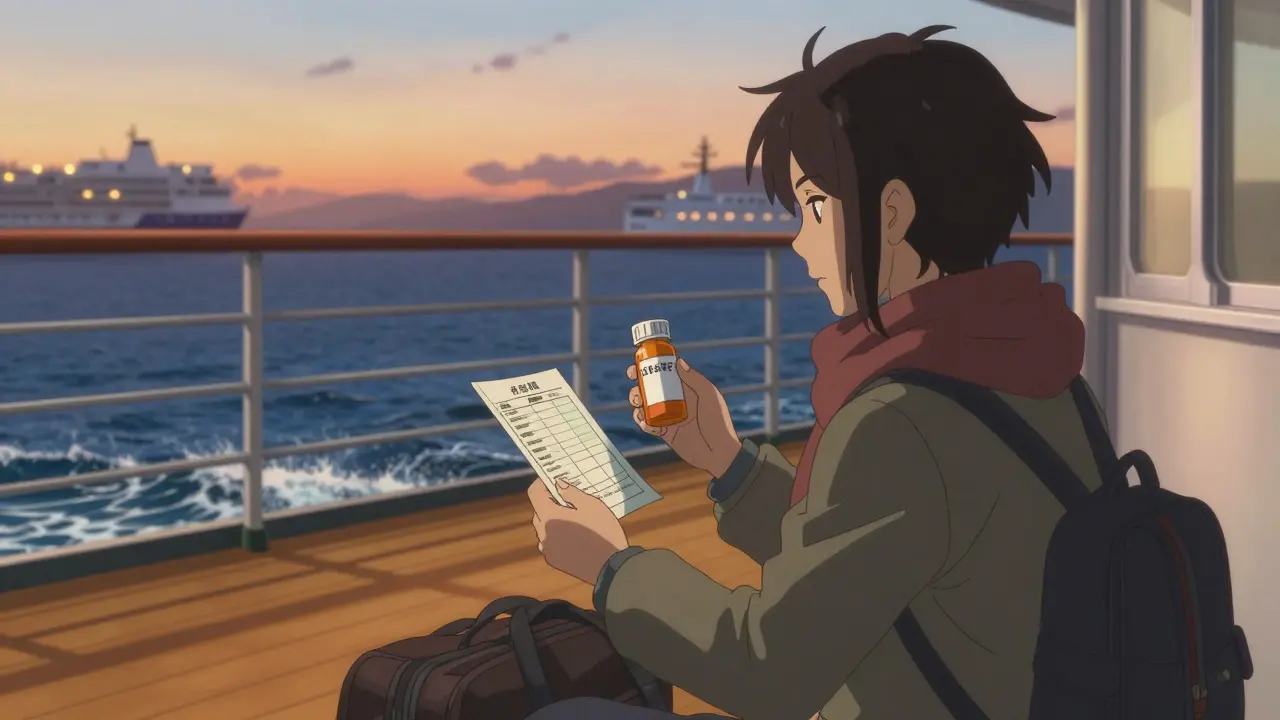
When you're out on the open sea, the last thing you want is to run out of your daily medication. Cruise ship medical centers aren’t hospitals. They’re infirmaries - small, busy, and stocked with just enough to handle the most common problems: seasickness, stomach bugs, minor injuries, and colds. If you need a prescription for something unusual - say, your blood pressure pill, insulin, or a painkiller - you can’t assume it’ll be there. Most cruise lines won’t carry it. And if they do, it’ll cost you more than you’d pay at home.
Don’t Rely on the Ship’s Pharmacy
The medical center on your cruise ship has a limited inventory. Even on big ships like those from Royal Caribbean or Norwegian Cruise Line, they typically stock between 50 and 100 different medications. That sounds like a lot until you realize it’s meant to serve 3,000+ people for a week or two. Common drugs like antacids, anti-nausea meds, antibiotics for ear or sinus infections, and basic pain relievers are usually available. But anything specialty? Forget it. Narcotics? Only in emergencies, and even then, in tiny amounts. Diabetes medications like insulin? Sometimes, but not guaranteed. Thyroid pills? Rare. Mental health meds? Almost never. Storylines, a newer residential cruise line, is an exception - they offer compounding pharmacies and take 6 to 12 months’ notice for specialty prescriptions. But if you’re on a regular 7-day cruise? You’re on your own.Bring More Than You Think You Need
The rule is simple: pack enough for your whole trip, plus extra. Not just a few extra days. At least five extra days. Why? Delays happen. Weather cancels port stops. Ships get stuck. One Reddit user shared how their 14-day cruise turned into 17 days because of a storm. They ran out of blood pressure meds because the ship didn’t carry it, and the next port’s pharmacy was closed. They ended up skipping doses for two days. If you’re on a 10-day cruise, bring 15 days’ worth. If it’s a 21-day voyage? Bring 28. Cruise lines like Royal Caribbean and Disney explicitly say this in their FAQs. It’s not a suggestion - it’s a requirement for your safety.Keep Medications in Original Containers
Never transfer pills into a daily pill organizer for the whole trip. Bring them in their original bottles with the pharmacy label. Why? Security. Customs. Medical staff. All of them need to see the prescription label, the patient name, and the doctor’s info. If you’re flying to your cruise port, TSA and international border agents may ask to see your meds. If the bottle says “John Smith” but your passport says “Jane Smith,” you’ll have problems. Disney Cruise Line is strict about this. They’ve turned people away from the medical center because their meds weren’t in labeled bottles. Even if you’re not flying, you’ll still go through port security in places like the Bahamas or Mexico. Unlabeled pills can be mistaken for illegal drugs. Don’t risk it.Carry-On Only - No Checked Bags
Pack your medications in your carry-on. Not your suitcase. Not your backpack. Your carry-on. Why? Bags get lost. Bags get delayed. If your checked luggage doesn’t arrive until day three and you need your asthma inhaler on day one? That’s not a minor inconvenience - it’s dangerous. Cruise lines don’t guarantee luggage delivery timing. Even if you’re boarding early, your bags might not reach your cabin for hours. If you’re diabetic and need insulin, or have a heart condition and need nitroglycerin, you can’t wait. Keep your meds with you at all times - in your purse, in your daypack, in your jacket pocket.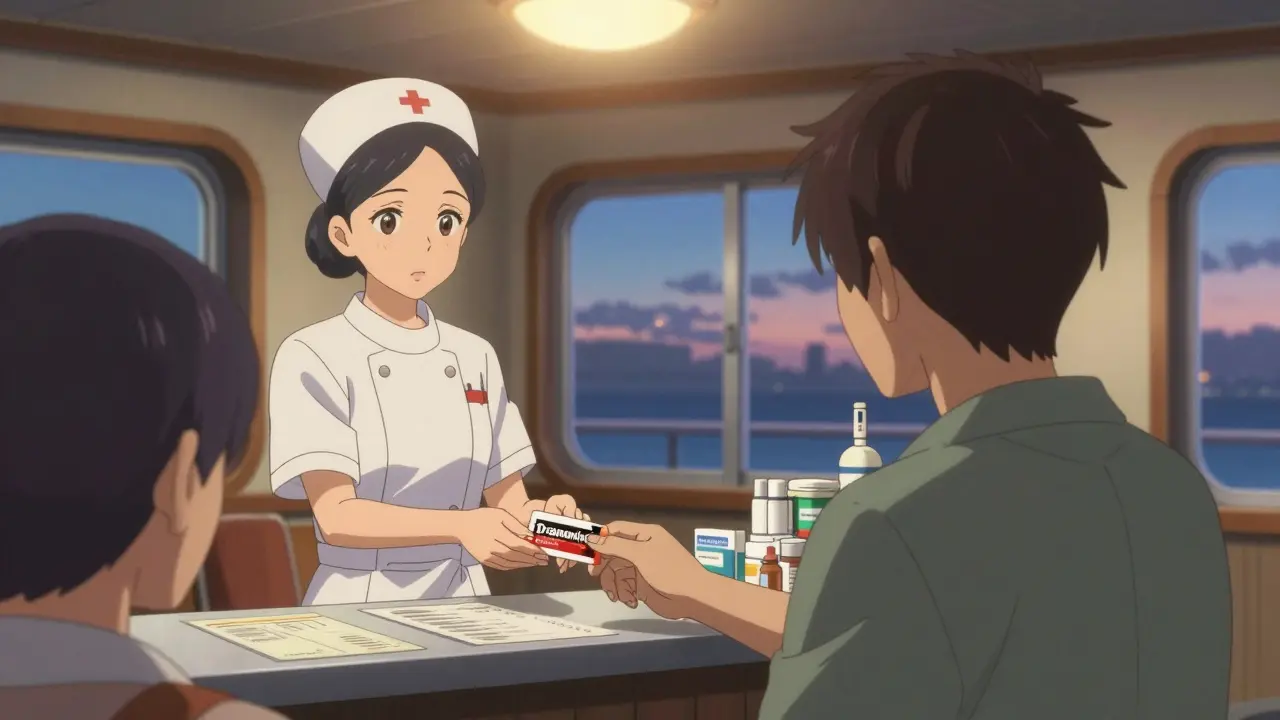
Bring a Medication List
Write down everything you take: name, dosage, frequency, reason. Include your doctor’s name and phone number. Print it out. Keep a copy in your wallet. Email it to a family member. If you end up in the medical center, this list is your lifeline. The doctor on board is a general practitioner - not your specialist. They might not know your history. They’ll need your list to avoid dangerous interactions or overdoses. If you’re on insulin, CPAP, or other medical devices, bring a note from your doctor. Some ports require it. Storylines requires it for CPAP users - they even ask you to bring distilled water and an extension cord in advance.Costs Are High - But Not Always Avoidable
If you do need to buy something from the ship’s pharmacy, expect to pay 200% to 300% more than you would at a U.S. pharmacy. Antibiotics? $25 to $40 per dose. Anti-nausea pills? $15 for five tablets. Compare that to $5 at Walmart or CVS. It’s steep. But sometimes, you have no choice. The good news? Seasickness meds are often free. Most ships offer them at the medical center or even at the front desk. You can walk in, ask for Dramamine or Bonine, and get it without a charge. Same with basic painkillers like acetaminophen or ibuprofen - they’re usually available on request.Special Cases: Insulin, CPAP, and Controlled Substances
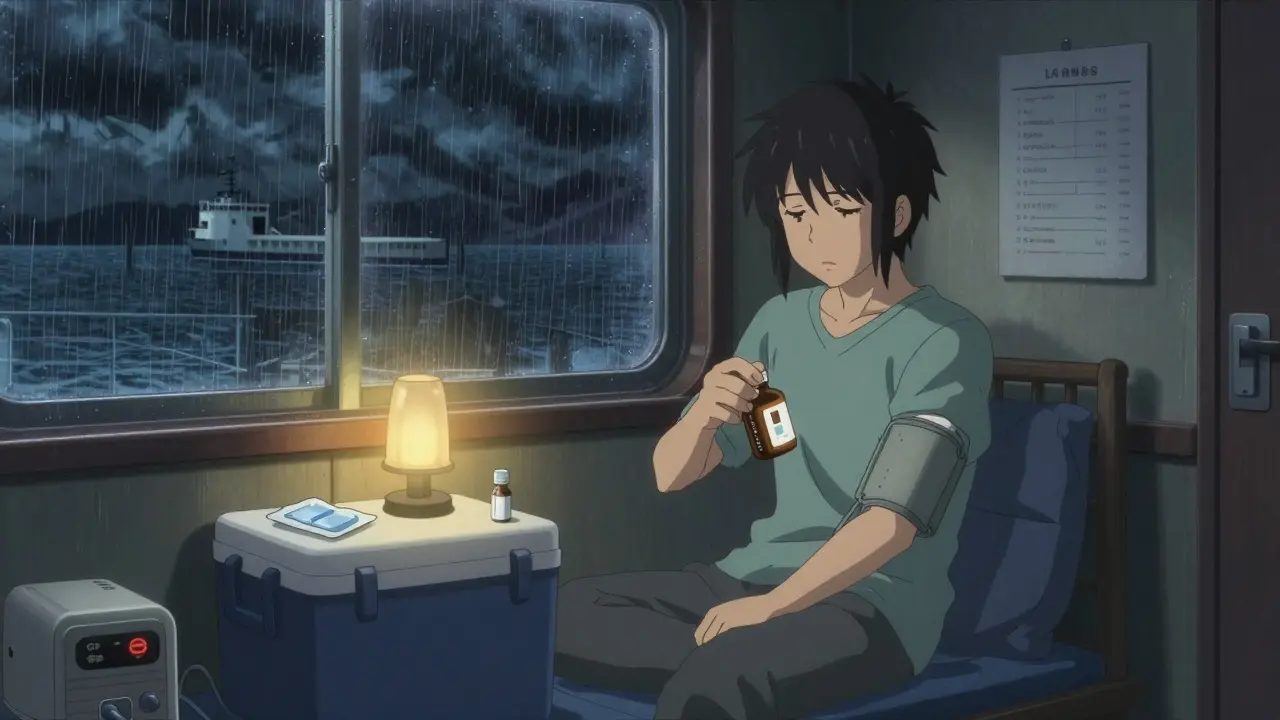
If you use insulin, bring extra syringes, alcohol wipes, and a cooler with ice packs. Some ships have fridges, but don’t count on it. Bring a doctor’s note - not just for the ship, but for any port you’ll visit. In some countries, insulin without a prescription can be confiscated. CPAP machines? Bring your own. The ship won’t provide one. Storylines says you’ll need distilled water and an extension cord. Bring both. Check with your cruise line ahead of time - some ships have limited outlets in cabins. Controlled substances - opioids, benzodiazepines, ADHD meds - are the hardest to get on board. Storylines says they’ll only provide them in “emergency or extreme cases.” Other cruise lines don’t carry them at all. If you need these, you must bring your own. Keep them in original bottles. Never try to get them refilled on the ship. It won’t happen.What to Do If You Run Out
If you run out and the ship doesn’t have your med, your options are limited:- Ask the medical center if they can order it from a port pharmacy. Some ships can do this, but it takes time - and money.
- Wait until the next port and go to a local pharmacy. But check the port’s hours. Many close early or on Sundays.
- If you’re near a U.S. territory (like St. Thomas or Puerto Rico), you might find a chain pharmacy. Otherwise, local pharmacies may not carry your brand.
Telemedicine Is Getting Better - But Not Yet Reliable
Royal Caribbean and a few others now offer telemedicine services. You can video-call a doctor on land for advice. This helps if you’re unsure whether you need a new prescription. But it doesn’t mean they’ll send you meds. They can’t. The ship’s pharmacy still has to stock what you need. Think of telemedicine as a second opinion - not a refill service. It’s useful for clarifying symptoms or getting advice on whether to see the ship’s doctor. But don’t count on it to solve your missing pill problem.Real Stories: What Went Right and Wrong
One passenger on a Carnival cruise forgot her antidepressant. She brought half her supply. On day 5, she ran out. The ship didn’t carry it. She panicked. She ended up in the medical center, crying. The nurse gave her a mild sedative to help her sleep. She didn’t get her real med until the next port - three days later. She said it was the worst three days of her life. Another traveler brought 20 days’ worth of blood pressure pills on a 10-day cruise. Her meds were in original bottles. She had a printed list. She kept them in her carry-on. When the ship was delayed by a storm, she was fine. She didn’t stress. She didn’t get sick. She just kept taking her pills - and enjoyed the rest of the trip. The difference? Preparation.Final Checklist Before You Board
- Bring 5-7 extra days’ worth of every prescription.
- Keep all meds in original containers with labels.
- Carry all meds in your carry-on bag.
- Print a list: drug name, dose, frequency, doctor’s contact.
- For insulin: bring extra syringes, cooler, and doctor’s note.
- For CPAP: bring distilled water and extension cord.
- For narcotics or controlled substances: bring your full supply - no refills on board.
- Check your cruise line’s website for their medical policy - don’t assume.
Bottom Line
Cruise ship medical centers are great for treating seasickness, cuts, or a bad cold. They’re not a replacement for your pharmacy. Don’t gamble with your health. If you need a medication to feel normal, to breathe, to sleep, or to stay alive - bring it. Bring extra. Bring it labeled. Bring it with you.The sea doesn’t care if you forgot your pills. You have to care for yourself.
Can I get my prescription refilled on a cruise ship?
Almost never. Cruise ship pharmacies carry only a limited selection of common medications. They rarely stock specialty drugs like insulin, thyroid meds, antidepressants, or controlled substances. Even if they have your medication, they won’t refill a prescription from your home doctor. Always bring enough for your entire trip - plus extra days.
Do cruise ships carry over-the-counter meds?
Yes, most cruise ships have basic OTC meds like pain relievers (ibuprofen, acetaminophen), antacids, anti-nausea pills, and antihistamines. Many offer these for free at the medical center or front desk. But don’t rely on them for your specific brand or dosage - bring your own.
Are cruise ship pharmacy prices higher than on land?
Yes, significantly. A single antibiotic dose can cost $25-$40 on a cruise ship, compared to $5-$15 at a U.S. pharmacy. You’re paying for convenience, storage, and limited supply. It’s not a markup - it’s the reality of operating a pharmacy at sea.
What if my medication isn’t in the ship’s inventory?
If your medication isn’t stocked, you’ll need to wait until the next port and visit a local pharmacy. But many ports have limited hours or may not carry your exact brand. The safest option is to bring your full supply before boarding. Never assume the ship can help.
Can I bring my own medications in pill organizers?
No. Always keep medications in their original labeled bottles. Cruise lines and port authorities require this for safety and legal reasons. Unlabeled pills can be mistaken for illegal drugs. Even if you’re only using a pill organizer for convenience, keep the original bottles with you at all times.
Do I need a doctor’s note for my medications?
For most prescriptions, a note isn’t required - but it’s highly recommended. For insulin, CPAP machines, or controlled substances, a doctor’s note can prevent delays or confiscation at ports. Some countries require it. Always carry one, especially if you’re traveling internationally.
Can I get prescription refills at a port pharmacy?
Sometimes - but not always. Port pharmacies may not carry your brand, and many close early or on weekends. Some countries require a local prescription. Even if you find the medication, it might cost more than on the ship. Bringing enough for the whole trip is far safer.
Are cruise ship medical centers open 24/7?
No. Most medical centers operate from 8 a.m. to 10 p.m. daily, with emergency coverage outside those hours. If you need a non-emergency refill or consultation, plan ahead. Don’t wait until 11 p.m. to realize you’re out of pills.
Comments
I once forgot my asthma inhaler and thought I was gonna die mid-ocean. Turned out the ship had albuterol. Free. No big deal. But yeah, bring your own. Never again.
I bring my meds in ziplocs n a little pouch. No one cares if the bottle says my name as long as i have the script. Why make it complicated?
I just asked my doctor for a 30-day supply before my 14-day cruise... and she laughed. Said I should bring 21 days. I did. Still had 6 left. 😅
The notion that cruise ship pharmacies are ‘limited’ is an understatement. They stock what’s legally permissible under maritime law and international port regulations-not what you need. Insulin? Only if the ship’s doctor has a DEA waiver, which most don’t. Controlled substances? Absolutely not. This isn’t negligence-it’s jurisdictional reality. Bring your own, labeled, with documentation. Period.
I can't believe people still treat cruise ships like they're floating pharmacies. This isn't a hotel-it's a floating city with a medical tent. If you're too lazy to pack your own meds, maybe you shouldn't be allowed on a boat. Also, why are you even traveling if you're this dependent on a pill? You're not a human-you're a vending machine with legs.
I’m a nurse who’s worked on two cruises, and let me tell you-this guide is spot on. I’ve seen people cry because they forgot their antidepressants. I’ve seen insulin go bad because it was in checked luggage. Please. Bring your meds. Bring extra. Bring the list. Bring the note. It’s not overkill-it’s survival. And if you’re worried about cost? $5 for ibuprofen at CVS vs $40 on a ship? That’s not a ripoff. That’s a life insurance policy. Do the right thing.
I mean… I brought my entire medicine cabinet on a 7-day cruise and still got seasick. So maybe the real issue isn’t the meds… it’s the rocking. Also, why are we treating a cruise like a medical emergency? I’m pretty sure the ocean doesn’t care if you forgot your thyroid pill. But hey, do what you gotta do. I just bring Advil and hope for the best
bro why u even on a cruise if u need so many pills 😭 u lookin like a walking pharmacy rn. i brought 2 benzos n a vape. that's it. if i die, i die. at least i had fun 😎
They don’t carry your meds because they’re in on it. The cruise lines partner with Big Pharma to make you buy their overpriced pills. That’s why they don’t stock generics. They want you to pay $40 for a pill that costs $0.50 to make. And the ‘doctor’ on board? He’s a temp hired from a staffing agency who doesn’t even have a license in 12 states. Don’t trust them. Bring your own. And hide it. They’ll confiscate it if they can.
bruh i just throw all my pills in a bag and hope for the best. i mean its just a boat right? how bad can it be? i missed my meds for 3 days last time and still had a good time. who even cares
I found this guide incredibly thoughtful. As someone who’s traveled extensively through the Mediterranean and Caribbean, I’ve seen how different ports handle pharmaceutical regulations. In some countries, even a common painkiller can be classified as a controlled substance. The advice to carry documentation is not just prudent-it’s culturally respectful. I always carry a translated copy of my prescription. It’s small, but it opens doors.
I’ve been on 12 cruises. This advice is gold. I carry my meds in a waterproof pouch with my passport. I also take a photo of each bottle and email it to myself. Last year, my bag got lost for 36 hours. I was fine because I had the list. No drama. No panic. Just peace of mind. Seriously, do this.
You people are overcomplicating this. I’ve been on 20 cruises. I just ask the nurse for whatever they got. They give me ibuprofen. I take it. I’m fine. If you’re that sick, maybe don’t go on a cruise. Simple.
The real problem isn’t the cruise lines. It’s the U.S. healthcare system. If your insulin costs $150 a vial at CVS, you’re already in crisis. The cruise ship pharmacy is just the symptom. You should be demanding systemic change, not packing extra bottles. This whole guide is a Band-Aid on a severed artery.
I brought my whole pharmacy. All labeled. All in carry-on. Then the TSA guy at the airport said my bottles were ‘too many’ and tried to make me check them. I called the cruise line. They sent a lawyer. I won. Moral of the story? If you’re not prepared to fight for your meds, you don’t deserve to travel.