
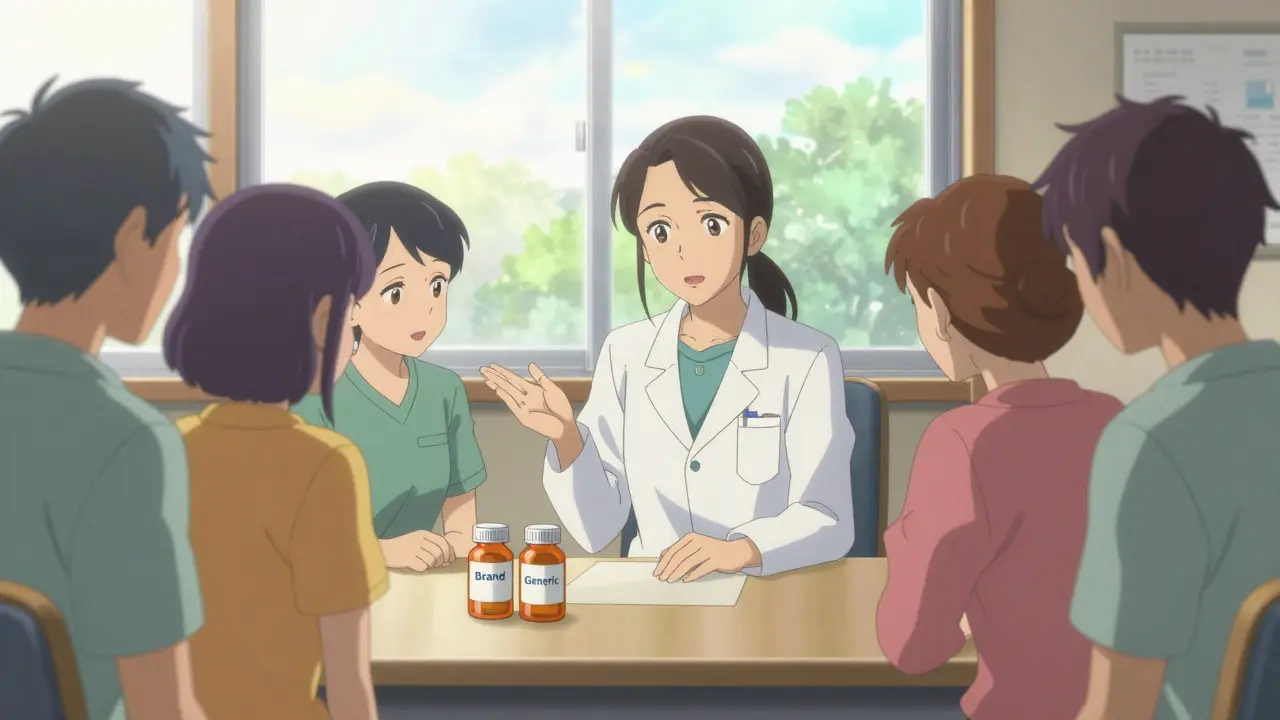
Every year, nearly half of all employees taking prescription meds skip doses, delay refills, or quit altogether. It’s not laziness. It’s cost. And it’s killing productivity - and lives. The CDC says better medication adherence could prevent 125,000 deaths annually and save the U.S. healthcare system up to $300 billion. But who’s actually stepping in to fix this? Not doctors. Not HR. Pharmacists.
Why Pharmacists Are the Missing Link in Workplace Wellness
Workplace wellness programs used to mean gym memberships and standing desks. Now, they’re evolving into real health interventions - and pharmacists are leading the charge. These aren’t just the people who hand out pills. They’re clinical experts trained to spot drug interactions, cut unnecessary costs, and make sure employees actually take their meds. The science is clear: generics work just as well as brand-name drugs. The FDA requires them to have the same active ingredients, strength, dosage form, and absorption rate. But most employees still think generics are "weaker" or "cheap knockoffs." That’s where pharmacists come in. They’re the only healthcare professionals who see every prescription, talk to patients daily, and can explain, in plain language, why ibuprofen is the same as Advil - just $5 instead of $20.How Pharmacists Actually Promote Generics at Work
Pharmacists in workplace wellness programs don’t wait for employees to ask. They proactively engage. Here’s how:- Medication Therapy Management (MTM): Pharmacists sit down with employees - in person or via video - and review every medication they’re taking. They flag duplicates, check for affordability, and suggest generics where appropriate. One study found MTM programs boosted adherence by 15-20% when pharmacists were involved.
- Point-of-care education: At on-site clinics or telehealth kiosks, pharmacists hand out simple brochures showing side-by-side comparisons of brand and generic drugs. They use the FDA’s Orange Book to prove therapeutic equivalence - no jargon, no fluff.
- Cost transparency: Pharmacists show employees exactly how much they’re saving. For example, switching from brand-name metformin to generic can cut monthly costs from $80 to $4. That’s not a minor detail - it’s the difference between staying on treatment or quitting.
- Personal stories: Pharmacists don’t just lecture. They share. "I take a generic blood pressure pill myself," says one pharmacist. "My dad’s on generic diabetes meds. They saved his life - and our wallet."
Companies like Walmart now have pharmacists embedded in their Health Centers, working directly with employer groups. Preliminary data shows a 23% drop in prescription costs among employees who got pharmacist-led counseling.
Why Employers Are Paying Attention
Employers aren’t doing this out of kindness. They’re doing it because it saves money - and keeps people working. - Generic drugs make up 90% of prescriptions filled in the U.S. but only 22% of total drug spending. That’s a massive gap. - Pharmacy Benefit Managers (PBMs) report pharmacists can cut prescription costs by 20-30% just by swapping brands for generics where appropriate. - 84% of large employers now use three-tier drug formularies that charge lower copays for generics. But without pharmacist intervention, employees often don’t know how to use them. The ROI is undeniable. According to the American Pharmacists Association, every $1 spent on pharmacist-led medication optimization returns $7.20 in reduced medical costs and fewer lost workdays. That’s not a marketing claim - it’s data from real programs.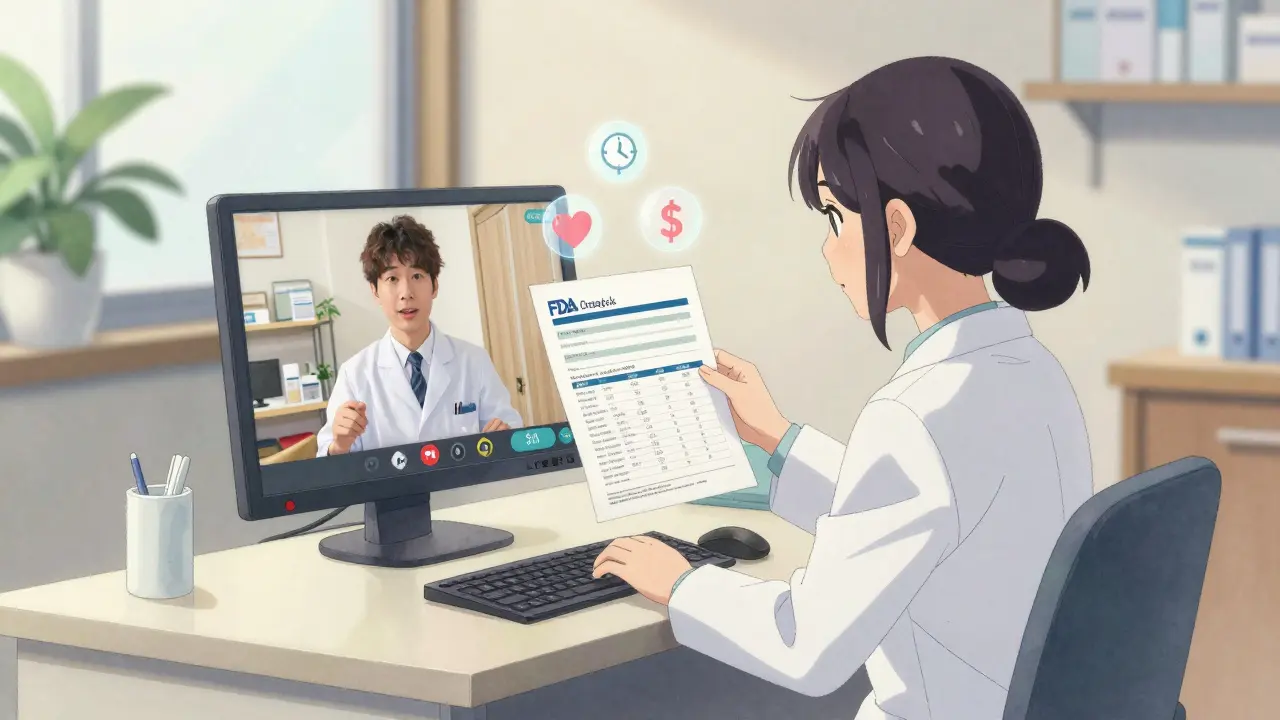
What’s Holding Pharmacists Back?
It’s not lack of skill. It’s lack of access. In 49 states, pharmacists can substitute generic drugs without a new prescription - if they’re therapeutically equivalent. But in many places, they still need the doctor’s okay to switch from brand to generic. That’s called a "therapeutic interchange," and it kills speed and savings. One pharmacist on Reddit wrote: "In my state, I can substitute generics, but I have to get prescriber approval for therapeutic interchange. That defeats the whole purpose." Hospital pharmacists often focus on clinical outcomes over cost. Community pharmacists? They care about access. That’s why workplace programs - especially those run by PBMs like CVS Caremark or OptumRX - are seeing the best results. These programs give pharmacists the authority, tools, and time to act.What Employees Really Think
When employees understand the facts, they switch. - 92.5% of pharmacists say generics improve medication access - and 78% of employees say they feel more confident using generics after a pharmacist consultation. - A survey found that 50% of patients who switched from brand to generic did so because a pharmacist explained it was safe. - People with chronic conditions - diabetes, high blood pressure, asthma - are the most likely to benefit. Missing a dose of insulin or a blood pressure pill isn’t just inconvenient. It’s dangerous. One pharmacist, Joanne Hanna, RPh, shares: "I tell patients I take generic drugs myself. That’s the moment they relax. They realize it’s not about money - it’s about trust."
What’s Next? The Future Is Already Here
The 2024 PBM Transparency Act is forcing pharmacy benefit managers to stop hiding markups. That means employers are demanding real value - not just lower sticker prices. Pharmacists are the only ones who can deliver it. By 2027, the American Pharmacists Association predicts 85% of large employer wellness programs will include pharmacist-led medication optimization. Why? Because it works. Walmart’s Health Centers, Kaiser Permanente’s integrated clinics, and even smaller employers are now hiring pharmacists not just to dispense - but to advise, educate, and save money. The role isn’t changing. It’s expanding.How Your Company Can Start
If you’re an employer or HR leader, here’s how to begin:- Partner with your PBM. Ask if they include clinical pharmacists in wellness offerings. If not, push for it.
- Offer on-site or virtual MTM sessions. Make them voluntary, but easy to access.
- Train managers to promote the program. Don’t just send an email - talk about it in team meetings.
- Use real examples. Share stories of employees who saved hundreds on meds - and stayed healthy.
- Track outcomes. Measure adherence rates, prescription costs, and absenteeism before and after.
It doesn’t take a big budget. It takes a shift in thinking. Stop treating pharmacy as a transaction. Treat it like care.
Frequently Asked Questions
Are generic drugs really as effective as brand-name drugs?
Yes. The FDA requires generic drugs to have the same active ingredients, strength, dosage form, and absorption rate as brand-name drugs. They must be bioequivalent - meaning they deliver 80-125% of the same amount of medicine into the bloodstream. Generics are tested just as rigorously. The only differences are inactive ingredients (like fillers) and packaging - which have no effect on how the drug works.
Why do some employees still refuse to take generics?
Mostly because of misinformation. Many believe generics are "inferior" or "made overseas," or that brand-name drugs are "stronger." Pharmacists counter this by showing FDA approval data, explaining manufacturing standards, and sharing personal stories - like taking generics themselves. Trust is built through conversation, not brochures.
Can pharmacists switch my medication without my doctor’s approval?
In 49 states, pharmacists can substitute a generic for a brand-name drug if it’s listed as therapeutically equivalent in the FDA’s Orange Book. But they can’t switch from one brand to another brand - or from a brand to a different generic - without prescriber approval. This is called a therapeutic interchange, and it’s where many programs hit roadblocks. Some states require patient consent, others require documentation. It varies.
Do generic drugs cost less because they’re lower quality?
No. Generics cost less because manufacturers don’t spend millions on advertising, branding, or patent litigation. The active ingredient is identical. In fact, many generics are made in the same factories as brand-name drugs - just sold under a different label. The FDA inspects all manufacturing sites equally, whether they make brand or generic.
How do I know if my employer’s wellness program includes pharmacist services?
Check your benefits portal or ask your HR department if they offer Medication Therapy Management (MTM) through your pharmacy benefit manager. Look for terms like "pharmacist consultation," "drug review," or "cost-saving program." If it’s not listed, ask why - and suggest it. Employee demand is what drives change.
Comments
Pharmacists are now the new wellness gurus lol
The data presented here is compelling and rigorously sourced. Pharmacists, as medication experts, are uniquely positioned to bridge the gap between clinical efficacy and patient adherence. Their involvement in workplace wellness represents a paradigm shift from transactional pharmacy to integrative care. The ROI metrics cited-$7.20 returned per $1 invested-are not merely anecdotal but derived from peer-reviewed program evaluations. This model deserves scalable implementation across all employer-sponsored health plans.
I’ve seen this firsthand at my dad’s workplace. The pharmacist came in once a month, sat with people one-on-one, and just… talked. No pressure. No sales pitch. Just, ‘Hey, your blood pressure med costs $75 a month. This one’s $4 and does the same thing.’ My dad switched and hasn’t missed a dose since. It’s not magic. It’s just someone who cares enough to explain it.
It’s funny how we treat medicine like it’s a luxury item. In many cultures, the pharmacist is the first and last stop for health advice-no doctor needed. Here, we’ve turned them into pill dispensers because we’re scared of responsibility. But when you give pharmacists real authority, they become healers again. This isn’t just cost-saving. It’s cultural repair.
Oh sure, let’s just hand out generics like candy and pretend everyone’s fine. What about the people who actually need the brand? The ones whose bodies react weirdly to fillers? You think pharmacists are saints? They’re just following PBM scripts. And don’t get me started on how they push generics to cut costs while the real problem is insulin pricing. This whole thing is a distraction.
Generic = cheaper. Brand = better. That’s basic. You want me to take a pill made in a factory that also makes laundry detergent? No thanks. And don’t tell me the FDA says it’s the same. They also said aspartame was fine. Wake up.
This is the most meaningful workplace wellness initiative I’ve seen in a decade. Pharmacists don’t just reduce costs-they restore dignity. When someone understands why their medication works, and why it’s affordable, they reclaim control over their health. That’s not a program. That’s empowerment.
While the economic arguments are persuasive, the human element cannot be overstated. Pharmacists provide continuity of care that physicians, burdened by time constraints, often cannot. Their daily interactions foster trust, which directly correlates with adherence. This is not merely a cost-saving strategy-it is a model of patient-centered care that should be institutionalized.
i just had my prescrption switched to generic and now i feel weird all the time like my brain is slowwwww
India has been using generics for 40 years. No one dies. No one complains. Everyone takes them. Why is America so scared of a pill that costs less than a coffee?
Who funds these PBM programs? Big Pharma? They own the generics too. This is just a clever way to make you think you’re saving money while they just switch the label. The real villains are the CEOs who profit from your confusion. You think a pharmacist cares? They’re paid by the same system that makes you choose between insulin and rent.
Let me tell you something. The entire healthcare system is a pyramid scheme. Pharmacists are the foot soldiers. They’re told to push generics because the system wants to keep you alive but not too healthy. Why? Because if you’re healthy, you don’t need surgery, you don’t need scans, you don’t need more meds. And that’s bad for business. So they give you a $4 pill and call it wellness. Meanwhile, the real cure-the one that fixes the root causes-is buried under layers of profit and paperwork. This isn’t progress. It’s performance art.