

The Power of Words in Pharmacy
Imagine you are sitting in a doctor’s office. You have been taking a specific heart medication for years. It works. You trust it. Then, the doctor hands you a prescription for a different-looking pill with a strange name. It is cheaper, but does it work the same? Your stomach drops. This is not just about cost; it is about trust. The way your clinician talks to you in that moment can decide whether you take the medicine or toss it in the bin.
We often think that generic medications are accepted simply because they save money. But the truth is far more psychological. Research shows that how healthcare providers communicate about generics is the single biggest factor in whether patients actually take them. When doctors and pharmacists explain things well, acceptance rates jump by nearly 40%. When they stay silent, skepticism wins. This article breaks down why this happens, the science behind it, and how better talk leads to better health.
Why Patients Doubt Generics (Even When They Shouldn't)
Let’s be honest: many patients believe brand-name drugs are superior. A 2015 study published in Dove Press found that almost 30% of people agreed that brand medicines are more effective than generics. This belief persists despite overwhelming evidence to the contrary. The U.S. Food and Drug Administration (FDA) requires generic drugs to meet strict bioequivalence standards. Specifically, the drug must deliver between 80% and 125% of the active ingredient into the bloodstream compared to the brand name. In practical terms, this means the clinical effect is identical.
So why the doubt? It comes down to brand psychology. We are wired to associate higher prices with higher quality. If a drug costs $10 instead of $100, our brains whisper, "What did they cut out?" This is a cognitive bias, not a medical fact. However, without clear intervention from a trusted professional, this bias overrides logic. Patients don’t need complex chemistry lessons; they need reassurance from an authority figure they trust. That authority figure is usually their clinician.
The Communication Gap: Silence Is Not Golden
Here is the hard truth: most clinicians aren’t talking enough about generics. The same Dove Press study revealed that over half of patients (53.7%) said their physicians never or seldom discussed generic options with them. Pharmacists were slightly better, but still, 52% reported little to no discussion. This silence is costly. When a pharmacist hands a patient a different pill without explanation, the patient assumes something is wrong. Maybe it’s a mistake. Maybe it’s inferior. The assumption fills the void left by the lack of information.
Consider the data from the American Pharmacists Association in 2020. They surveyed 2,500 patients and found a stark difference based on conversation. When pharmacists gave a thorough explanation about the generic medication, 92% of patients accepted the substitution. Without that explanation, only 68% accepted it. That is a 24-point gap caused entirely by words. It proves that communication is not just "nice to have"; it is a critical part of the treatment plan.
The Nocebo Effect: How Fear Creates Symptoms
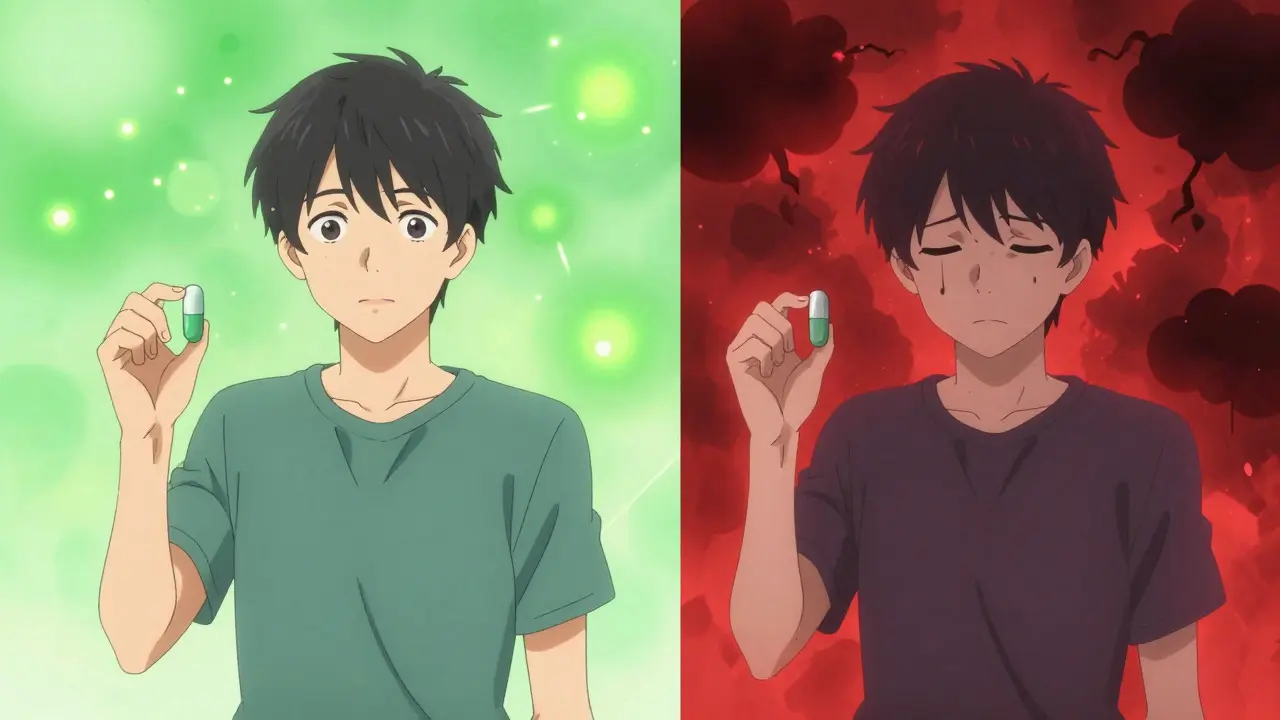
This brings us to one of the most fascinating aspects of brand psychology: the nocebo effect. You likely know the placebo effect, where belief in a treatment makes you feel better. The nocebo effect is the opposite. If you expect a negative outcome, you will experience negative symptoms. This isn’t "all in your head" in the sense that it’s imaginary; the brain releases stress hormones and alters pain perception, creating real physical discomfort.
A pivotal 2019 study in the Journal of the American Medical Association (JAMA) highlighted this danger. Researchers followed 412 patients with chronic conditions who switched to generics. Those who received standard, minimal information reported more adverse events. However, patients whose clinicians emphasized the rigorous FDA approval process and assured them of the drug’s safety reported 28% fewer side effects. Dr. Aaron Kesselheim, a professor at Harvard Medical School and lead author of the study, put it bluntly: expectation of harm leads to the experience of real, perceived negative symptoms. When a clinician says, "This generic is fine," but sounds unsure, the patient hears, "This might hurt you." And then, it does.
What Effective Communication Looks Like
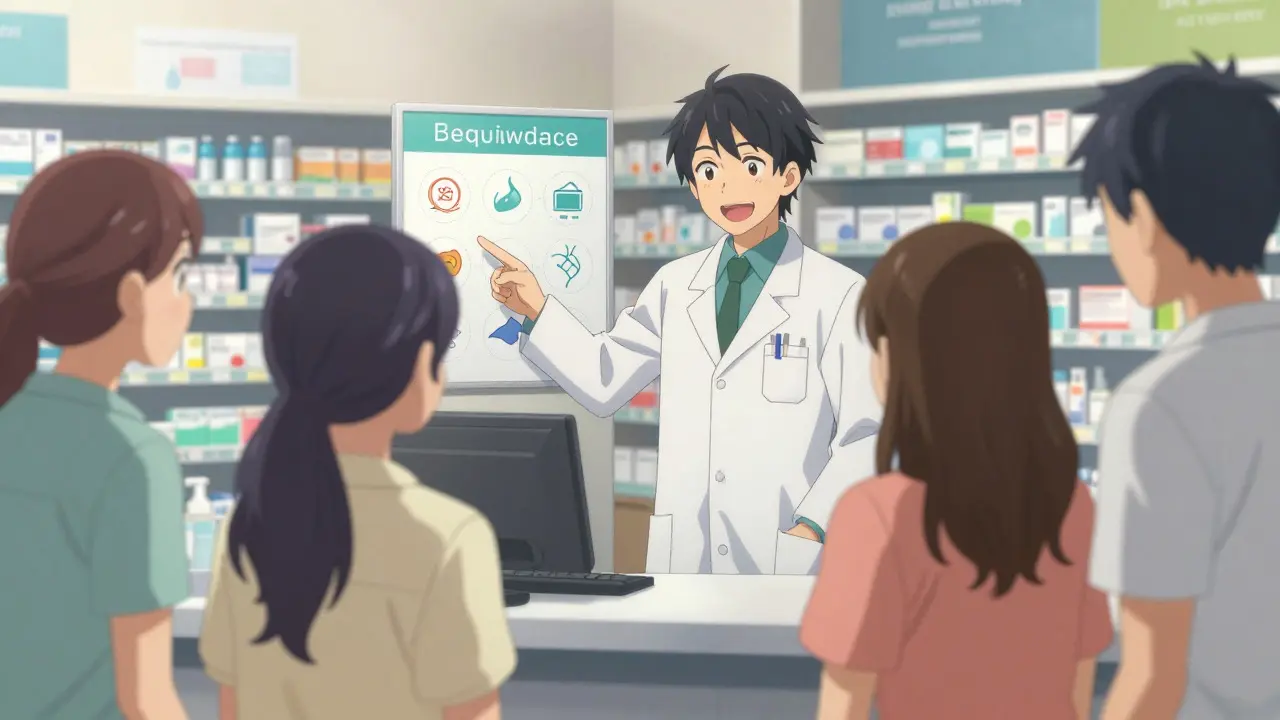
Not all conversations are created equal. A 2022 analysis in U.S. Pharmacist identified three pillars of effective generic communication. First, clinicians must show authoritative understanding of regulatory standards. Second, they must use confident endorsement language. Third, they must proactively address the nocebo effect. Let’s break these down into actionable steps.
- Explain the Science Simply: Don’t just say "it’s the same." Explain the 80-125% bioequivalence rule in plain English. Tell them the active ingredient is identical. Mention that the FDA tests every batch.
- Use Confident Language: Avoid tentative phrases like "Let’s try this generic and see how it goes." Instead, say, "I prescribe this generic for my own family. It is clinically equivalent to the brand name." Confidence is contagious.
- Address Cost Transparently: Generics typically cost 80-85% less than brand names. Acknowledge this benefit. It validates the choice as smart and responsible, not just cheap.
- Normalize the Switch: Remind patients that 90% of prescriptions filled in the U.S. are generics. They are joining the majority, not being singled out.
These four elements form a script that any clinician can adapt. The goal is to build positive expectations. When a patient expects success, they are more likely to adhere to the regimen and report fewer side effects.
| Strategy | Patient Outcome | Data Source |
|---|---|---|
| No Explanation | 68% Acceptance Rate | APhA 2020 Survey |
| Thorough Explanation | 92% Acceptance Rate | APhA 2020 Survey |
| Standard Substitution Info | Higher Adverse Event Reports | JAMA 2019 Study |
| FDA Process Emphasis | 28% Fewer Adverse Events | JAMA 2019 Study |
| Culturally Competent Talk | 41% Reduced Skepticism | Health Affairs 2021 |
Tailoring the Message: Culture and Context Matter
One size does not fit all when it comes to communication. Demographics play a significant role in how messages are received. An NIH survey from 2016 involving 3,500 patients showed that non-Caucasian patients were 1.7 times more likely to express skepticism about generics than Caucasian patients. Additionally, patients with lower socioeconomic status were more likely to prefer brand names, possibly due to past experiences with inconsistent care or targeted marketing by pharmaceutical companies.
This doesn’t mean these patients are irrational. It means they may have different trust barriers. A 2021 study in Health Affairs found that culturally competent communication reduced skepticism by 41% among non-Caucasian patients. What does this look like in practice? It means acknowledging historical disparities in healthcare, listening to specific concerns without judgment, and building rapport before pushing the prescription. It also means recognizing that some communities have been targeted by sophisticated marketing campaigns that sow doubt. As Dr. Jerry Avorn noted, overcoming deep-seated mistrust requires more than a quick sentence; it requires relationship-building.
Real-World Examples: Success vs. Failure
To understand the stakes, let’s look at real patient experiences shared online. On Reddit’s r/pharmacy community, a highly upvoted post described a cardiologist who spent 10 minutes explaining why generic amlodipine was identical to Norvasc. He showed the patient the FDA data and mentioned he took generics himself. Result? The patient stayed on the medication for two years with no issues. The key here was time and transparency.
Contrast this with a negative review on Healthgrades from June 2022. A patient complained that their pharmacist handed them a different pill without explanation. When the patient experienced headaches, the pharmacist dismissed it, saying, "Some people react to generics." This vague response fueled anxiety. The patient stopped taking the medication for three weeks. The symptom might have been minor, but the lack of support turned it into a crisis. These stories highlight that communication is not just about initial acceptance; it’s about ongoing adherence.
Barriers to Better Communication
If communication is so important, why is it lacking? Clinicians face real hurdles. Time is the biggest enemy. A 2020 AMA time-motion study found that doctors spend an average of just 1.2 minutes per patient interaction. In that window, covering diagnosis, treatment, and insurance is tough. Adding a detailed generic education session feels impossible.
Knowledge gaps are another issue. A 2019 survey found that only 54% of physicians could correctly answer questions about FDA bioequivalence standards. If a doctor isn’t confident in the facts, they won’t be confident in the conversation. Finally, there’s the confidence deficit. Nearly 40% of clinicians expressed uncertainty about generic efficacy for complex conditions like epilepsy. To fix this, systems like Kaiser Permanente have implemented mandatory training and standardized scripts. Their "Generic First" initiative achieved 94% generic utilization and saved $1.2 billion annually. Proof that structure and training work.
The Future of Generic Trust
The landscape is shifting. Recognizing the power of communication, organizations are acting. The FDA launched its Generic Drug Communication Initiative in 2023, providing materials in 12 languages. The American Medical Association integrated generic communication metrics into physician performance evaluations in 2024. Even technology is helping; Epic Systems introduced a "Generic Confidence Score" in April 2024, prompting clinicians to address key communication points during electronic health record interactions.
Looking ahead, the CDC plans to incorporate generic medication communication into national health literacy standards by 2025. Medicare Part D redesigns may tie reimbursement to demonstrated communication effectiveness. These changes signal a new era: communication is no longer optional soft skill. It is a measurable, billable, and vital component of clinical care. As complex generics like inhalers and injectables enter the market, the need for clear, confident dialogue will only grow.
Next Steps for Patients and Providers
If you are a patient, don’t hesitate to ask questions. Ask your doctor or pharmacist: "Is this generic bioequivalent to the brand?" "What are the inactive ingredients?" "Have you seen any issues with this specific manufacturer?" You have the right to know. If you are uncomfortable, seek a second opinion or a different pharmacy.
If you are a provider, start small. Use the four-element framework: explain the science, use confident language, address cost, and normalize the switch. Train your staff. Use available toolkits from organizations like the APhA. Remember, your words shape reality. By communicating effectively, you aren’t just saving money; you are preventing suffering caused by the nocebo effect and ensuring patients get the life-saving treatments they need.
Are generic medications really as effective as brand-name drugs?
Yes. The FDA requires generic drugs to demonstrate bioequivalence, meaning they must deliver 80-125% of the active ingredient into the bloodstream compared to the brand name. Clinical studies consistently show no significant difference in therapeutic effect between approved generics and their brand-name counterparts.
What is the nocebo effect in the context of generic drugs?
The nocebo effect occurs when a patient's negative expectations about a treatment cause them to experience actual adverse symptoms. If a clinician expresses doubt about a generic, the patient may perceive side effects that are not physically present, leading to discontinuation of therapy.
Why do some patients prefer brand-name medications despite the cost?
Preferences often stem from brand psychology, where higher price is associated with higher quality. Additionally, lack of communication from healthcare providers, cultural factors, and targeted marketing by pharmaceutical companies can reinforce skepticism about generics.
How much can switching to generics save?
Generics typically cost 80-85% less than brand-name equivalents. In the U.S., generic drugs represent 90% of prescriptions filled but only 23% of total drug spending, generating billions in annual savings for patients and the healthcare system.
What should I ask my doctor if I am worried about a generic prescription?
Ask about the bioequivalence data, the manufacturer of the generic, and any known differences in inactive ingredients. Request that your doctor share their personal experience with the generic version. Clear, confident answers can alleviate most concerns.