
Have you ever watched a patient walk away from the counter with a brand-name prescription because they refused to accept the generic alternative? It’s a frustrating moment that costs everyone money and potentially compromises care. You know the science is solid. You know Generic medications are drugs containing the same active ingredients as their brand-name counterparts but sold at a lower cost. Yet, despite this knowledge, nearly one in four patients still express serious doubts about switching. This hesitation isn’t just stubbornness; it’s a breakdown in trust and communication.
The problem isn’t usually the pill itself. Research shows that 27% of patients express concerns about generic substitution, often stemming from deep-seated misconceptions rather than clinical evidence. When we fail to address these fears effectively, we lose an opportunity to provide optimal pharmaceutical care. The good news? You have the power to change this dynamic. By shifting your approach from simple information transfer to building therapeutic relationships, you can turn hesitation into acceptance.
Understanding the Root of Generic Hesitation
To fix the problem, you first need to understand what’s really going on in the patient’s mind. Most people don’t reject generics because they’ve read a scientific paper. They reject them because something feels "off." A major factor is visual. According to research from the University of Michigan, 78% of patients cite pill appearance as a primary concern. If their usual blue oval turns into a white rectangle, their brain screams "different drug," even if the chemistry is identical.
Then there’s the myth of potency. Many patients believe generics are "watered down" or contain less active ingredient. In reality, the Food and Drug Administration (FDA) requires generics to demonstrate bioequivalence between 80-125% compared to the brand name. This means the amount of drug absorbed by the body must fall within a very tight range. However, only 32% of patients are aware of these rigorous standards. When you don’t bridge that knowledge gap, fear fills the void.
Distrust in manufacturing also plays a role. Some patients assume that because generics are cheaper, corners were cut in production. They don’t realize that the Hatch-Waxman Act, passed in 1984, established strict guidelines ensuring that generic manufacturers meet the same quality standards as brand-name companies. Without explaining this regulatory backbone, price savings can look like quality sacrifices.
The Power of Specific Communication Frameworks
Telling a patient "it’s the same thing" rarely works. In fact, dismissive language can backfire, reducing acceptance rates to as low as 31%. Instead, structured communication frameworks yield significantly better results. One of the most effective methods is the Ask-Tell-Ask framework.
- Ask: Start by asking the patient what they already know or feel about the medication. "What have you heard about generic versions of this drug?" This opens the door and shows respect for their perspective.
- Tell: Provide clear, concise information tailored to their specific concern. If they’re worried about strength, explain bioequivalence. If they’re worried about cost, explain the savings without devaluing the drug.
- Ask: Verify comprehension by asking them to repeat back their understanding. "So, does that make sense regarding how the generic works in your body?"
A landmark study tracked over 1,200 patients and found that providers using this method achieved a 68% generic acceptance rate, compared to just 42% with standard communication. Another powerful technique is the VALUE technique: Validate concerns, Acknowledge feelings, Listen actively, Understand perspective, and Educate with empathy. This approach respects the patient’s emotions before introducing facts, creating a safer space for dialogue.

Timing and Phrasing: Small Changes, Big Impact
When and how you say things matters immensely. Data indicates that 89% of patients accept generic substitution when educated at the point of prescribing, versus only 63% when education happens only at the pharmacy counter. As pharmacists, we often get stuck in the reactive mode, waiting for the patient to complain. But proactive explanation-before the patient even voices doubt-boosts acceptance to 82%.
Your word choice also carries weight. Avoid phrases like "This is cheaper." While true, framing the decision solely around cost can inadvertently signal lower quality. Instead, try saying, "This medication contains exactly the same active ingredient but without the brand name marketing costs." Studies show this phrasing increases acceptance by 29%, whereas cost-focused statements improve it by only 7%.
Personal endorsement is another high-impact strategy. When a provider says, "I prescribe this generic for my own family," acceptance rates jump by 37 percentage points. Patients crave personal validation. They want to know that someone who understands medicine trusts this option enough to use it themselves.
Visual Aids and Practical Tools
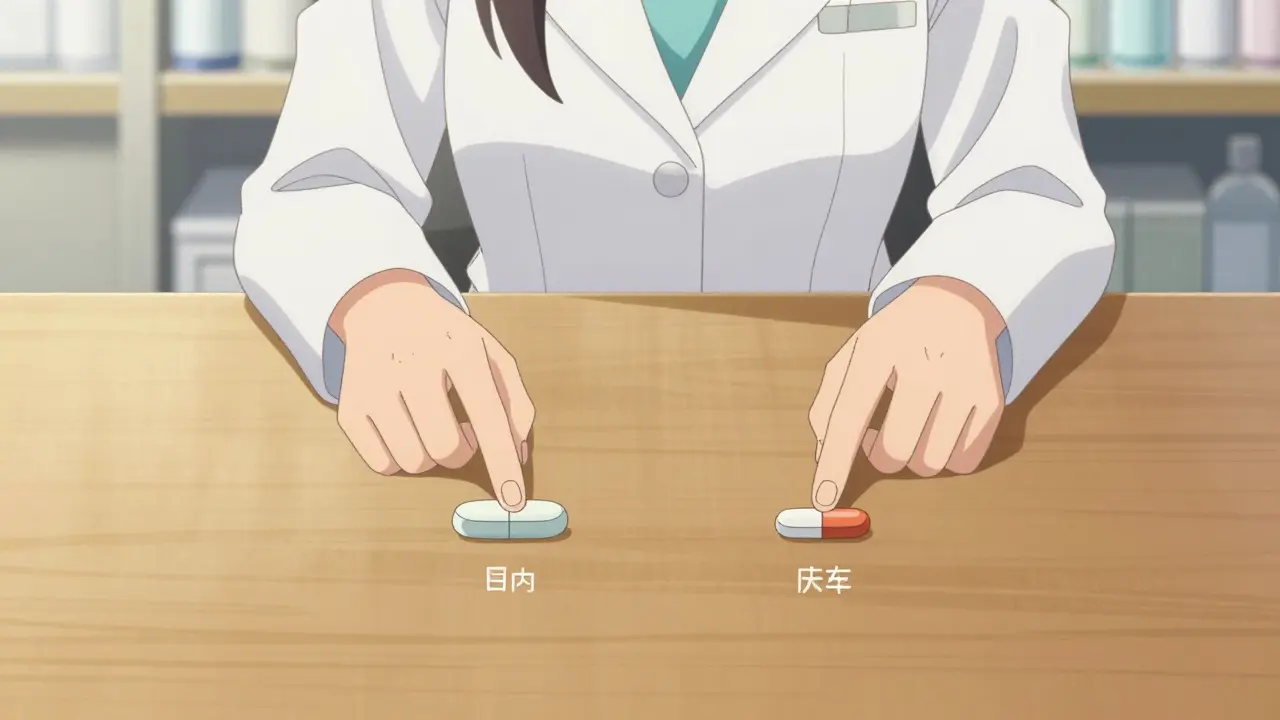
Sometimes words aren’t enough. Visual comparisons can dismantle misconceptions instantly. A survey found that 68% of patients would accept generics if shown visual comparison tools. Simple aids like side-by-side pill images or brochures showing the manufacturing process can be game-changers.
| Strategy | Key Action | Acceptance Rate Impact |
|---|---|---|
| Ask-Tell-Ask | Structured dialogue verifying understanding | +26% vs standard |
| Personal Endorsement | "I use this for my family" | +37% increase |
| Proactive Explanation | Addressing concerns before they arise | 82% acceptance |
| Dismissive Language | "It's the same, just cheaper" | 31% acceptance (low) |
| Teach-Back Method | Patient explains concept in own words | Increases from 54% to 81% |
The FDA offers a variety of resources, including counter mats and videos demonstrating bioequivalence testing. Incorporating these into your workflow takes minimal time but builds significant credibility. For instance, showing a patient a video of how generic drugs undergo the same rigorous testing as brands can neutralize fears about manufacturing standards.
Overcoming Time Constraints and Building Trust
We all know time is tight. Primary care physicians often interrupt patients within 18 seconds, leaving little room for nuanced discussion. However, the American College of Clinical Pharmacy recommends allocating just 3-5 minutes per patient for generic substitution discussions. This brief investment pays off in adherence and trust.
Remember, patients don’t need an information librarian; they need a trusted advisor. Dr. Jane Smith, former ACCP President, noted that patients are inundated with conflicting health information online. Your role is to cut through the noise with clarity and confidence. When you incorporate patient goals into the conversation-such as, "Because you mentioned taking multiple pills is difficult, this generic allows us to simplify your routine while saving money"-you align the switch with their personal needs, not just the pharmacy’s bottom line.
Documentation is also evolving. Under recent guidelines, documenting generic substitution discussions using standardized terminology is increasingly important. This not only ensures continuity of care but also protects you legally by showing that informed consent was sought and provided.
Future Directions in Patient Education
The landscape of generic communication is evolving. Digital toolkits now offer 3D pill comparison tools and virtual reality demonstrations of manufacturing processes. Pilot programs have shown a 29% increase in acceptance when these interactive tools are used. Additionally, AI-driven strategies are being tested to adapt communication styles to individual patient belief profiles.
As healthcare moves toward value-based models, effective communication about generics becomes even more critical. With generics representing over 90% of prescriptions dispensed, every successful substitution contributes to systemic savings and improved access to care. By mastering these communication strategies, you’re not just filling prescriptions; you’re building healthier, more trusting relationships with the people you serve.
Why do patients hesitate to take generic medications?
Patients often hesitate due to misconceptions about efficacy, differences in pill appearance, and distrust in manufacturing standards. Many believe generics are "weaker" or less safe, despite rigorous FDA bioequivalence requirements ensuring they perform identically to brand-name drugs.
What is the Ask-Tell-Ask communication framework?
The Ask-Tell-Ask framework involves three steps: First, ask the patient about their current understanding or concerns. Second, tell them clear, relevant information addressing those concerns. Third, ask them to verify their comprehension by repeating back key points. This method has been shown to significantly increase generic acceptance rates.
How can pharmacists address concerns about pill appearance?
Pharmacists can use visual aids such as side-by-side pill comparisons or digital tools showing that different shapes/colors do not affect efficacy. Explaining that inactive ingredients (which determine appearance) vary while active ingredients remain identical helps reassure patients.
Is it better to discuss generics at prescribing or dispensing?
Discussing generics at the point of prescribing is significantly more effective, with 89% acceptance rates compared to 63% when discussed only at dispensing. Proactive communication prevents hesitation from forming in the first place.
What should pharmacists avoid saying when recommending generics?
Avoid dismissive phrases like "It's the same drug, just cheaper" or focusing solely on cost. These approaches can imply lower quality. Instead, emphasize identical active ingredients, rigorous testing standards, and personal endorsement if applicable.
How does bioequivalence ensure generic safety?
Bioequivalence requires generics to demonstrate that 80-125% of the drug is absorbed by the body similarly to the brand name. This narrow range ensures therapeutic equivalence, meaning the generic will work just as effectively and safely as the original medication.
Can personal endorsements influence patient decisions?
Yes, stating "I prescribe this generic for my own family" increases acceptance rates by 37 percentage points. Personal validation builds trust and reassures patients that the healthcare provider genuinely believes in the medication's quality.
What role do visual aids play in generic acceptance?
Visual aids are highly effective, with 68% of patients more likely to accept generics when shown comparison tools. Images, videos, and digital comparisons help demystify differences in appearance and illustrate manufacturing consistency.
How much time should be allocated for generic counseling?
The American College of Clinical Pharmacy recommends 3-5 minutes per patient for generic substitution discussions. This brief investment addresses concerns adequately and builds therapeutic relationships without significantly impacting workflow.
Are there legal requirements for documenting generic discussions?
Recent guidelines under GDUFA III mandate that generic substitution discussions be documented in patient records using standardized terminology. This ensures transparency, continuity of care, and legal protection for healthcare providers.