
Counterfeit medications are more common than you think
Every year, around 1 million people die from fake medicines, according to the World Health Organization. These aren’t just poor-quality copies-they’re dangerous fakes made in secret labs, often with toxic chemicals, wrong doses, or no active ingredient at all. You might think this only happens in faraway countries, but it’s happening right here-in your neighborhood, online, and even through social media ads.
Counterfeit versions of popular drugs like Ozempic®, Mounjaro®, Xanax, and OxyContin are flooding the market. They look identical to the real thing. Some even have the same color, shape, and logo. But inside? They could be laced with fentanyl, chalk, or rat poison. And if you’re taking them for diabetes, high blood pressure, or mental health, the consequences can be deadly.
What to look for: 7 clear warning signs
Most counterfeit pills are designed to fool you. But there are clues-if you know where to look.
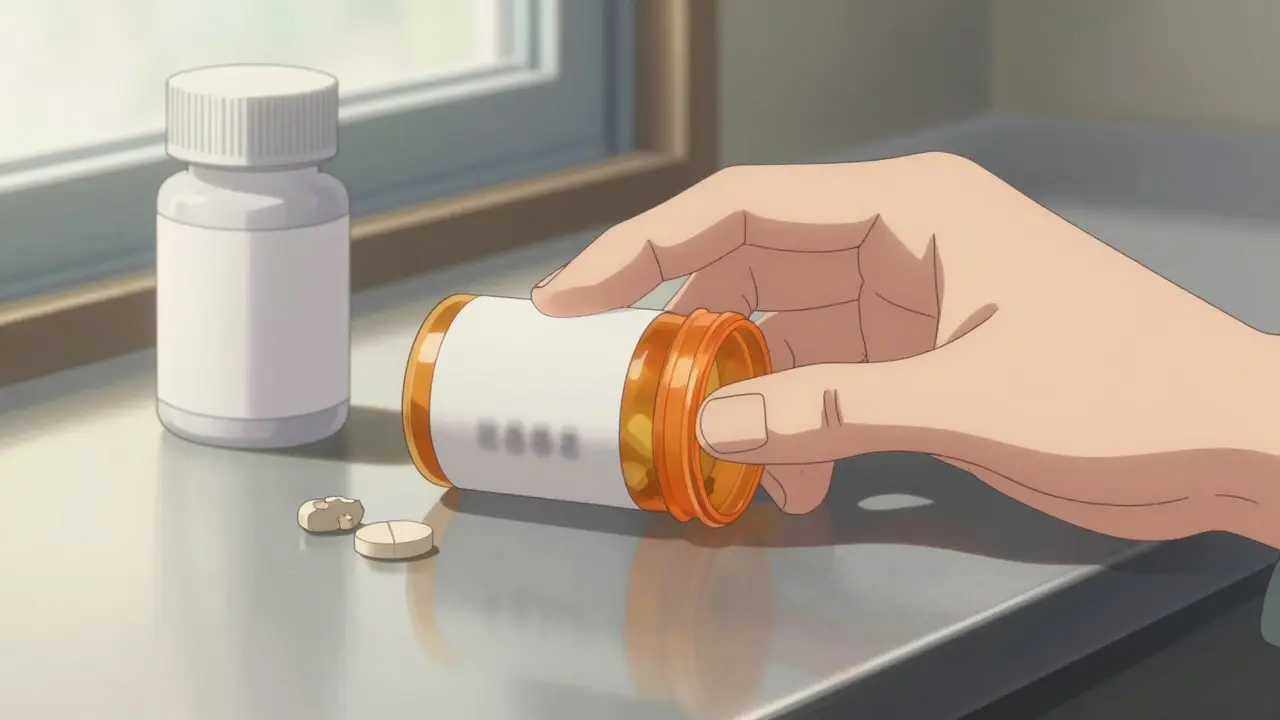
- Changes in appearance: If your pills suddenly look different-smaller, larger, lighter, darker, or with a new marking-it’s a red flag. Real medications are made with precision. Cracked, crumbly, or bubbled coatings? That’s not normal.
- Strange taste or smell: You know how your medication tastes. If it suddenly tastes bitter, metallic, or smells like plastic, stop taking it. Fake pills often use cheap fillers that alter flavor and odor.
- Poor packaging: Check the box. Are the fonts blurry? Is there a spelling error? Are the labels faded or crooked? Real pharmaceutical packaging uses high-quality printing. Fake ones often have mismatched colors, uneven edges, or wrong barcode placement.
- No lot number or expiration date: Legitimate medications always have a batch number and expiration date printed clearly on the box and bottle. If it’s missing, or if the date looks scratched or altered, don’t use it.
- Unusually low price: If you see Ozempic® or Adderall being sold for 70% off online, it’s not a deal-it’s a trap. Counterfeiters lure buyers with rock-bottom prices. Real pharmacies don’t slash prices like this.
- Buying from an unlicensed online pharmacy: Websites that don’t require a prescription, offer “no doctor visit” pills, or use strange domain names (like .xyz or .ru) are almost always illegal. The FDA says only buy from pharmacies that are licensed in your state and listed on the VIPPS program.
- New or unusual side effects: If you’ve taken your medication for months and suddenly feel dizzy, nauseous, or have chest pain after starting a new bottle, it could be fake. Report it to your pharmacist immediately.
Pfizer’s global security team says real pills always have a factory-made finish-smooth, even, and consistent. Fake ones often look hand-made: uneven edges, smudged letters, or powder leaking from capsules. One pharmacist in Birmingham reported a patient who found crystals inside a bottle of insulin-something no legitimate manufacturer would ever allow.
Where fake drugs come from
Counterfeit medications don’t appear out of nowhere. They’re made in hidden labs in China, India, and Eastern Europe, then shipped globally. Criminal networks use encrypted apps like Telegram and social media platforms to sell directly to consumers. You might get a DM saying, “Get Ozempic® for $50-no prescription needed.” It sounds easy. It’s lethal.
The National Association of Boards of Pharmacy found over 10,000 illegal websites selling fake GLP-1 weight-loss drugs in 2024. Many of these sites look professional-they even have fake FDA logos and customer testimonials. But they’re not regulated. They don’t store medicines properly. They don’t check your medical history. And they don’t care if you live or die.
Even legitimate-looking pharmacies can be compromised. Some get hacked or have employees who steal and resell real drugs, then replace them with fakes. That’s why you should always check your medication when you pick it up-even from your regular pharmacy.
How to buy safely: 5 steps to protect yourself
- Only use licensed pharmacies: In the UK and US, licensed pharmacies must be registered with government bodies. In the UK, check the General Pharmaceutical Council (GPhC) website. In the US, use the VIPPS program. Never buy from a website that doesn’t show a physical address and phone number.
- Never buy without a prescription: Any pharmacy offering prescription drugs without one is breaking the law. Even if you’ve used the same drug for years, your doctor must renew the prescription each time.
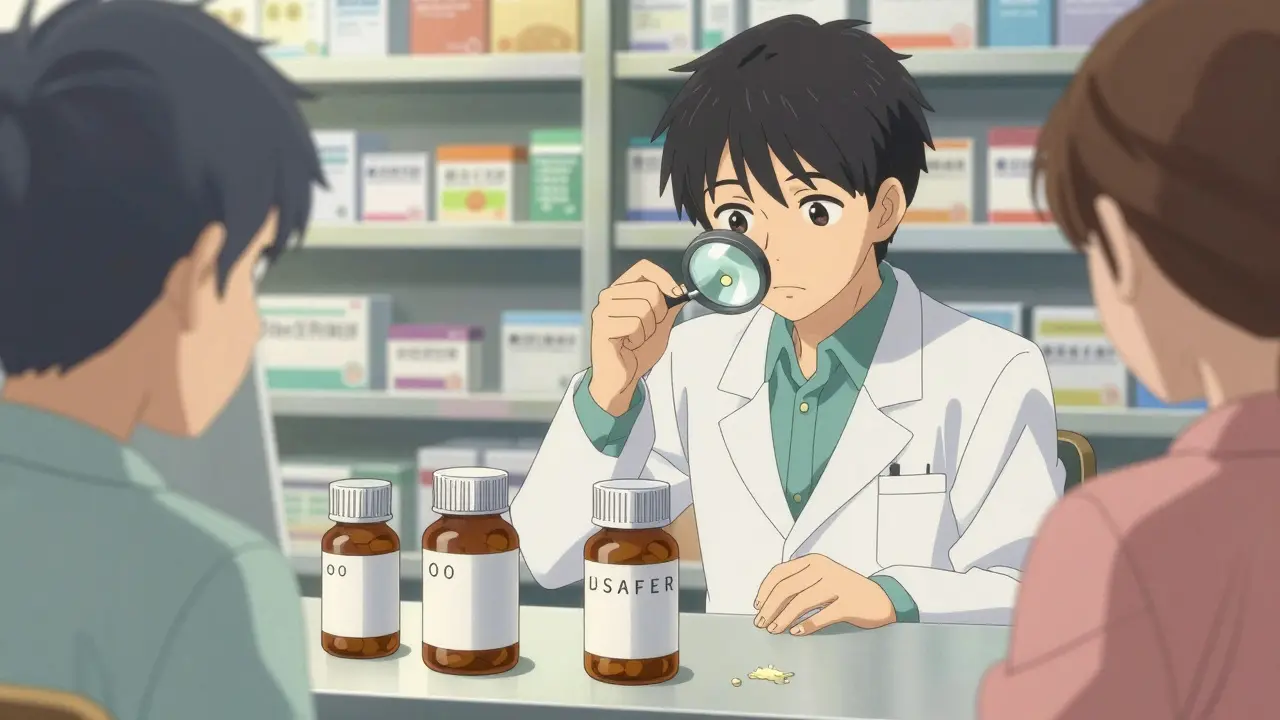
- Ask your pharmacist to verify: If something looks off, don’t hesitate to ask. Pharmacists are trained to spot fakes. They can compare your new bottle to previous ones, check lot numbers, and even contact the manufacturer.
- Don’t accept pills from friends or strangers: Someone giving you extra pills “to help out”? That’s not kindness-it’s a risk. Even if they’re using the same medication, the source could be unsafe.
- Report suspicious products: If you find a fake, tell your pharmacist, doctor, or local health authority. In the UK, report to the MHRA. In the US, report to the FDA. Companies like Eli Lilly and Pfizer track these reports to help shut down counterfeit operations.
What to do if you think you’ve taken a fake
If you suspect you’ve taken a counterfeit medication, stop using it immediately. Don’t flush it or throw it away-take it to your pharmacy. They can send it to authorities for testing.
Call your doctor right away. Tell them exactly what you took, when, and what symptoms you’re feeling. Fake drugs can cause delayed reactions. You might feel fine now, but toxic ingredients like fentanyl can build up over time.
Keep the packaging. Even if it looks fake, it’s evidence. Write down where you bought it, what the website looked like, and any messages you received. This helps law enforcement track down the source.
Why you can’t always tell by looking
Here’s the hard truth: even experts can’t spot every fake pill just by sight. The most sophisticated counterfeits are nearly identical to the real thing. That’s why the FDA and WHO stress that only laboratory testing can confirm authenticity.
But you don’t need to be a scientist to stay safe. You just need to be careful. If you follow the steps above, you’re already ahead of 90% of people who buy meds online. Don’t rely on your eyes. Rely on your habits: licensed pharmacies, prescriptions, and questions.
Real stories, real risks
In 2023, a woman in Manchester bought “Xanax” from a Facebook ad for £20 a pill. She took it for anxiety. Two days later, she collapsed. She was rushed to hospital with respiratory failure. Tests showed the pills contained fentanyl-20 times stronger than the dose she was used to.
In another case, a man in Birmingham bought counterfeit insulin online to save money. He didn’t realize the dose was too low. His blood sugar spiked for weeks. He ended up in the ICU with diabetic ketoacidosis. The insulin had no active ingredient at all.
These aren’t rare. They’re becoming routine.
What’s being done to stop it
Regulators are fighting back. The FDA’s Drug Supply Chain Security Act (DSCSA), fully active since November 2023, requires every prescription drug to have a unique digital code that can be traced from manufacturer to pharmacy. This makes it harder to slip fakes into the system.
Pharmaceutical companies are using holograms, tamper-evident seals, and digital verification apps. Pfizer, Eli Lilly, and Novo Nordisk all offer free tools to check your medication’s authenticity by scanning a code on the box.
But technology alone won’t fix this. It takes people-like you-asking questions, reporting suspicious products, and refusing to buy from shady sources.
Bottom line: Your health is worth the extra effort
Buying medication online might seem convenient. It might even seem cheap. But the cost of a fake pill isn’t just financial-it’s your life. There’s no shortcut to safety.
Stick with your doctor. Use licensed pharmacies. Ask questions. Report anything that feels off. You’re not being paranoid-you’re being smart.
Counterfeit drugs thrive in silence. Speak up. Protect yourself. And protect others.
How can I tell if an online pharmacy is legitimate?
Look for the VIPPS seal (in the US) or the GPhC registration (in the UK). Legitimate pharmacies require a valid prescription, display a physical address and phone number, and have a licensed pharmacist available to answer questions. Avoid sites that offer “no prescription needed” or have strange domain names like .xyz or .ru. The National Association of Boards of Pharmacy (NABP) has a list of verified pharmacies you can check.
Can fake pills look exactly like the real ones?
Yes. Some counterfeit pills are made using the same molds and coloring agents as the real drugs. They can match size, shape, color, and even imprint codes. That’s why visual inspection alone isn’t enough. If you notice even small differences-like a slightly different taste, texture, or packaging-contact your pharmacist. Only lab testing can confirm authenticity.
Are counterfeit drugs only a problem in developing countries?
No. While counterfeit drugs are more common in some regions, they’re a global issue. The WHO reports that fake medicines are found in North America, Europe, and the UK. Criminal networks use international shipping and online sales to reach consumers everywhere. In 2024, the FDA warned about fake Ozempic® and Mounjaro® pens circulating in the US-and similar cases have been reported in the UK.
What should I do if I find a fake medication?
Stop using it immediately. Take the medication and its packaging to your pharmacist or local health authority. In the UK, report it to the Medicines and Healthcare products Regulatory Agency (MHRA). In the US, report it to the FDA. Don’t throw it away-keep it as evidence. Your report helps authorities track down counterfeiters and protect others.
Can I trust generic medications?
Yes-if they’re from a licensed pharmacy. Generic drugs are legally required to meet the same safety and effectiveness standards as brand-name versions. The problem isn’t generics themselves-it’s counterfeit versions pretending to be generics. Always check the packaging, lot number, and pharmacy source. If it looks too cheap or comes from an unknown website, be cautious.
Why are counterfeit drugs so dangerous?
Because you never know what’s inside. Some fake pills contain no active ingredient, so your condition worsens. Others contain too much or the wrong drug-like fentanyl in a pill meant to be Xanax. Some have toxic chemicals like lead, arsenic, or rat poison. Even small amounts can cause poisoning, organ failure, or death. There’s no safety net with counterfeit drugs.
Comments
I bought some metformin from a site that looked legit but the pills were lighter than usual. Took them anyway. Ended up in the ER with nausea and dizziness. Never again. Always check the lot number. Even if it costs more, it's worth it.
so like... if i buy xanax off instagram for 10 bucks and it makes me feel normal, who cares if its fake? my anxiety is worse than the risk of dying. also why do we even have to pay 500 bucks for a script??
I work in a pharmacy and I can tell you this is real. We had a guy come in last month with a bottle of 'Ozempic' he bought from a Telegram link. The capsule was cracked and had this weird chalky residue. We called the manufacturer and it was a total fake. The worst part? He’d been taking it for three weeks. His HbA1c was through the roof. He didn’t even know he was at risk. Please, if you’re buying meds online, just stop. Talk to your doctor. We’re here to help, not judge.
I used to buy my insulin online to save money. Thought I was being smart. Then I got really sick. Turned out the dose was half of what I needed. Now I only get it from my local CVS. It’s more expensive but I’m alive. Don’t risk it.
you’re not paranoid if you check the packaging. seriously. i always look at the expiration date and the font. if it looks off i call the pharmacy. its not hard. just take 30 seconds. your life is worth it
I’m from India and we’ve got a ton of fake meds here too. But I’ve seen people die because they trusted a guy selling pills on WhatsApp. Please don’t be that person. Your family will never forgive you if you take a fake. Save your money, save your life.
Funny how the FDA says 'only lab testing confirms authenticity' but also tells you to 'trust your pharmacist.' So which is it? Also, why are these fake pills always found in the US but never in places like Germany or Canada? Hmm.
I just want to say thank you to the pharmacists out there. You’re the unsung heroes. I had a bad experience with a fake Adderall last year and my pharmacist spent an hour on the phone with the manufacturer to trace it. She didn’t even charge me. People like her make this system work.
I’ve been taking my blood pressure meds for 8 years. Last refill, the pill was a different shade of blue. I didn’t say anything. I just threw it out and called my doctor. She said I did the right thing. Don’t ignore the little things. They’re not little.
The fundamental issue here is not counterfeit drugs. It is the commodification of health. When we treat medicine as a product to be optimized for profit rather than a right to be protected, we create the conditions for exploitation. The state has abdicated its duty. The market has filled the void. And now we pay with our lives.
I know it sounds crazy but I started using the Pfizer authenticity app after reading this. Scans the QR code on the box and tells you if it’s real. Took me 10 seconds. My grandma uses it now too. She’s 78 and she thinks it’s magic. I told her it’s just tech. She said ‘honey, magic is just tech you don’t understand.’ Point taken.
I used to think this was just a third-world problem. Then my cousin in Ohio bought 'Mounjaro' off a TikTok ad. She lost 30 pounds in two weeks. Thought she was winning. Turns out the pill had no active ingredient. She gained it all back and then some. Now she’s on insulin. Don’t let your desperation make you stupid.
Okay but what if you’re poor? What if you can’t afford a $1000 insulin pen? What if your insurance won’t cover it? Are you just supposed to die? This whole article feels like it’s written by someone who’s never had to choose between food and medicine. You can’t just say 'use a licensed pharmacy' like it’s that easy. The system is broken. We need real solutions, not just warnings.