

You walk into your third specialist's office this year. The doctor asks for a full list of medicines you're taking. You try to recall them from memory, or maybe you check an old envelope in your bag. When you leave, you pick up three more prescriptions from the local pharmacy. Days later, you feel dizzy. It turns out two doctors prescribed conflicting drugs, but neither knew the other was treating you. This isn't just bad luck; it's a systemic gap we call fragmented care. With medication management becoming increasingly complex, coordinating between specialists, primary care doctors, and pharmacists is critical for your safety.
When we visit multiple clinicians, we assume they share records automatically. In many cases, especially across different hospitals or insurance networks, they don't. Research shows that communication breakdowns happen often when patients see three or more providers. These gaps can lead to serious harm. Understanding how to bridge these gaps yourself is the most effective way to protect your health.
The Real Cost of Poor Communication
We often think of medical errors as surgical accidents or misdiagnoses, but medication errors are arguably more common because they happen quietly. Studies from major health agencies indicate that preventable errors linked to medication communication contribute to thousands of deaths annually. This isn't hyperbole. When providers lack complete information, they may prescribe something that interacts dangerously with what another specialist already gave you.
Polypharmacy is a term used by clinicians describing the simultaneous use of five or more medications by a single patient. As the number of prescriptions grows, the risk of conflicts rises exponentially.Data from the Agency for Healthcare Research and Quality highlights that millions of people experience adverse drug events every year due to coordination failures. If you have chronic conditions, diabetes, or heart disease, you likely fall into this group. The financial toll is also massive, costing billions in avoidable hospitalizations. For you, the impact is immediate: confusion, side effects, and a feeling of being overwhelmed rather than cared for.
The Circle of Care Concept
To understand where things go wrong, imagine your care team as a circle. In a perfect world, you sit at the center, surrounded by your Primary Care Provider, specialists, and your pharmacist. They pass information to each other seamlessly. That ideal model is called the Circle of Care Modeling approach. Unfortunately, in reality, this circle has gaps. Doctors often send reports to other doctors, but the transmission is slow or incomplete.
Your role shifts from passive recipient to active coordinator. You aren't replacing the doctor; you are filling the digital gaps until better technology catches up. This involves specific steps to ensure everyone in your circle sees the same data. When you take ownership, error rates drop significantly. We've seen standardized communication protocols reduce mistakes by over half in coordinated settings. Here is how you replicate that success personally.
Building Your Medication Command Center
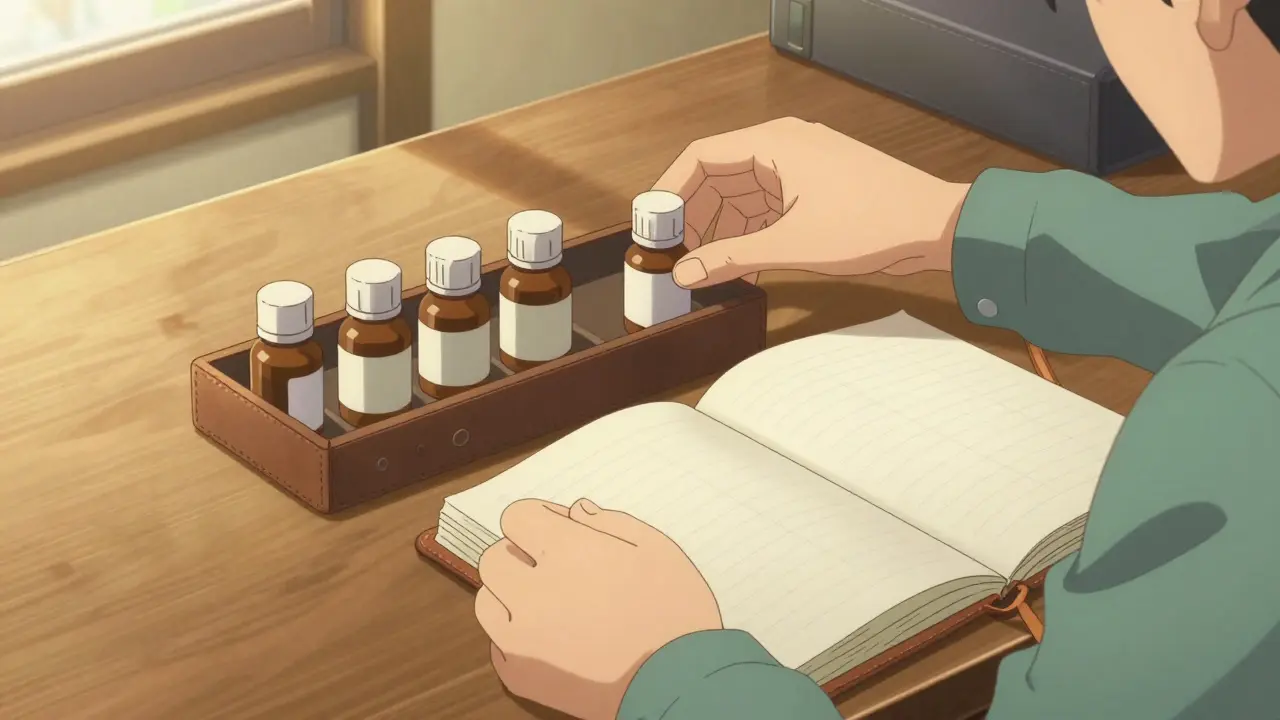
Forget carrying loose prescription bottles in a plastic bag. You need a dedicated system. Think of this as your portable medical record. There are four critical elements every single medicine entry must include. Without these, the data is useless:
- Name of the medication: Use the generic name if possible (like lisinopril) alongside the brand name.
- Dosage: Exactly how much mg or ml you take.
- Frequency: Once daily, before meals, every four hours, etc.
- Purpose: Why are you taking this? Blood pressure, anxiety, pain?
Keep this list updated every time you change a dose or stop a pill. A physical version should live in a wallet-sized folder, so it's always in your pocket. A digital version should be on your smartphone. Update it immediately after leaving the pharmacy. If you forget something later, write it down instantly before you drive home.
Medication Reconciliation is defined as the process of identifying discrepancies between a patient's current medications and the new ones prescribed during care transitions. This process is essential during hospital stays or specialist visits.Don't rely on memory alone. Memory fades under stress or fatigue. Having a written, verified document allows any new provider to see exactly what's happening within seconds. This forces transparency. If a specialist prescribes a new drug, you hand them your list. Ask explicitly: "Does this interact with anything here?" It sounds basic, but asking this question triggers a review that might otherwise get skipped.
Talking Scripts for Different Providers
Different healthcare roles require different conversation styles. Your primary care physician knows your long-term history. Specialists know their specific area deeply. Pharmacists know the chemical properties of the drugs. Tailoring your approach gets better results.
With Your Primary Care Provider
This is your quarterback meeting. Bring your updated list. Ask: "Have I taken off any old medications recently that I should mention to others?" They track the big picture. Ensure they have copies of recent specialist notes. If they don't, ask them to request them formally. Sometimes, a fax or email from their office to the specialist is more effective than you trying to deliver papers.
With Specialists
Specialists treat the organ, not the whole person. Always state your baseline medications first. Before they write a new script, say: "Please send a copy of these instructions to my family doctor." This creates a direct line between the two professionals. Follow up a week later to confirm it arrived.
With Pharmacists
Pharmacists are the unsung heroes of safety. They review all prescriptions entering the pharmacy network. Even if you shop at different chains, one central pharmacy is usually better. Tell your pharmacist about supplements and over-the-counter vitamins, too. Those count as medications. A clinical pharmacist study showed that involving them in the plan boosts adherence significantly. Use them as a safety net.
A powerful technique is the Teach-Back Method. Instead of nodding along, ask the provider to explain it back to you, or repeat it in your own words. "So, I'm taking this twice a day with food, correct?" This reduces misunderstandings by nearly half. If you cannot explain it clearly, neither did they.
Digital Tools and Electronic Records
Electronic Health Records, often referred to as digital versions of patient charts stored in secure systems allowing providers to access and share medical history, are changing how care is delivered.EHRs have improved speed, but they haven't solved interoperability completely yet. Many systems don't talk to each other smoothly. Just because your doctor uses a computer doesn't mean the data travels freely to another hospital network. Don't assume the system knows your history. Assume they see zero until proven otherwise.
Keep a health journal digitally or on paper tracking symptoms, mood changes, and side effects. If a medication causes drowsiness or nausea, log the timing. Patterns help doctors identify culprits faster than guessing. Some apps allow you to store photos of medication labels and scan barcodes. This helps verify names if handwriting is illegible. While AI tools are emerging to speed up reconciliation, human verification remains the gold standard right now.

Overcoming Common Roadblocks
Often, patients feel intimidated to question doctors. Remember, your health is yours. You have the right to ask why a drug is needed. Be firm but polite. If you get vague answers, write them down and consult your pharmacist. Another barrier is simply forgetting appointments or refills. Set phone alarms. Use auto-refill services carefully, checking each new bottle against your master list before accepting it.
For those caring for elderly parents, this coordination becomes even harder. Consider using a shared cloud document accessible by you, the parent, and their caregivers. Transparency prevents duplicate testing or conflicting orders. If you are the primary decision-maker, attend the appointment. Observing the dynamic between patient and doctor reveals crucial details.
Next Steps and Maintenance
Start small. Gather all bottles today. Write down the names and doses. Schedule a review with your GP. Don't wait until you feel sick to organize your data. Regular maintenance keeps the process smooth. Aim to update your list quarterly, or immediately after every new prescription fill. Over time, this becomes routine. You become the hub of your own safety network, ensuring that care remains continuous and coordinated despite the complexities of modern healthcare.
What should I do if I find two doctors are prescribing conflicting medications?
Contact the pharmacist immediately. They can identify interactions based on chemical properties. Then, inform both prescribing doctors. Do not stop taking medication suddenly without professional guidance, as withdrawal can occur.
Do I need to tell my doctor about over-the-counter vitamins?
Yes. Supplements like St. John's Wort or Vitamin K can alter how prescription drugs work. Treat them exactly the same as prescription pills on your master list.
Is there a standard template for a medication list?
While formats vary, the essential template requires Name, Dosage, Frequency, and Reason. Many health organizations provide downloadable PDFs for this specific purpose.
How often should I update my medication list?
Update it immediately whenever a change occurs. This means adding a new drug, stopping one, or changing the dosage frequency. Review it fully at least once every three months.
Can I rely solely on electronic medical records?
Not yet. Electronic systems often lack interoperability between different facilities. Carrying a physical, updated copy ensures information follows you everywhere regardless of technical limitations.
Comments
My cousin actually got hospitalized twice last year due to this exact mess.
The pharmacist caught something the doctor totally missed entirely.
We were crying in the hallway trying to understand what went wrong.
It feels like a nightmare living with constant health anxiety lately.
I cannot stress enough how terrifying this situation actually feels.
Technically speaking the concept of polypharmacy involves five medications.
The risk increases exponentially beyond this threshold number.
However most patients do not realize the cumulative effect quickly.
One must document generic names specifically for clarity purposes.
Brand names often vary depending on the manufacturer location.
I truly believe that we can manage our health much better if we work together.
It is not about blaming anyone for the confusion.
Many of us struggle with keeping track of all our meds.
This guide offers a solid foundation for improvement.
We should encourage each other to bring lists to appointments.
When doctors have all the info, they work wonders.
I have seen friends get dizzy just like the story mentions.
It is heartbreaking when preventable mistakes happen.
But we can take charge of our own safety today.
A little bit of organization goes such a long way.
Your primary doctor knows you best overall.
Keep them updated even if specialists change things.
Pharmacists are experts in chemical interactions always.
They will catch errors before you swallow anything.
Remember that your health is your own property to guard.
Let us build a culture of proactive self care now.
Doctors should fix their computers instead of making us do all this work.
You have the power to change your health outcomes dramatically right now.
Every step you take towards organizing your records matters immensely.
Do not let fear paralyze your ability to advocate for yourself strongly.
There is hope in knowing you control the process significantly.
Imagine walking into appointments with confidence and full knowledge.
That feeling of empowerment changes everything about the experience.
Small consistent actions lead to massive improvements over time.
Trust in your ability to manage this complex challenge well.
Remember that your life depends on your personal involvement daily.
Take a deep breath and start building your command center today.
Oh wonderful another manual task for the overwhelmed masses.
Because trusting doctors to communicate properly is clearly obsolete.
Sure lets carry plastic bags of bottles like it is a survival kit.
Nothing screams modern medicine like a handwritten index card surely.
It is very important to respect the different roles in healthcare teams.
However coordination remains a significant area for improvement globally.
We must remain respectful while advocating for better communication.
Thank you for sharing these practical suggestions with everyone here.
It fosters a community focused on safety and shared learning.
This puts the burden on patients which is unreasonable.
Healthcare fails because of system issues not personal lists.
Stop blaming individuals for broken infrastructure.
You peopel are alwayes waiting for help but it comes from you.
Why is no one taking respensibility properaly?
If you dont list meds you are being careless.
Poor thing you probably cried yourself to sleep worrying about vitamins.
It is so sad that you have to manage your own prescriptions.
How brave of you to fill out a simple four line list manually.
Do not worry too much though the system is likely watching you anyway.
Sometimes it is easier to just nod and sign whatever paper appears.
Use a notes app on your phone and photograph every bottle label directly.
It saves space and ensures dosage details stay attached permanently.
Share access with a family member who handles emergencies for you.
I found this trick helped catch a dangerous interaction once.
Stay safe out there and double check everything before you leave.
use a digital tracker for everything and update it weekly so nothing gets missed easily
They want us confused so we buy more drugs every single month.
Hospitals profit from mistakes made through lack of information clearly.
Electronic records are locked down to keep secrets hidden from us.
Keep a paper trail independent of their corrupted computer systems entirely.
Never trust a doctor who refuses to send notes to your main clinic.
Perhaps the chaos of medication is simply a mirror of existence itself.
We consume substances to sustain a body that constantly decays away.
To organize pills is to attempt order in a fundamentally disorderly universe.
I find myself agreeing with the sentiment yet questioning the purpose fully.
Does safety matter more than the organic chaos of being alive?
It is imperative that patients demand accountability from medical institutions immediately.
Passive acceptance of fragmented care is negligence.
Systemic reform requires individual vigilance above all else.
You must insist on full reconciliation every single visit.