
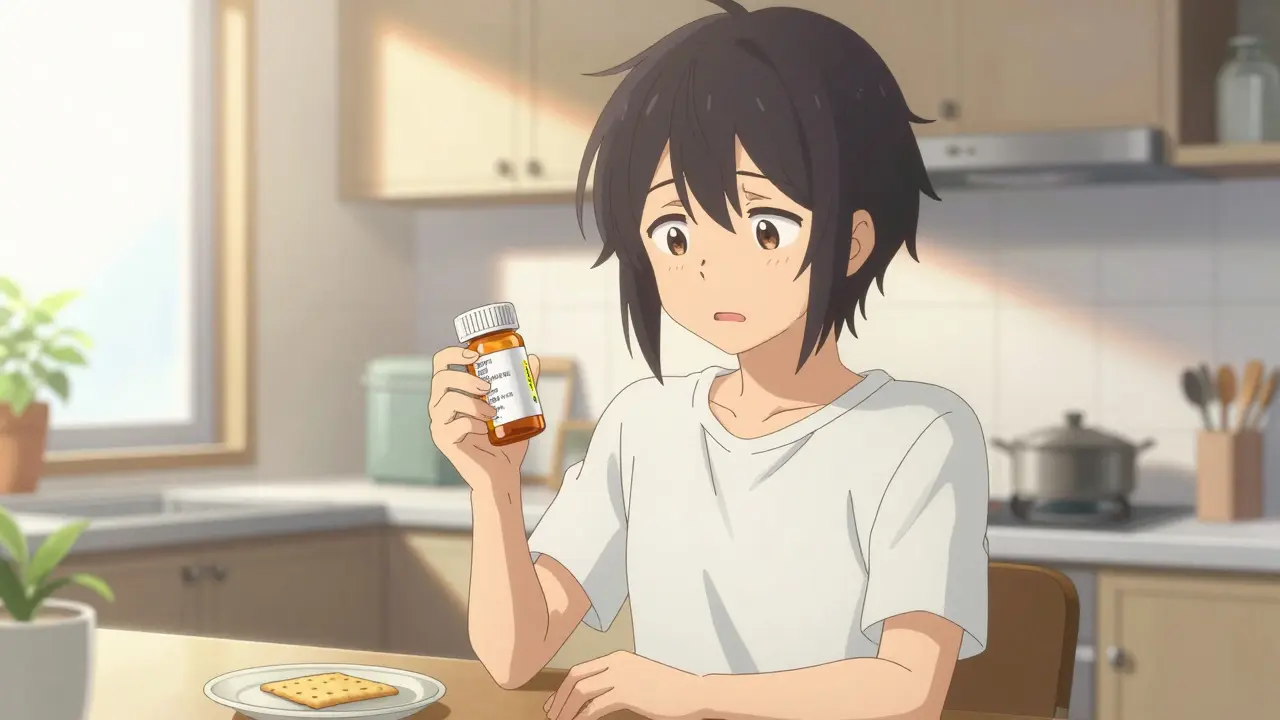
You pick up your prescription from the pharmacy. The pharmacist hands you a bottle with a sticker full of tiny text. You glance at it, see "Take with food" or "Shake well," and nod politely. But later, standing in your kitchen, that vague instruction suddenly feels confusing. Do you need a full steak dinner? Or will a cracker do? This moment of uncertainty is far more common than you might think.
Special instructions on prescription medication labels are specific directives that guide patients on how to properly take medications beyond basic dosage information. They are not just filler text. These notes are critical safety nets designed to maximize how well your medicine works and to keep side effects away. Yet, studies show that nearly half of primary care patients misunderstand these very instructions. When we get them wrong, it’s not just an inconvenience; it can lead to serious health issues and billions of dollars in preventable healthcare costs.
What Exactly Are Special Instructions?
To understand why these labels matter, we first need to separate standard dosage from special instructions. Standard dosage tells you how much to take (e.g., "One tablet") and when to take it (e.g., "Twice daily"). Special instructions tell you how to take it in context.
These directives cover a wide range of actions:
- Dietary interactions: "Take with food" or "Take on an empty stomach."
- Physical handling: "Shake well before use" or "Do not crush or chew."
- Environmental factors: "Refrigerate" or "Avoid direct sunlight."
- Timing precision: "Take one tablet every 12 hours" rather than "twice a day."
- Disposal: "Discard unused portion after 14 days."
The U.S. Food and Drug Administration (FDA) regulates these requirements. Since the 2014 FDA Safety and Innovation Act, there has been a push for clearer labeling. However, the reality is that a typical prescription label contains about 3.7 special instructions, compared to just 1.2 on over-the-counter drug boxes. That extra complexity increases the chance for error if you aren't paying close attention.
Where to Find These Critical Notes
If you’ve ever stared at a pill bottle wondering where the important warning was, you’re not alone. According to data from the Cleveland Clinic, special instructions hide in three main places:
- Supplemental Stickers: In 47% of cases, pharmacies add a separate white or yellow sticker below the main label. This is often where "Shake well" or "Keep refrigerated" appears because it doesn’t fit on the primary print.
- Primary Label: About 32% of the time, critical info like "Take with food" is printed directly on the main pharmacy label alongside your name and the doctor’s details.
- Paper Inserts: In 21% of cases, especially for complex drugs requiring a Medication Guide, the detailed instructions come on a folded paper sheet inside the bag or box.
The FDA requires that any critical special instruction use a minimum 10-point font size with high contrast against the background. Despite this, many patients report difficulty locating these notes. If you have trouble reading small print, ask your pharmacist for a large-print label. Nearly 94% of U.S. pharmacies offer this service for free.
The "Take With Food" Confusion
Let’s talk about the most misunderstood phrase in pharmacy: "Take with food." It sounds simple, right? But research from Harvard Health reveals a massive gap in interpretation.
When a label says "take with food," patients interpret it differently:
- 41% believe it means taking the pill with the very first bite of their meal.
- 33% think it means swallowing the pill sometime during the meal.
- 26% assume it means within 30 minutes of eating.
Why does this distinction matter? For some medications, like certain antibiotics or pain relievers, taking them on an empty stomach causes severe nausea. For others, like thyroid medication, food blocks absorption entirely, rendering the drug useless. If your label says "take with food," aim for a substantial snack or meal-not just a sip of water and a gummy bear-unless your pharmacist specifies otherwise. Always clarify what counts as "food" for your specific drug.
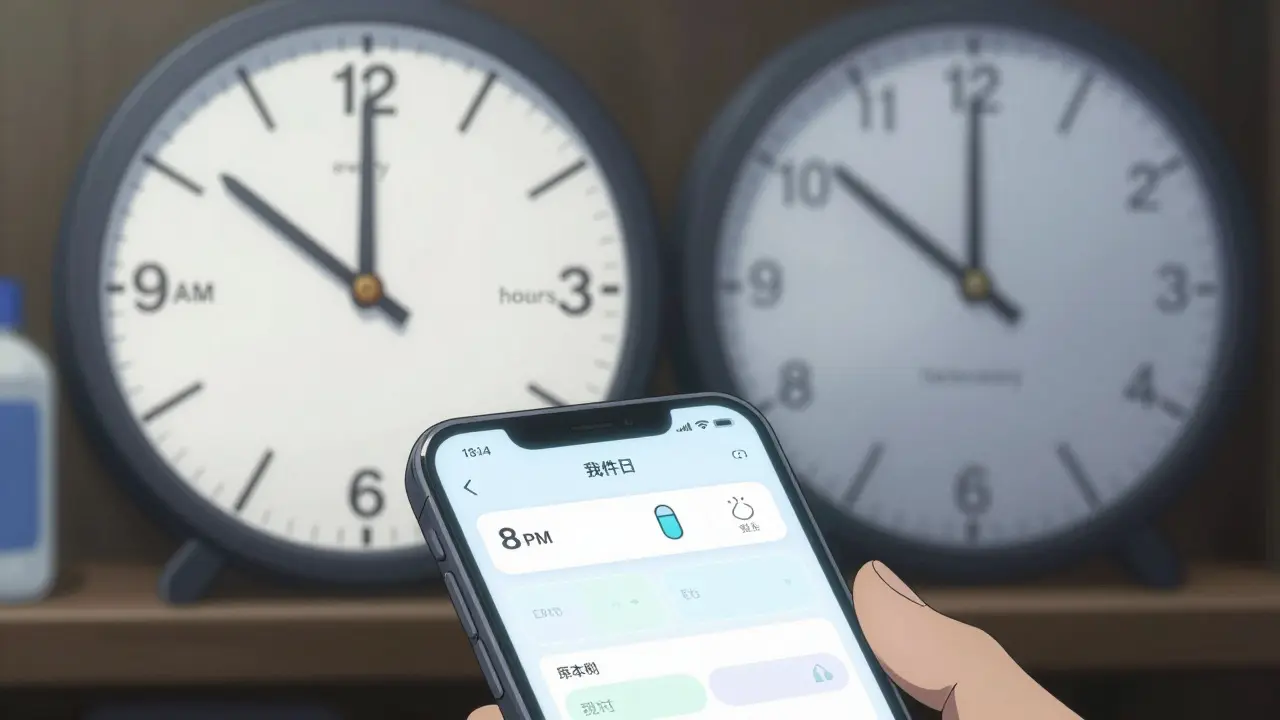
Timing Traps: Every 12 Hours vs. Twice Daily
Another major source of error is timing. You might think "twice a day" and "every 12 hours" mean the same thing. They do not.
"Twice a day" usually implies morning and night, roughly aligned with your waking hours. "Every 12 hours" is strict. It means if you take your first dose at 8:00 AM, the next must be at 8:00 PM. Missing this window by even a few hours can cause drug levels in your blood to drop too low, reducing effectiveness, or spike too high, increasing toxicity.
A study published in Harvard Health found that 53% of patients misinterpret these timing instructions, often taking doses too close together. To avoid this, set alarms on your phone. Labeling a pill organizer with specific times (e.g., "8 AM" and "8 PM") rather than generic slots ("Morning" and "Night") can reduce these errors significantly.
Who Is Most at Risk?
Not everyone struggles with these labels equally. Health literacy plays a huge role. According to the National Assessment of Adult Literacy, 36% of U.S. adults have basic or below-basic health literacy. For these individuals, the risk of misinterpreting special instructions jumps to 62%, compared to 28% for those with proficient literacy skills.
Language barriers also compound the problem. A study from UCSF found that Spanish-speaking patients were 3.2 times more likely to misinterpret "take with food" instructions than English speakers. If English is not your first language, do not rely solely on the label. Ask for translated materials or use a trusted family member to help verify the instructions with the pharmacist.
| Instruction | Common Misinterpretation | Correct Action |
|---|---|---|
| Take with food | With any snack or drink | With a substantial meal or heavy snack to buffer stomach acid or aid absorption. |
| Empty stomach | Just before breakfast | At least 1 hour before eating or 2 hours after eating to ensure maximum absorption. |
| Shake well | Gently swirl | Vigorous shaking to suspend particles evenly, crucial for liquid suspensions. |
| Do not crush | Can be cut in half | Swallow whole. Crushing may release the entire dose at once (dangerous) or destroy protective coatings. |
| Refrigerate | Cool room temperature | Store between 36°F and 46°F (2°C - 8°C). Freezing can damage the medication. |
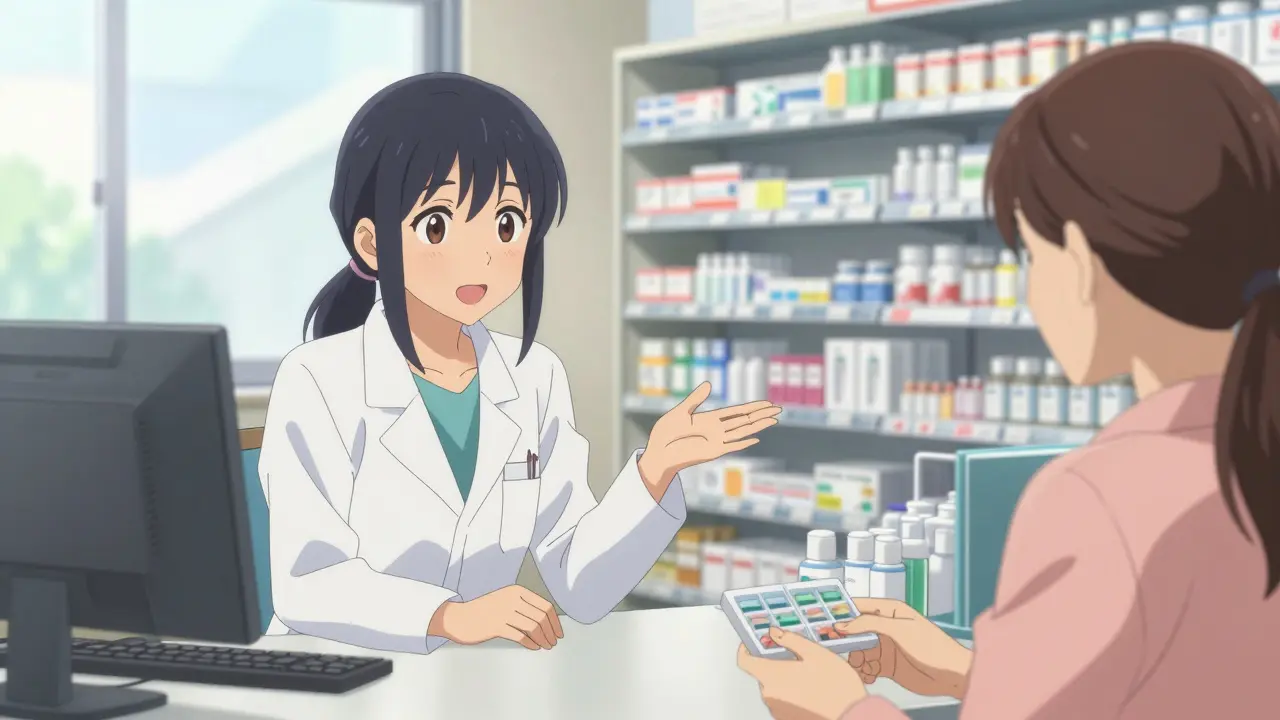
How to Verify Your Understanding
The Dana-Farber Cancer Institute recommends a simple 3-step verification process when picking up new meds:
- Scan all locations: Check the main label, any added stickers, and the paper insert. Don’t stop at the first line of text.
- Clarify ambiguity: If "full meal" or "small snack" isn’t defined, ask the pharmacist. "Does this mean I need a burger, or is yogurt enough?" is a perfectly valid question.
- Create reminders: Use technology. Medication reminder apps improve adherence by 62%. Pair this with a physical pill organizer that has time-specific compartments.
Pharmacists are your best resource. Despite busy stores, 89% of positive pharmacy reviews cite "helpful clarification of special instructions" as a key benefit. Don’t be afraid to say, "I want to make sure I understand this correctly." It signals to the pharmacist that you need a brief, focused explanation.
The Future of Clearer Labels
Regulators are aware of these gaps. The FDA proposed Rule 2023-0489 to standardize 12 critical special instructions across all labels by 2026. Additionally, pilot programs are testing augmented reality (AR) labels. Imagine scanning your bottle with your smartphone to watch a short video demonstrating exactly how to mix a suspension or apply a topical cream. While this tech is emerging, the immediate solution remains human interaction and careful reading.
Medication errors cost the U.S. healthcare system $42 billion annually. Many of these are preventable simply by understanding the small print. By treating special instructions as critical safety data rather than optional suggestions, you protect your health and ensure your treatment works as intended.
Why do some pills say "do not crush"?
Many tablets have special coatings. Some are "extended-release," meaning they dissolve slowly over hours. Crushing them releases the entire dose at once, which can be dangerous or toxic. Others have coatings to protect the stomach lining or to mask bad tastes. Always swallow these whole unless your doctor explicitly says otherwise.
What does "take on an empty stomach" really mean?
It generally means taking the medication at least one hour before eating or two hours after a meal. Food can interfere with how certain drugs are absorbed into your bloodstream, making them less effective. Water is fine to take with the pill, but avoid juice or milk unless instructed.
Should I ask for a large-print label?
Yes, if you have trouble reading small text. Most pharmacies provide large-print labels for free. This ensures that critical warnings like "keep refrigerated" or "avoid sunlight" are visible and easy to read, reducing the risk of storage errors.
Why is "shake well" important for liquid medicines?
In liquid suspensions, the active drug particles can settle at the bottom over time. If you don’t shake the bottle vigorously, you might pour out mostly water in the first dose and a concentrated sludge in the last. Shaking ensures each dose has the correct amount of medication.
What should I do if I miss a "special instruction" after starting my med?
Contact your pharmacist or doctor immediately. Do not guess. Depending on the drug, missing a dietary restriction or timing cue might require adjusting your next dose or monitoring for side effects. Professional guidance is essential to stay safe.