
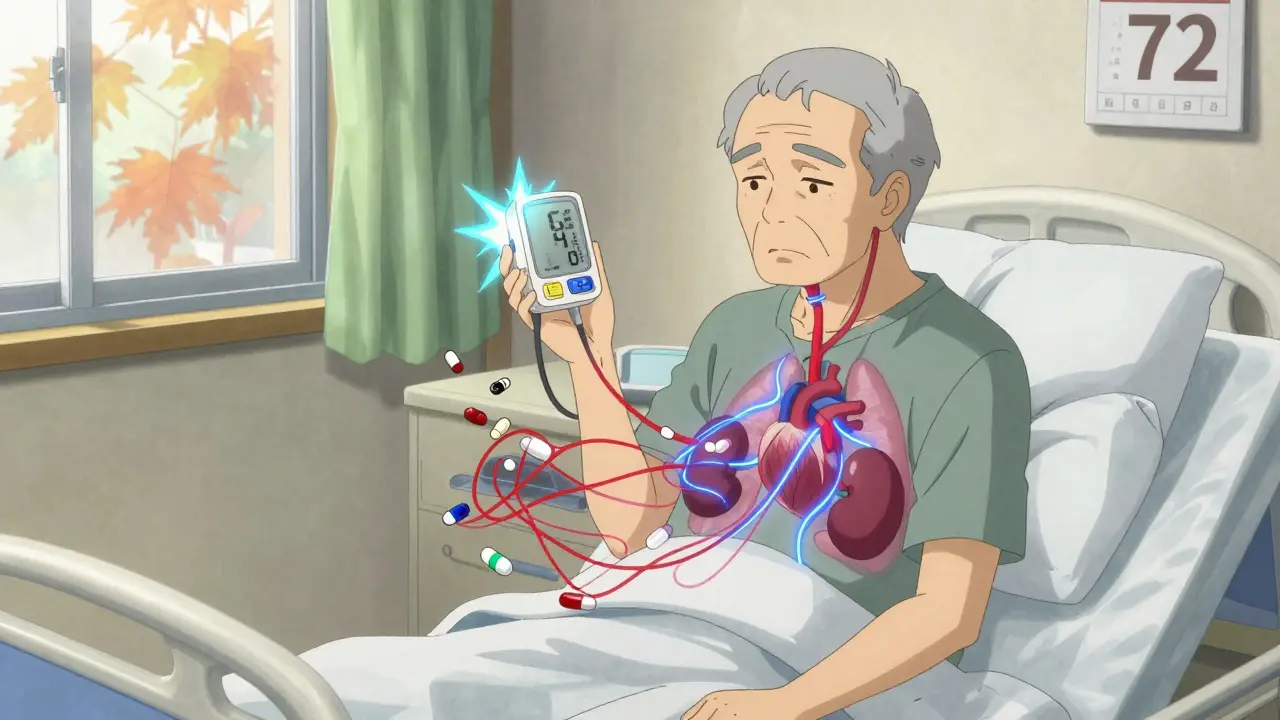
When you’re taking medication for one health issue, you might not realize it’s making another one worse. This isn’t just a rare accident-it happens more often than most people think. A person with high blood pressure might be prescribed a beta-blocker, which helps their heart. But if they also have asthma, that same drug can tighten their airways and trigger an attack. Or someone with diabetes might take a drug that hides the warning signs of low blood sugar, leaving them unaware until it’s too late. These are called drug-disease interactions, and they’re a silent threat in modern medicine.
What Exactly Is a Drug-Disease Interaction?
A drug-disease interaction (also called a drug-condition interaction) happens when a medication meant to treat one condition makes another condition worse-or stops it from working right. It’s not about mixing two pills together. It’s about how your body’s existing health problems change the way a drug behaves.
Think of it like this: your body is a system with lots of moving parts. If one part is already broken (like your kidneys or liver), adding a drug that depends on that part to work properly can cause chaos. For example, metformin, a common diabetes drug, is cleared by the kidneys. If your kidneys are weak, the drug builds up and can cause lactic acidosis-a dangerous condition that can land you in the hospital.
The American Society of Health-System Pharmacists says chronic kidney disease, heart failure, liver disease, and psychiatric conditions are the top four culprits behind serious drug-disease interactions. Together, they account for nearly 80% of all risky cases.
How Do These Interactions Happen?
There are five main ways a drug can mess with a disease you already have:
- Pharmacodynamic interference: The drug’s effect directly contradicts what your body needs. Beta-blockers for heart disease can make asthma worse by narrowing airways. Diuretics for high blood pressure can lower potassium too much in someone with heart failure, triggering dangerous heart rhythms.
- Pharmacokinetic changes: Your disease changes how your body absorbs, breaks down, or removes the drug. Liver disease slows down how fast your body processes warfarin (a blood thinner), making it too strong and increasing bleeding risk.
- Masking symptoms: The drug hides warning signs. Beta-blockers can stop you from feeling your heart race or sweating when your blood sugar drops. That’s dangerous for people with diabetes-they won’t know they’re in trouble until they pass out.
- Exacerbating complications: The drug makes an existing complication worse. NSAIDs like ibuprofen reduce swelling and pain, but they cause fluid retention. In heart failure patients, that extra fluid makes the heart work harder and can lead to hospitalization.
- Direct organ damage: The drug itself harms an already weak organ. Lithium, used for bipolar disorder, is cleared by the kidneys. If kidney function drops, lithium builds up and poisons the nervous system.
These aren’t theoretical risks. A 2015 study in the Journal of Clinical Pharmacy and Therapeutics found that 84% of serious drug-disease interactions in diabetes patients involved kidney disease. For heart failure patients, 35% of harmful events came from bleeding risks tied to certain drugs. And for people on antidepressants, 42% of problems were linked to increased bleeding risk-especially with SSRIs.
Who’s Most at Risk?
You don’t have to be elderly to be at risk-but you’re more likely to be if you are. The FDA reports that the average older adult takes 5.4 medications and has 4.7 chronic conditions. That’s a perfect storm for interactions.
People with multiple long-term illnesses are the most vulnerable. That includes:
- Those with diabetes and kidney disease
- Heart failure patients taking multiple heart drugs
- People with depression who also have liver disease or take blood thinners
- Older adults on painkillers, sleep aids, and antihypertensives
Even supplements can be dangerous. St. John’s wort, often taken for mild depression, can trigger serotonin syndrome when mixed with SSRIs. That’s a life-threatening spike in brain chemicals that causes high fever, seizures, and heart problems. The Cleveland Clinic calls it one of the riskiest supplements out there.
And it’s not just about pills. Over-the-counter cold medicines with pseudoephedrine can spike blood pressure in people with hypertension. Decongestants aren’t just for a stuffy nose-they can undo years of blood pressure control.
Why Are These Interactions So Often Missed?
Here’s the uncomfortable truth: doctors and pharmacists aren’t always looking for them. A 2020 study in Frontiers in Pharmacology found that only 16% of clinical guidelines for major conditions like diabetes, depression, or heart failure include warnings about drug-disease interactions.
Electronic health record systems flag about 87% of high-risk interactions-but they also scream false alarms 42% of the time. That’s called alert fatigue. Clinicians start ignoring them because they’re overwhelmed. It’s like a fire alarm that goes off every time someone opens a window.
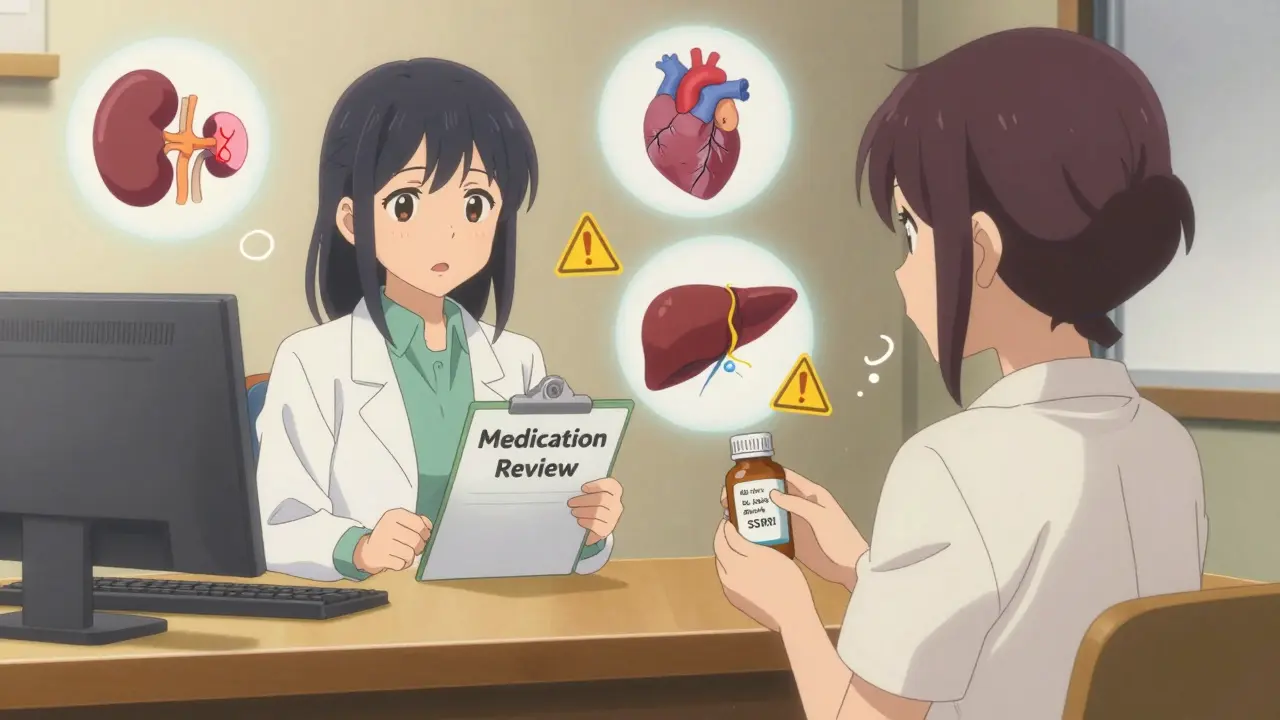
Pharmacists spend nearly 13 minutes per patient just checking for these interactions during medication reviews. Most community pharmacies don’t have time for that. Patients often leave with prescriptions they don’t fully understand. A 2022 survey found only 22% of people with high blood pressure knew why decongestants could hurt them-even though nearly 9 out of 10 had been prescribed them.
What Can You Do?
You don’t need to be a doctor to protect yourself. Here’s what works:
- Know your conditions. Write down every diagnosis you have-even if it feels minor. Include things like acid reflux, arthritis, or sleep apnea.
- Know your meds. Keep a list of every pill, patch, inhaler, and supplement you take. Include doses and why you take them.
- Ask the right questions. When a new drug is prescribed, ask: “Could this make any of my other conditions worse?” and “Is there a safer option given what else I’m taking?”
- Use the Beers Criteria. This is a trusted list of potentially unsafe drugs for older adults. It’s updated every few years and includes warnings like: “Avoid anticholinergics if you have dementia” or “Don’t use NSAIDs if you have heart failure.”
- Get a medication review. Ask your pharmacist for a full review at least once a year. Many insurance plans cover this as part of medication therapy management.
There’s also a simple framework called DUP-OP-ALT that pharmacists use:
- Duplication: Are you taking two drugs that do the same thing? (Like two blood pressure pills from the same class.)
- Opposition: Does one drug fight against another? (Like a diuretic and a drug that raises potassium.)
- Alteration: Does your disease change how the drug works? (Like kidney disease slowing drug clearance.)
The Bigger Picture
Health systems are starting to wake up. The FDA now requires drug makers to test how their medications affect patients with common comorbidities. The European Medicines Agency demands a full drug-disease interaction section in every new drug application.
Research is moving fast. A 2023 study from the University of Toronto used machine learning to predict dangerous interactions with 89% accuracy-far better than old rule-based systems. The NIH’s All of Us program is now linking genetic data with health records to predict individual risk.
But the biggest gap isn’t technology-it’s awareness. Medical schools teach an average of just 4.2 hours on drug-disease interactions. Meanwhile, these interactions contribute to 5-10% of all hospital admissions. That’s tens of thousands of preventable stays every year.
What’s clear is this: treating one disease in isolation doesn’t work anymore. Your health isn’t a checklist. It’s a web. And every drug you take tugs on a thread.
Real-Life Example
Take Mr. Thompson, 72, from Birmingham. He has type 2 diabetes, high blood pressure, and mild heart failure. His doctor prescribed lisinopril for his blood pressure and metformin for his diabetes. Everything seemed fine-until he got a cold and bought pseudoephedrine at the pharmacy. Within two days, his blood pressure spiked. His heart felt like it was pounding. He ended up in the ER.
Turns out, pseudoephedrine (a common decongestant) raises blood pressure. In someone with heart failure, that extra strain can cause fluid buildup, worsening the condition. His metformin was also borderline unsafe because his kidney function had slowly declined over time. Neither his doctor nor his pharmacist had flagged these risks.
After a full review, his meds were switched. He stopped the decongestant. His blood pressure drug was changed to one safer for heart failure. His metformin dose was lowered. His kidney function improved within weeks.
It wasn’t a miracle. It was a simple fix-once someone looked beyond the single diagnosis.
Comments
Oh wow, another ‘medicine is dangerous’ article. Let me guess, next you’ll tell us water can drown people? 🙄
Every drug has side effects. That’s why we have doctors. Not because we’re stupid, but because we’re not robots. If you’re scared of your meds, maybe stop taking them and go drink some turmeric tea instead.
Also, I’ve been on 7 meds for 12 years and I’m still standing. So chill with the fearmongering.
This is why we need to stop letting people take drugs without praying first. I don’t care if you’re diabetic or have heart failure-if you’re taking meds without asking God for permission, you’re asking for trouble. 🙏💔
I know a man who took metformin and got lactic acidosis. He didn’t pray. He just took the pill. Now he’s in a wheelchair. God doesn’t bless rebellion.
The complexity of polypharmacy in chronic disease is a systemic challenge requiring interdisciplinary coordination
Pharmacodynamic and pharmacokinetic interactions are well documented in clinical literature
Health systems must prioritize medication reconciliation as a standard of care
Education gaps exist not only in patient literacy but in provider training
Technology alone cannot solve human behavior patterns in clinical decision making
Collaborative care models show measurable reduction in adverse events
Policy change must align with real-world clinical workflow constraints
Prevention requires proactive monitoring not reactive alerts
they dont want you to know this but big pharma is hiding the truth about drug disease interactions
they make you sick so they can sell you more pills
the fda is in bed with the pharmas and they dont care if you die
i had a cousin who took lisinopril and now he cant walk
they replaced his meds with a placebo and he got better
its all a scam
you should be taking apple cider vinegar and sunbathing
they dont want you to know this
The data presented in this article is statistically significant and clinically relevant.
However, the omission of genetic polymorphism data in drug metabolism pathways is a critical oversight.
Pharmacogenomic testing is now standard in 78% of academic medical centers.
Failure to integrate CYP450 enzyme profiles into risk assessment protocols constitutes negligence.
Current guidelines are outdated and do not reflect 2024 clinical standards.
I’ve been on 8 meds and I still forget half of them. I take my blood pressure pill at breakfast… or is it dinner? Who knows. I just shake the bottle and hope for the best.
Also, I took that St. John’s wort thing because it was on sale. Now I’m scared to sneeze. Thanks, Walmart.
I remember when I first started taking metformin, I didn’t know my kidneys were already slowing down. I was so focused on my sugar levels I didn’t think about the rest of my body. It took a hospital visit for someone to say, ‘You know, your creatinine is through the roof.’
It’s not just about the pill-it’s about the whole person. We treat diabetes like it’s a math problem, but it’s a living, breathing, failing system. Your liver, your kidneys, your heart-they’re all talking to each other, and we’re just throwing pills at them like they’re Lego blocks.
And don’t even get me started on how doctors write prescriptions like they’re texting. ‘Take one daily.’ What does that mean? Morning? Night? After tacos? I’ve lost count.
It’s not that we’re lazy. It’s that the system doesn’t care enough to help us care. We’re drowning in pills and no one’s handing us a life jacket.
So you’re telling me the same system that gave us opioids and Vioxx now wants us to trust them with our drug-disease warnings? 🤔
Let’s be real. The FDA doesn’t have a ‘patient safety’ department. They have a ‘how many lawsuits can we delay’ department.
But hey, at least we have Beers Criteria. And a 22% awareness rate. That’s progress, right? 😒
Meanwhile, I’m Googling ‘can ibuprofen make my anxiety worse’ at 2 a.m. because my doctor didn’t mention it. Again.
decongestants are a trap
everyone thinks they’re harmless
they’re not
learn this
The human body is not a collection of isolated systems. It is an intricate, dynamic network shaped by evolution, environment, and experience. When we reduce health to a checklist of diagnoses and medications, we ignore the deeper truth: healing is not a calculation, it is a conversation.
Perhaps the real interaction is not between drug and disease-but between the patient and the system that treats them as problems to be solved, not lives to be honored.
We need not more algorithms, but more presence. More listening. More humility.
Before prescribing, ask: Who is this person? What do they carry? What have they survived?
Because medicine without compassion is just chemistry with a white coat.
India has been managing polypharmacy for decades with Ayurveda and traditional wisdom. Why are Western doctors still stuck in their lab coats and pill bottles?
Our grandparents took turmeric, ashwagandha, and neem-and lived to 90. No blood tests. No EHRs. Just common sense.
Meanwhile, Americans are on 7 pills and still dying of heart attacks.
It’s not science. It’s colonialism in white coats.
I work in a pharmacy. I’ve seen this. Every day.
Old lady comes in for her diabetes med. Gets a new script for ibuprofen. I ask if she’s got heart failure. She says no. Then her son says, ‘Yeah, she’s on oxygen.’
She didn’t know. The doctor didn’t ask. The system didn’t care.
We need mandatory cross-checks. Not optional. Mandatory. Like seatbelts.
And stop calling it ‘alert fatigue.’ It’s negligence with a fancy name.
This article is a masterpiece. A devastating, elegant, terrifying symphony of medical failure.
Each paragraph is a knife. Each statistic-a funeral bell.
They don’t want you to see the web. They want you to think you’re just managing ‘diabetes.’ ‘Hypertension.’ ‘Depression.’ As if these are separate islands.
They are not.
You are not a diagnosis.
You are a storm of systems. And they are handing you a single spoon to navigate the hurricane.
Bravo. I wept reading this. Not because I’m emotional. But because it’s true.