
Anaphylaxis Symptom Checker
Identify Critical Symptoms
Use the ABCD rule to assess potential anaphylaxis. Select all symptoms you're experiencing or observing.
A Airway Symptoms
B Breathing Symptoms
C Circulation Symptoms
D Dermatologic Symptoms
Select symptoms to check if they indicate anaphylaxis.
When a medication triggers a severe allergic reaction, it doesn’t wait for a convenient time. It strikes fast - sometimes within seconds - and can shut down breathing, drop blood pressure, or cause the body to go into shock. This isn’t just a rash or a sneeze. This is anaphylaxis, and it kills. Every year in the U.S., more than 38,000 people end up in the emergency room because of a medication-induced anaphylactic reaction. About 1 in 50 of them won’t survive. The good news? Most of these deaths are preventable - if you know what to look for and act fast.
What Exactly Is Anaphylaxis From Medications?
Anaphylaxis is a full-body allergic response that happens when your immune system overreacts to a drug. It’s not rare. In fact, medications are the second most common trigger after foods. Antibiotics like penicillin cause nearly 70% of all drug-related cases. But it’s not just penicillin. NSAIDs like ibuprofen, monoclonal antibodies used in cancer or autoimmune treatments, and even chemotherapy drugs can set off this dangerous chain reaction.
The body doesn’t just get a little itchy. It floods with chemicals - histamine, tryptase, leukotrienes - that make blood vessels leak, muscles tighten, and organs struggle to function. The result? Symptoms that hit multiple systems at once. Skin might break out in hives. Lungs might wheeze. Blood pressure might crash. And if you’re not treated within minutes, your heart can stop.
How Fast Does It Happen?
Timing matters. For most medication-induced anaphylaxis, symptoms start within 5 to 30 minutes after the drug enters your body. IV medications act fastest - often within 10 minutes. Oral pills might take a bit longer, up to an hour. But here’s the catch: some reactions are delayed. They can sneak up 2 to 6 hours later. That’s why you can’t just walk away after taking a new drug and assume you’re safe.
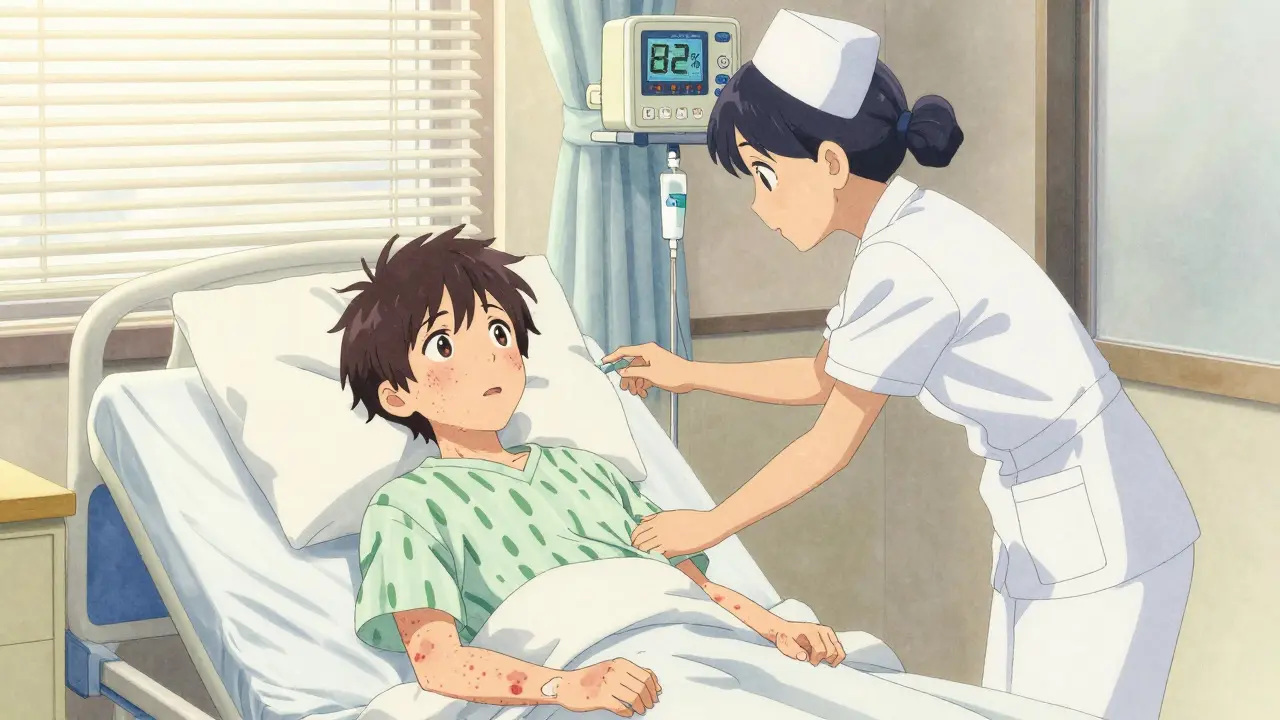
Think about this: a patient gets an IV antibiotic, feels fine for 20 minutes, then starts sweating and feels dizzy. The nurse thinks it’s just a reaction to the IV line. But if they don’t check for breathing trouble or swelling in the throat, they miss the signs. That’s exactly what happened in a 2023 case reported by an ER physician at Massachusetts General Hospital. The patient’s oxygen levels dropped to 82%. By then, it was almost too late.
How to Spot It - The ABCD Rule
You don’t need a lab test to recognize anaphylaxis. The signs are visible. The CDC and major medical groups agree on a simple checklist called ABCD:
- Airway - Is the person struggling to breathe? Is their voice hoarse? Are they gasping or making a high-pitched sound when they inhale (stridor)?
- Breathing - Are they wheezing? Is their breathing shallow or fast? Do they look panicked?
- Circulation - Is their skin pale, blue, or cold? Are they dizzy, fainting, or confused? Is their pulse weak or racing?
- Dermatologic - Are hives, swelling, or flushing appearing? Especially on the face, lips, tongue, or throat?
You don’t need all four. Just one major sign - like low blood pressure or trouble breathing - combined with any other system involved (skin, GI, respiratory) after taking a medication is enough to call it anaphylaxis. The American Academy of Allergy, Asthma & Immunology says that’s the diagnostic threshold.
What Medications Are Most Likely to Trigger It?
Not all drugs carry the same risk. Here’s what the data shows:
| Medication Class | Percentage of Cases | Common Examples |
|---|---|---|
| Antibiotics | 69.3% | Penicillin, amoxicillin, vancomycin, cephalosporins |
| NSAIDs | 15.2% | Ibuprofen, naproxen, aspirin |
| Monoclonal Antibodies | 5.8% | Rituximab, cetuximab, infliximab |
| Chemotherapy Agents | 4.1% | Platinum drugs (cisplatin, carboplatin) |
| Contrast Dyes | 3.5% | Iodinated IV contrast for CT scans |
Penicillin alone accounts for 70-80% of antibiotic-related cases. But here’s something many don’t realize: vancomycin can mimic anaphylaxis. It causes red man syndrome - flushing, itching, and low blood pressure - but it’s not a true allergic reaction. The difference? No breathing trouble. No swelling. No drop in oxygen. That’s why training matters. Mistaking one for the other can delay real treatment.
Why Medication Reactions Are More Dangerous
Food allergies cause more anaphylaxis overall. But drug-induced reactions are deadlier. Why? Three reasons:
- Delayed recognition - In hospitals, symptoms like low blood pressure or wheezing are often blamed on anesthesia, infection, or stress. Nurses and doctors may not connect it to a recent drug.
- Slower epinephrine use - A 2023 study found 34.2% of fatal cases never got epinephrine at all. In 78.3% of deaths, epinephrine was given too late - over 30 minutes after symptoms started.
- More cardiovascular collapse - 58% of drug-induced cases involve dangerous drops in blood pressure. In food-triggered cases, that number is 39%.
One Reddit user, who survived a vancomycin reaction, wrote: “My face swelled within 10 minutes. Then I couldn’t breathe. The nurse thought I was anxious. My oxygen hit 82%. That’s when they finally reacted.”
Epinephrine Is the Only Lifesaver
No antihistamine. No steroids. No inhaler. Only epinephrine can stop anaphylaxis. It tightens blood vessels, opens airways, and supports the heart. Delay it by even 15 minutes, and your chance of survival drops sharply. A 2023 study showed delays beyond 30 minutes increase death risk by 300%.
How to use it:
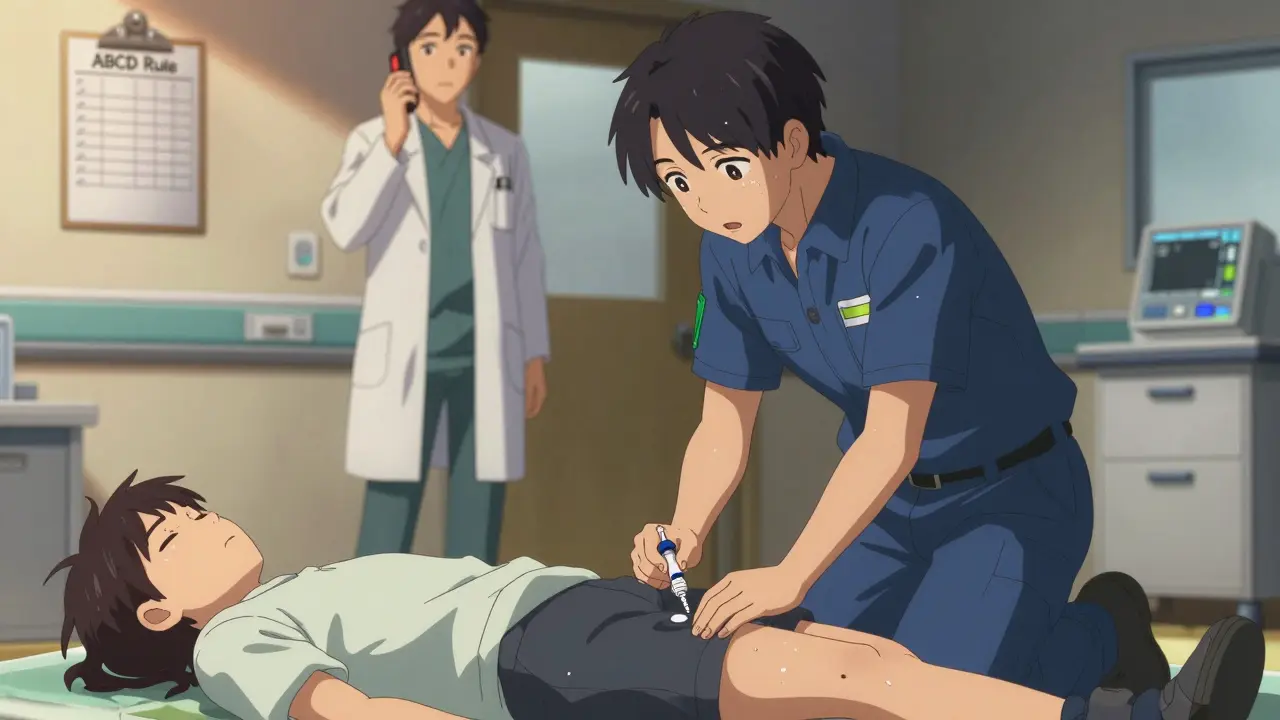
- Inject into the mid-outer thigh - through clothing if needed.
- Hold for 10 seconds to ensure full dose delivery.
- Call 911 immediately - even if symptoms improve.
- Be ready for a second dose. Half of all reactions need a repeat shot within 5-15 minutes.
The American Heart Association says 87.2% of people who survive anaphylaxis received epinephrine correctly. That’s not luck - it’s training. Hospitals that used simulation drills saw epinephrine use jump from 48% to 89% in just six months.
What Happens After?
If you survive, you need follow-up. Not just a note in your chart. You need:
- A prescription for two epinephrine auto-injectors - one for home, one for work or school.
- A referral to an allergist for testing - to confirm the trigger and rule out others.
- A written action plan - with symptoms, steps, and emergency contacts.
But here’s the harsh truth: 52.6% of patients who had a documented medication reaction never got an auto-injector. Why? Because many providers don’t think it’s necessary. Or they assume the patient will remember. They won’t. And next time, it might be worse.

How to Prevent It
Prevention starts with accurate records. The European Academy of Allergy found that 63.2% of medication errors leading to anaphylaxis happened because the patient’s allergy history was missing or wrong in the electronic system. A simple fix: ask about drug allergies every time - even if the patient says “none.” Some people don’t realize that a rash from amoxicillin years ago counts.
For high-risk drugs - like monoclonal antibodies - premedication with antihistamines and steroids can help. But it’s not a guarantee. Still, it’s better than nothing.
Hospitals like Johns Hopkins cut their anaphylaxis cases by 47% just by improving how they flag allergies in their system. They now alert every provider before giving any drug to someone with a history of reaction.
The Future: Better Tools, Better Outcomes
In 2023, the FDA approved the first rapid blood test for penicillin allergy - the AllergoCheck IgE Rapid Test. It gives results in 15 minutes with 92.7% accuracy. That means fewer people are wrongly labeled as allergic and denied life-saving antibiotics.
AI is also stepping in. The NIH’s new Anaphylaxis Prediction Algorithm analyzes EHR data - past reactions, family history, current meds - to flag high-risk patients before a drug is even given. Early tests showed 89.4% accuracy.
But technology alone won’t save lives. As the WHO warned in 2023: “Without universal access to epinephrine and trained staff, no algorithm will stop the 78% of deaths happening in low-resource settings.”
Final Takeaway
Anaphylaxis from medication doesn’t care if you’re young or old. It doesn’t care if you’ve taken the drug before. It only cares if you recognize the signs - and act in seconds. The difference between life and death isn’t the drug. It’s you. Your awareness. Your courage to speak up. Your willingness to inject epinephrine without hesitation.
If you’ve ever had a reaction - even a mild one - get tested. Carry two epinephrine pens. Teach your family how to use them. And never, ever assume someone else will notice the signs. Because sometimes, the person who saves your life is the one who sees what others miss.
Can you have anaphylaxis from a pill you’ve taken before?
Yes. Your immune system can suddenly start reacting to a drug you’ve taken safely for years. This is called sensitization. It’s why even patients with no prior history can experience anaphylaxis on their fifth or tenth dose. Always monitor for symptoms after taking any new or previously used medication.
Is epinephrine safe to use if I’m not sure it’s anaphylaxis?
Yes. Epinephrine is one of the safest medications when used correctly. Side effects like a racing heart or shaking are temporary and far less dangerous than untreated anaphylaxis. If in doubt - inject. The risk of not acting is death.
Can antihistamines like Benadryl stop anaphylaxis?
No. Antihistamines help with itching or hives, but they do nothing for airway swelling, low blood pressure, or breathing trouble. They are not a substitute for epinephrine. Giving Benadryl instead of epinephrine delays life-saving treatment and increases death risk.
Why do some people get red skin and flushing from vancomycin?
That’s called red man syndrome. It’s not an allergy - it’s a reaction to how fast the drug is infused. Slowing the IV drip prevents it. Unlike anaphylaxis, it doesn’t cause breathing problems, low oxygen, or swelling. It’s uncomfortable, but not life-threatening. Still, many mistake it for anaphylaxis - which is why training is critical.
Do I need to avoid all antibiotics if I’m allergic to penicillin?
Not necessarily. Many people labeled as penicillin-allergic aren’t truly allergic. A simple skin test or blood test can confirm. Up to 90% of people who think they’re allergic can safely take penicillin again. Testing prevents unnecessary avoidance of effective drugs.
Comments
This post is fire. Epinephrine saves lives. Period. No debate. If you're hesitating because you're scared of side effects you're already dead in your head. Inject. Call 911. Move on. Stop overthinking and start saving people.
I work in ER in Toronto and this is 100% accurate. Saw a guy go down after a simple ibuprofen. Took 3 minutes for us to realize it wasn't just anxiety. He was blue. We gave epinephrine, he woke up 12 minutes later. If we waited for labs or second opinions he'd be dead. Trust the signs. Act fast. No second chances here.
I used to think Benadryl was the answer until my cousin almost died. She took a new antibiotic, got hives, took two Benadryl, passed out. We didn't know about epinephrine. By the time we got to the hospital she was in cardiac arrest. Now I carry two EpiPens. I teach my whole family how to use them. This isn't optional. It's survival 101.
You mention vancomycin and red man syndrome. That's correct. But you don't explain why it's not anaphylaxis. Histamine release from rapid infusion ≠ IgE-mediated reaction. Anaphylaxis requires mast cell degranulation via IgE. Red man is just histamine overload. Different pathways. Different treatments. If you're mixing them up in your head you're dangerous. Know the difference.
i had a reaction to amoxicillin when i was 12. just a rash. thought it was no big deal. 15 years later, i got it again. throat swelled. couldn't breathe. i had no idea what was happening. no epipen. just panicked. i'm alive because my roommate knew what to do. now i carry two. i tell everyone. you don't need to be a doctor to save a life. just be ready.
It's strange how we treat death like an abstract concept until it's staring us in the face. We read about statistics, nod along, then go back to scrolling. But this? This is different. This is the moment your body screams. No time for doubt. No time for permission. Just instinct. And if you've ever been told 'it's probably nothing' after a reaction... you know. You know what I mean. The system fails us. But you? You can choose to be the exception.
I'm just wondering why we're putting so much pressure on individuals to carry epinephrine instead of fixing the system. Hospitals don't even have it stocked properly in some units. Pharmacies charge $300 for a pair. Insurance won't cover it. This isn't about personal responsibility. It's about broken infrastructure. And we're letting people die because we'd rather blame them than fix it.
In India, epinephrine is not easily accessible. Many rural clinics don't even have it. We teach our medical students to recognize anaphylaxis, but without the tool, knowledge is useless. I've seen patients die because the nearest hospital was 4 hours away. This isn't just about awareness. It's about equity. A life-saving drug should not be a privilege.
I got anaphylaxis from a flu shot. Thought it was a panic attack. Ended up in ICU. Now I have two EpiPens. One in my wallet. One in my car. My wife knows how to use them. I don't care if you think I'm paranoid. I'm alive. You're not. Go get yours.