
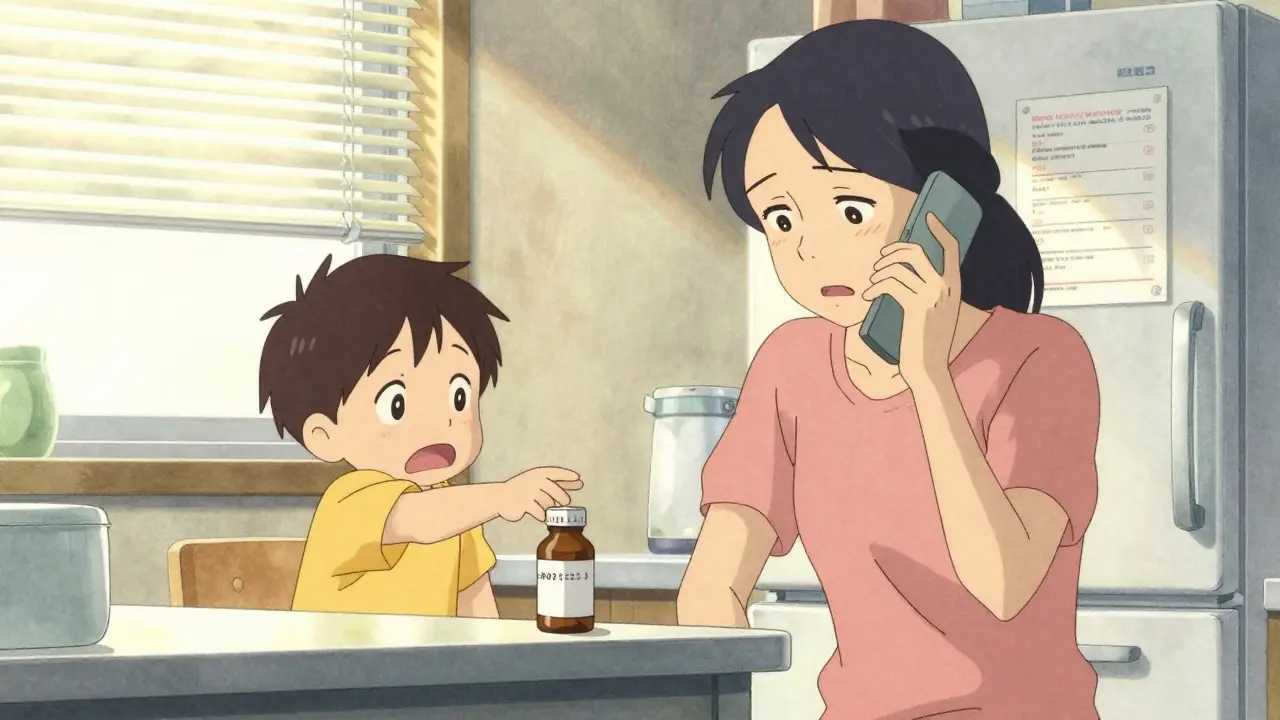
When a child swallows a handful of pills by accident, or an adult takes the wrong dose of their blood pressure medicine, panic sets in. You don’t need to drive to the ER. You don’t need to wait on hold for a doctor. You just need to call 1-800-222-1222. That’s the Poison Control Hotline - a free, 24/7 lifeline that’s helped over 2 million people in the U.S. last year avoid serious harm from medication mistakes.
How the Poison Control Hotline Actually Works
The Poison Control Hotline isn’t just a phone number. It’s a network of 53 accredited centers staffed by specialists trained in toxicology - nurses, pharmacists, and doctors who know exactly how drugs behave in the body. When you call 1-800-222-1222, your call is routed to the center closest to you based on your area code. There’s no waiting in a queue. No automated menus. You’re connected to a real person who’s ready to help. They don’t guess. They don’t rely on memory. They use 1,540 evidence-based algorithms developed over decades by toxicology experts. These algorithms analyze what was taken, how much, when, and who took it - then spit out a clear, step-by-step plan. For medication cases, which make up nearly half of all calls, they check things like the drug’s therapeutic index, potential interactions, and the patient’s weight and age. You can also text "poison" to 797979 or use the webPOISONCONTROL tool at poisonhelp.org. The online tool walks you through six simple questions: what substance, how much, when, age, weight, and zip code. It gives you a risk assessment in under three minutes. Studies show it matches specialist advice 97% of the time.What to Report About Medications - The Exact Details They Need
Don’t say "I took some Tylenol." That’s not enough. Say: "My 7-year-old swallowed 12 tablets of Tylenol Extra Strength, 500mg each, at 2:15 PM today. She weighs 23 kilograms. She’s vomiting and seems drowsy." Here’s what matters most:- Exact name: Brand and generic. "Advil" isn’t enough - say "ibuprofen 200mg tablets".
- Strength and form: Is it 500mg or 1000mg? Tablet, liquid, patch? Different forms act differently.
- Amount ingested: Count the pills, measure the liquid. "A few" doesn’t help. "Three tablets" does.
- Time of exposure: When did it happen? "An hour ago" is better than "today".
- Patient info: Age, weight in kilograms (not pounds), and any known allergies or health conditions.
- Symptoms: Nausea? Dizziness? Sleepiness? Rash? Write them down as they happen.
What Happens After You Call
Most calls - about 60% - are handled at home. No ambulance. No ER. Just clear instructions: "Wait and watch," "Give activated charcoal," or "Start N-acetylcysteine now." For acetaminophen overdoses, they’ll tell you to monitor for liver damage and call back at 4, 8, and 24 hours. Follow-up success rates are above 90%. They don’t just give advice. They send you an email summary with everything you discussed: product names, doses, symptoms, and next steps. About 78% of people keep it. Some print it. Others show it to their doctor later. If the case is serious - like a child who swallowed a whole bottle of opioids - they’ll coordinate with EMS or the ER. They’ll even call ahead to warn the hospital what’s coming. That saves critical minutes.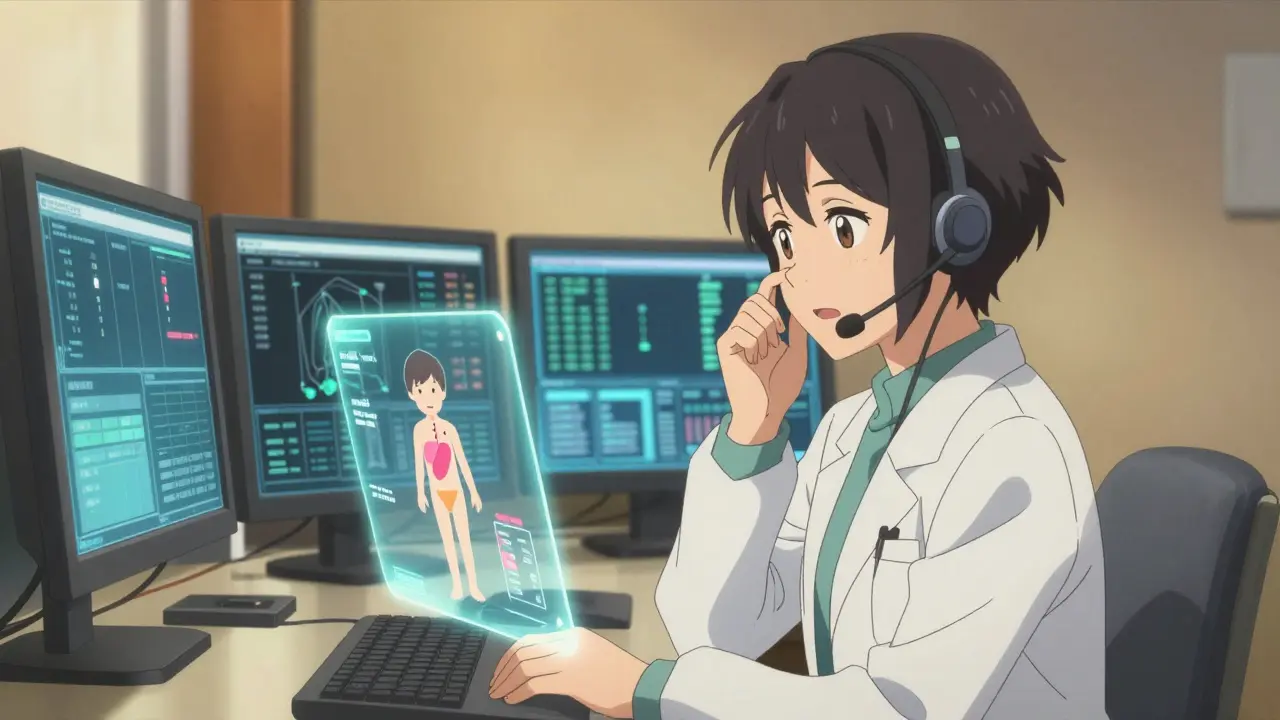
Why This Service Saves Lives and Money
Every dollar spent on poison control returns $7.67 in saved healthcare costs. How? By keeping people out of the ER when they don’t need to be there. In 2019, the hotline prevented $1.8 billion in unnecessary hospital visits. That’s not just money - it’s less stress, fewer tests, shorter wait times for people who really need emergency care. It’s also a public health early warning system. The National Poison Data System (NPDS) collects every single case. That’s how they spotted the rise in gabapentin overdoses in 2019 and synthetic cannabinoid poisonings in 2021. When a new weight-loss drug starts causing liver damage, they’re the first to know - and they update their protocols within weeks.Common Scenarios Where Poison Control Makes All the Difference
- A toddler gets into a bottle of children’s cough syrup. They’re sleepy but breathing fine. Poison Control tells you to keep them awake, give water, and monitor for 4 hours. No ER needed. - An elderly man takes his morning meds and accidentally doubles up on his blood pressure pill. He feels lightheaded. Poison Control checks his heart rate, tells him to sit down, and says to call back in an hour. He avoids a fall and a hospital stay. - A teenager takes a friend’s Adderall to stay awake for finals. They get a racing heart and anxiety. Poison Control tells them to drink water, lie down, and avoid caffeine. Within 90 minutes, symptoms fade. These aren’t rare cases. Accidental pediatric ingestions make up nearly half of all calls. And in 83% of those, poison control prevents an ER visit.What They Won’t Help With - And What to Do Instead
The hotline doesn’t handle intentional overdoses or cases involving more than two substances. If someone deliberately took 15 pills to hurt themselves, call 911 immediately. Poison Control will still help after emergency services arrive, but they’re not a replacement for crisis intervention. They also can’t replace your doctor. If you’re on long-term medication and have questions about side effects, talk to your pharmacist. Poison Control is for emergencies - the unexpected, the urgent, the scary moments when you don’t know what to do.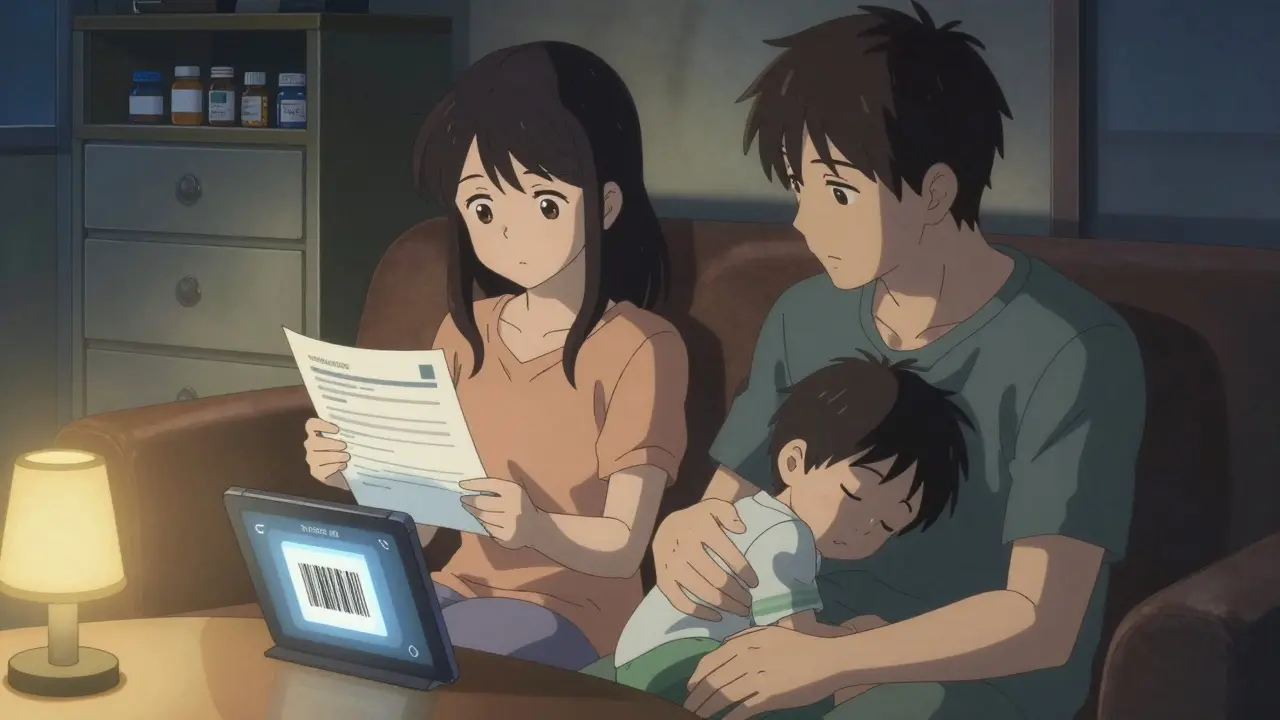
How to Prepare Before You Need It
Don’t wait for a crisis. Keep this info handy:- Save 1-800-222-1222 in your phone as "Poison Control".
- Keep a list of all medications everyone in your household takes - including vitamins and supplements.
- Know your family members’ weights in kilograms (divide pounds by 2.2).
- Download the webPOISONCONTROL app. It has a barcode scanner that auto-fills drug names.
- Store medications out of reach and in original bottles. Don’t transfer pills to pill organizers unless you label them clearly.
Frequently Asked Questions
Is the Poison Control Hotline really free?
Yes. There is no charge to call 1-800-222-1222 or use webPOISONCONTROL. It’s funded by government grants, hospitals, and state programs. You don’t need insurance, ID, or even to give your name.
Can I call for someone else, like my elderly parent?
Absolutely. You can call for anyone - a child, a neighbor, a pet (though they’ll refer you to a vet for animals). Just have the medication details and the person’s age and weight ready.
What if I’m not sure if it’s an emergency?
Call anyway. Poison Control specialists are trained to judge risk. Even if it turns out to be nothing, it’s better to be safe. They’ve handled cases where a child licked a tiny bit of cleaning product and ended up needing treatment - and cases where a full bottle of pills was swallowed but caused zero harm. They know the difference.
Do they offer translation services?
Yes. The hotline supports over 150 languages through live interpreters. Just say the language you need, and they’ll connect you immediately. No waiting.
Is the hotline confidential?
Yes. All calls are private and HIPAA-compliant. Your information is only shared with emergency services if there’s an immediate life-threatening risk. Otherwise, your details stay within the poison control system to help improve future responses.
Can I use the hotline for pets?
The hotline focuses on human exposures. For pets, they’ll give you general advice and then strongly recommend contacting a veterinary poison control center, like the ASPCA Animal Poison Control Center at (888) 426-4435. There’s a small fee for that service, but it’s worth it for your pet’s safety.
What if I call and they say to wait and watch - but I’m still worried?
Call back. If symptoms change - if someone gets worse, stops breathing, or becomes unresponsive - call 911. But if you’re unsure whether something’s getting worse, call Poison Control again. They expect follow-up calls. That’s part of the process.
Comments
Just saved 1-800-222-1222 in my phone right after reading this. I never realized how precise their algorithms are-1,540 evidence-based protocols? That’s insane. And the fact they match specialist advice 97% of the time via the web tool? No wonder this service is underfunded. We should be broadcasting this on every TV channel.
Also, the part about polypharmacy? My grandma’s on seven meds. I’m making a printed list with weights in kg and handing it to her this weekend.
This is why America still leads in public health infrastructure. No other country has a system this efficient. The fact that it’s free and works 24/7 without insurance hurdles proves the value of well-funded domestic programs. Stop outsourcing solutions. This is American ingenuity at work.
Y’all need to hear this. Seriously. I work in pediatrics and I tell every parent I meet: save this number. I’ve seen kids survive because mom called instead of driving to the ER at 2am.
And the text-to-797979 feature? Genius. My niece used it last month when she thought her little brother swallowed a vitamin gummy. Turned out it was just a candy wrapper. But she called. And that’s the point.
🙏 You don’t need to be a doctor to save a life. Just be prepared.
Also-download the app. The barcode scanner is a game changer. I’ve linked it to my family’s shared health folder.
Man, this is wild. I grew up in a household where if you took something wrong, you just waited it out. No one knew this hotline existed. My cousin once swallowed half a bottle of ibuprofen and we just sat there for hours. He’s fine now, but...
Why isn’t this taught in schools? Like, right after fire drills? This should be in every classroom. Even just a poster in the bathroom. I’m sharing this with my entire family right now.
Okay but let’s be real-this is all a distraction. The real poison? Big Pharma. They flood the market with pills no one needs, then profit off the panic they create. Poison Control is just the Band-Aid on a bullet wound.
And don’t get me started on the ‘webPOISONCONTROL’ app. That’s just a gateway to data harvesting. They track your zip code, your meds, your kid’s weight. Who’s really behind that server? I’m not giving them my info. Not even for free.
Also-why is it only in the US? Are other countries just letting people die? Suspicious.
Interesting read. I live in Australia-we have a similar service, but it’s not as widely known. I’ve never used it, but now I’m thinking I should keep the number handy. The detail about the 97% accuracy rate is impressive. I’d be curious to see how it compares to our own system.
Also, the part about keeping meds in original bottles? That’s something I’ve neglected. My vitamins are in a random Tupperware. Maybe I’ll fix that this weekend.
I just want to say that the fact that this service exists at all is a quiet miracle, and I think we don’t talk about it enough because it’s so understated-it doesn’t have flashy ads or celebrity endorsements, it just quietly saves lives every single day, often without anyone ever knowing they were helped, because the outcome is simply ‘nothing happened’-no ER, no ambulance, no trauma, no panic, just a calm voice on the phone saying ‘you’re okay, just watch her for the next four hours’-and then the child wakes up normal, and the parent breathes again, and nobody ever writes a story about it, and that’s the whole point, isn’t it? The best emergency response is the one that never needs to escalate, and this system is built on that philosophy, and I think we should be celebrating it more, like national holidays or something, because it’s not just a hotline, it’s a cultural safeguard, a safety net woven into the fabric of everyday life, and we take it for granted until we need it, and then we’re so grateful we cry, and then we forget again, and that’s the tragedy, not the overdose, but the forgetting.
Save the number. Keep a list. Know weights in kg. Done. This is public health 101. Everyone should have this on their phone right now.
Okay I’m crying. 🥹 I used to work in a pharmacy and I saw so many parents panic because they didn’t know what to do. This hotline is pure gold. I just sent this to my entire family group chat. My nephew’s got ADHD meds in the house-now we’re keeping them locked and I’m printing the dosage chart. Thank you for this. 🙏💖
Wow, another government-funded feel-good story. But let’s be honest-this only works because people are too lazy to read labels. If you can’t tell the difference between Tylenol and Advil, maybe you shouldn’t be managing meds at all. This is just enabling negligence. And why is it free? Who’s paying? Taxpayers? Great. Let’s just keep handing out free babysitters for irresponsible adults.
Wow. 97% accuracy. That’s… suspiciously perfect. Did you know the CDC once admitted they misclassified 12% of overdose cases in 2017? And now this ‘webPOISONCONTROL’ tool matches specialists 97% of the time? Coincidence? Or is this just PR spun to look like science?
Also, I just looked up the funding sources-‘government grants, hospitals, and state programs.’ Funny how hospitals are listed as funders when they lose money every time someone doesn’t show up. This smells like a cost-shifting scheme disguised as public service. Just saying.
Also, typo: ‘algorithms developed over decades’-should be ‘developed over DECADES’? Capitalization? I’m confused. 😅
This article reads like a pharmaceutical industry whitepaper. Poison Control is not a public service-it’s a risk mitigation tool designed to reduce liability for drug manufacturers. The fact that they recommend ‘monitoring at home’ for acetaminophen overdoses is dangerously negligent. The liver damage window is narrow. If you’re not in a hospital with IV NAC within four hours, you’re gambling with organ failure. This is corporate PR dressed as public safety.
How is this not national news? This is the most important public health tool we have and nobody talks about it. I’m calling my senator. I’m posting this everywhere. If you know someone with kids, elderly parents, or even just a messy medicine cabinet-you owe it to them to share this. This isn’t helpful. This is life-saving. And we’re letting it stay under the radar? That’s unacceptable.
Wait-so they track your zip code? And your kid’s weight? And your meds? And they say it’s confidential? Yeah right. That data gets sold to insurers. Next thing you know, your premiums go up because ‘you have a history of accidental ingestion.’
Also, did you know the Poison Control hotline is run by the same people who own the opioid manufacturers? They need you to call so they can say ‘we told them to monitor at home’ and avoid lawsuits. It’s all a setup.
And the barcode scanner? That’s just a backdoor to your pharmacy records. Don’t trust it. I’ve seen the leaks.
People are so naive. You think this hotline exists to help you? It exists to keep you from suing drug companies. Every time someone calls instead of going to the ER, the hospital loses revenue. The manufacturer avoids liability. The state saves on Medicaid costs. You’re not being helped-you’re being managed. This isn’t altruism. It’s economics dressed in a white coat.
And don’t get me started on the ‘free’ part. Free services are the most expensive. Someone’s paying. And it’s not the pharmaceutical CEOs. It’s you.