
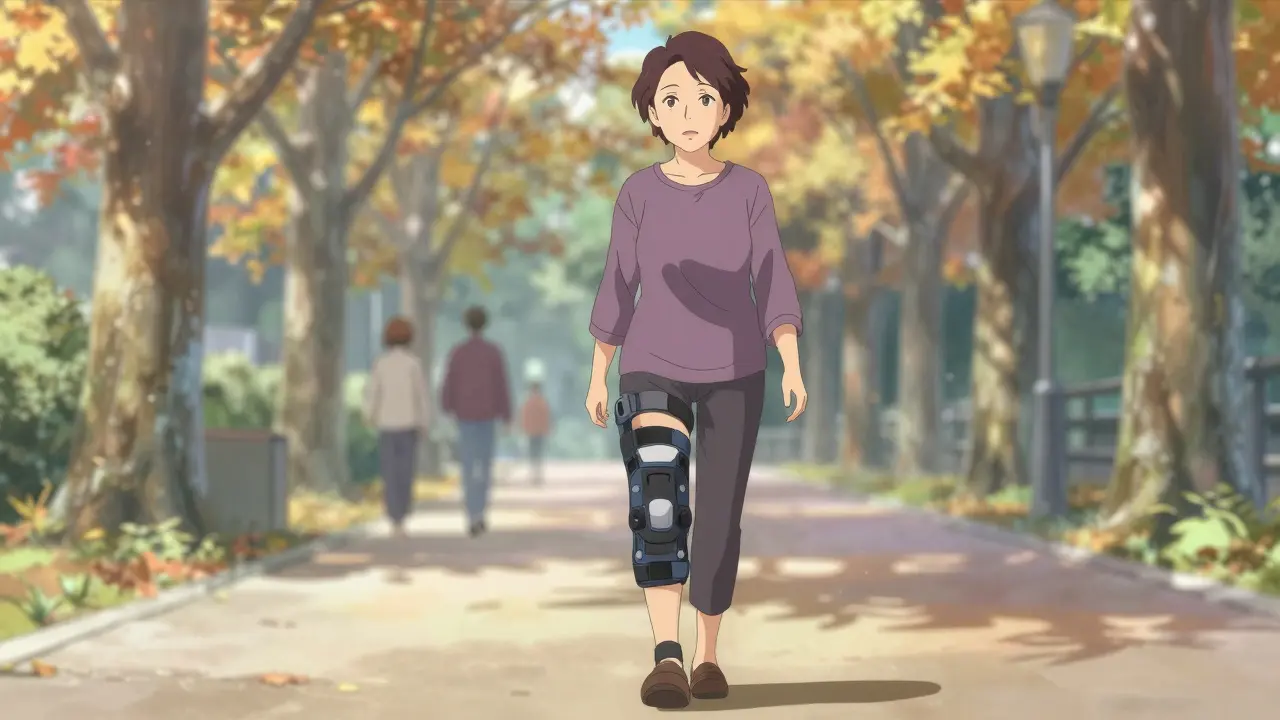
When your knee hurts just to stand up, walk down the stairs, or get out of a chair, it’s not just discomfort-it’s life slowing down. Knee osteoarthritis affects more than 250 million people worldwide, and for many, it’s the main reason they stop doing the things they love. The good news? You don’t have to wait for surgery. Three proven, non-surgical approaches-bracing, injections, and exercise-can significantly reduce pain and help you move better, right now.
How Bracing Takes Pressure Off Your Knee
Knee braces aren’t just for athletes. For people with osteoarthritis, especially those with pain on the inner side of the knee (medial compartment OA), unloader braces are one of the most effective tools available. These aren’t your average compression sleeves. They’re custom-fitted devices that gently shift weight away from the damaged part of your knee, like a lever pulling pressure off a sore spot. Studies show these braces can reduce pain by 30-45% on standard pain scales. One 2023 review of over 100 trials found they ranked highest for improving both pain and function compared to other non-surgical options. If you’ve ever felt like your knee is giving out when you walk, an unloader brace can give you the stability you need to get through the day. But here’s the catch: they only work if they fit right. A poorly fitted brace won’t help-and might even make things worse. You need to see a certified orthotist, not just buy one online. The right brace should feel supportive, not tight or pinching. Most people need 2-3 weeks to adjust to wearing it, especially during daily activities. Insurance often covers part of the cost (Medicare pays 80% for approved braces), but you’ll still need a prescription and documentation. Real users report immediate relief during walking. On Amazon, 82% of 5-star reviews mention “instant pain reduction.” But 47% of negative reviews cite skin irritation or bulkiness. If you’re active, look for lightweight models like Össur’s Unloader One Pulse, which now includes motion sensors to track your gait and give feedback. For many, it’s the difference between staying home and staying mobile.Injections: Fast Relief, But Not a Forever Fix
If your pain flares up suddenly-maybe after a bad day on your feet or a cold snap-injectable treatments can offer quick relief. Three main types are used for knee OA: corticosteroids, hyaluronic acid, and PRP (platelet-rich plasma). Corticosteroid injections are the most common. They’re cheap ($50-$150 per shot), fast-acting, and usually covered by insurance. They work by reducing inflammation, and most people feel better within a few days. Relief typically lasts 4-12 weeks. But here’s what doctors won’t always tell you: repeated use can harm cartilage over time. The FDA and American Academy of Orthopaedic Surgeons recommend no more than 3-4 injections per year. Hyaluronic acid (like Gel-Syn 3, newly FDA-approved in 2023) is a gel-like fluid that mimics the natural lubricant in your joint. It’s given as a series of 3-5 weekly shots and can provide pain relief for up to 22 weeks. But it costs $500-$1,200 per series, and insurance often requires prior authorization. Studies show it reduces pain better than placebo, but not always better than exercise. PRP injections use your own blood, spun down to concentrate healing platelets. They cost $500-$2,000 and aren’t covered by most insurers. Evidence is mixed, but some patients report longer-lasting relief than steroids. The downside? The injection itself is painful, and you’ll need to avoid strenuous activity for a few days after. Patient reviews tell a clear story: 65% of people are satisfied with corticosteroid shots-but 32% experience “rebound pain” after the relief fades. And 57% say the procedure itself was painful. Injections are great for short-term flare-ups, but they don’t fix the root problem. Relying on them without exercise can actually weaken your knee over time.Exercise: The Long-Term Game Changer
If you’re only doing one thing for your knee osteoarthritis, make it exercise. Not because it’s easy-but because it works better than anything else in the long run. A 12-week program of regular movement reduces pain by 22-28% on pain scales. Water-based exercises like swimming or water aerobics are especially powerful: one study showed 28.7% pain reduction compared to 22.3% with land-based workouts. Why? Water supports your weight, so your knee isn’t bearing the full load while you strengthen the muscles around it. Land-based exercises don’t need a pool. Simple moves like seated leg extensions, heel slides, straight leg raises, and mini-squats build strength in your quads and hamstrings-the natural shock absorbers of your knee. Stretching daily improves range of motion by an average of 8.2 degrees in just 6-8 weeks. That might sound small, but it means you can bend your knee deeper to sit in a chair or climb stairs without pain. The biggest hurdle? Adherence. Studies show 25-35% of people quit exercise programs within six months. Why? It’s hard to stay motivated when results take time. Unlike a brace you put on or a shot you get, exercise requires daily effort. But here’s the payoff: people who stick with it report not just less knee pain, but better sleep, improved mood, and even less pain in other joints. The Arthritis Foundation’s exercise program is one of the most trusted. It’s free, easy to follow, and designed for all fitness levels. Start slow: 2-3 sessions per week, 45-60 minutes each. Consider a few sessions with a physical therapist to learn proper form. You’ll avoid injury and get more out of every workout.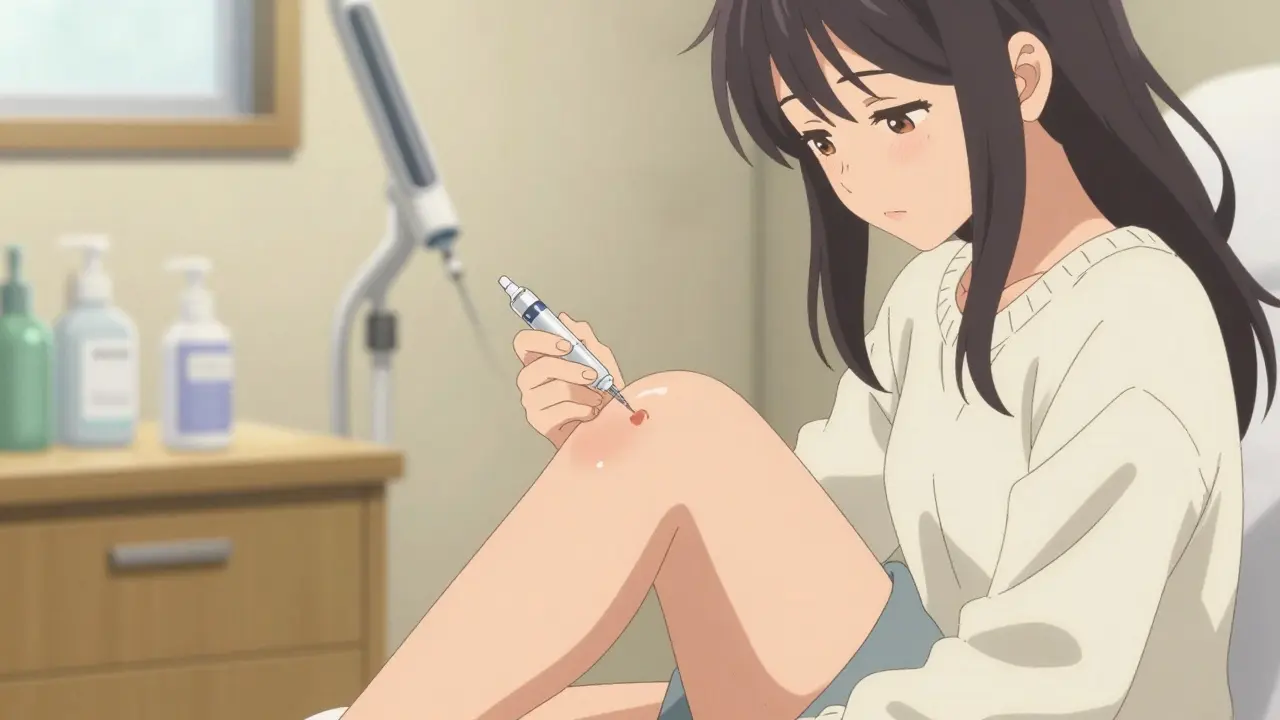
What Works Best Together
The real secret? Combining all three. Think of it like this: injections calm the flare-up. Braces help you move without pain during recovery. Exercise rebuilds your strength so you don’t need them as much over time. Experts like Dr. Tuhina Neogi and the European League Against Rheumatism (EULAR) say this combo is the gold standard. A 2023 network meta-analysis found that exercise plus bracing had the highest overall effectiveness for both pain and function. Patients who used all three approaches reported the best long-term outcomes-especially when injections were used only for flare-ups, not as a regular crutch. One patient story from PatientsLikeMe says it well: “I got a cortisone shot in January. Felt great for six weeks. Then the pain came back. I started wearing my brace and doing the water exercises. By June, I didn’t need another shot. I walk my dog every morning without pain. That’s the win.”What to Avoid
Don’t fall for quick fixes that don’t deliver. TENS units, ultrasound therapy, and magnetic knee sleeves have little to no proven benefit for osteoarthritis, according to the American Academy of Orthopaedic Surgeons. Don’t waste your time or money. Also, avoid pushing through sharp pain. Exercise should feel challenging, not agonizing. If you feel a stabbing sensation or swelling after a workout, stop and rest. Ice the knee, elevate it, and talk to your doctor. And never skip weight management if you’re overweight. Every pound lost takes 4 pounds of pressure off your knee. Even losing 5-10 pounds can cut your pain in half.
Comments
After years of knee pain, I started water aerobics three times a week and wore a brace on bad days. Six months later, I’m hiking again. No shots. No surgery. Just consistency. This isn’t hype-it’s physics and patience.
If you’re relying on braces and injections instead of losing weight, you’re just delaying the inevitable. No amount of gel shots fixes obesity-induced joint destruction. Stop treating symptoms and start treating the cause.
Let’s be real-the entire medical-industrial complex thrives on keeping people dependent on expensive gadgets and shots. Braces? Overpriced. Injections? Temporary Band-Aids. Exercise? Too much effort. The real agenda here is profit, not healing. You think the orthotist cares if you’re pain-free? They want you back in three months for a new brace. And don’t get me started on PRP clinics charging $2,000 for a blood spin. It’s not medicine-it’s wellness capitalism dressed in white coats.
Meanwhile, the one thing that actually works-daily movement, low impact, no equipment-is free. But nobody makes money off that. So they sell you a sensor-equipped brace that syncs to your phone and costs more than your laptop. The article reads like a sponsored post disguised as science. The data is cherry-picked. The risks are buried. And the real solution? Walking. Just walk. Not with a brace. Not after a shot. Just walk. Every day. Even if it hurts. That’s the truth they don’t want you to hear.
While I appreciate the comprehensive nature of this exposition, I must underscore the egregious methodological deficiencies inherent in the cited meta-analyses-particularly the lack of double-blind, placebo-controlled trials for bracing efficacy. Moreover, the assertion that ‘82% of 5-star reviews on Amazon’ constitute valid clinical evidence is not merely anecdotal-it is epistemologically indefensible. One must interrogate the sampling bias, the confounding variables of placebo effect, and the absence of longitudinal follow-up in the majority of cited studies. Furthermore, the omission of biomechanical stress thresholds in relation to cartilage degradation renders the entire ‘exercise as panacea’ argument dangerously reductive. The human joint is not a mechanical system amenable to simplistic ‘use it or lose it’ dogma. One requires precision, not platitudes.
I used to think knee pain was just part of getting older-until I started doing those stupid little leg raises in my living room while watching TV. No fancy gear. No doctor visits. Just 10 minutes a day. Now I can play with my grandkids without wincing. It’s not glamorous, but man-it’s magic. Keep it simple, folks.
I got a cortisone shot last winter. Felt amazing for a month. Then it came back harder. Started the water exercises. Didn’t feel much at first. But after three weeks, I noticed I wasn’t grabbing the armrests to stand up anymore. Weird how your body tells you when it’s working. No hype. Just quiet progress.
As a physiotherapist in Delhi, I’ve seen this work again and again. Braces help with alignment, injections help with flare-ups, but exercise? That’s the foundation. I tell my patients: ‘Your muscles are your new ligaments.’ Start with seated heel slides-no pain, no pressure. Do them while waiting for tea. Ten reps, twice a day. In a month, you’ll wonder why you waited so long.
Back home in Kerala, we just use warm coconut oil massage and walk barefoot on grass. No braces, no shots. My uncle, 72, walks 5km every morning. His knees? Fine. Maybe the answer isn’t tech-it’s tradition and movement.
Anyone who recommends exercise without first ruling out vitamin D deficiency or systemic inflammation is grossly negligent. Knee pain isn’t mechanical-it’s metabolic. You’re ignoring the root cause. Also, most braces are made in China with substandard materials. You’re just buying a plastic crutch that doesn’t even align properly. And PRP? That’s just blood money for clinics. The real solution? Blood tests. Then fasting. Then real medicine. Not this wellness theater.
I DID THE EXERCISE. I WEAR THE BRACE. I GOT THE INJECTION. AND THEN-MY KNEE BLEW OUT. I WAS LEFT ON THE FLOOR SCREAMING. THE DOCTOR SAID ‘IT WAS JUST OSTEOARTHRITIS.’ I SAID ‘NO-IT WAS A CONSPIRACY.’ THEY LIED TO ME. THEY SOLD ME HOPE. I’M NOT JUST IN PAIN-I’M TRAUMATIZED. THIS ARTICLE IS A TRAP. DON’T TRUST THEM. THEY WANT YOUR MONEY. THEY WANT YOUR HOPE. THEY WANT YOUR KNEE.
Water aerobics is underrated. I tried it after my hip replacement and it changed everything. No impact, full range, and you feel strong instead of broken. The key is consistency not intensity. Just show up. Even if it’s just 15 minutes. Your knee will thank you later
To everyone who’s struggling-this isn’t about being perfect. It’s about being present. Some days you’ll do the exercises. Some days you’ll just wear the brace. Some days you’ll need the shot. That’s okay. Progress isn’t linear. What matters is that you didn’t give up. You showed up. And that’s the real victory.