
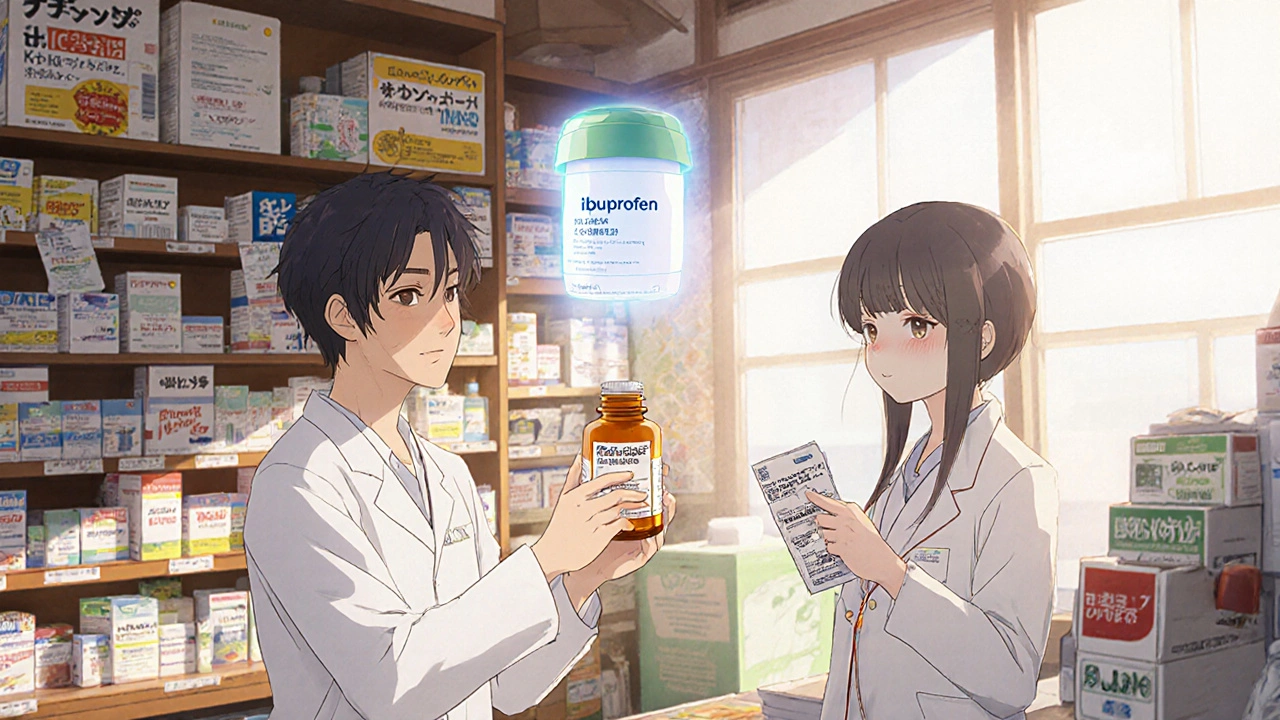
When you’re traveling abroad and need to fill a prescription, it’s not just about finding a pharmacy. It’s about making sure the pharmacy understands exactly what you need-down to the milligram. A simple mix-up in drug names or dosage can lead to serious harm. You might think Google Translate will do the job, but medication translation isn’t like translating a menu or a tourist map. One wrong decimal point, one misread brand name, and you could end up with the wrong drug entirely.
Why Medication Names Vary by Country
The same pill can have five different names depending on where you are. In the U.S., you might take Advil for pain. In France, it’s Ibuprofène. In Poland, it’s Abfen. All three contain the same active ingredient: ibuprofen. But if you hand a pharmacist in Rome a bottle labeled "Advil" and they don’t recognize it, they won’t know what to give you. This isn’t just confusing-it’s dangerous. In the UK, Ambyen is used to treat irregular heartbeat. In the U.S., Ambien is a sleep aid. The names look almost identical. If you accidentally get Ambien when you need Ambyen, you could face life-threatening side effects. That’s why relying on brand names alone is a risky move. The World Health Organization created the International Nonproprietary Name (INN) system to fix this. INNs are standardized generic names used globally. For example, the INN for Tylenol is "acetaminophen." If you know the INN, you can find the right drug anywhere. Always write down the INN of your medication before you travel.How Dosage Formats Can Trick You
Dosage instructions are another minefield. In the U.S., pills are often labeled in milligrams (mg). In some countries, they use grams (g). A prescription that says "1g" might mean 1,000 mg-exactly what you need. But if you misread it as 1 milligram, you’ll take 1,000 times less than required. That’s not just ineffective-it could make your condition worse. Some countries write dosing as "1 tablet 3x daily." Others use "TID" or "3x/die." Even punctuation matters. In the U.S., "5 mg" means five milligrams. In some European countries, they use a comma: "5,0 mg." If you’re not used to that format, you might think it’s 50 mg. Always ask the pharmacist to write out the dosage in plain language. If they say "take one tablet every eight hours," confirm that matches your original prescription. Don’t assume anything.What to Bring to a Foreign Pharmacy
You can’t just walk into a pharmacy in Tokyo or Mexico City with a U.S. prescription and expect them to fill it. Most countries don’t recognize foreign prescriptions without verification. Here’s what you need to bring:- The original prescription bottle with the pharmacy label
- A written list of your medication’s generic name (INN), strength, and dosage
- A letter from your doctor explaining why you need the medication
- Your passport or ID for identification
- A translated version of your prescription (if possible)
Professional Translation Services vs. AI Tools
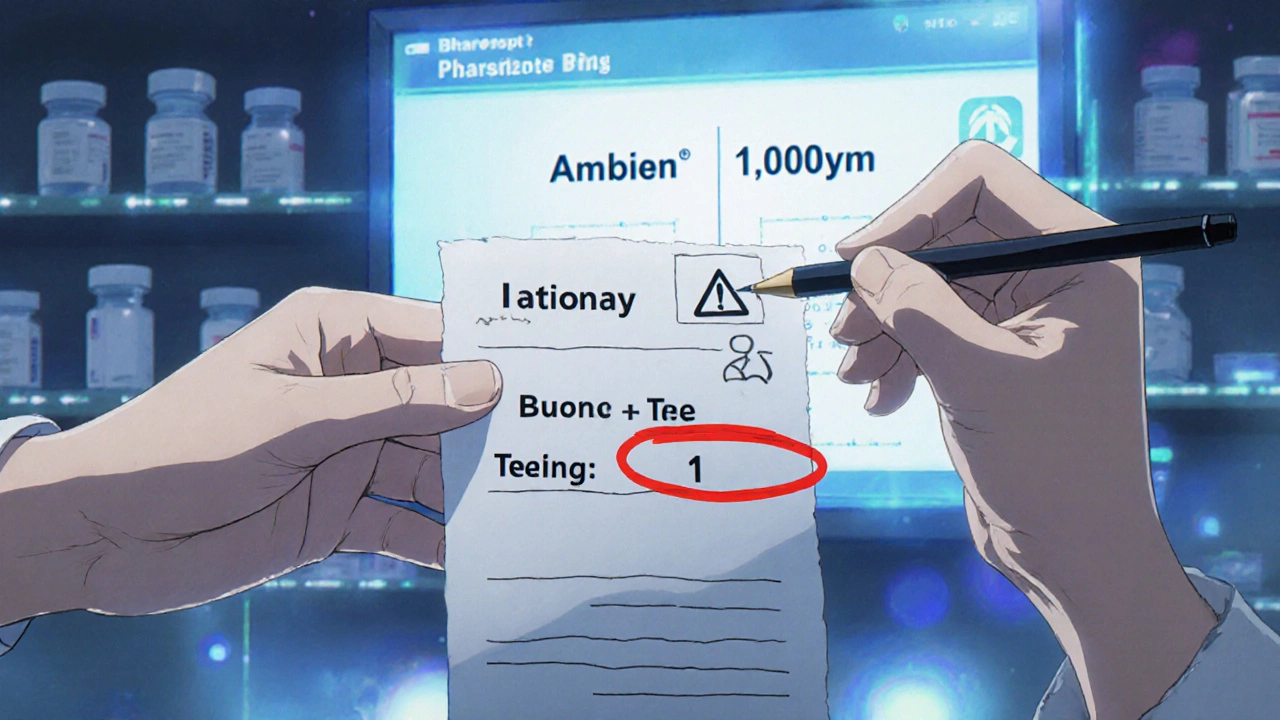
You might be tempted to use Google Translate or DeepL to convert your prescription. Don’t. These tools don’t understand medical context. They can’t tell the difference between "as needed" and "every 6 hours." They might translate "10 mg twice daily" as "10 mg two times daily," which sounds fine-but if they misread "2x" as "20," you’re in trouble. Professional medical translation services like RxTran and Stepes use certified medical translators who understand pharmaceutical terminology. They don’t just translate words-they translate meaning. Their systems cross-check brand names against global databases and flag dangerous similarities like Ambien/Ambyen. These services integrate directly with pharmacy systems and can generate translated patient labels, warning stickers, and medication guides in real time. They’re used by hospitals in Dubai, Toronto, and Singapore that serve patients from over 40 countries. But they’re not cheap. Enterprise systems cost $3,500 a year. For individual travelers, that’s not practical. But if you’re a pharmacy owner or work with international patients, investing in certified translation is non-negotiable. First Databank reports that 40% of medication errors during care transitions are preventable with accurate translation.What Pharmacies Are Required to Do
In the U.S., federal law requires pharmacies to provide medication information in languages spoken by their patients. New York State mandates translated labels in Chinese, Italian, Russian, and Spanish. California is expanding to include Tagalog, Vietnamese, and Farsi based on local demographics. Hospitals and large pharmacies are required to have translation protocols. Smaller clinics and independent pharmacies often don’t. That’s why travelers need to be proactive. If you’re in a country without strong language access laws, don’t assume the pharmacist speaks English. Bring your own translation. Even a simple printed card with your medication’s INN, dosage, and frequency can prevent a mistake.Real Stories from the Front Lines
A Reddit user named PharmTech2020 shared how they caught a potential overdose. A patient brought in a Spanish prescription for "1g" of a painkiller. The staff thought it meant 1 milligram. The patient had been taking it three times a day-thinking it was a low dose. But "1g" meant 1,000 mg. That’s a massive amount. Without the pharmacist’s training, the patient could have suffered liver damage. Another traveler in Bangkok ran out of her blood pressure medication. She showed the local pharmacy the bottle. They didn’t recognize the brand name. But she had written down the INN: "amlodipine." They found it under a local brand and confirmed the dosage matched. She got her refill without delay. These aren’t rare cases. A 2022 survey found 68% of international healthcare providers had encountered problems with foreign prescriptions. Most of those problems came from misread dosages or confused brand names.
How to Prepare Before You Travel
Don’t wait until you’re sick in a foreign country to figure this out. Here’s your checklist:- Ask your doctor for the INN of every medication you take.
- Write down the dosage, frequency, and reason for each one.
- Use Drugs.com/International to find local brand names for your medications in your destination country.
- Print a one-page summary in English and your destination’s language (use a professional translator if possible).
- Carry at least a 30-day supply of your medication in its original packaging.
- Know the rules: Some countries ban certain medications (e.g., pseudoephedrine in Japan). Check your destination’s health ministry website.
What to Do If You Can’t Find Your Medication
Sometimes, the exact drug isn’t available. That’s when you need to work with the pharmacist to find a safe alternative. Ask: "Is there another medication with the same active ingredient?" or "What’s the closest equivalent?" Never accept a substitute without confirming the active ingredient matches your original. If they suggest a different drug, ask for the INN and compare it to your list. If you’re still unsure, call your doctor back. Many can now send electronic prescriptions to international pharmacies through secure systems.Final Rule: Never Guess
Medication translation isn’t about being clever. It’s about being precise. If you’re not 100% sure what you’re getting, don’t take it. Walk out. Find another pharmacy. Call your doctor. Use a translation service. The cost of a mistake isn’t just financial-it’s your health. Every year, over half of all patients don’t take their meds correctly. A huge chunk of those errors happen because of language barriers. You can be part of the solution-by being prepared, asking questions, and never assuming.Can I use Google Translate to translate my prescription?
No. Google Translate and similar tools don’t understand medical context. They can misinterpret dosages, confuse similar-sounding drug names, and miss critical instructions like "take with food" or "avoid alcohol." Even small errors can lead to overdose or underdose. Always use a certified medical translator or verified resources like Drugs.com/International for accuracy.
What’s the difference between a brand name and a generic name for a drug?
The brand name is what the pharmaceutical company calls the drug-like Advil or Tylenol. The generic name, or International Nonproprietary Name (INN), is the active ingredient-ibuprofen or acetaminophen. The INN is the same worldwide. Brand names change by country, but the INN doesn’t. Always use the INN when asking for a drug abroad.
Do all countries accept foreign prescriptions?
No. Most countries require you to see a local doctor to get a new prescription. Some allow refills if you have the original bottle and a doctor’s letter. Others ban certain medications entirely. Always check your destination’s rules before you travel. Never try to bring controlled substances across borders without permission.
How do I know if a medication I find abroad is safe?
Ask the pharmacist for the active ingredient (INN) and compare it to your original prescription. Check the dosage and form (tablet, capsule, liquid). If it matches, it’s likely safe. Use trusted databases like Drugs.com/International to verify equivalents. If anything feels off, don’t take it-get a second opinion.
What should I do if I can’t find my medication abroad?
Contact your doctor immediately. Many can send an electronic prescription to a local pharmacy. If that’s not possible, ask the pharmacist for the closest therapeutic equivalent-meaning a drug with the same active ingredient and similar effect. Never substitute without confirming the INN matches. Carry a 30-day backup supply when you travel.
Comments
Been there done that in Delhi last year with my dad's blood pressure med
Pharmacist had no clue what 'Lisinopril' was until I showed him the INN on the bottle
He pulled out a local brand and we matched the dosage
Thank god I wrote it down before leaving
Google Translate said 'Lisinopril' was 'a type of lemon' lol
Of course you need to bring a doctor’s letter... because Americans can't be trusted to manage their own meds abroad. Why don't we just hand out passports with pre-approved drug lists stamped by the FDA? This is why the rest of the world thinks we're incompetent. You don't need a 10-page guide to take a pill. You need common sense. And maybe a pharmacy that speaks English. Which, shocker, most places don't. But hey, let's make it a global emergency.
OMG this is so real!! I had a panic attack in Tokyo when they handed me a tiny white pill and said 'for anxiety'... I had no idea if it was my Xanax or something else
I pulled out my INN list and they immediately went 'oh! Alprazolam!'
Then they gave me a little printed card in Japanese with the name and dosage 😭
Best pharmacy experience ever. I cried. Not because I was scared, but because someone cared enough to help me get it right.
Also-Drugs.com/International is my new favorite website. Bookmark it. Now.
It’s funny how we think language is just about words. But with medicine, it’s about life. One comma, one decimal, one different brand name-and you’re not just confused, you’re in danger.
Maybe the real problem isn’t the translation. It’s that we assume everyone speaks the same medical language. We forget that pills don’t have passports. People do.
So we have to carry the map for them. The INN isn’t just a name. It’s a lifeline.
And if you don’t write it down? You’re gambling with your body. And that’s not brave. That’s just careless.
I mean I get it but like... why does this even need to be this complicated? I just take my meds and I don't think about it. I guess if you're traveling you should probably do the research but honestly I just bring my bottle and hope for the best. I've never had a problem. Maybe I'm just lucky. Or maybe people are overthinking it. Like do you really need a letter from your doctor to get ibuprofen? I mean it's literally Advil. Everyone knows what that is. Right? Or am I the only one who thinks this is a bit much?
This is such a kind and necessary guide. I’ve seen people panic at pharmacies abroad and it breaks my heart.
Just writing down your INN and dosage on a sticky note? That’s the kind of small thing that saves lives.
You don’t need to be a doctor or a translator. You just need to be prepared.
And if you’re reading this and you’ve never done this before? Start today.
Take five minutes. Write it out. Print it. Carry it.
Your future self will thank you. And maybe someone else’s too.
Stop overcomplicating it. If you need medicine abroad, see a local doctor. Done.
No letters. No translations. No apps.
Just get a prescription like everyone else.
Stop treating your meds like a sacred text.
You’re not special. The system isn’t broken. You’re just lazy.
Thank you for this comprehensive and deeply thoughtful resource. The emphasis on the International Nonproprietary Name as a universal standard is not merely practical-it is ethically imperative.
Healthcare equity transcends borders, and the responsibility to ensure accurate medication delivery lies not only with institutions but with every individual who carries a prescription across cultures.
I have trained international medical volunteers using this exact framework, and the reduction in adverse events has been measurable and profound.
Let this not be a guide for travelers, but a manifesto for global health literacy.
Carry the INN. Speak plainly. Never assume.