
When Your Generic Medication Doesn’t Work - And Insurance Says No
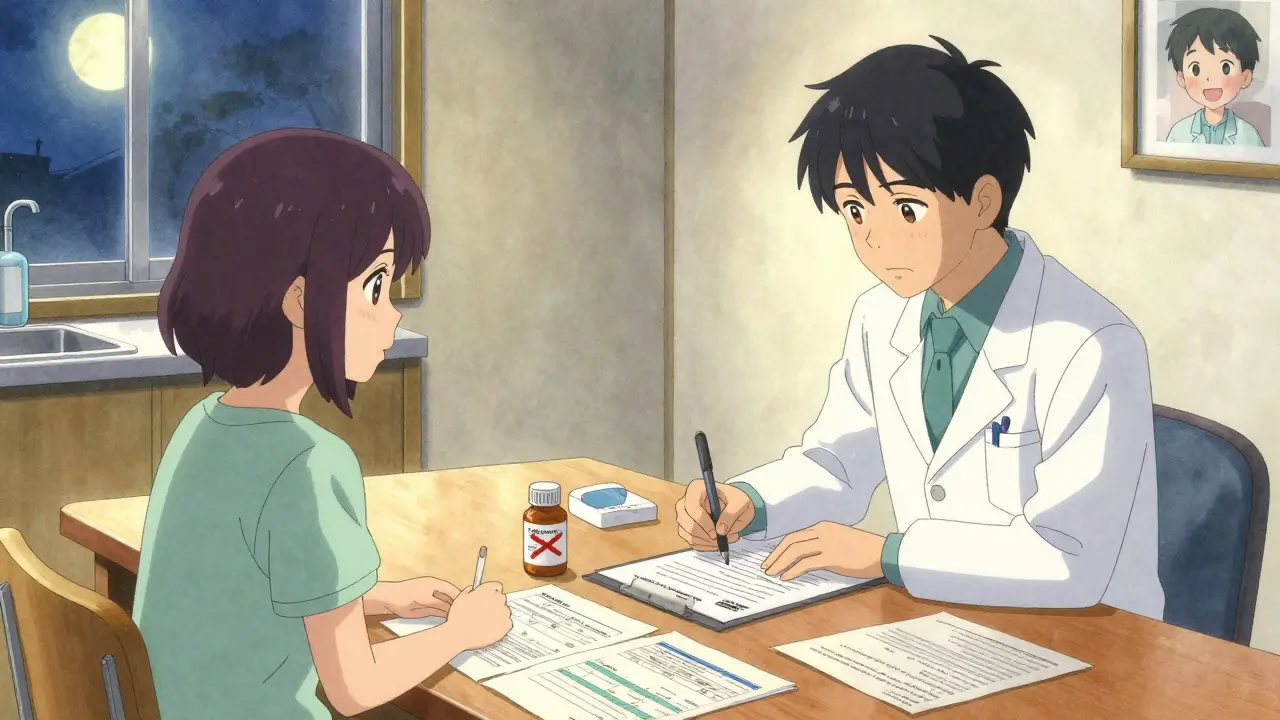
You were told the generic version of your medication would work just like the brand name. It’s cheaper. It’s FDA-approved. It’s supposed to be the same. But after two weeks, your symptoms are worse. Your blood work shows levels are off. You’re having side effects you never had before. You call your doctor. They agree: the generic isn’t working for you. You ask your insurance to cover the brand-name drug instead. And they deny it.
That’s not rare. In fact, it’s happening to tens of thousands of people every month - especially those taking drugs for thyroid conditions, epilepsy, heart rhythm disorders, or mental health. The FDA says generics must be 80% to 125% as effective as the brand name. That sounds precise. But for some people, that 25% window is the difference between feeling normal and having a seizure, a panic attack, or a thyroid crash.
Insurance companies don’t care about your experience. They care about cost. And if they can save $50 a month by pushing a generic, they will - even when it’s harming you.
But you don’t have to accept it. You can appeal. And if you do it right, you have a better than 6 in 10 chance of winning.
Why Generics Sometimes Just Don’t Work - Even When They’re "Bioequivalent"
Here’s the truth: generics are not identical to brand-name drugs. They contain the same active ingredient, yes. But they can have different fillers, dyes, coatings, or manufacturing processes. For most people, that doesn’t matter. But for people with sensitive systems - like those with epilepsy, Hashimoto’s, or bipolar disorder - those tiny differences can throw everything off.
Take levothyroxine, the most common thyroid medication. Studies show that switching from Synthroid to a generic can cause TSH levels to spike - sometimes from a stable 2.5 to over 10. That’s not just a number. That’s fatigue, weight gain, brain fog, and heart palpitations. One patient in Birmingham told me her TSH jumped from 2.1 to 14.7 after switching. Her doctor said: "This isn’t your fault. This isn’t compliance. This is the formulation."
Same with gabapentin. For nerve pain or seizures, some people report that generic versions don’t control symptoms the same way. The FDA doesn’t require generics to prove they work the same in every patient - only that they deliver the same amount of active ingredient. That’s not enough.
And then there’s warfarin. One small change in absorption can mean a dangerous blood clot or a bleed. Doctors who manage anticoagulants often refuse to switch patients to generics for this reason. But insurance doesn’t care what your doctor says - until you appeal.
How the Appeal Process Actually Works (Step by Step)
Insurance denials don’t mean "no forever." They mean "no - unless you prove otherwise." Here’s how to fight back.
- Get your Explanation of Benefits (EOB) - This is your official denial letter. Look for codes like DA2000 ("generic available") or DA1200 ("not on formulary"). Keep it. You’ll need it.
- Call your doctor’s office immediately - Don’t wait. Ask for a letter of medical necessity. Tell them exactly what happened: "I switched to the generic on [date]. My symptoms worsened on [date]. My lab values changed from [value] to [value]. I had [side effect]. I need the brand name to stay stable."
- Include specific evidence - The best appeals don’t just say "it doesn’t work." They show it. Attach:
- Lab results showing TSH, INR, or drug levels before and after switching
- A medication log: date, dose, symptoms, side effects
- Any ER visits or hospitalizations tied to the generic
- A copy of your doctor’s note or clinical assessment
One patient with epilepsy in Manchester won her appeal after submitting a seizure diary with dates, times, and EEG reports showing increased spike activity after switching to generic levetiracetam. The insurer approved the brand name within 10 days.
For Medicare Part D, you have 60 days to appeal. For commercial insurance, you usually have 180 days. Don’t wait.

What Makes an Appeal Win - And What Makes It Fail
Most appeals get denied the first time. But 67% of appeals that go to an external review are approved - if they’re well-documented.
Here’s what works:
- Specifics over generalizations - "My mood worsened" → "My PHQ-9 score rose from 8 to 21 after switching to generic sertraline, and I had two panic attacks in one week."
- Cite guidelines - "Per the 2019 Endocrine Society guidelines, patients with autoimmune thyroid disease should not be switched between formulations without monitoring."
- Use your doctor’s voice - The letter should be on letterhead, signed, and include their license number. It should say: "I have seen this patient for X years. This is not a preference. This is medical necessity."
Here’s what fails:
- "I feel better on the brand name." (Too subjective)
- "My friend takes the brand and it works." (Irrelevant)
- "I’ve been on it for 10 years." (Doesn’t prove the generic caused the problem)
- Waiting 3 months to appeal. (Deadline missed)
Studies show appeals with blood level data have an 82% approval rate. Appeals with just a doctor’s note saying "it doesn’t work"? Around 37%.
Which Insurances Are Easier to Appeal Against?
Not all insurers play by the same rules.
Medicare Part D has a clear five-step appeals process. They’re required to respond within 7 days for urgent cases. Success rate: 58% at the first level.
Commercial plans vary by state. In California, New York, and Texas, you have stronger protections. In states without specific laws, denials are harder to overturn - but not impossible.
Employer plans under ERISA are trickier. They’re federally regulated, and their internal reviews can feel like a black box. But if you get to external review, your odds jump.
Pro tip: If your insurer is OptumRx, Accredo, or Express Scripts, they have dedicated appeal support teams. Call them. Ask for a case manager. They’ve seen this before. They know what works.
What to Do If Your First Appeal Gets Denied
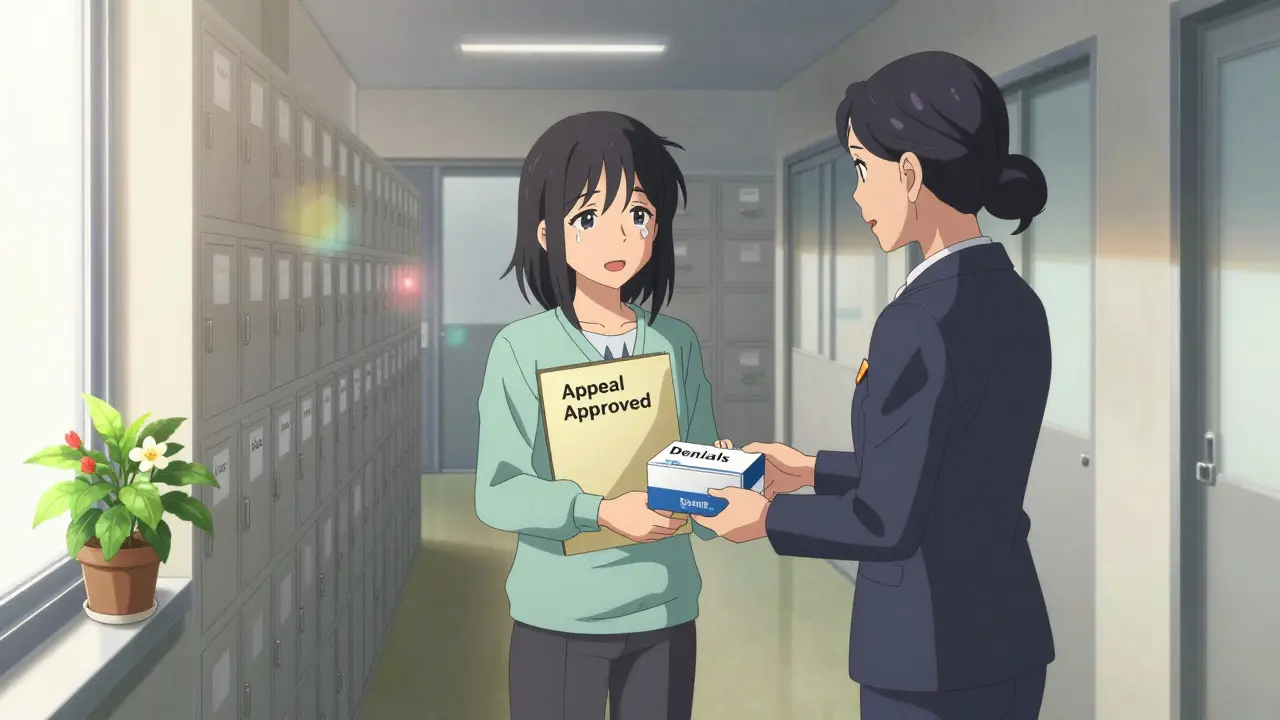
Don’t stop. You have the right to an external review.
For commercial insurance, this means an independent third party reviews your case - not your insurer. For Medicare, it’s the Office of Medicare Hearings and Appeals. This is where most wins happen.
At this stage, you need:
- Your original appeal packet
- A copy of the denial letter
- A letter from your doctor reiterating medical necessity
- Any new lab results or clinical notes since your first appeal
And if you’re still stuck? Contact the Patient Advocate Foundation at 1-800-532-5274. They offer free case management. Their clients have a 92% satisfaction rate. They’ve helped people in Birmingham, Leeds, and Glasgow get their medications approved.
How to Prevent This From Happening Again
Once you win, make sure your insurer documents it permanently.
Ask your doctor to add a note to your chart: "Therapeutic inequivalence with generic [drug name]. Brand name medically necessary. Do not substitute."
Ask your pharmacy to flag your profile. Many pharmacies now have systems that block substitutions if there’s a documented exception.
And if your plan changes next year? Call your new insurer before you refill. Say: "I have an approved exception for [drug name]. Is it still covered?"
Also, ask your doctor if they can prescribe the brand name with a "do not substitute" note on the script. Some states require pharmacies to honor that.
The Bigger Picture: Why This System Is Broken - And How It’s Changing
Generics save billions. That’s good. But the system assumes all patients are the same. They’re not.
Every year, $28 billion is spent on hospital visits because people couldn’t get the right medication. That’s avoidable.
Thankfully, things are shifting. The 2024 Inflation Reduction Act strengthened Medicare appeals. 19 states now have "right to try brand" laws. And the FDA is looking at individualized bioequivalence testing.
But until then - if you’re one of the 15-20% of patients who don’t respond to generics, you have rights. You have a process. And you have proof.
You just have to fight for it.
What if my doctor won’t write a letter for my appeal?
Ask them again - and be specific. Say: "I need you to document that the generic caused a measurable decline in my health. I have lab results showing [X] changed from [Y] to [Z]. Can you write a letter confirming this is a medical necessity?" Many doctors will do it if you make it easy. If they refuse, ask for a referral to a specialist who can. Some clinics have dedicated staff to help with prior authorizations.
Can I appeal if I’ve only tried one generic?
Yes. You don’t need to try multiple generics unless your insurer requires it - and many states now ban that practice for documented therapeutic failures. If you had a clear reaction to one generic - like a seizure, severe anxiety, or abnormal lab values - that’s enough. Insurers can’t force you to try more if it’s medically unsafe.
How long does the appeal process take?
Internal appeals usually take 14-21 days. External reviews take 30-45 days. For urgent cases - like epilepsy, heart conditions, or severe mental health crises - you can request an expedited review. Medicare must respond within 72 hours. Make sure your doctor writes "URGENT: RISK OF SEIZURE/DECOMPENSATION" at the top of the letter.
Are there tools to help me write my appeal letter?
Yes. GoodRx’s Appeal Assistant generates a customized letter based on your drug and insurance. It’s free, takes 5 minutes, and includes the exact language insurers recognize. The Patient Advocate Foundation also offers templates. Don’t write from scratch - use what works.
What if I run out of medication while waiting for my appeal?
Call your pharmacy and ask for a "bridge prescription" - a short-term supply of the brand name while your appeal is pending. Many pharmacies will give you 7-14 days’ worth if your doctor calls in. If they refuse, ask your doctor to file a "prior authorization emergency exception." For Medicare, this triggers a 72-hour review. Don’t stop taking your meds. Fight for continuity.
Comments
Just had this happen with my levothyroxine. Switched to generic, felt like a zombie for three weeks. Doctor said same thing - it’s not me, it’s the filler.
This is one of those systemic failures that shouldn’t exist in a country with our medical resources. The FDA’s 80–125% bioequivalence window is a statistical abstraction that ignores biological individuality. For patients with epilepsy, autoimmune thyroid disease, or psychiatric conditions, that variance isn’t a margin - it’s a chasm. The insurance industry’s cost-cutting logic treats human physiology like a commodity ledger, and it’s morally indefensible. Documented clinical deterioration, lab anomalies, and physician attestation should be sufficient for approval - not a bureaucratic gauntlet.
Thank you for outlining the appeal process with such precision. The 82% approval rate with lab data is the most compelling statistic here. It proves that when we translate lived experience into measurable clinical evidence, the system *can* be moved. The real tragedy isn’t the denials - it’s that so many patients never reach the external review stage because they’re exhausted, uninformed, or financially drained.
Also, shoutout to the Patient Advocate Foundation. Their case management model should be replicated nationwide. We need more advocates, not more algorithms deciding who gets to feel human.
I appreciate the thorough breakdown. As someone who manages chronic autoimmune conditions, I’ve been through this dance multiple times. The key is specificity - not just "it doesn’t work," but "my TSH went from 2.3 to 11.4, my FT4 dropped 40%, and I had two falls due to vertigo within 10 days of switching."
Doctors need to be pushed to document this way. Most don’t realize how much weight objective data carries. I’ve had mine write letters with lab graphs attached - insurers don’t argue with graphs.
Also, always ask for a "therapeutic equivalence exception" in writing. That phrase triggers a different internal flag than "I prefer the brand."
And yes - call the pharmacy *before* you run out. Bridge prescriptions are a lifeline.
YEAH FUCK THIS SYSTEM. I WAS ON SYNTHROID FOR 8 YEARS. INSURANCE SWITCHED ME TO A GENERIC - I HAD A PANIC ATTACK SO BAD I CALLED 911. THEY DENIED MY APPEAL THE FIRST TIME BECAUSE "NO SEIZURE OCCURRED." WHAT THE ACTUAL FUCK? I’M NOT WAITING TO HAVE A SEIZURE TO PROVE IT’S DANGEROUS.
TOOK ME 3 MONTHS AND A LAWYER TO WIN. NOW THEY’RE FORCED TO COVER IT. DON’T LET THEM GASLIGHT YOU. DOCUMENT EVERYTHING. SEND IT CERTIFIED MAIL. THEY HATE THAT.
Why do people think the government gives a shit? Generics save money. That’s it. You think they care you’re tired? You think they care you’re depressed? Nah. They care about the bottom line. And you’re just a line item.
Also why is everyone acting like this is new? This has been happening since the 90s. The FDA’s rules haven’t changed. The insurance bots haven’t changed. You’re just now noticing because your meds stopped working.
Good luck. You’re gonna need it.
I’m a nurse and I see this every week. One thing I tell patients: your doctor doesn’t have to say "I think" - they have to say "this is medically necessary because of documented clinical deterioration."
And if they’re hesitant? Say: "Can you just write what happened? The numbers? The dates? I’ll handle the rest."
Most doctors will do it if you make it easy. You’re not asking for a favor. You’re asking for a record of what happened to your body. That’s your right.
Also - don’t wait for the appeal to start taking your meds again. Call the pharmacy. Ask for a 7-day bridge. They’ll usually give it. You’re not being pushy. You’re being smart.
Thank you for this comprehensive guide. As a clinician in the UK, I’ve observed similar issues with generic substitutions under the NHS. The principle of bioequivalence is sound in population-level terms but fails in individualized care. The absence of mandatory post-market pharmacovigilance for generic formulations is a critical gap.
Documented clinical outcomes, serial lab values, and physician attestation remain the most effective tools. The 67% external review success rate is encouraging. It suggests that when evidence is structured and objective, systems can be corrected - even slowly.
For those in the US, I recommend retaining all correspondence. Paper trails matter. Digital records vanish.
My cousin in India had the same problem with epilepsy meds. Generic didn't work. Doctor wrote letter. Hospital helped with appeal. Took 4 weeks. Now covered. Don't give up. Your body knows what it needs.
This gave me hope. I was about to quit. My doctor said "it’s probably fine" but I knew something was off. Now I’ve got my lab results printed, my symptom log ready, and I’m calling the pharmacy tomorrow for a bridge script. Thank you for saying I’m not crazy.
Oh sweetie, you’re just not understanding the elegance of market-driven healthcare. The FDA’s bioequivalence standards are *perfectly* calibrated for efficiency. If you can’t tolerate a $0.12 pill, perhaps you’re just not optimized for capitalism? Maybe try yoga? Or a different diagnosis?
Also, why are you even on medication? Shouldn’t you be manifesting wellness?
My sister’s story: switched from brand to generic sertraline. Mood crashed. Went from functional to bedridden in 10 days. Lab tests showed no change in blood levels - but her cortisol spiked, her sleep architecture collapsed, and her PHQ-9 score went from 7 to 24. Her doctor called it "therapeutic failure due to formulation variability." Insurer denied. External review approved after 38 days. She’s back to normal.
It’s not about preference. It’s about physiology. And the system knows it - that’s why they only approve when you bring the data.
Don’t let them make you feel like you’re asking too much. You’re asking for your life back.