
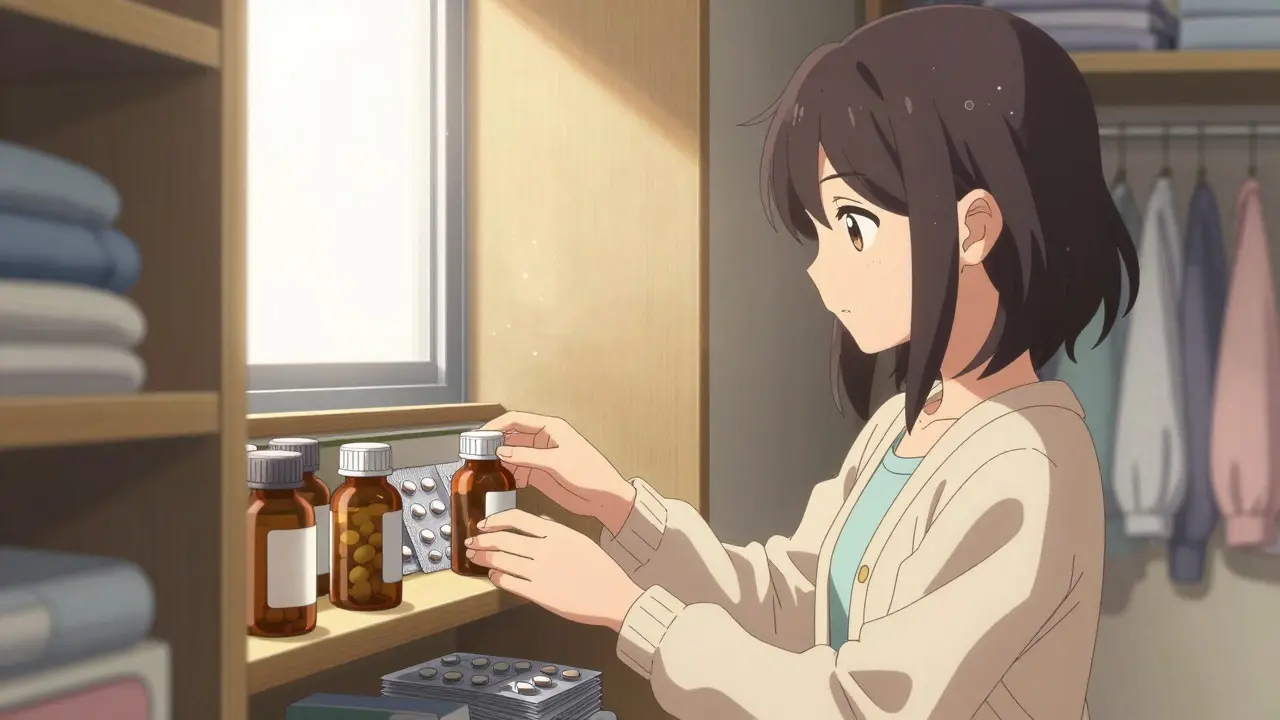
Have you ever dug into the back of your medicine cabinet, pulled out a bottle of pills from last year, and wondered if they were still safe to take? You are not alone. Most of us treat expiration dates like hard deadlines for food, but with medication, the rules are surprisingly different. While some drugs lose their punch quickly, others can sit on a shelf for years without losing effectiveness-provided they are stored correctly.
The idea that all medicines go bad the moment the clock strikes midnight on their expiry date is a myth. In fact, large-scale government studies have shown that the vast majority of properly stored medications remain potent well beyond their labeled dates. However, this doesn't mean you should just throw everything in a drawer and hope for the best. Storing medications to extend their shelf life safely requires understanding how temperature, light, and humidity interact with chemical compounds. Get it wrong, and you risk taking an ineffective dose or, worse, a degraded product that could cause harm.
The Science Behind Expiration Dates
To understand why some meds last longer than others, we need to look at where these dates come from. An expiration date is not a random guess by a pharmacist. It is a legal guarantee provided by the manufacturer that the drug will retain its full potency and safety up until that specific point in time. This guarantee is based on rigorous stability testing protocols, often following guidelines set by organizations like the International Council for Harmonisation (ICH).
These tests simulate long-term storage conditions to see how the drug breaks down over time. The date printed on the box is essentially the conservative end-point of that data. But here is the twist: once a batch leaves the factory, the story changes depending on where it goes. If it sits in a warehouse under perfect conditions, it might last much longer. If it bounces around in a hot car or a humid bathroom, it degrades faster.
This discrepancy led to the creation of the Shelf-Life Extension Program (SLEP), a joint initiative between the FDA and the Department of Defense established in 1986. SLEP was designed to test medications held in strategic national stockpiles to see if they were still viable after their original expiration dates passed. The results were eye-opening. Out of 3,005 tested lots across 122 different drug products, 88% retained adequate stability beyond their labeled expiration dates. Many showed extended stability of over five years. This proves that the chemical structure of many solid oral dosage forms is far more resilient than we give them credit for.
Where to Store Your Meds: The Golden Rules
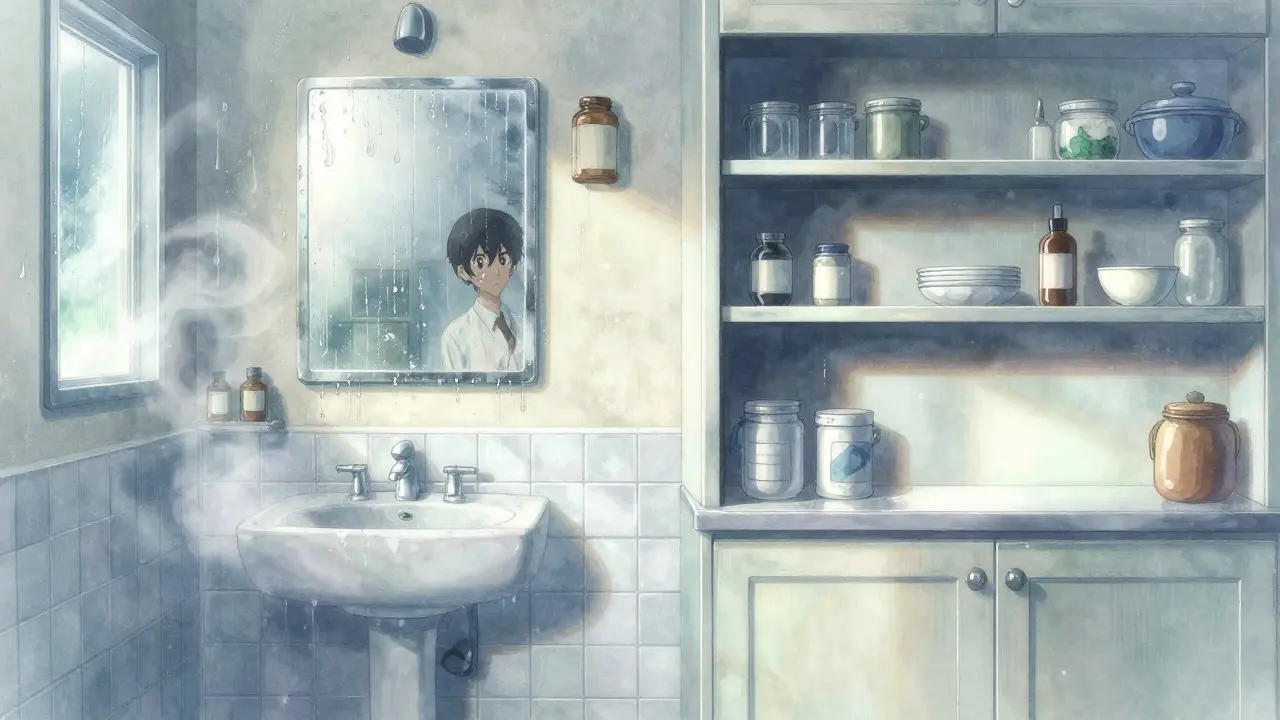
If you want to maximize the life of your medications, location is everything. The biggest mistake people make is storing drugs in the bathroom. It sounds convenient, but the bathroom is a nightmare for pharmaceutical stability. Why? Because of heat and humidity. Every time you shower, you create a steamy environment that mimics a tropical rainforest. For most tablets and capsules, moisture is the enemy. It can cause pills to crumble, dissolve prematurely, or grow mold.
Instead, aim for a cool, dry place away from direct sunlight. A bedroom closet or a kitchen cupboard (away from the stove and sink) is usually ideal. The goal is to maintain a consistent ambient temperature, ideally around 20°C to 25°C (68°F to 77°F). Fluctuations are just as damaging as extreme heat. If your home gets very hot in the summer, consider keeping sensitive medications in a room with air conditioning.
Light is another silent killer. UV rays can break down chemical bonds in certain drugs, rendering them useless. This is why many medications come in amber bottles or opaque blister packs. Never transfer pills from their original packaging to clear plastic containers unless necessary, and even then, keep them out of sight. If a label says "protect from light," take it seriously. Store those bottles in a dark drawer rather than on an open shelf.
- Avoid the Bathroom: High humidity accelerates degradation.
- Skip the Car: Cars act like ovens in summer and freezers in winter, causing rapid temperature swings.
- Keep Original Packaging: Blister packs offer better protection against moisture and light than loose pills in a jar.
- Control Temperature: Aim for a stable room temperature, avoiding places near radiators or windows.
Which Medications Last Longer?
Not all drugs are created equal when it comes to longevity. The physical form of the medication plays a huge role in how well it holds up over time. Solid oral dosage forms, such as tablets and capsules, are generally the most stable. They have low moisture content and are often coated to protect the active ingredient. In SLEP testing, drugs like naloxone, halothane, and fentanyl demonstrated 100% stability for four to five years post-expiration across all tested lots.
Liquids, on the other hand, are much trickier. Once you open a bottle of liquid antibiotic or cough syrup, the clock starts ticking faster. Exposure to air introduces oxygen and microbes, which can spoil the solution. Reconstituted powders (where you mix water with a powder to make a liquid) are particularly unstable and should be used within the timeframe specified on the label, usually within days or weeks.
Insulin and other biologics represent the high-maintenance end of the spectrum. These complex protein structures are highly sensitive to temperature. Insulin needs to be refrigerated between 2°C and 8°C until opened. Even brief excursions outside this range can denature the protein, making it ineffective. If you rely on insulin, a simple refrigerator thermometer is a wise investment to ensure your fridge isn't running too warm or too cold.
| Medication Type | Typical Stability Beyond Expiry | Key Risk Factors |
|---|---|---|
| Solid Tablets/Capsules | High (Often years) | Humidity, Heat |
| Liquid Suspensions | Low (Months after opening) | Oxidation, Microbial Growth |
| Insulin/Biologics | Very Low (Strict Temp Control Needed) | Temperature Excursions |
| Nitroglycerin | Low (Weeks after opening) | Light, Air, Heat |
The Dangers of Expired Drugs
While many drugs remain effective past their expiration date, "effective" does not always mean "safe." There are notable exceptions where degradation leads to toxic byproducts. The most famous example is tetracycline. Older studies suggested that expired tetracycline could break down into compounds that damage the kidneys. While modern manufacturing has reduced this risk, it remains a cautionary tale. Always check specific warnings for antibiotics before considering extended use.
Another critical category is emergency medications. Nitroglycerin, used for chest pain, loses potency rapidly once the bottle is opened because it is volatile. Relying on expired nitroglycerin during a cardiac event could be fatal. Similarly, epinephrine auto-injectors (EpiPens) are subject to strict expiration dating because they must deliver a precise dose instantly. If the mechanism fails or the drug degrades, the consequences are severe. For life-saving drugs, err on the side of caution and replace them promptly.
Dr. Lee Cantrell from the University of California, San Francisco, notes that while solid oral forms are generally stable, liquid formulations and reconstituted products can degrade into potentially harmful substances. This highlights the importance of knowing what you are dealing with. A leftover course of amoxicillin from six months ago might taste fine, but is it strong enough to kill the bacteria causing your current infection? Probably not. Taking sub-therapeutic doses can contribute to antibiotic resistance, a major global health threat.
Advanced Storage Technologies
For those looking to push the boundaries of shelf life, technology offers some fascinating solutions. In industrial and military settings, Modified Atmosphere Packaging (MAP) is used to alter the internal atmosphere of a package with specific gas mixtures. This inhibits microbial growth and slows oxidation. While you won't find MAP for your everyday aspirin, the principle applies: less oxygen means slower degradation.
Emerging trends include "intelligent packaging" with time-temperature integrators. These are small labels that change color based on cumulative exposure to heat. If your medication has been subjected to too much warmth during transport or storage, the label alerts you. This provides a visual indicator of quality that goes beyond the printed date. As these technologies become cheaper, we may see them adopted in consumer packaging, giving patients greater confidence in their medication's integrity.
Additionally, continuous stability monitoring is becoming more common in the pharmaceutical industry. Instead of relying on fixed expiration dates, companies are using real-time tracking systems to assess drug quality. This shift towards data-driven shelf life determination could eventually lead to personalized expiration dates based on how a specific batch was handled and stored.
Practical Tips for Home Management
You don't need a laboratory to store your meds safely. Simple habits can make a big difference. First, organize your medicine cabinet regularly. Check expiration dates every six months. If a pill looks discolored, smells odd, or has changed texture, toss it. Visual inspection is a powerful tool; degradation often shows visible signs.
Second, keep a log if you have multiple prescriptions. Note when you open each bottle. For liquids, write the date of opening on the label with a permanent marker. This helps you track how long the medication has been exposed to air.
Third, dispose of expired medications properly. Do not flush them down the toilet unless the label specifically instructs you to do so (this is rare and usually reserved for highly addictive opioids to prevent misuse). Instead, take them to a local pharmacy or a community drug take-back program. In the UK, pharmacies often have designated bins for unused medicines. This prevents environmental contamination and keeps drugs out of the hands of children or pets.
Finally, communicate with your pharmacist. If you have questions about whether a specific medication is safe to use past its date, ask. Pharmacists have access to detailed stability data and can provide guidance tailored to your specific health needs. They are your best resource for navigating the complexities of medication storage.
Can I take expired medication if it looks and smells fine?
For most solid oral medications like tablets and capsules, yes, they are likely still safe and effective for a short period past the expiration date, especially if stored properly. However, for critical medications like insulin, nitroglycerin, or liquid antibiotics, it is safer to replace them. Degradation is not always visible, and potency loss can lead to treatment failure.
Why shouldn't I store medicine in the bathroom?
Bathrooms are typically the warmest and most humid rooms in a house due to showers and baths. Moisture and heat accelerate the chemical breakdown of drugs, causing them to lose potency or degrade into harmful compounds. A cool, dry bedroom closet is a much better option.
What is the Shelf-Life Extension Program (SLEP)?
SLEP is a US government program that tests medications in national stockpiles to determine if they remain stable and effective beyond their original expiration dates. Studies under SLEP have found that nearly 90% of tested drugs remained viable for years after expiring, proving that proper storage significantly extends shelf life.
Are there any medications that become toxic when expired?
Yes, tetracycline is the most well-known example. When it degrades, it can form compounds that may cause kidney damage. While modern manufacturing has reduced this risk, it is generally advised not to use expired tetracycline. Other antibiotics may simply lose effectiveness, leading to incomplete treatment and antibiotic resistance.
How should I dispose of old medications?
The best way is to return them to a pharmacy or a community drug take-back program. This ensures safe disposal and prevents environmental pollution. Only flush medications if the label explicitly instructs you to do so, which is usually limited to highly addictive drugs to prevent overdose risks.