
One wrong letter on a prescription can kill. It’s not a scare tactic-it’s fact. In 2022, over 1,500 preventable deaths in U.S. hospitals were linked to misread medical abbreviations. These aren’t typos. They’re deeply rooted habits that still slip through, even in high-tech hospitals. And the worst part? Most of them are avoidable.
Why These Abbreviations Are So Dangerous
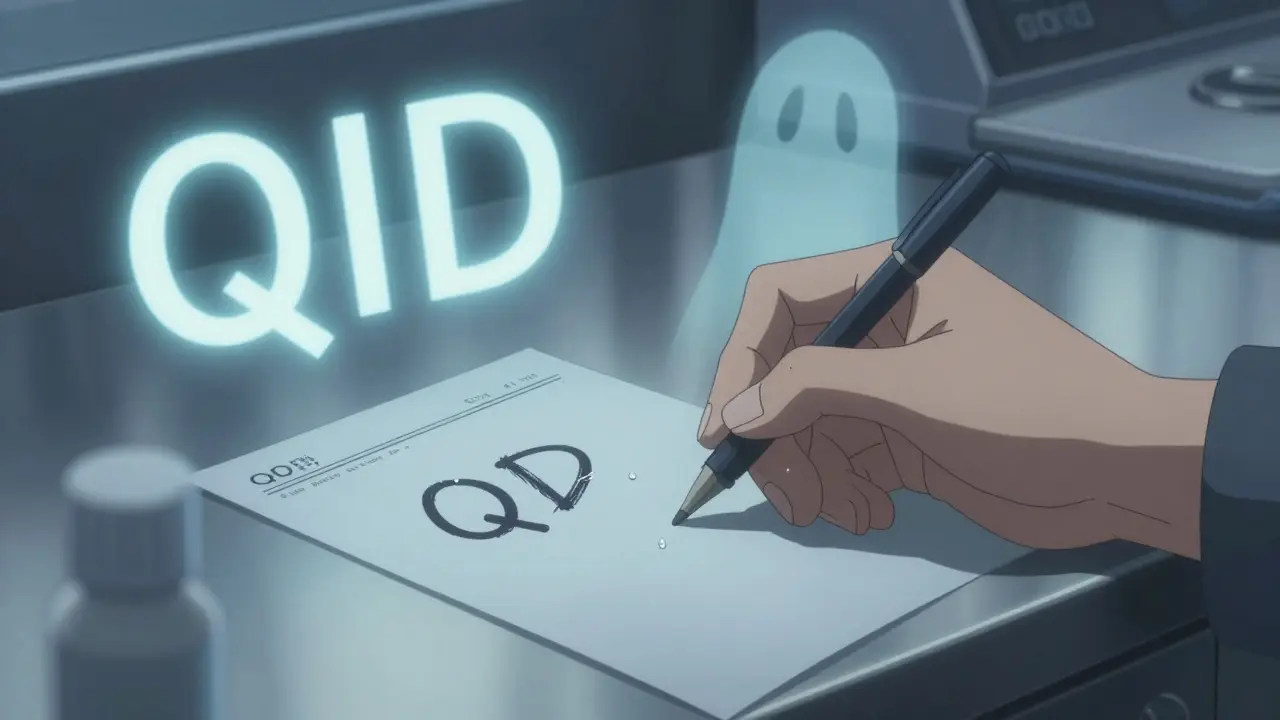
Medical abbreviations were once shortcuts. Doctors wrote them fast. Pharmacists read them quick. But when a handwritten ‘QD’ meant ‘once daily’ and got read as ‘every day,’ or ‘MS’ stood for morphine sulfate but looked like magnesium sulfate, lives were put at risk. The Joint Commission and the Institute for Safe Medication Practices (ISMP) started sounding alarms back in 2001. By 2015, they had compiled a formal ‘Do Not Use’ list. It wasn’t just suggestions. It was a safety mandate.Here’s what happens when these abbreviations stay in use:
- A nurse gives insulin because ‘U’ was misread as ‘4’-leading to a fatal overdose.
- A pharmacist dispenses morphine instead of magnesium sulfate because ‘MS’ and ‘MgSO4’ looked too similar.
- A patient gets chlorambucil twice daily instead of twice weekly because ‘BIW’ was mistaken for ‘BID’.
These aren’t rare. In a 2022 survey of 1,843 pharmacists, 63.7% said they’d intercepted at least one dangerous abbreviation error in the past year. The top three? ‘QD,’ ‘U,’ and ‘MS.’
The Top 5 Dangerous Abbreviations You Must Stop Using
These five are the most common culprits-and they’re banned in every accredited U.S. hospital.
- QD - This stands for ‘quaque die’ (once daily). But it looks like ‘QID’ (four times daily) or ‘QOD’ (every other day). A 2018 analysis of nearly 5,000 medication errors found that QD caused 43.1% of all abbreviation-related mistakes. Solution? Write ‘once daily’ in full.
- U - Stands for ‘unit.’ But handwritten, it looks like a ‘0,’ a ‘4,’ or even a ‘cc.’ In one case, a patient received 100 units of insulin because ‘10U’ was read as ‘100.’ Solution? Always write ‘units’ in full.
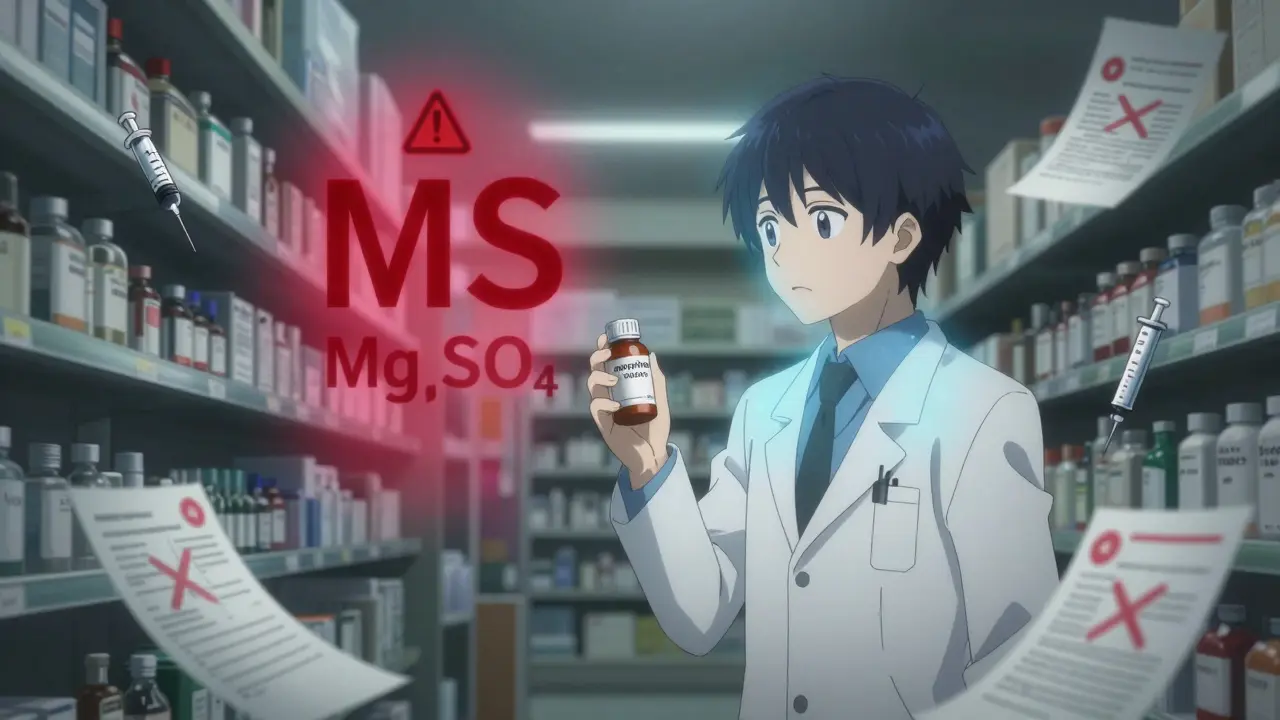
- MS or MSO4 - Means morphine sulfate. But it’s almost identical to ‘MgSO4’ (magnesium sulfate). Mixing them up can cause respiratory arrest or cardiac arrest. Morphine depresses breathing. Magnesium can stop your heart. Solution? Always write ‘morphine sulfate’ or ‘magnesium sulfate’ in full.
- SC or SQ - Both mean subcutaneous. But ‘SQ’ can be misread as ‘5 every’ (especially in messy handwriting). ‘SC’ has been confused with ‘SL’ (sublingual), leading to wrong drug routes. Solution? Use ‘subcutaneous’ or ‘SubQ’ (if allowed by your facility).
- cc - Cubic centimeters. Sounds harmless, right? But it’s often mistaken for ‘U’ (units). A 2020 study found that 1 in 4 insulin errors involved ‘cc’ and ‘U’ confusion. Solution? Always use ‘mL’ (milliliters).
Other High-Risk Abbreviations You Might Not Know
Some abbreviations are less common but just as deadly:
- TIW or BIW - ‘Twice a week’ or ‘twice a week.’ Often read as ‘twice daily.’ A patient on chlorambucil nearly died when this happened.
- IU - International Unit. Looks like ‘IV’ (intravenous) or ‘10.’ In one case, a patient got an IV dose of vitamin D because ‘10 IU’ was read as ‘10 IV.’
- AZT - Zidovudine. Mistaken for azathioprine (an immune suppressant) or aztreonam (an antibiotic). Wrong drug, wrong outcome.
- TAC - Triamcinolone cream. Looked like ‘Tazorac’ (a different acne medication) due to sloppy handwriting. Patient got the wrong skin treatment.
- NMT - Nebulizer mist treatment. Interpreted as ‘no more than.’ Patient received a higher dose of hypertonic saline than intended.
- DTO - Diluted tincture of opium. Confused with morphine sulfate. Led to dangerous opioid overdose.
These aren’t just ‘bad handwriting’ issues. They’re systemic failures. Even in digital systems, free-text fields still let these slip through.
How Hospitals Are Fighting Back
Some places have turned the tide. Mayo Clinic cut abbreviation-related errors by 92.3% in just two years. How? Three things:
- EHR hard stops - If you type ‘QD,’ the system won’t let you submit. It forces you to write ‘once daily.’
- Real-time alerts - Pharmacists get instant notifications when dangerous abbreviations appear in e-prescriptions.
- Education with consequences - Every prescriber gets mandatory training. Repeat offenders get flagged.
It works. A 2021 study showed that facilities using hard stops reduced errors by 84.6%. Those relying only on education? Only 52.3% improvement.
But not everyone is on board. A 2022 AMA survey found that 43.7% of physicians over 50 still use banned abbreviations. They say, ‘I’ve always written it this way.’ But safety isn’t about tradition. It’s about survival.
What You Can Do-Even If You’re Not a Doctor
You don’t need to be a pharmacist to protect yourself or a loved one. Here’s how:
- Ask - When you get a prescription, ask: ‘Can you write that out in full?’ If you see ‘MS,’ ‘U,’ or ‘QD,’ say: ‘Can you spell that out?’
- Check - Compare the label on your pill bottle to the doctor’s note. If it says ‘morphine sulfate’ but the script says ‘MS,’ ask why.
- Report - If you spot a dangerous abbreviation on a prescription, tell the pharmacist. They’re trained to catch this. You’re their eyes.
One woman in Ohio saved her husband’s life when she noticed ‘U’ on his insulin script. She called the pharmacy. The pharmacist realized the dose was 10 times too high. She didn’t have a medical degree. She just knew to question it.
What’s Changing in 2026?
The fight isn’t over. In January 2024, ISMP added 17 new abbreviations to their watch list-mostly for HIV medications like DOR, TAF, and TDF. Why? Errors involving these jumped 227% from 2019 to 2023.
AI is stepping in. Epic Systems now has tools that auto-detect dangerous abbreviations in real time. By 2026, most voice-to-text systems will automatically correct ‘QD’ to ‘once daily’ as you speak.
But technology alone won’t fix this. Culture will. Until every prescriber, nurse, and pharmacist treats abbreviations like loaded guns-until they’re banned, not tolerated-we’re still risking lives.
Bottom Line
There’s no excuse for using ‘QD,’ ‘U,’ ‘MS,’ or any other dangerous abbreviation in 2026. We’ve known what to do for over 20 years. We’ve got the tools. We’ve got the data. What’s missing is consistency.
Every time you write ‘once daily’ instead of ‘QD,’ you’re not just following rules. You’re saving a life. And that’s not just good practice. It’s your responsibility.
What is the most dangerous medical abbreviation?
The most dangerous abbreviation is ‘QD’ (once daily), which has caused 43.1% of all abbreviation-related medication errors, according to ISMP data. It’s easily confused with ‘QID’ (four times daily) or ‘QOD’ (every other day), leading to dangerous overdoses or underdosing. The fix? Always write ‘once daily’ in full.
Why can’t I use ‘U’ for units anymore?
‘U’ looks too much like a ‘0,’ a ‘4,’ or even a ‘cc.’ In one case, ‘10U’ was read as ‘100,’ causing a fatal insulin overdose. Even in digital systems, ‘U’ can be misread by voice recognition or handwriting software. Writing ‘units’ in full eliminates all risk.
Is ‘MS’ really that dangerous?
Yes. ‘MS’ stands for morphine sulfate, but it’s visually similar to ‘MgSO4’ (magnesium sulfate). Morphine depresses breathing. Magnesium can stop your heart. Confusing them has led to dozens of deaths. Always spell out ‘morphine sulfate’ or ‘magnesium sulfate’-never use ‘MS’ or ‘MgSO4’ as shorthand.
Do electronic health records (EHRs) fix this problem?
EHRs reduced abbreviation errors by 68.3%, but 12.7% of errors still happen because of free-text fields. If you type ‘QD’ or ‘U’ into a note, it can still slip through. The only reliable fix is EHR hard stops that force you to write out the full term.
What should I do if I see a dangerous abbreviation on my prescription?
Don’t assume it’s correct. Ask the pharmacist to confirm the medication, dose, and instructions. If it says ‘MS,’ ask if it’s morphine sulfate or magnesium sulfate. If it says ‘U,’ ask if it’s units. You have the right to clarify. Your life depends on it.
Comments
QD? U? MS? LOL. This is all just a distraction. The real problem is the FDA and Big Pharma pushing EHRs so they can track every pill you take. They don't care if you live or die-they care about data. They'll ban 'QD' but keep selling lethal combo drugs. Wake up.
This is actually really important. I work in a clinic in Mumbai and we still see 'U' and 'MS' all the time-especially from older doctors. Just writing out 'units' and 'morphine sulfate' saves lives. Small changes, big impact. Keep spreading this.
If you're still using abbreviations in 2026 you're not just negligent-you're a liability. Hospitals that don't enforce hard stops in their EHRs are playing Russian roulette with patient lives. Stop being lazy. Write it out. Full. Words. No excuses.
I’m a nurse and I’ve caught so many of these. One time a script said 'MS'-I called the doc and it was supposed to be magnesium sulfate for a seizure patient. He said 'oh yeah, I always write MS.' I almost cried. Just say the full thing. Please.
Oh wow, another 'safety' article... Meanwhile, in India, doctors are still prescribing insulin with a pencil on a napkin because the hospital can't afford printers. You're banning 'QD' but the system won't even give them a functioning computer? Priorities, people.
This is all staged. The 'dangerous abbreviations' list was created by EHR vendors to force hospitals into their proprietary systems. They profit when you can't use shortcuts. The real danger is corporate control over medical language. Look at the patent filings.
The systematic elimination of ambiguous medical abbreviations represents a critical advancement in patient safety protocol. The empirical data presented by the Institute for Safe Medication Practices is unequivocal. The continued use of 'U', 'QD', and 'MS' constitutes a breach of the standard of care and is ethically indefensible in contemporary clinical practice.
You say 'QD' causes 43% of errors? That’s statistically meaningless without context. How many total prescriptions are written? What’s the error rate per 100,000? You’re cherry-picking data to scare people. Also, 'MS' is only dangerous if you’re an idiot who can’t read 'MgSO4'. Blame the person, not the abbreviation.
I had a patient come in last week with a script that said 'BIW'-turned out it was chlorambucil. I almost had a heart attack. We use AI flags now and they catch 90% of these. But the real hero? The patient’s wife. She asked, 'Is this twice a week or twice a day?' She saved his life. Never underestimate the power of asking.