
Medication mistakes at home are more common than you think
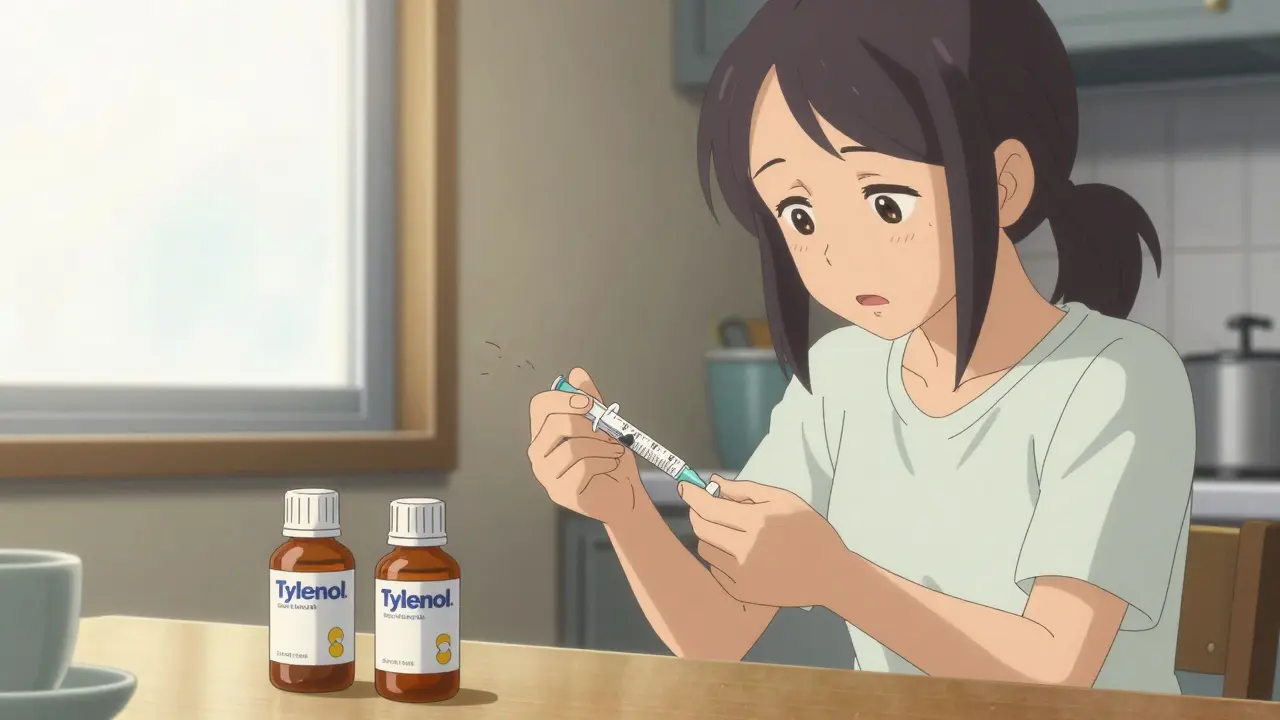
Every day, people take pills, liquids, or patches the wrong way-sometimes without even realizing it. A parent gives their child the wrong dose of fever medicine because they confused the infant and children’s bottles. An elderly person skips a dose because the pill box looks too complicated. Someone takes an extra tablet because they forgot whether they already took it. These aren’t rare accidents. They’re everyday mistakes that happen in homes across the UK and beyond. According to the Agency for Healthcare Research and Quality, between 2% and 33% of all medications given at home are administered incorrectly. That’s up to one in three people making a mistake. And the consequences? Hospital visits, dangerous side effects, or even death.
What are the most common medication errors?
The biggest problems aren’t always about taking the wrong pill. More often, it’s about how much, when, and how you take it. Here are the top five errors that happen most often:
- Wrong dose-giving too much or too little. This is especially dangerous with children’s medicine. Infant Tylenol is five times stronger than children’s Tylenol. Mixing them up can lead to liver damage.
- Missing doses-skipping pills because you’re busy, forgetful, or afraid of side effects. One study found that 92% of parents didn’t finish the full course of antibiotics for their kids, which can lead to resistant infections.
- Wrong medication-taking something that wasn’t prescribed. This happens when people grab the wrong bottle from the cabinet or mix up similar-sounding drugs like Lipitor and Lopressor.
- Wrong timing-taking medicine at the wrong time of day. Some drugs need to be taken with food. Others need to be taken on an empty stomach. Getting this wrong can make the medicine less effective-or more toxic.
- Double dosing-taking the same medicine twice because you forgot you already did. This is common with cold and flu products that contain the same active ingredient (like acetaminophen) in multiple formulas.
For older adults on five or more medications, the risk of error jumps by 30%. For those over 75, it’s 38% higher. It’s not just about memory-it’s about complexity.
Why do these mistakes keep happening?
It’s not because people are careless. It’s because the system isn’t designed for real life. Here’s what’s really going on:
- Too much information, too little clarity-Doctors give instructions in a 10-minute visit. Patients remember only 40% to 80% of what they’re told. A 2023 study from UC Davis found most people forget key details about their meds within hours.
- Confusing labels-Look-alike, sound-alike drug names are everywhere. One pill looks like another. One bottle says “10 mg,” another says “10 mL.” The difference could be deadly.
- Multiple caregivers-If Grandma lives with her daughter and granddaughter, who’s giving her pills? Two people might give the same medicine twice.
- Cost fears-Some people cut pills in half or skip doses because they can’t afford the full prescription.
- Language barriers-If instructions are only in English, and you speak another language, you’re at higher risk.
And then there’s the biggest problem: alternating fever reducers. Parents often switch between Tylenol and Advil to keep a child’s fever down. But doing this increases the chance of error by 47%. It’s easy to lose track of which one you gave last-and when.
How to avoid drug mistakes at home
You don’t need to be a nurse to keep your family safe. These simple steps cut the risk of errors in half:
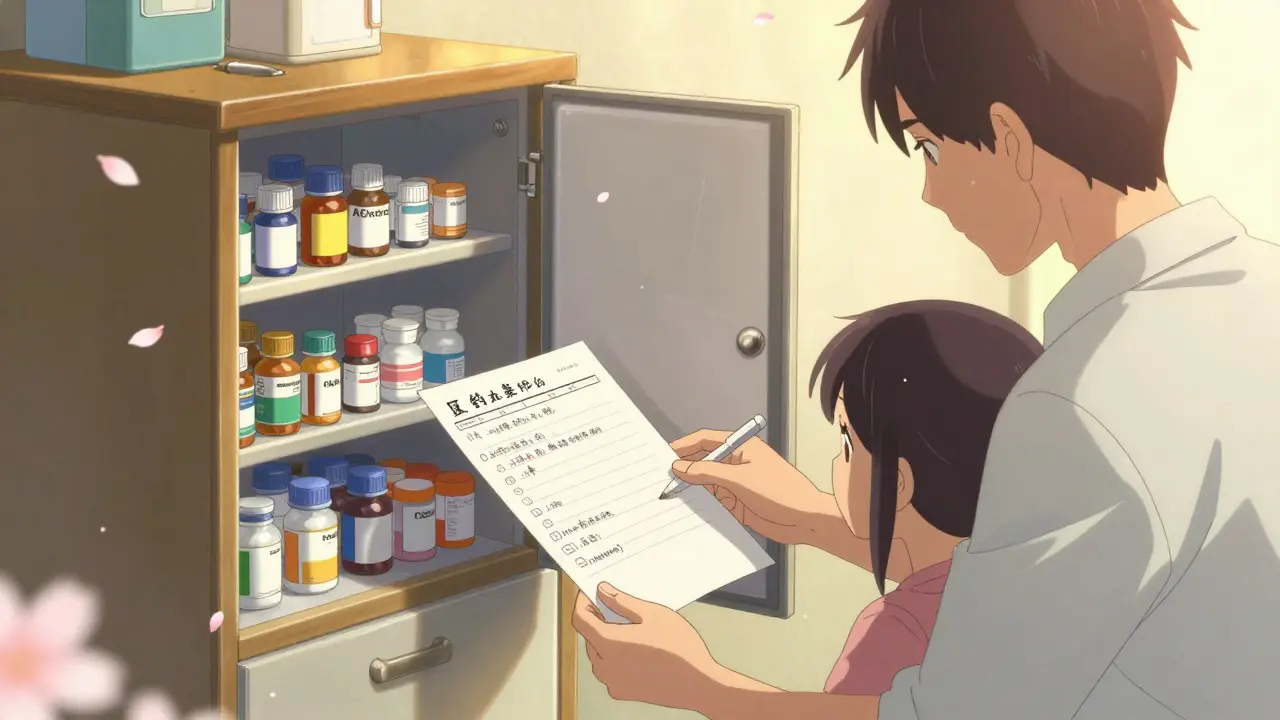
- Make a current, written list of every medication-Include the name, dose, time of day, and why you’re taking it. Update it every time your doctor changes something. Keep a copy in your wallet and give one to a family member.
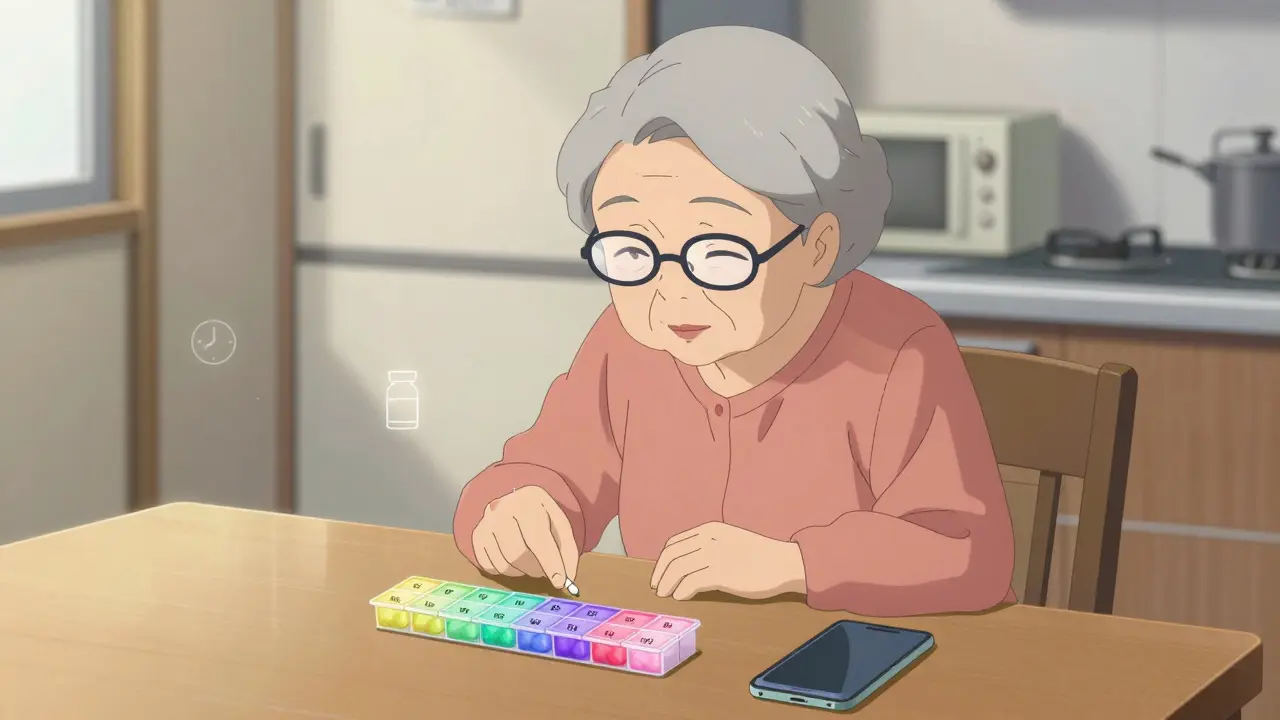
- Use a pill organizer with alarms-Buy one with separate compartments for morning, afternoon, evening, and night. Set alarms on your phone for each dose. Don’t rely on memory.
- Check the label every single time-Before you give any medicine, read the name, dose, and instructions. Don’t assume it’s the same as last time.
- Ask the pharmacist to explain-When you pick up a new prescription, ask: “What is this for? When and how do I take it? What happens if I miss a dose?” Then say it back in your own words. This is called the “teach-back” method-and it works.
- Keep all meds out of reach of kids-Even childproof caps aren’t foolproof. Store medicines in a locked cabinet, not on the counter.
- Never mix cold medicine with fever reducers-Many cold syrups already contain acetaminophen or ibuprofen. Giving extra could cause an overdose. Always check the “active ingredients” list.
- Use the right measuring tool-Never use a kitchen spoon. Use the dosing cup, syringe, or dropper that came with the medicine. A teaspoon isn’t the same as a medicine teaspoon.
- Dispose of old or expired meds-Don’t keep last year’s antibiotics or that bottle of painkillers from your surgery. Take them to a pharmacy drop-off or use a drug disposal bag. Outdated meds can lose strength or become dangerous.
Special rules for children and older adults
For kids: Always dose by weight, not age. If your child weighs 18 pounds, don’t guess-look up the correct dose on the label or ask your pharmacist. Never give adult medicine to a child, even if you cut it in half. And if your child is on antibiotics, finish the whole bottle-even if they feel better.
For older adults: If you take five or more meds, ask your doctor for a “medication review.” This means going over every pill to see what’s still needed and what can be stopped. Many seniors are taking drugs that no longer help-or that interact dangerously. Also, keep a list of all your meds in your phone and on your fridge. If you fall or get confused, someone else needs to know what you’re taking.
What to do if you think you made a mistake
If you gave the wrong dose, skipped a dose, or gave the wrong medicine:
- Don’t panic-but don’t ignore it either.
- Check the medicine’s packaging for emergency instructions. Many have a poison control number on the label.
- Call NHS 111 or your pharmacist immediately. They can tell you if it’s an emergency or if you just need to watch for symptoms.
- If your child or elderly relative shows signs of drowsiness, vomiting, confusion, or trouble breathing, call 999.
Most errors don’t cause harm-but they can. The sooner you speak up, the safer everyone is.
When to ask for help
You don’t have to figure this out alone. If any of these sound familiar, reach out:
- You’re giving meds to someone who can’t remember or read.
- You’re juggling more than three different medications.
- You’re worried about the cost of prescriptions.
- You’re not sure what each pill is for.
- You’ve made a mistake before and are scared to do it again.
Ask your GP for a home medicines review. Many areas in the UK offer free visits from a pharmacist who comes to your home to check all your meds. Community nurses and social workers can also help set up pill organizers, reminders, or even weekly delivery of pre-sorted doses.
What should I do if I accidentally give my child the wrong dose of medicine?
Don’t wait for symptoms to appear. Call NHS 111 immediately. Have the medicine bottle handy so you can tell them the name, strength, and how much was given. If your child is under 1 year old, having trouble breathing, or is unusually sleepy, call 999. Even small mistakes with children’s medicine can be serious because their bodies process drugs differently than adults.
Can I cut my pills in half to save money?
Only if the pill has a score line and your doctor or pharmacist says it’s safe. Some pills are designed to release medicine slowly, and cutting them can cause a dangerous overdose. Others are too soft or uneven to split evenly. Always ask before cutting any pill.
Why do I keep forgetting to take my meds?
It’s not just forgetfulness-it’s often because the schedule is too complicated. Talk to your doctor about simplifying your regimen. Can you switch to once-a-day pills? Can some meds be taken together? Many people can reduce their daily pills from five to two with a simple adjustment. Also, use a pill box with alarms or a phone app like Medisafe or MyTherapy to remind you.
Is it safe to take old medicine if it looks fine?
No. Expired medicine can lose effectiveness or break down into harmful substances. Antibiotics that are past their date won’t kill bacteria properly and can lead to resistant infections. Even painkillers can become less potent. Always dispose of expired meds at a pharmacy or through a take-back program.
How do I know if my pill box is helping or making things worse?
If you’re still confused about what goes where, or if you’re filling it wrong, it’s making things worse. A good pill box has clear labels (morning, afternoon, night) and compartments for each day. If you’re filling it weekly, make sure someone else checks it once a week. If you’re filling it daily and still missing doses, try a phone alarm instead.
Should I keep all my meds in one place?
Yes-but locked away. Keep all prescriptions, over-the-counter drugs, and supplements in one cabinet, preferably high and out of reach of children. Don’t store them in the bathroom (humidity ruins pills) or on the kitchen counter (easy to grab by accident). A locked box or cabinet reduces the risk of accidental overdose, especially in homes with kids or confused older adults.
Next steps: Make your home safer today
Start with one thing. Right now, go to your medicine cabinet. Pull out every pill, liquid, and patch. Write down the name, dose, and reason for each. Cross out anything expired or no longer used. Then, call your pharmacist and ask: “Can you help me simplify this list?” Most will do it for free. In the next 48 hours, set up a pill organizer and two phone alarms. These small steps cut your risk of a dangerous mistake by more than half. Medication safety isn’t about being perfect. It’s about being prepared.”
Comments
I never realized how easy it is to mess up meds until my grandma almost took two different blood pressure pills at once. Scary stuff. I started using a pill organizer with alarms after that. Simple fix, huge difference.
This is the kind of post that should be mandatory reading for every new parent and anyone caring for an elderly relative. I wish my doctor had explained this stuff like this instead of handing me a sheet of fine print.
One thing no one talks about: the cost trap. I’ve seen people skip doses because they can’t afford it. Pharmacies in my town have discount programs for generics - ask. Also, if you’re mixing Tylenol and Advil for a kid, write it down. I keep a tiny notebook in my purse. No guesswork. 📝
The systemic failure in pharmaceutical communication is not merely a logistical issue but a profound epistemological gap between clinical authority and domestic practice. Patients are not trained in pharmacology, yet are expected to navigate complex regimens with minimal support. Structural interventions - such as standardized labeling, pharmacist-led home visits, and multilingual instruction - are not optional luxuries but ethical imperatives.
They’re lying about the 2-33% error rate. That’s just the tip. Big Pharma wants you confused so you keep buying new bottles. The real danger? The FDA lets look-alike drugs exist on purpose. And those pill organizers? They’re designed to make you feel safe while they track your habits. I stopped using them. Now I just write everything on my arm with a Sharpie. Works better.
The pharmacokinetic variability across age cohorts is non-trivial. Pediatric hepatic metabolism differs radically from geriatric clearance rates - hence the 47% increase in dosing errors with alternating antipyretics. You’re not just giving a pill; you’re modulating cytochrome P450 pathways. If you don’t understand the half-life of acetaminophen, you shouldn’t be administering it. Period.
i got a new presc for abilify and i thot it was my blood pressure pill so i took it twice by mistake. now my heart is doing somethin weird. i think the gov is usin the meds to control us. why do all the bottles have the same barcode? theyre trackin us. i called 911 but they hung up. help
Honestly, if you’re still using kitchen spoons or forgetting to check labels, you’re just asking for disaster. I’ve seen people do this and then act shocked when their kid ends up in the ER. It’s not rocket science. Get a pill box. Use the dosing cup. Write it down. If you can’t manage that, maybe you shouldn’t be in charge of meds. Just saying.