
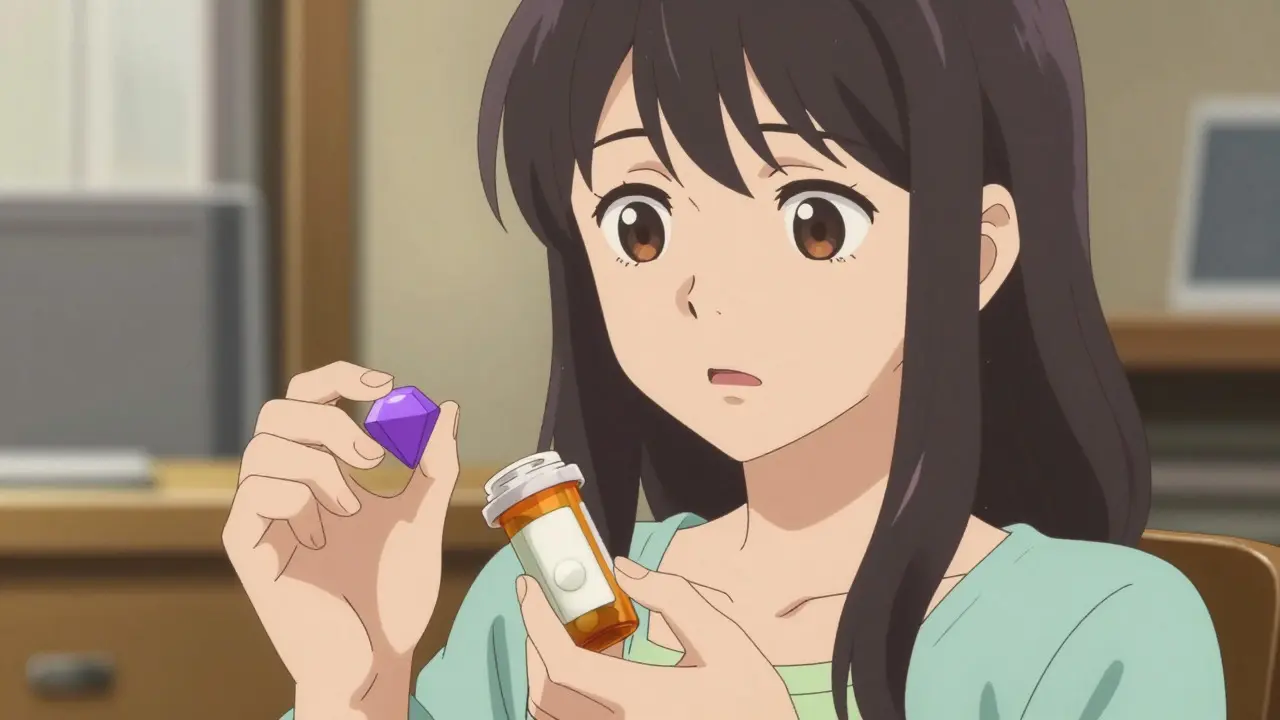
Have you ever opened a new prescription bottle and felt a sudden spike of anxiety because the pill inside looked nothing like the one you took last month? Maybe it’s a different color, a different shape, or even has a strange taste. It is completely normal to wonder if your medication has been switched for something less effective. But here is the truth: that change in appearance isn’t a mistake, nor does it mean the drug is weaker. In fact, the law requires it.
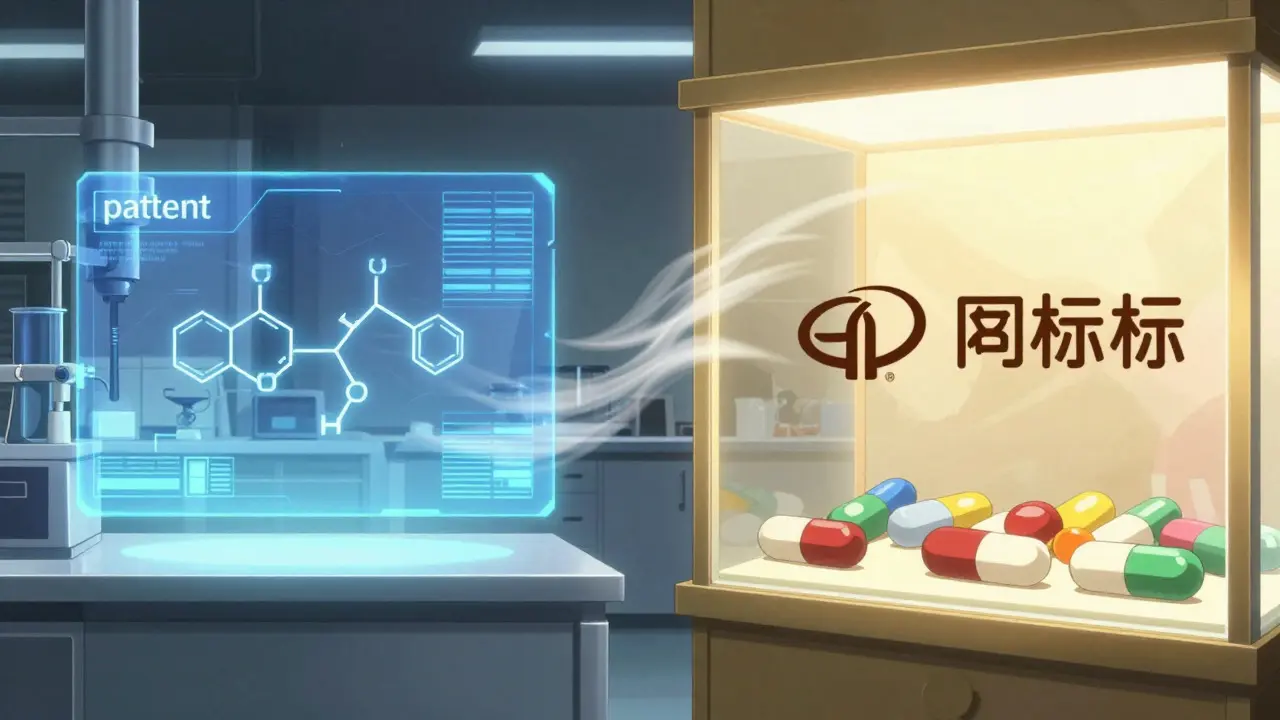
The reason generic drugs look different from their brand-name counterparts comes down to intellectual property rights-specifically, trademark laws. While patents protect the chemical formula of a drug for a set period, trademarks protect the brand identity, including its visual packaging and physical characteristics. Once a patent expires, other companies can make the same medicine, but they cannot copy the look. This legal framework ensures competition keeps prices low while protecting the original manufacturer’s brand recognition.
The Legal Wall Between Patents and Trademarks
To understand why your pills change colors, we first need to separate two types of protection: patents and trademarks. These are often confused, but they serve very different purposes in the pharmaceutical industry.
A patent is a government grant that gives an inventor exclusive rights to their invention for a limited time. For new drugs, this usually lasts up to 17 years. During this time, only the original company can sell that specific active ingredient. When the patent expires, the "monopoly" ends. Other manufacturers can then step in and produce the exact same chemical compound.
However, a trademark is a symbol, word, or design that identifies and distinguishes the source of the goods of one party from those of others. Unlike patents, trademarks can last forever as long as they are in use. The brand name (like Lipitor) and its distinctive purple diamond shape are trademarks. Even after the patent for atorvastatin (the active ingredient) expired, Pfizer still owned the trademark for that specific look and name.
This creates a unique situation. Generic manufacturers can legally copy the science, but they must invent their own aesthetic. If a generic maker produced a pill that looked identical to the brand-name version, they would be violating trademark law by causing consumer confusion. The U.S. Food and Drug Administration (FDA) enforces this strictly. Their guidance states clearly that trademark laws do not allow a generic drug to look exactly like other drugs already on the market.
Bioequivalence: Same Power, Different Package
If the outside looks different, what about the inside? This is where the concept of bioequivalence comes in. For a generic drug to get approved, it doesn't just need to have the same ingredients; it needs to perform the same way in your body.
The FDA requires generic manufacturers to provide scientific evidence that their product is bioequivalent to the brand-name drug. Bioequivalence means the generic drug delivers the same amount of active ingredient into your bloodstream over the same amount of time. The acceptable range for absorption is typically between 80% and 125% of the brand-name drug's performance. A large study comparing generics with brand-name medicines found differences of only 3.5% in absorption, which is clinically insignificant for most patients.
| Feature | Brand-Name Drug | Generic Drug |
|---|---|---|
| Active Ingredient | Original formulation | Identical chemical compound |
| Dosage & Strength | Standardized | Identical |
| Safety & Efficacy | Clinically proven | Proven via bioequivalence studies |
| Appearance | Protected by trademark | Must differ (color, shape, size) |
| Inactive Ingredients | Proprietary mix | May vary (fillers, dyes, binders) |
| Cost | High (covers R&D) | Low (typically 80-85% less) |
The key takeaway is that while the inactive ingredients-the fillers, binders, colors, and preservatives-can vary, these components do not affect the drug's therapeutic performance. They are there to hold the pill together or give it color, not to treat your condition. As long as the active ingredient is the same and the bioequivalence standards are met, the medical outcome should be identical.
Why Do Inactive Ingredients Matter?
You might wonder why manufacturers bother changing inactive ingredients at all if they don't affect efficacy. The answer lies in manufacturing logistics and allergy management. Different generic companies use different suppliers for excipients (inactive ingredients). One company might use lactose as a filler, while another uses corn starch.
For most people, this makes no difference. However, for patients with severe allergies or sensitivities, knowing the specific inactive ingredients is crucial. This is why pharmacists ask about allergies during dispensing. If you are sensitive to a specific dye used in one generic version, your pharmacist can switch you to a different generic manufacturer that uses a different coloring agent, provided it is available.
Additionally, flavorings play a role, especially in liquid medications or chewable tablets. Since the brand-name company owns the trademark for their specific flavor profile, generic makers must create their own tastes. This is why some children’s cough syrups taste slightly different when switched to a generic version. It’s a minor inconvenience, but it highlights how deeply trademark law penetrates every aspect of the product.
The Risk of Medication Confusion
While the system protects brands and lowers costs, it introduces a real-world problem: patient confusion. When you refill a prescription, the pharmacy may receive stock from a different generic manufacturer than the previous month. Suddenly, your daily blood pressure pill changes from white to blue, or from round to oval.
This visual shift can lead to serious errors. Patients might think they missed a dose because the pill looks wrong, so they take an extra one. Or, conversely, they might hesitate to take it at all. According to reports from health organizations like UMass Memorial Health, these appearance changes can possibly lead to medication confusion or errors, particularly among elderly patients or those managing multiple prescriptions.
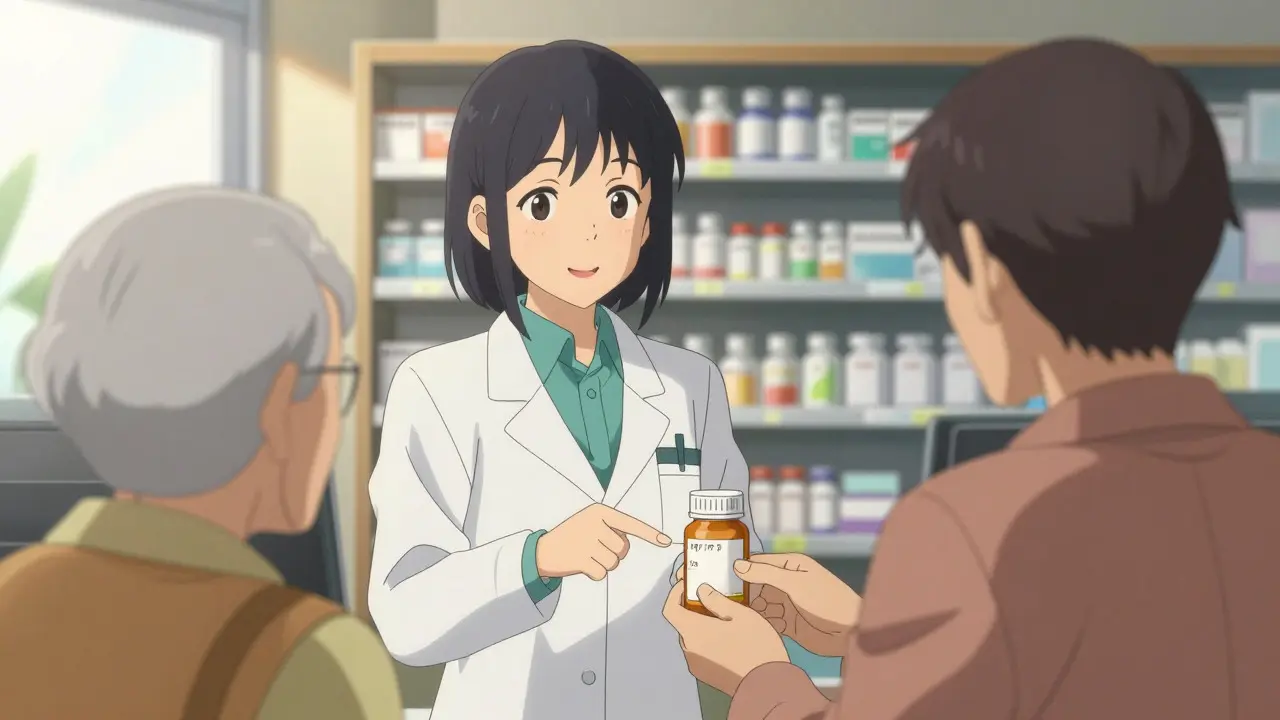
To mitigate this risk, pharmacies implement safety protocols. Pharmacists are trained to alert patients when a generic substitution results in a noticeable change in appearance. You will often see a sticker on your bottle noting “Generic Substitution” or specific warnings about appearance changes. Some states even require pharmacists to document these changes in your profile to ensure continuity of care.
Navigating Changes: Tips for Patients
Living with generic substitutions is part of modern healthcare for most people. Generics account for approximately 90% of prescriptions filled in the United States, saving billions in healthcare spending annually. To stay safe and confident, follow these practical steps:
- Check the Label: Always read the label on your new bottle. It will list the manufacturer. If you notice a change, compare it to your old bottle.
- Ask Your Pharmacist: If the pill looks drastically different, ask your pharmacist to confirm it is the correct medication. They can verify the NDC (National Drug Code) number.
- Request Consistency: If you prefer a specific generic manufacturer due to past tolerance issues, ask your doctor to write “Dispense As Written” or “Brand Medically Necessary” if appropriate, though this may increase your cost. Alternatively, ask your pharmacy to try to stick with one generic supplier.
- Use Pill Organizers Wisely: If you use a weekly pill organizer, inspect the pills when filling them. If they look different from the previous week, pause and call your pharmacy before taking them.
The Future of Generic Appearance
Regulatory bodies are aware of the confusion caused by varying appearances. The FDA has issued recommendations suggesting that generic applicants design drugs with similar sizes and shapes to the brand-name product where possible, to reduce cognitive load for patients. However, this must always balance against trademark restrictions.
As the pharmaceutical landscape evolves, we may see more standardization in generic designs within legal limits. Yet, the core principle remains: trademark law ensures that brand identity is preserved, fostering competition that drives down costs. Without these laws, brand-name companies would have little incentive to innovate, and consumers would lose the clarity of knowing who made their medicine.
Ultimately, the different look of generic drugs is a small price to pay for significant savings and continued innovation. By understanding the role of trademark laws and bioequivalence, you can approach medication changes with confidence rather than fear.
Do generic drugs work as well as brand-name drugs?
Yes. Generic drugs must meet strict FDA standards for bioequivalence, meaning they deliver the same amount of active ingredient into your bloodstream in the same amount of time as the brand-name drug. Studies show negligible differences in absorption (around 3.5%), which are clinically insignificant for most patients.
Why can't generic drugs look exactly like the brand-name version?
Trademark laws prevent generic manufacturers from copying the distinctive appearance (color, shape, imprint) of a brand-name drug. This protects the brand owner's intellectual property and prevents consumer confusion about the source of the medication.
Can I choose which generic manufacturer my pharmacy uses?
Not directly, but you can request consistency. Pharmacies often buy from whichever distributor offers the best price. If you have issues with a specific generic version, talk to your pharmacist. They may be able to order from a different supplier or check if your insurance covers a specific brand.
What should I do if my pill looks different from last month?
Don't panic. Check the label to ensure it's the same medication name and dosage. If it still looks unfamiliar, call your pharmacy immediately. Pharmacists can verify if a generic substitution occurred and confirm the new appearance is correct.
Are there any risks associated with switching between generic manufacturers?
The primary risk is medication error due to confusion about appearance. There is also a slight possibility of reacting differently to inactive ingredients (fillers/dyes) if you have specific allergies. However, for the vast majority of patients, switching between generic manufacturers is safe and effective.