
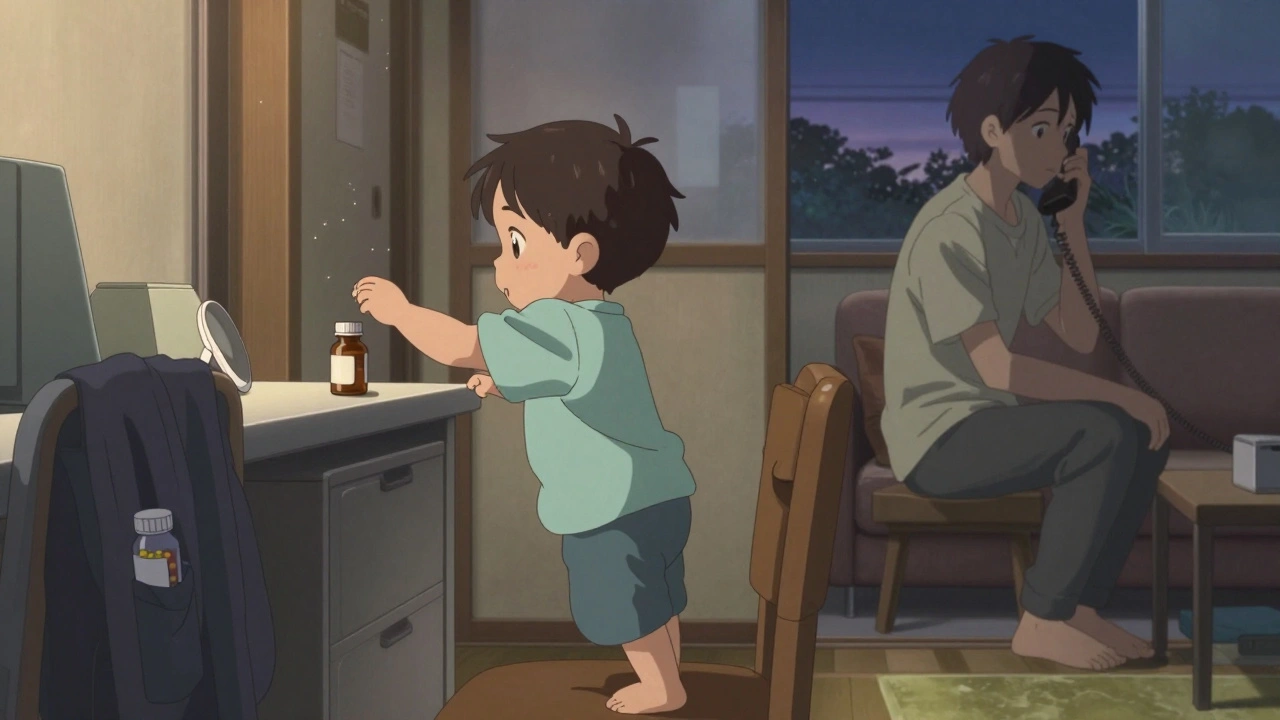
Every year, more than 90 percent of accidental medication poisonings in children happen right in the home-often while a parent or caregiver is nearby. It’s not a matter of neglect. It’s a matter of distraction, habit, and underestimating how quickly a toddler can climb, reach, and open something they shouldn’t. A child as young as 18 months can pull themselves up on a chair, stand on the toilet, and grab a bottle from a countertop. And if that bottle looks like candy? They’ll take it.
Most Common Medications That Poison Toddlers
Not all medicines are equally dangerous, but some are far more likely to cause harm. Acetaminophen (Tylenol), ibuprofen (Motrin, Advil), and aspirin top the list. These are common in nearly every household, often left out on nightstands, bathroom counters, or in purses. But it’s not just painkillers. Antihistamines, cold syrups, and even vitamins with sweet flavors are frequent culprits.
One of the most alarming risks? Liquid nicotine from e-cigarettes. Just half a milliliter-less than a teaspoon-can be fatal to a toddler. That’s why nicotine cartridges and refill bottles must be locked away, not just tucked in a drawer. And don’t forget prescription patches, like fentanyl or nicotine patches. A single patch can contain enough drug to kill a child.
Why Child-Resistant Caps Aren’t Enough
You’ve bought the bottles with the safety caps. You feel safe. But here’s the truth: child-resistant is not childproof. These caps are designed to slow down a child, not stop them. A determined toddler can figure them out in minutes-especially if they’ve watched an adult open them repeatedly.
According to UCSF Benioff Children’s Hospital, relying on child-resistant packaging alone is one of the biggest mistakes parents make. In 2022, their data showed that nearly half of all poisoning cases involved medications stored in containers labeled as child-resistant. The cap worked-but the child got in anyway.
Locked Cabinets: The Only Real Solution
The only reliable way to keep medicines away from kids is to lock them up. Not high up. Not out of sight. Locked. With a key or a magnetic latch that engages automatically when the door closes.
NYU Langone Health’s 2023 guidelines say this clearly: cabinets with safety latches are the gold standard. And they’re not just for the bathroom. Medicines should be stored in a cabinet that’s at least 54 inches off the ground, out of reach of climbing toddlers. But height alone isn’t enough. A child can use a chair, a drawer, or even the toilet to climb. That’s why the lock matters more than the shelf.
And don’t forget to check every room. Grandparents’ rooms. Visitors’ coats. Nightstands. Purses. In 2022, Nationwide Children’s Hospital found that 30 percent of poisonings came from medications left in bags or pockets. A visitor leaves their insulin pen on the coffee table. A grandparent leaves their blood pressure pill on the bedside table. That’s all it takes.
Never Call Medicine ‘Candy’
This might sound obvious-but it happens more than you think. “Here, take your medicine. It tastes like gummy bears.” “This is your special candy for your tummy.”
The American Academy of Pediatrics analyzed poison control data and found that children who were told medicine was “candy” were 3.2 times more likely to take it without asking. That’s not a small risk. That’s a dangerous habit. Even if you’re trying to be funny or comforting, you’re teaching your child that pills are treats. And toddlers don’t understand the difference between pretend and real.
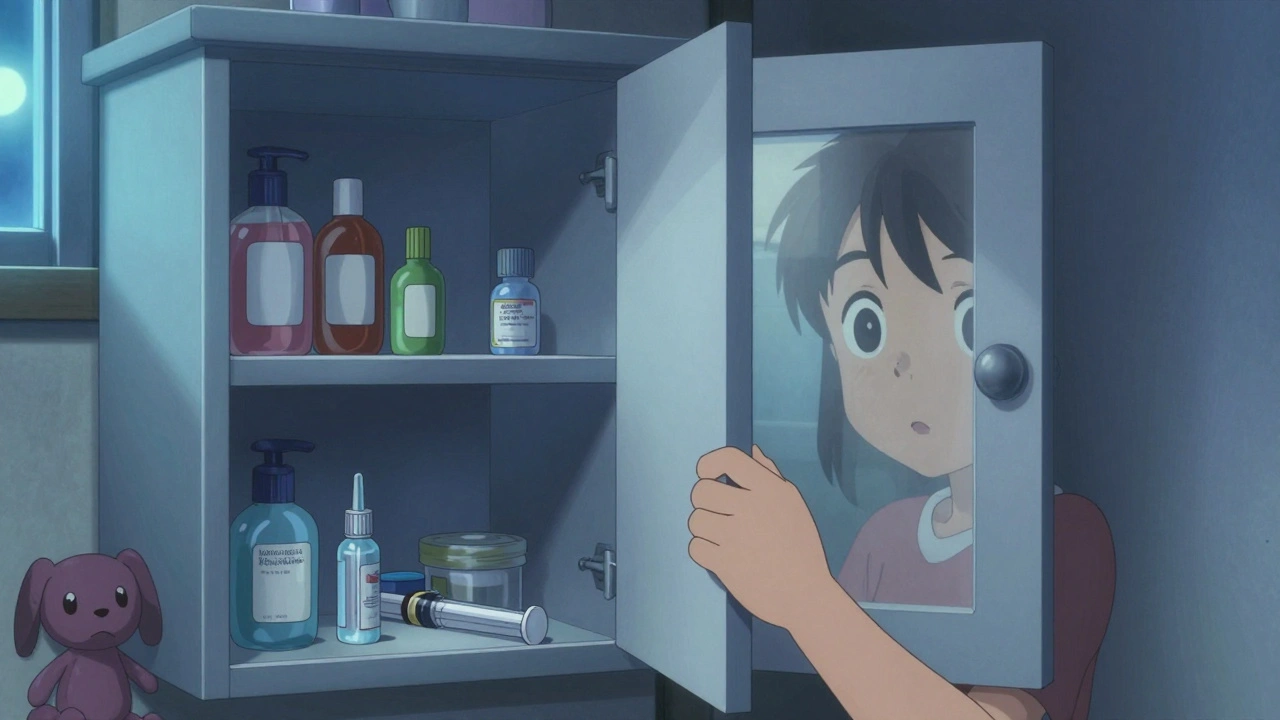
Use the Right Measuring Tool
Accidental overdoses aren’t just about access-they’re about dosing. Nearly 68 percent of medication errors in children come from wrong dosing. And the biggest culprit? Kitchen spoons.
A teaspoon from your silverware drawer isn’t the same as a teaspoon from a medicine syringe. Studies show household spoons vary by 20 to 40 percent in volume. That means you might be giving your child twice the dose-or half-without realizing it.
Always use the tool that comes with the medicine: a syringe, a dosing cup, or a dropper. Mark the correct dose with a piece of tape if needed. Never guess. Never eyeball. Always measure.
View Your Home From Your Child’s Eyes
Get down on your hands and knees. Crawl through every room. Look at shelves, drawers, cabinets, and countertops from a toddler’s height.
The Rural Health Information Hub found that 78 percent of poisonings involve items stored below 4 feet-the maximum reach for most toddlers. You might think your medicine cabinet is safe because it’s above the sink. But if your child can pull open the cabinet door by standing on the edge of the tub? It’s not safe.
Look for loose pill bottles in drawers. Medicines in a coat pocket on the back of a chair. Supplements on the windowsill. A forgotten patch on the bathroom counter. If you can reach it from a toddler’s perspective, they can too.
Prepare for Developmental Surprises
Children don’t stay the same. They grow fast. What was safe last month might not be safe next month.
UCSF Benioff Children’s Hospital advises parents to think ahead. Anticipate milestones-climbing, opening drawers, unscrewing caps-3 to 6 months in advance. If your child just learned to pull up, they’ll be climbing by next season. If they can open a cabinet now, they’ll be unlocking it in weeks.
Don’t wait for an accident to happen. Reassess your home storage every time your child hits a new milestone. Keep locks updated. Move bottles higher. Add new locks. Stay one step ahead.
Emergency Response: Know What to Do
If you suspect your child has swallowed medicine, don’t wait. Don’t call your pediatrician first. Don’t Google symptoms. Don’t try to make them throw up.
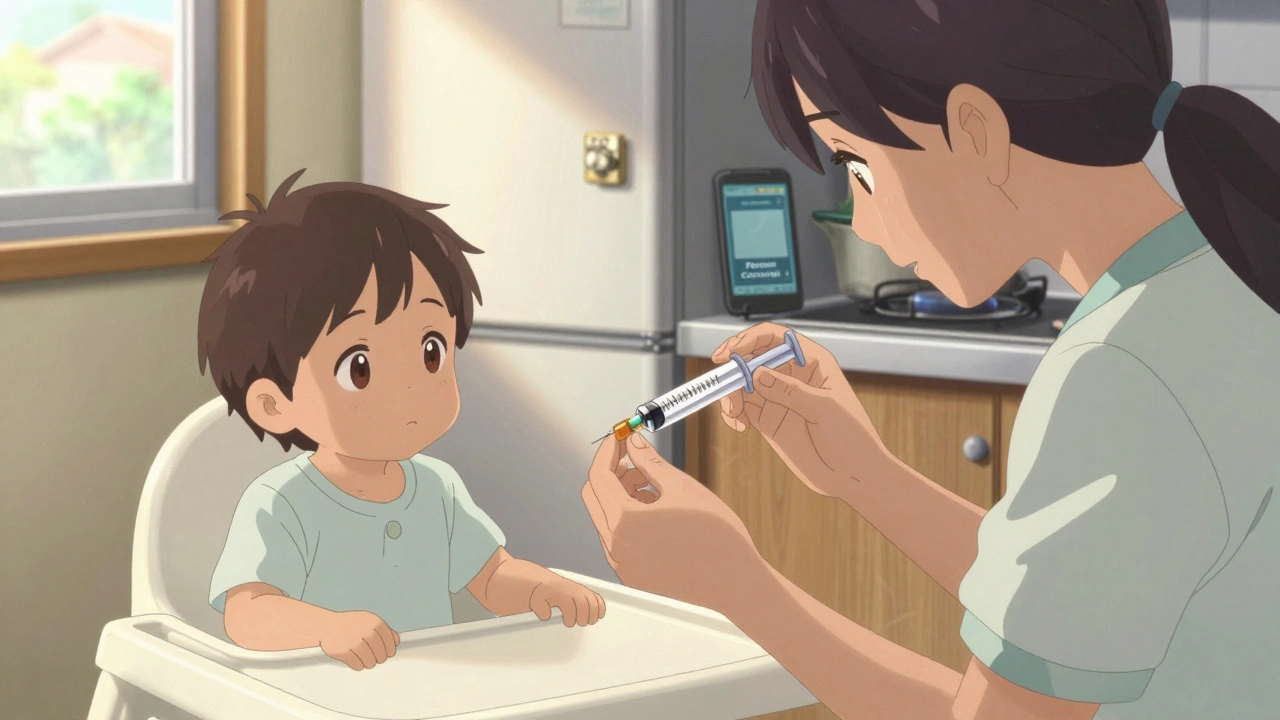
Call Poison Control immediately: 1-800-222-1222. It’s free, it’s 24/7, and it’s staffed by experts who know exactly what to do. Their webPOISONCONTROL tool also works online if you’re in a hurry.
Research shows that if you call within 5 minutes of exposure, the chance of a serious outcome drops by 89 percent. That’s not a statistic-it’s a lifesaver.
Post the number on your fridge. Save it in your phone. Put it on the back of your medicine cabinet. And make sure every caregiver-grandparents, babysitters, nannies-knows it by heart.
Community Help Is Available
You don’t have to do this alone. Many pharmacies offer free medication lock boxes to families with young children. Nationwide Children’s Hospital’s program has cut access incidents by 41 percent in participating homes.
Some hospitals and clinics also run “Up and Away” campaigns, which provide free safety kits, lock boxes, and educational materials. Check with your local pharmacy or pediatrician. These programs exist because they work.
And if you live in a rural area, you’re at higher risk. The Children’s Safety Network reports rural households have 22 percent more severe poisoning cases-partly because emergency help takes longer to arrive. That makes prevention even more critical.
What to Do After an Incident
If your child swallowed something, keep the container. Don’t throw it away. Bring it with you to the hospital or have it ready for Poison Control. The ingredients, dosage, and time of ingestion matter more than you think.
Even if your child seems fine, don’t assume they’re safe. Some poisons take hours to show symptoms. Acetaminophen overdose, for example, can look like a cold at first-then lead to liver failure.
And if you’re ever unsure? Call anyway. Poison Control doesn’t judge. They’ve seen it all. And they’d rather hear from you five times than miss one real emergency.
Looking Ahead: Smart Tech Is Coming
The future of prevention is already here. Pilot programs for smart medicine containers are showing a 63 percent drop in unsupervised access. These devices track when a bottle is opened, send alerts to your phone, and even lock automatically if a child tries to open them.
While these aren’t widely available yet, they’re coming. In the meantime, the basics still work: lock it up, measure it right, never call it candy, and always know the Poison Control number.
Accidental poisoning isn’t a matter of luck. It’s a matter of preparation. And with a few simple steps, you can keep your child safe-even when you’re not watching.
Comments
Let’s be real-child-resistant caps are a joke. I’ve seen my niece open a Tylenol bottle in under 30 seconds after watching her mom do it once. The system is broken. Lockboxes aren’t optional-they’re mandatory. Why are we still pretending a twist cap is enough? It’s not negligence, it’s laziness disguised as trust.
So you want us to lock everything up but what about grandma who forgets her blood pressure meds on the counter because she’s old and confused and you dont want to treat her like a criminal right? You think locking up medicine makes you a good parent but what about the dignity of the elderly? This is not a war its a balancing act
Ugh I just realized I left my Advil on the nightstand last night. My toddler was crawling all over that bed. I’m gonna go lock everything right now. Thanks for the kick in the pants.
How is this even still a conversation in 2024? We have smart fridges that order milk when we’re out, but we still trust toddlers with child-resistant caps? The fact that we need to be told to lock up medicine is a cultural failure. Also, calling it candy? That’s not parenting-that’s behavioral sabotage.
There’s a deeper truth here that no one wants to name. We live in a society that treats children as accidental threats to our convenience. We don’t design homes for them-we design them for adults who occasionally have to babysit. The medicine cabinet isn’t the problem-it’s the assumption that a child’s curiosity is a problem to be contained rather than a natural force to be understood. Locking things up is a bandage. What we need is a redesign of domestic space as a child-inclusive environment-not a minefield to be avoided.
Stop making excuses. If you leave pills out and your kid dies, you’re not a victim. You’re negligent. No one cares about your distraction. No one cares that you’re tired. Your kid doesn’t care either. Lock it up. Period.
Just got one of those smart medicine lockboxes on Amazon. It beeps if someone opens it and sends a notification to my phone. Also has a camera. 🤯 I know it sounds crazy but after reading this I’m like… why didn’t I do this sooner? My 2yo is a ninja.
It’s critical to distinguish between accessibility and exposure. The goal isn’t just to store medications securely-it’s to reduce the opportunity for accidental ingestion through environmental design. That means not just locking cabinets but also eliminating visual and tactile cues that signal ‘edible.’ The sweet flavoring of liquid medications is a pharmacological misstep that perpetuates cognitive dissonance in developing minds. We must treat pharmaceuticals with the same level of risk mitigation as firearms or cleaning agents. The data is unequivocal: behavioral interventions alone are insufficient without structural safeguards.
It’s funny how we’ll spend hours baby-proofing the electrical outlets but think a child can’t figure out a cap. We treat them like little scientists-curious, persistent, observant-and then act shocked when they solve the puzzle. We built the puzzle. We gave them the clues. The real danger isn’t the medicine. It’s our refusal to admit that they’re smarter than we think.
omg i just checked my drawer and found my sister's insulin pen next to my lip balm 😳 i moved it right away. thanks for the reminder. we all get distracted but this is one thing u cant mess up
The normalization of pharmaceutical negligence within domestic spaces reflects a broader societal erosion of precautionary principle in child-rearing practices. The commodification of convenience has supplanted vigilance, and the myth of the 'safe home' has become a dangerous illusion. When we permit the presence of lethal substances within unsecured environments, we are not merely failing in logistics-we are failing in moral responsibility. The child does not comprehend risk; the adult must become the architecture of safety. This is not a suggestion. It is a covenant.
My cousin’s kid got into her grandma’s fentanyl patch. She’s fine now but spent three days in ICU. Never again. Lock. Everything.