
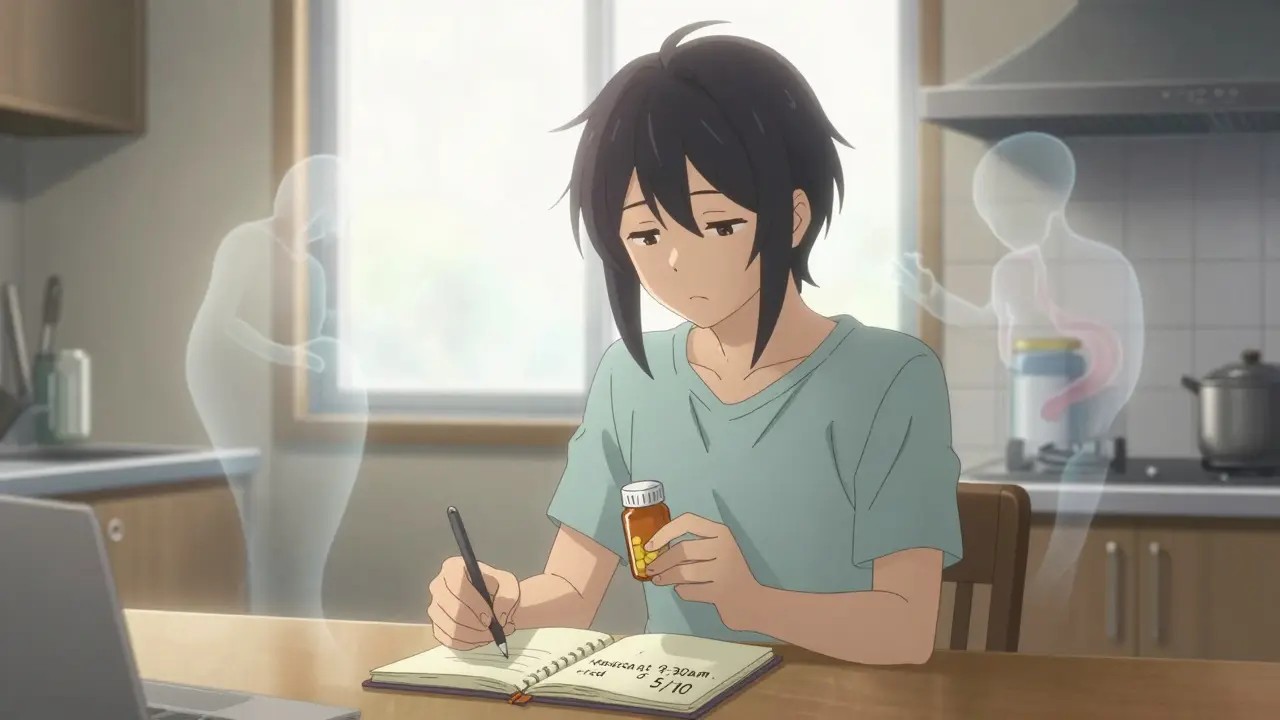
Side Effect Assessment Tool
How to Use This Tool
Answer these questions to determine if your side effect should be addressed immediately or if it's acceptable to monitor.
- Rate severity 1-10 (1 = mild, 10 = severe)
- Consider duration (days)
- Select your condition being treated
- Assess impact on daily life
Results
This tool helps you understand if your side effect requires immediate attention or if it's acceptable to monitor.
Condition-specific guidance:
When you start a new medication, it’s common to feel a mix of hope and anxiety. You’re hoping it will help, but you’re also bracing for the side effects you read about in the leaflet. Some people push through discomfort, thinking it’s just part of the process. Others panic at the first twinge and stop taking the pill altogether. Neither approach is right. The real skill isn’t ignoring side effects or quitting cold turkey-it’s knowing when to accept and when to address them.
Not All Side Effects Are Created Equal
Side effects aren’t a single category. The FDA defines them as unintended responses to medications at normal doses. But here’s the key: some are harmless and temporary. Others are warning signs. The difference comes down to three things: severity, duration, and impact.Take dry mouth, for example. Around 60% of people on antipsychotics experience it. It’s annoying, sure. But if it’s just a dry feeling in your throat and you can still swallow, drink water, or chew sugar-free gum to relieve it? That’s manageable. The beMedWise program confirms that mild dry mouth (rated 1-3 on a 10-point scale) rarely needs medical intervention. It’s an acceptable trade-off if the medication is helping with serious symptoms like hallucinations or severe anxiety.
On the other hand, if that same dry mouth turns into sores, difficulty swallowing, or constant thirst even after drinking? That’s a red flag. It could mean your body is reacting to the drug in a way that’s stressing your kidneys or salivary glands. That’s not something you wait out.
Acceptable Side Effects: The Short-Term Trade-Off
Some side effects are like the sore muscles after your first workout. They happen because your body is adjusting. These are the ones you can often accept-temporarily.Initial drowsiness is common with many antidepressants and antipsychotics. Studies show 20-25% of people feel unusually tired in the first week. But here’s the pattern: if it fades after 7 to 10 days, it’s likely just your nervous system recalibrating. Dr. Sarah Johnson’s 2022 analysis found that patients who kept taking their medication through this phase saw better long-term outcomes than those who stopped.
Same goes for mild nausea. About half of people starting antidepressants feel queasy. But if it’s not vomiting, doesn’t last all day, and you can eat small meals without issue? Timing matters. The FDA’s Patient Communication Network found that 30-40% of people who moved their dose to bedtime eliminated morning nausea entirely.
Even weight gain can be acceptable-if it’s modest and temporary. Mirtazapine, used for treatment-resistant depression, causes weight gain in 15-20% of users. For someone who’s underweight and struggling with appetite, this might be a net positive. The trade-off? Better mood, better sleep, better eating. The American Medical Association says this kind of balance is exactly why shared decision-making with your doctor matters.
When to Act: The Red Flags
There’s a line. Cross it, and you need help-not patience.Severe allergic reactions are non-negotiable. If you get hives, swelling in your face or throat, or trouble breathing, call 999. These aren’t side effects-they’re emergencies. The FDA’s adverse event database shows 1-2% of new medication users experience this, and it can escalate fast.
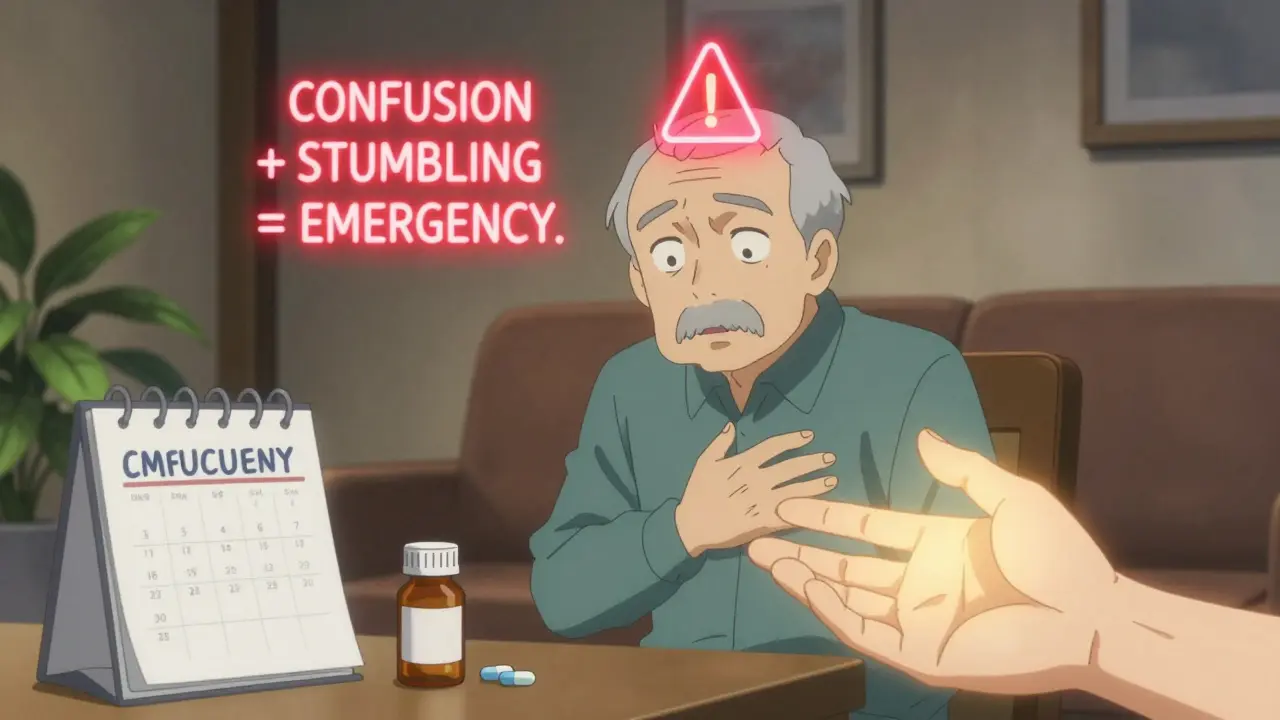
Neurological changes are another major red flag. Confusion, memory lapses, or stumbling while walking? Especially in older adults on multiple medications, these aren’t normal. The CDC’s 2022 alert says these symptoms increase fall risk and can signal dangerous drug interactions. A 68-year-old man in Birmingham stopped his blood pressure pill because he felt “a bit fuzzy.” Two weeks later, he fell and broke his hip. His doctor later found the medication was interacting with his cholesterol drug. A simple check-in could’ve prevented it.
Gastrointestinal bleeding? Black, tarry stools or vomiting blood? That’s not “stomach upset.” It’s a medical emergency. The National Institute on Aging says this happens in 0.5-1% of NSAID users each year. If you’re taking ibuprofen regularly and notice this, don’t wait for your next appointment. Go to urgent care.
And don’t ignore skin rashes-especially if they spread fast. Allopurinol, used for gout, carries a black box warning from the FDA. A rash could mean a rare but deadly skin reaction. Stop the drug and seek help immediately.
How to Track Side Effects Like a Pro
Most people describe side effects like this: “I feel weird.” That’s not helpful. Your doctor needs details.Dr. Michael Chen at Johns Hopkins found that patients who track side effects with specifics are 4.2 times more likely to get the right fix. Here’s how:
- Severity: Rate it 1-10. Is it a 2 (mild annoyance) or a 7 (can’t sleep, work, or focus)?
- Timing: Does it hit 30 minutes after your pill? Or 4 hours later? That tells your doctor how your body processes it.
- Duration: Has it lasted 3 days? 3 weeks? Side effects that linger beyond two weeks often mean the drug isn’t the right fit.
- Impact: Are you skipping meals? Avoiding social events? Missing work? That’s the real cost.
Keep a simple log. A note on your phone works. You don’t need a fancy app. Just write down: “March 1: Took 10mg fluoxetine at 8am. Nausea started at 9:30am, lasted 2 hours. Rated 5/10. Ate toast, felt better.”
What to Ask Your Doctor
Don’t just show up with a list. Go prepared with questions. The National Institute on Aging recommends these three:- “Is this side effect expected with this medication?” If yes, how long should it last?
- “What’s the timeline for resolution?” Some side effects fade in days. Others need a dose change.
- “What specific actions should I take if it worsens?” Should you call? Go to urgent care? Stop the drug?
A 2023 JAMA Internal Medicine study tracked 1,200 patients. Those who asked these questions resolved side effects 32% faster. Why? Because they gave their doctors clear data to act on.
What Not to Do
Here’s where most people go wrong:- Stopping cold turkey. The CDC found 28% of people quit meds because of side effects. Of those, 73% ended up with worse symptoms. Depression, anxiety, or high blood pressure can rebound harder than before.
- Ignoring symptoms because “everyone else has them.” Just because dry mouth is common doesn’t mean it’s harmless for you. Your body isn’t a statistic.
- Waiting too long. If something new pops up after two weeks, don’t assume it’s normal. New side effects can mean your body’s reaction is changing.
Reddit threads from the r/medication community show 65% of users try to handle side effects alone. 42% of those cases ended in unnecessary suffering. The most common mistake? Discontinuing meds without talking to a provider first.

Real Solutions That Work
You don’t have to suffer. There are real, evidence-backed fixes:- Change the timing. Taking a pill at night instead of morning cuts drowsiness and nausea in 30-40% of cases.
- Take it with food. For drugs like metformin, eating a small snack with the pill reduces stomach upset in 60-70% of users.
- Try a different pill in the same class. If one SSRI gives you nausea, switching to another (like sertraline instead of escitalopram) often helps. About 24% of successful cases involve this.
- Add a simple support. A 62-year-old patient in Wales reduced nausea from 5-6 times a day to 1-2 by taking her antibiotic with a high-protein snack. Her pharmacist suggested it. No cost. No new prescription. Just better timing.
These aren’t guesses. They’re based on data from the FDA, CDC, and clinical trials.
Your Personal Risk Calculator
Not all conditions are equal. The stakes change depending on what you’re treating.For cancer treatment? Nausea, fatigue, hair loss-they’re expected. The trade-off is survival. Dr. Linda Rodriguez explains: “We accept 60-70% nausea if it means beating the tumor.”
For mild high blood pressure? Even a 10% drop in daily function (like dizziness when standing) is enough reason to switch. The American Heart Association says: if side effects affect more than 20% of your daily life, it’s time to reconsider.
Cost matters too. A Kaiser Family Foundation study found 37% of people keep taking meds they hate because they can’t afford alternatives. That’s not bravery-it’s a system failure. Talk to your doctor about generics, samples, or patient assistance programs. You shouldn’t have to choose between health and money.
Final Rule: When in Doubt, Talk
There’s no shame in asking. Your doctor isn’t judging you. They’re there to help you navigate this.Side effects aren’t a failure. They’re feedback. Your body is telling you something. The smart choice isn’t to ignore it or quit. It’s to listen, track, and act-with guidance.
Keep the log. Ask the three questions. Don’t stop without talking. You’re not just taking a pill-you’re managing your health. And that’s a partnership, not a solo mission.
Should I stop my medication if I experience side effects?
No, not without talking to your doctor first. Stopping medication abruptly can cause your original condition to worsen, or lead to withdrawal symptoms. For example, stopping antidepressants suddenly can trigger dizziness, anxiety, or flu-like symptoms. Always contact your prescriber before making changes. They may adjust your dose, timing, or switch you to a different medication.
How long should I wait before calling my doctor about a side effect?
If a side effect is mild (like slight dry mouth or tiredness) and you’re within the first 7-10 days of starting a medication, it’s usually safe to monitor. But if it lasts longer than two weeks, gets worse, or starts affecting your daily life (sleeping, working, eating), call your doctor. For severe symptoms like swelling, trouble breathing, confusion, or bloody stools, seek help immediately-don’t wait.
Can lifestyle changes help reduce side effects?
Yes. Simple changes often make a big difference. Taking medication with food can cut stomach upset by 60-70%. Moving your dose to bedtime can eliminate daytime drowsiness. Drinking more water and chewing sugar-free gum helps with dry mouth. The FDA and beMedWise program both confirm these strategies work for many common side effects. But even if you try them, still talk to your doctor-they can tell you if your approach is safe for your specific medication.
Are some side effects normal and expected?
Yes. Many medications cause temporary side effects as your body adjusts. For example, 35-40% of people starting SSRIs feel drowsy at first. About half of people on antidepressants feel nauseous for a few days. These usually fade within 1-2 weeks. The key is whether the side effect is mild and improving. If it’s severe, persistent, or getting worse, it’s not normal-it’s a signal to act.
What if my side effect isn’t listed in the patient leaflet?
That doesn’t mean it’s not related. Medication leaflets list the most common side effects, but not every possible reaction. If you experience something unusual-like sudden mood swings, unusual bruising, or tingling in your hands-it’s still important to report it. Your doctor may have seen similar cases, or it could indicate a drug interaction. Always mention anything new, even if it seems unrelated.
Can I switch to a different medication if side effects bother me?
Yes, and it’s often a better option than enduring discomfort. About 15-20% of side effect cases are resolved by switching to another drug in the same class. For example, if one antidepressant causes weight gain, another might not. Your doctor can compare options based on your health history, cost, and lifestyle. Don’t assume you’re stuck with the first prescription.
Comments
I started sertraline last month and thought I was dying at first 😵💫😭 Like, my tongue felt like sandpaper and I could barely walk without feeling like I was drunk. But I kept going. Now? I sleep like a baby and actually want to leave the house. Don't quit too soon. Your future self will high-five you. 🙌
You got this. Mild side effects are just your body saying 'hey, we're adjusting!' Keep the log, tweak timing, drink water, and trust the process. You're not broken-you're evolving.
Ah, yes. The classic pharmacological paradox: 'Acceptable trade-offs.' But who defines 'acceptable'? The FDA? A pharmaceutical marketing team? Or the silent, overworked doctor who has 12 minutes per patient? The system doesn't care about your dry mouth-it cares about adherence metrics. And yet, here we are, individual humans, trying to navigate a machine that treats symptoms like KPIs.
You know what they don't tell you? The side effects are just the tip. The real agenda? Big Pharma wants you dependent. They don't want you cured-they want you on it forever. Why? Because cure = no more revenue. And that's why they downplay the long-term damage. You think dry mouth is bad? Wait till your liver says 'nope'.
I'm from Nigeria, and here, we say: 'The medicine that makes you weak is not medicine-it's poison.' But in the U.S., you're told to 'push through.' I've seen both sides. Sometimes, the body knows before the mind does. Listen to it. Not the leaflet. Not the algorithm. You.
The data is unequivocal: adherence rates improve by 41% when patients implement timing adjustments and dietary co-administration. The clinical efficacy of such behavioral interventions is statistically significant (p<0.01). Therefore, structural compliance is not optional-it is a therapeutic imperative.
i started this med and felt like i was turning into a zombie and i cried in the shower for 20 mins and then i just kept taking it and now i can laugh again and i dont even remember the last time i felt this... calm? idk. but it worked. i think. maybe. idk.
Wait, so if I feel fine but my bloodwork is weird, I should keep taking it? What if the side effects are invisible? Like, what if the real damage is happening in my cells and I just feel 'better' because my anxiety is numbed? Maybe the medication is just making me a happy robot. 🤖