

When you pick up a prescription at the pharmacy, the label on the bottle might look like any other. But if it’s a controlled substance, that label carries legal weight - and the code on it tells pharmacists exactly how to handle it. These aren’t just random letters or numbers. They’re part of a federal system designed to track who gets what, how often, and why. Understanding controlled substance labels and their schedule codes isn’t just for doctors and pharmacists. It matters to you - whether you’re taking opioids for pain, anxiety meds, or even a cough syrup with codeine.
What Are Controlled Substances?
Not every prescription drug is controlled. Aspirin? Not controlled. Antibiotics? Usually not. But drugs like oxycodone, Adderall, Xanax, and even some cough syrups are. These are called controlled substances because the federal government regulates them tightly under the Controlled Substances Act (CSA) of 1970. The law was created to stop abuse while still allowing medical use. The key idea? If a drug has a high chance of addiction or misuse, it gets stricter rules.The U.S. Drug Enforcement Administration (DEA) manages this system. Every controlled substance gets a schedule number - I through V - based on three things: its medical use, its potential for abuse, and how likely it is to cause physical or psychological dependence. The higher the schedule number, the lower the risk. Schedule I is the strictest. Schedule V is the least restrictive.
The Five Schedules Explained
Each schedule has clear rules. Knowing them helps you understand why your prescription works the way it does.- Schedule I: These drugs have no accepted medical use in the U.S. and a high potential for abuse. Examples include heroin, LSD, and - as of 2025 - marijuana under federal law. You can’t get a prescription for these. Even though 38 states allow medical marijuana, federal law still classifies it as Schedule I. That creates legal gray areas for doctors and patients.
- Schedule II: High abuse potential, but they’re used medically. Think powerful painkillers like oxycodone, fentanyl, morphine, and stimulants like Adderall and Ritalin. These can cause severe dependence. You can’t refill them. Each prescription is good for one fill only, and it must be written on special tamper-resistant paper in most states. Electronic prescriptions are allowed in some cases, but the original must be signed and sent to the pharmacy.
- Schedule III: Moderate to low abuse potential. These include drugs like ketamine, anabolic steroids, and hydrocodone combined with acetaminophen (like Vicodin). You can get up to five refills within six months. Electronic prescriptions are common here.
- Schedule IV: Low abuse potential. Benzodiazepines like Xanax, Valium, and sleep aids like Ambien fall here. Refills are allowed up to five times in six months. Most are prescribed electronically.
- Schedule V: Lowest abuse risk. These are often cough syrups with small amounts of codeine (less than 200 mg per 100 ml) or antidiarrheal meds with diphenoxylate. Some can be bought over-the-counter, but only behind the pharmacy counter and with pharmacist approval. Refills are usually allowed without restriction.
One drug can appear in multiple schedules depending on how it’s made. Codeine is a perfect example. Pure codeine? Schedule II. Codeine with acetaminophen in a tablet? Schedule III. Codeine in a cough syrup with very low concentration? Schedule V. That’s why checking the exact formulation matters.
What’s on the Label?
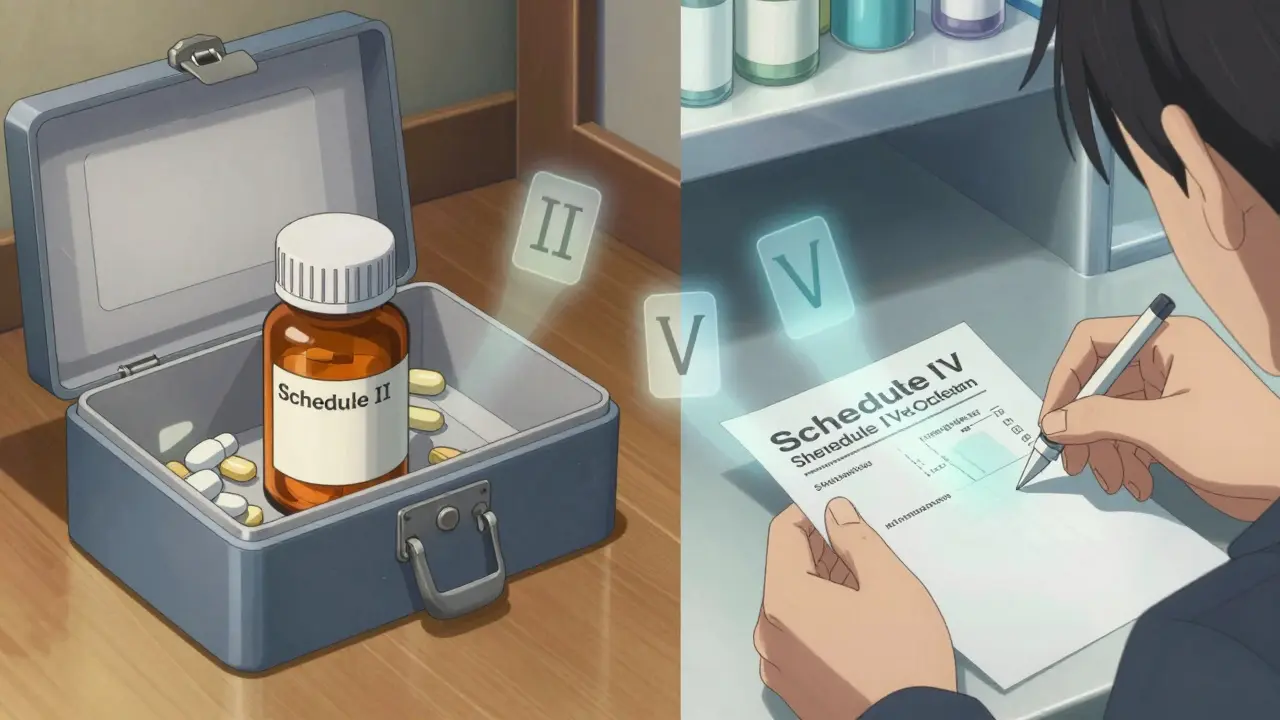
The label on your bottle doesn’t say “Schedule II” in big letters. But it does have clues. Look for:- The DEA Controlled Substance Code Number (CSCN) - often printed as “CSA SCH II” or “NARC” on pharmacy records.
- Refill instructions: “No refills” means Schedule II. “Up to 5 refills” usually means Schedule III or IV.
- Prescription format: If you had to pick up a new script every time, it’s likely Schedule II. If you got refills, it’s probably III or IV.
- Special warnings: “Controlled substance” or “C-II” may appear in small print near the bottom.
Pharmacists use these labels to follow federal rules. A Schedule II prescription must be presented as a physical paper copy in 47 states (with electronic options limited). Schedule III-V prescriptions can be sent electronically. That’s why your doctor might have to call in a refill for Xanax but can’t do the same for oxycodone.
Why Does This System Exist?
The goal isn’t to punish patients. It’s to stop diversion - drugs ending up on the street. The DEA tracks every step: who manufactures it, who prescribes it, who dispenses it, and how much is used. Pharmacies report sales of controlled substances monthly. Manufacturers must keep detailed logs. This “closed system” helps prevent theft, overprescribing, and illegal sales.For patients, it means more paperwork and sometimes delays. Oncology nurses report that processing a Schedule II prescription takes about 15 minutes longer than a regular one because of extra checks and documentation. Pharmacists say they spend hours verifying DEA numbers and confirming refills aren’t being abused.
But it also helps protect people. Addiction specialists say the schedule system gives them a clear way to explain risk to patients. “When I tell someone their painkiller is Schedule II, they understand it’s not like a vitamin,” says one clinic director. “It’s a tool - powerful, but dangerous if misused.”
Problems With the System
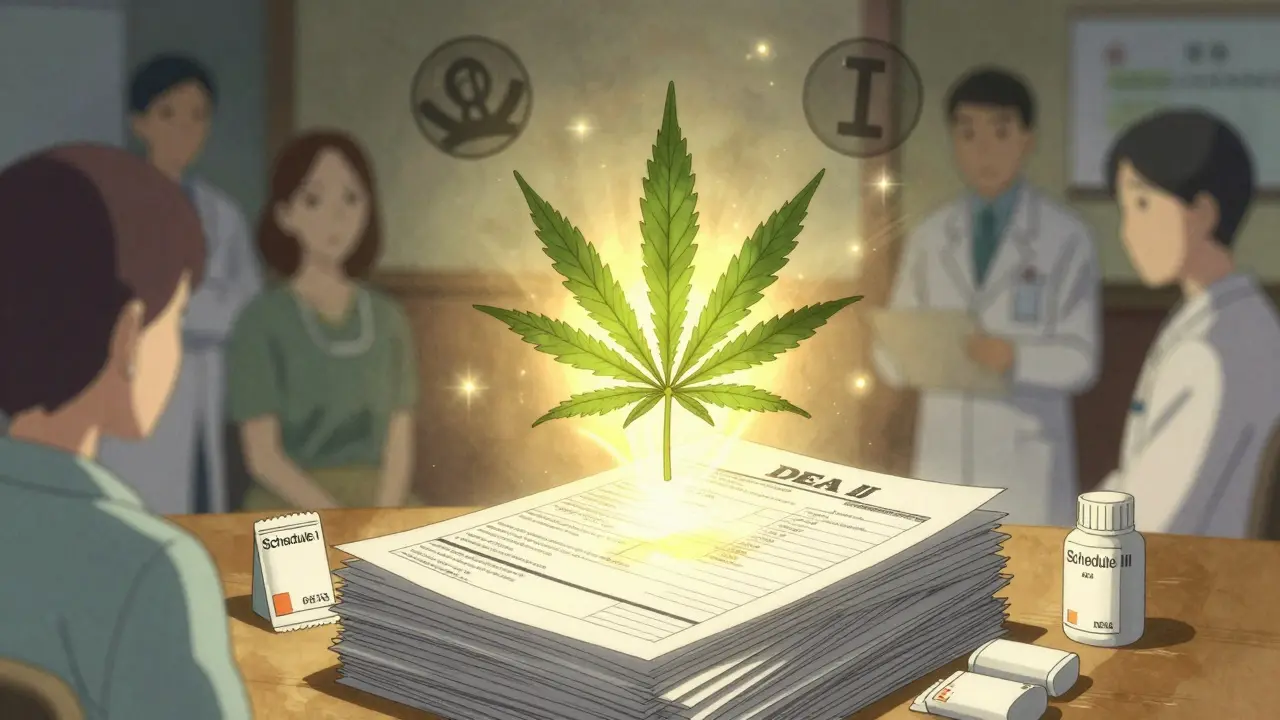
It’s not perfect. Critics point out big flaws.First, science doesn’t always match the law. Cannabis is still Schedule I - even though it’s used medically in 38 states and supported by growing research. The Biden administration started reviewing this in 2022. In August 2023, the Department of Health and Human Services recommended moving cannabis to Schedule III. If that happens, millions of patients could get easier access to legal prescriptions.
Second, the system doesn’t always reflect real-world risk. A 2023 survey of 342 pharmacists found that 78% believe the current schedule rules create unnecessary barriers - especially for Schedule II drugs. Patients waiting days for a new script because their refill ran out? That can lead to worse pain or even withdrawal.
Third, some drugs are misclassified. Tramadol, a painkiller, was moved from Schedule IV to Schedule II in 2014 after reports of abuse. But some experts argue it’s still less risky than certain Schedule III drugs. The process to change a schedule can take over two years. The DEA is trying to cut that time in half by 2025.
What’s Changing?
The system is slowly evolving. The DEA added 17 new synthetic drugs to Schedule I between 2022 and 2023 because they were flooding the market and causing overdoses. That’s the system working as intended - responding to new threats.The biggest change on the horizon? Cannabis. If it moves to Schedule III, it could open the door for more research, insurance coverage, and easier access. It would also force pharmacies to update their labeling systems and training.
Experts predict the U.S. will eventually add more schedules - maybe six or seven - to better separate low-risk medications from high-risk ones. Right now, Schedule IV includes everything from sleeping pills to anxiety meds. But not all anxiety meds are the same. A better system would reflect that.
What You Need to Know
If you take a controlled substance:- Know your schedule. Ask your pharmacist or check your prescription label.
- Never share your pills. Even if you’re giving them to a family member with similar symptoms, it’s illegal.
- Don’t try to refill a Schedule II prescription early. Pharmacies track this electronically. Multiple attempts can trigger an audit.
- Keep your prescriptions secure. Theft of Schedule II drugs is common. Store them in a locked box, not your bathroom cabinet.
- If you’re switching doctors, make sure your new provider knows your history. Controlled substance records are tracked nationally through DEA databases.
And if you’re worried about dependence? Talk to your doctor. There are alternatives. Not every painkiller needs to be Schedule II. Not every anxiety attack needs a benzodiazepine. The system is there to protect you - not just to restrict you.
Common Questions
Can I get a refill on a Schedule II medication?
No. Schedule II medications cannot be refilled under federal law. Each prescription is valid for one fill only. If you need more, your doctor must write a new prescription. This rule exists because these drugs carry a high risk of dependence and abuse. Even if you have leftover pills, you cannot legally use them after the original prescription expires.
Why is my cough syrup controlled?
Some cough syrups contain small amounts of codeine or diphenoxylate, which can cause dependence if taken in large doses or over long periods. Even though the amount is low, federal law classifies these as Schedule V controlled substances. That means you can buy them over the counter, but only with a pharmacist’s approval and limited quantities per purchase. You may need to show ID and sign a logbook.
Do all pharmacies handle controlled substances the same way?
Yes, in terms of federal rules. All pharmacies must follow DEA regulations for labeling, record-keeping, and dispensing. However, state laws can add extra requirements. For example, some states require electronic prescriptions for all controlled substances, while others still allow paper for Schedule II. Pharmacies also use internal tracking systems to flag suspicious patterns, like patients getting the same drug from multiple doctors.
What happens if I lose a Schedule II prescription?
If you lose a Schedule II prescription, your doctor may be able to issue a new one, but only under specific circumstances - like if you’re hospitalized or traveling out of state. Most doctors won’t replace a lost prescription for a Schedule II drug unless there’s a documented emergency. This is to prevent fraud and abuse. Always keep your prescriptions in a safe place.
Can I take a controlled substance across state lines?
Yes, as long as you have a valid prescription from a licensed provider and are carrying the medication in its original container. However, some states have stricter rules. For example, carrying more than a 30-day supply of a Schedule II drug may require special documentation. Always check your destination state’s laws before traveling with controlled substances.
Next Steps
If you’re on a controlled substance:- Ask your pharmacist to explain the schedule code on your label.
- Set phone reminders for refills - especially if you’re on Schedule III or IV.
- Use one pharmacy for all your controlled prescriptions. This helps them monitor your usage and catch potential problems early.
- Keep a written list of all your controlled meds, including names, doses, and schedules. This helps if you switch doctors or need emergency care.
- If you feel dependent or notice changes in your use, talk to your doctor. There are resources - and you’re not alone.
The system isn’t flawless, but it’s designed to keep dangerous drugs out of the wrong hands - while still letting people get the care they need. Knowing how it works helps you use your medication safely and avoid legal trouble.
Comments
Oh wow, another PSA from the federal government telling us how to feel about our meds. Let me guess - next they’ll make us sign a waiver before taking Tylenol? Schedule II? That’s just code for ‘we don’t trust you not to turn into a zombie.’ Meanwhile, my neighbor’s cousin’s dog gets more medical freedom than I do with my oxycodone. At least the dog doesn’t have to show ID at the pharmacy.
The system isn’t broken - it’s working exactly as intended. The DEA tracks every pill because people like you treat prescriptions like candy. You think it’s unfair that you can’t refill your Xanax? Good. That’s the point. Addiction doesn’t care if you ‘need it.’ It just takes. And if you’re one of those people who says ‘but my doctor prescribed it,’ congratulations - you’re the reason pharmacies now have armed guards.
Let’s be real - this whole schedule system is a relic of the War on Drugs, wrapped in bureaucratic legalese. Schedule I for cannabis? That’s not science, that’s political cowardice. The DEA’s been stuck in 1970 since 1971. Meanwhile, we’ve got kids vaping delta-8 gummies bought from gas stations while the government pretends marijuana’s as dangerous as heroin. It’s not about safety - it’s about control. And control? That’s just power dressed up as policy.
I work in a pharmacy and this is SO helpful. Just wanted to add - if you see ‘C-II’ on your label, that’s the DEA code. Also, don’t panic if your script says ‘no refills’ - it’s not a punishment, it’s a safety net. I’ve seen people get anxious when they can’t refill early, but the system actually protects them from accidental overdose. And yes, we do track every single one. We’re not spying - we’re saving lives.
Okay but let’s be real - this whole system is a front. The DEA doesn’t care about you. They care about the pharmaceutical companies who pay them to keep the prices high. Why is oxycodone Schedule II but alcohol is legal? Why is nicotine legal but kratom’s getting slapped with Schedule I? It’s not about danger - it’s about money. Big Pharma owns the DEA. They made the rules. And now they’re making you jump through hoops so they can keep selling you the same damn pills at 500% markup. Wake up. This isn’t medicine - it’s a racket.
My grandma takes a Schedule IV sleep med. She says the label’s the only thing that reminds her not to mix it with wine. Simple. Clear. Works.
Just got my first Schedule III script yesterday - hydrocodone + acetaminophen. The pharmacist spent 10 minutes explaining everything, even wrote down the schedule number for me. Felt weird at first, but honestly? Kinda reassuring. Like, wow, someone’s actually paying attention. Thanks for the clarity on the label stuff - I didn’t realize ‘CSA SCH III’ meant anything.
It is imperative that all patients be made aware of the statutory obligations pertaining to the dispensing of controlled substances under Title 21, United States Code, Section 829. Failure to comply may result in civil or criminal penalties. This is not a suggestion. It is the law.
While the structural framework of the Controlled Substances Act remains a cornerstone of American pharmacological governance, one cannot help but observe the profound dissonance between its 1970 epistemological foundations and the contemporary neuropharmacological landscape. The classification of cannabis as Schedule I, for instance, constitutes a categorical failure of evidentiary fidelity - a relic of moral panic masquerading as regulatory rigor. One wonders whether the DEA’s methodology is rooted in science, or in the bureaucratic inertia of a bygone era.
Man, I used to hate how annoying the refill rules were - until my buddy got hooked on his Schedule II painkiller and ended up in rehab. Now I get it. It’s not about being bossy. It’s about not letting someone slip through the cracks. That label? It’s not a cage. It’s a life raft. And hey - if we ever get cannabis to Schedule III? That’ll be sweet. But let’s not throw the baby out with the bathwater. The system’s clunky, sure. But it’s saving people every day.