
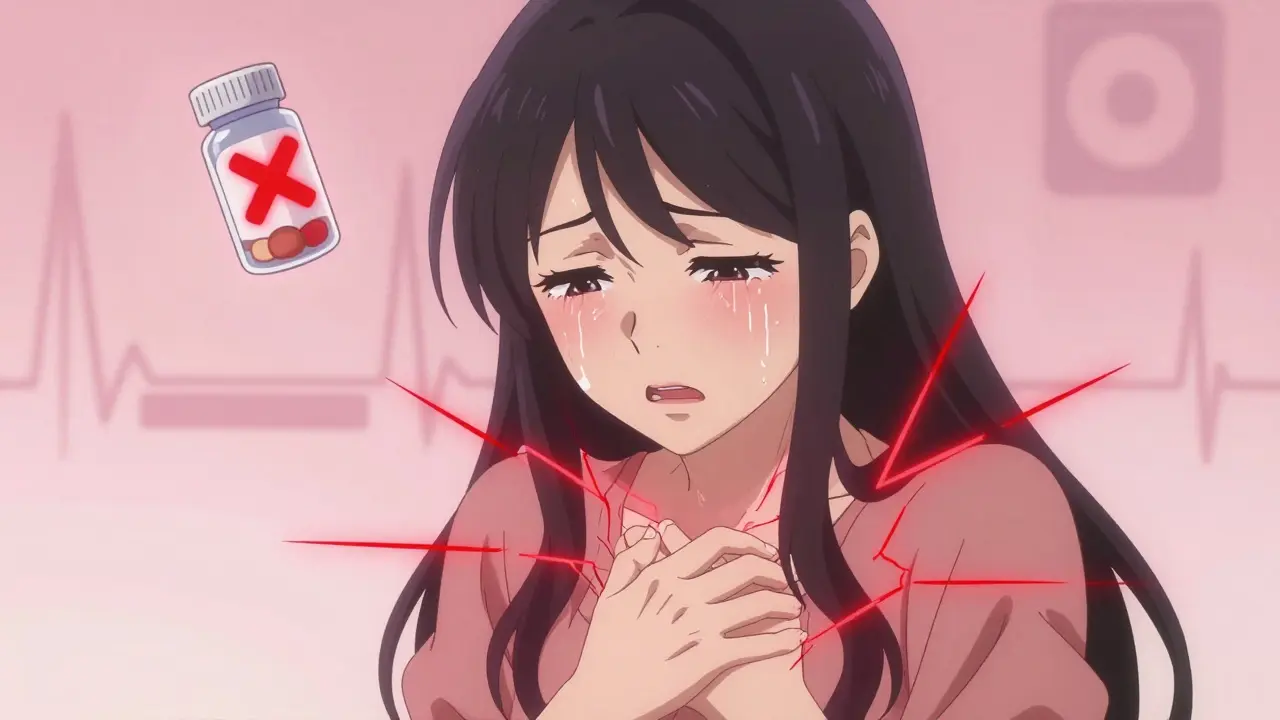
It’s easy to brush off a headache or a little nausea after starting a new pill. You tell yourself it’s just your body adjusting. But what if that headache is the first sign of something dangerous? Medications save lives-but they can also hurt you if you don’t know when to act. The difference between a mild side effect and a life-threatening reaction often comes down to timing, severity, and knowing what to watch for.
What Counts as a Red Flag?
Not all side effects are dangerous. Feeling a bit tired after taking an antihistamine? That’s common. A dry mouth from blood pressure meds? Normal. But some symptoms are warning signs you can’t ignore. According to the FDA and major medical groups, a serious reaction is one that causes death, hospitalization, disability, or permanent damage. That’s the line.Here’s what you need to call your doctor about immediately:
- Difficulty breathing or wheezing
- Hives, rash, or skin blisters
- Swelling of your face, lips, tongue, or throat
- Sudden dizziness or fainting
- Severe nosebleeds that won’t stop
- Unexplained bruising or bleeding under the skin
- Severe stomach pain with vomiting or bloody stool
- Yellowing of skin or eyes (jaundice)
- High fever with chills or confusion
These aren’t just uncomfortable-they’re medical emergencies. For example, hives and swelling together can mean anaphylaxis, a reaction that can kill you in minutes. The American Academy of Allergy, Asthma & Immunology says 1 in 10,000 prescriptions triggers this kind of reaction. It’s rare, but it doesn’t wait for a doctor’s appointment.
When a Side Effect Just Won’t Go Away
Some reactions aren’t sudden. They creep up. You take your pill every day, and over time, you feel worse. Maybe you’re dizzy every afternoon. Or your constipation turned into pain. Or you’ve had a headache for five days straight.Harvard Health says these aren’t always emergencies-but they’re still red flags. If a side effect lasts longer than 72 hours, gets worse, or starts interfering with your daily life (like making it hard to work, drive, or sleep), it’s time to call your doctor. Don’t wait until it’s unbearable.
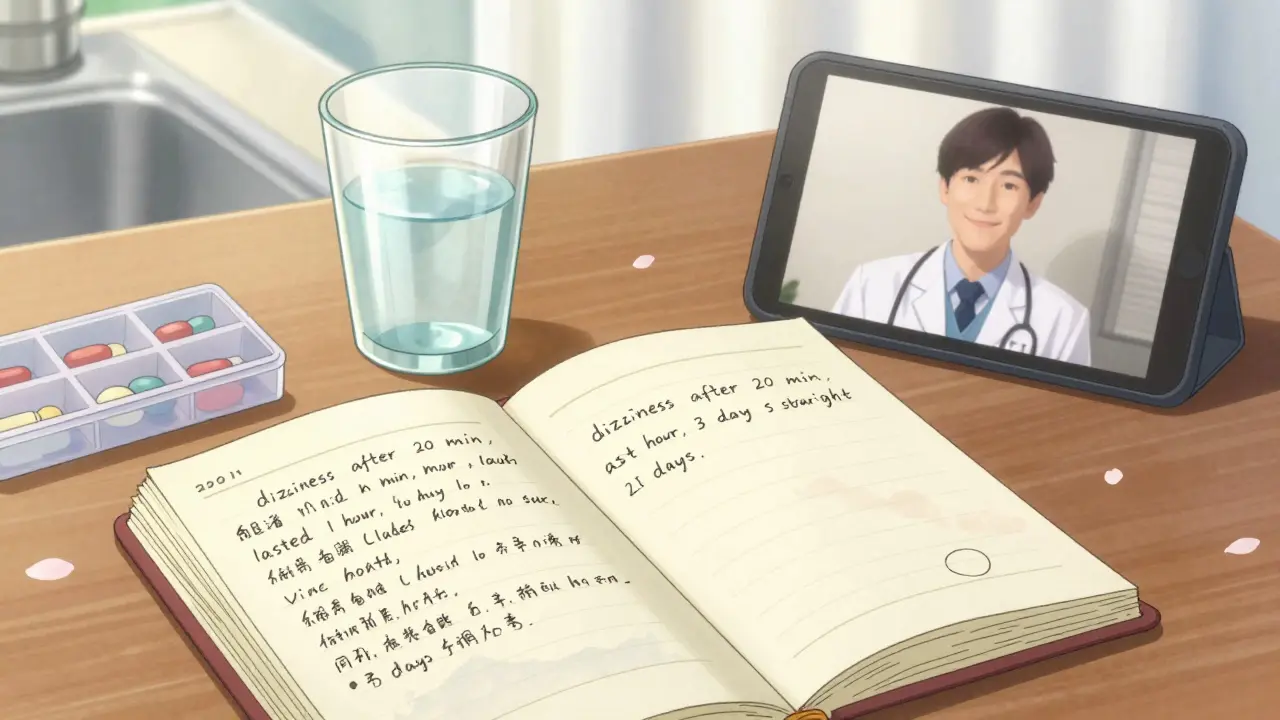
One study in the Lancet found that patients who kept a simple side effect diary-writing down when symptoms started, how long they lasted, and how bad they were on a scale of 1 to 10-were 65% more likely to get the right diagnosis. That’s not magic. It’s data. Your doctor can’t help if you say, “I feel weird.” They need details: “I felt lightheaded 20 minutes after taking my blood pressure pill, and it lasted an hour. Happened three days in a row.”
Stop the Medication? Not So Fast
You might think: if it’s making me feel bad, I should just quit. But that’s dangerous too. The National Institute on Aging reports that 50% of treatment failures for chronic conditions like high blood pressure, diabetes, or depression happen because people stop their meds without talking to their doctor.Here’s the rule: Only stop your medication if you have signs of anaphylaxis or severe skin reactions like blisters or peeling skin. For everything else, keep taking it-and call your doctor.
Why? Because some side effects fade as your body adjusts. Others can be managed with dose changes or added meds. Stopping cold turkey can cause withdrawal symptoms, rebound high blood pressure, or even a relapse of the condition you’re treating. Your doctor might say, “Keep taking it, but we’ll add something for the nausea.” Or, “Let’s switch to a different pill.” But they can’t do that if you’re already off the drug.
What to Do When It Happens
If you notice a red flag symptom, here’s what to do right away:- Call 999 or go to A&E if you have trouble breathing, swelling in your throat, or feel like you’re going to pass out. Don’t wait. Don’t text your doctor. Call emergency services.
- Call your GP or NHS 111 if symptoms are serious but not life-threatening-like persistent vomiting, unexplained bruising, or severe dizziness. They can tell you whether to come in or wait.
- Don’t take another dose until you’ve spoken to a professional. Even if you think it’s “just a headache,” it’s better to be safe.
- Write it down. Note the name of the medicine, the dose, when you took it, and exactly what happened. Include how long it lasted and whether anything made it better or worse.
Keep this list in your phone or wallet. When you’re panicking, you won’t remember details. Having it ready saves time-and maybe your life.
Why Reporting Matters
You might think: “My reaction is just one case. It won’t make a difference.” But it does. The FDA’s MedWatch program gets over a million reports every year from patients like you. Those reports led to 200-300 label changes and 15-20 drug recalls between 2020 and 2024.One big example: in 2022, the FDA’s Sentinel system flagged a link between a diabetes drug and heart failure-just six months after it hit the market. Before systems like this, it could take years to catch that. Your report could help prevent someone else from being hospitalized.
You can report side effects online through the Yellow Card Scheme in the UK (medicinesandhealthcareproductsregulatoryagency.gov.uk/yellow-card), or by calling 0800 731 6789. It takes five minutes. And it’s anonymous.

What’s Normal? What’s Not
Let’s clear up the confusion. Here’s what most people experience without danger:- Nausea after antibiotics (affects 20-30%)
- Constipation from opioids (40-50%)
- Diarrhea from amoxicillin (25%)
- Dry mouth from antihistamines (35%)
- Drowsiness from older allergy meds (30%)
- Mild rash from penicillin (5-10%)
- Headache from various meds (15-20%)
If you get one of these, it doesn’t mean you’re allergic. It just means your body’s reacting. Most of these fade in a few days. If they don’t? Call your doctor. If they’re mild and go away? Keep taking your medicine.
How to Stay Safe Going Forward
Prevention beats crisis. Here’s how to protect yourself:- Ask your pharmacist: “What are the top three things I should watch for with this medicine?”
- Read the medication guide they give you. It’s not junk mail-it’s required by law.
- Keep a list of all your meds (including supplements and OTC pills) and share it with every doctor you see.
- Use one pharmacy for all your prescriptions. They’ll catch dangerous interactions.
- Set phone reminders to take your meds. Missing doses can cause side effects too.
Medication safety isn’t just about the pill. It’s about knowing your body, speaking up, and acting fast. You’re not overreacting if you call your doctor. You’re being smart.
Can I just stop taking my medicine if I feel side effects?
Only stop if you have signs of a severe allergic reaction-like trouble breathing, swelling of the face or throat, or blisters on your skin. For most other side effects, keep taking the medicine and call your doctor. Stopping without advice can cause your original condition to worsen or lead to dangerous withdrawal symptoms.
How long should I wait before calling my doctor about a side effect?
If a side effect lasts more than 72 hours, gets worse, or interferes with your daily life (like making it hard to sleep, work, or drive), call your doctor. Don’t wait until it’s unbearable. Even mild symptoms that persist can signal something serious.
Are all rashes from medication dangerous?
No. A mild, itchy rash that appears a few days after starting a pill is often harmless and goes away on its own. But if the rash turns into blisters, peels, or spreads quickly-especially if it affects your mouth, eyes, or genitals-this could be Stevens-Johnson Syndrome, a life-threatening reaction. Call 999 immediately.
Can over-the-counter medicines cause serious side effects?
Yes. Many people assume OTC drugs are safe, but they’re not. Taking too much paracetamol can cause liver failure. NSAIDs like ibuprofen can cause stomach bleeding or kidney damage. Even antihistamines can cause dizziness and falls in older adults. Always check with your doctor or pharmacist before mixing OTC meds with prescriptions.
Why should I report a side effect to the Yellow Card Scheme?
Your report helps the UK’s medicines regulator spot new safety risks. Many dangerous side effects only show up after thousands of people use a drug. Your experience could lead to a warning label, a dosage change, or even a recall-protecting others down the line. It takes five minutes and is completely anonymous.
What if I’m not sure whether my symptom is serious?
When in doubt, call NHS 111 or your GP. It’s better to be checked out than to risk missing something serious. Many people wait too long because they’re afraid of bothering their doctor. But doctors expect these calls. They’d rather hear from you early than have you show up in A&E with a life-threatening reaction.
Comments
bro i took ibuprofen for a headache and my hand swelled up 😱 i thought it was a bug bite till i saw the red streaks... called 911 bc i read this post n i was like NOPE
People act like doctors are gods but half the time they dont even know what's in those pills they hand out like candy I mean come on the FDA is just a front for Big Pharma and they want you dependent on meds that cause the very problems they claim to fix
Jaundice + fever = liver failure risk. Stop reading. Go to ER.
I know someone who died from a reaction to amoxicillin and they said "it was just a rash" for 3 days... now i check every pill like it's a bomb. i keep a journal. i screenshot the med guide. i dont trust anyone.
they say report to yellow card but what if you dont have a computer? what if you're 70 and live alone? who helps you? the system is broken and they dont care about people like me
I used to be the person who ignored every little side effect until I almost lost my kidney to a bad reaction to a generic blood pressure med. Now I carry a laminated card in my wallet with every med I take, the date I started, and the emergency symptoms. I teach my friends how to do it too. This isn't fear-it's power. You're not overreacting. You're protecting your life. And if someone tells you otherwise? They haven't been where you are.
I dont understand why people think its okay to just take pills without asking questions i mean really do you even know what youre putting in your body you think your doctor knows everything but half the time they just read the script off a card and hand it to you like its a coupon
I love how this post says "call your doctor" but doesn't mention that a lot of people can't get in for weeks. I had a rash that turned into blisters and my GP's earliest slot was 10 days away. I went to urgent care and they said "it's probably fine"... it wasn't. So yeah-call your doctor, but also know your limits and trust your gut. You're your own best advocate.
this is just another way for the government to control us. if you dont report side effects you're basically helping them track your health data. who's gonna use that? insurance companies? employers? the military? we're being manipulated into giving up our privacy under the guise of "safety"
I literally cried reading this. I thought I was crazy for being scared of my thyroid med. I kept thinking "everyone else takes it fine" but I had tremors and heart palpitations for 3 weeks. I called my doctor and they switched me immediately. Turns out I have a rare metabolic sensitivity. I'm alive because I didn't ignore it. You're not weak for feeling scared. You're brave.
In India, many people don't even know what medicine they're taking. I once saw a man take 5 different pills from a plastic bag labeled "for pain". This post is a gift. Thank you for writing it. Please share it with your family. Especially elders.
The empirical data presented in this article aligns with established pharmacovigilance protocols outlined by the WHO and the FDA. The statistical significance of patient-reported adverse events in triggering regulatory action is well-documented in peer-reviewed literature, particularly in the Journal of Clinical Pharmacology, Vol. 64, Issue 3. The underreporting bias remains a critical systemic limitation, and patient engagement remains the most underutilized resource in pharmacosafety.