April 30, 2026 posted by Arabella Simmons
Imagine waking up to find that a shipment of high-cost specialty medications in your pharmacy is actually a batch of sophisticated fakes. It happens more often than you'd think. With the
World Health Organization reporting that roughly 1% of the global supply chain is compromised by counterfeit drugs-costing the world about $200 billion annually-the stakes for pharmacy sourcing aren't just financial; they're matters of life and death. If your procurement process has a single blind spot, you're essentially leaving the door open for contaminated or stolen meds to reach your patients.
The Core of Legitimate Procurement: Understanding the DSCSA
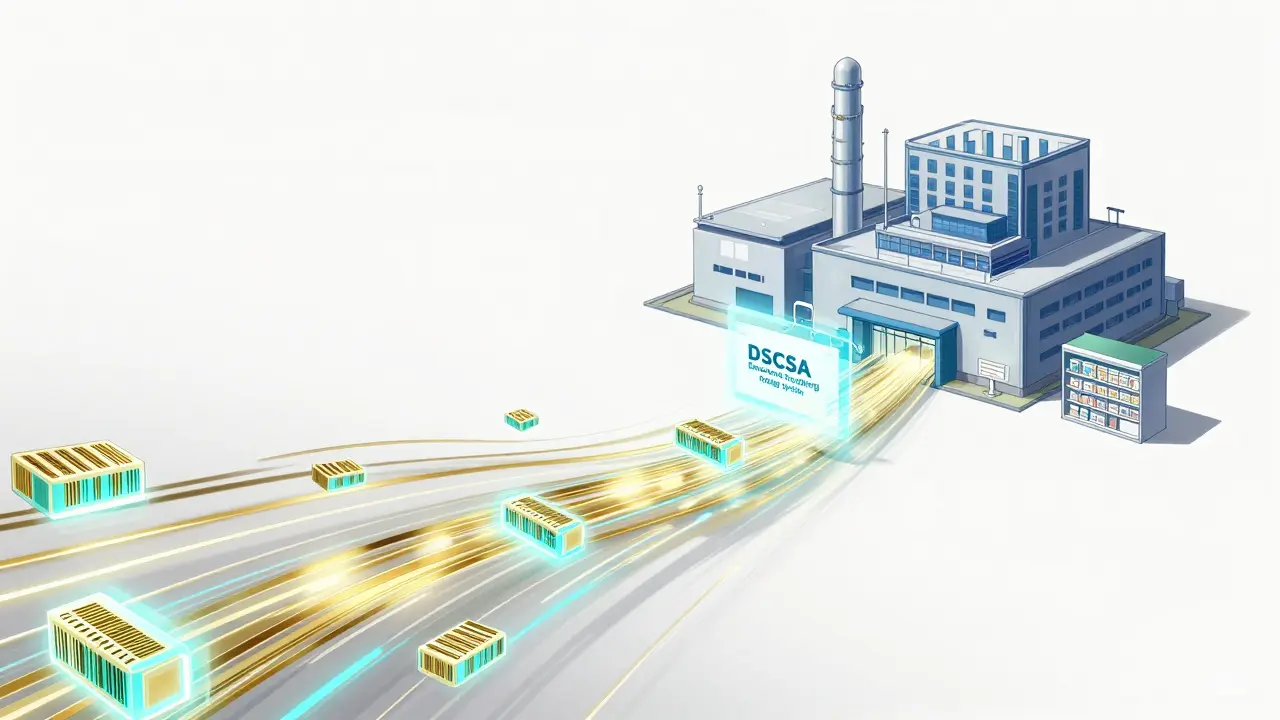
To stop fakes from entering the system, the U.S. government moved away from honor-system trust and toward a digital trail. The
Drug Supply Chain Security Act (or
DSCSA) is the gold standard here. It's not just a suggestion; it's a federal mandate designed to build an electronic, interoperable system to track prescription drugs as they move from the manufacturer to the patient.
By November 2023, the rules tightened significantly. Now, every trading partner-manufacturers, wholesalers, and dispensers-must exchange product tracing information electronically. This means you need three specific things for every single product: transaction information, transaction history, and transaction statements. If a distributor's system glitches and you can't verify this data, the product is effectively dead in the water. Some pharmacy managers have reported having to quarantine nearly $90,000 worth of stock simply because a data transfer failed. That's the reality of modern
drug procurement standards: if the data isn't there, the drug isn't legitimate.
Vetting Your Suppliers: The Seven-Point Check
You can't just buy from whoever offers the lowest price. A


Comments
honestly just check the packaging and the lot numbers manually if you're in a pinch. i've seen so many ppl overlook the basic physical signs of a fake batch because they're too reliant on the digital stuff. its a pain but it saves you from a total nightmare
Oh please, you really think a "digital trail" is for safety? It's all about control and surveillance. They just want to track every single pill to see who is taking what and when so they can tighten the leash on the population. Wake up! The DSCSA is just a front for a massive data-mining operation by Big Pharma and the govt to monitor health patterns and control distribution based on their own secret agendas. You're all just playing along with a system that's designed to trap you in a digital web of compliance while the real counterfeiters are probably the ones running the regulatory boards anyway
It's a lot to process but we just have to trust the process to keep people safe.
One must observe that the utter inadequacy of the current infrastructure is simply laughtable, as these so called interoperable systems are frequently prone to the most egregious of glitches that leave professionals in a state of utter desparetion while the bureaucrats simply shrug their shoulders in total indifference to the actual clinical impact of such failures
The sheer chaos of a $90k quarantine is absolutely wild! Talk about a logistical nightmare. We're basically dealing with a paradigm shift in the supply chain where the data integrity is now as critical as the chemical composition of the drug itself. If the serialization isn't tight, the whole house of cards just collapses on the pharmacist's head. It's high-stakes drama in the most boring-looking setting possible
I think we can all agree that getting the data right is the only way forward.
too many words. just use a better supplier 🙄
From a GxP perspective, the integration of EPCIS standards is what's actually driving this transition. Without a standardized XML schema for the event data, the interoperability mentioned here remains a theoretical goal rather than a functional reality in most emerging markets.
I'm just so glad there's finally a way to fight the fakes!! It's about time we got some real teeth in these regulations!!!
The lack of precision in the current implementation is quite lamentable. It is a rudimentary attempt at security that fails to account for the nuanced complexities of international trade
Stop whining about the glitches and just do your jobs right! If you can't handle a data transfer, you shouldn't be running a pharmacy!
Most pharmacies find that diversifying their wholesaler base reduces the risk of these massive quarantine events. Relying on a single primary source is a vulnerability in your risk management strategy.
idk why ppl care so much. just buy cheap and hope for the best lol. its not that deep
The actual implementation of the DSCSA is just a smokescreen for the blockchain-based tracking the globalists want to impose. Once they move the ledger to a decentralized cloud, they'll have a full audit trail of every patient's biological dependencies. This isn't about counterfeit meds; it's about the biometric synchronization of the pharmaceutical supply chain to facilitate a social credit system based on medication compliance
It's interesting how different countries handle this. I wonder if the electronic systems in the US are actually more effective than the paper-trail systems used in some other regions, or if it's just a different kind of bureaucracy