

When you're going through chemotherapy, eating well isn't about getting lean or eating clean-it's about staying strong enough to finish treatment. Nausea, loss of appetite, and unexpected weight loss aren't just inconvenient; they can delay your treatment, weaken your immune system, and make recovery harder. The truth? What works for a healthy person eating to prevent disease won't work for you right now. Your body needs more calories, more protein, and smarter timing-not less fat or fewer carbs. This isn't a diet. It's survival.
Why Your Body Needs More Food During Chemotherapy
Chemotherapy doesn't just attack cancer cells. It hits your gut, your taste buds, and your metabolism too. Your body is fighting two battles at once: the cancer and the treatment. That burns through energy fast. Studies show 60 to 85% of people on chemo struggle with nutrition problems. You might lose weight even if you're eating. That's not your fault-it's the chemo.
Healthy adults need about 0.8 grams of protein per kilogram of body weight. During chemo, you need 1.2 to 2.0 grams. That’s nearly double. Calorie needs go up too-from 20-25 kcal per kg to 25-30 kcal per kg. If you weigh 70 kg (about 154 lbs), you’re not aiming for 1,500 calories a day. You’re aiming for 1,750 to 2,100. And protein? At least 85 to 140 grams. That’s not optional. It’s what keeps your muscles from breaking down and your body healing.
Beating Nausea: What to Eat and What to Skip
Nausea is one of the most common side effects of chemo-and it’s often made worse by the wrong foods. Greasy, fried, or heavily spiced meals? They trigger nausea in 73% of patients. Strong smells-like coffee, garlic, or grilled meat-can send you running for the bathroom. The key isn’t to eat less. It’s to eat smarter.
- Choose cold or room-temperature foods. They give off fewer odors. Think yogurt, cottage cheese, fruit, or sandwiches.
- Avoid strong smells. Skip the kitchen when cooking. Use the microwave, air fryer, or order in.
- Drink fluids between meals, not with them. Filling your stomach with liquids during a meal makes you feel full faster and can worsen nausea.
- Try ginger. Ginger chews, ginger tea, or even ginger ale (real ginger, not just flavoring) helped 287 people on Cancer Survivors Network manage nausea. It’s not magic, but it’s science-backed.
- Keep snacks handy. Saltine crackers, dry toast, or rice cakes are easy on the stomach. Eat one before getting out of bed if morning nausea is a problem.
Forget the idea of three big meals. Instead, eat five to six small meals every 2-3 hours. Even if you’re not hungry, try to eat something every few hours. Your body needs consistent fuel. A 2023 study found that 55% of patients who switched to small, frequent meals saw better nausea control.
Protein Is Your Best Friend-Here’s How to Get It
Protein isn’t just for bodybuilders. It’s what keeps your muscles, immune system, and healing processes going. When you lose weight during chemo, you’re often losing muscle-not just fat. That makes you weaker, more tired, and more vulnerable to infections.
You don’t need expensive supplements. Start with real food:
- Full-fat Greek yogurt (17g protein per 6 oz)
- Cottage cheese (14g per half-cup)
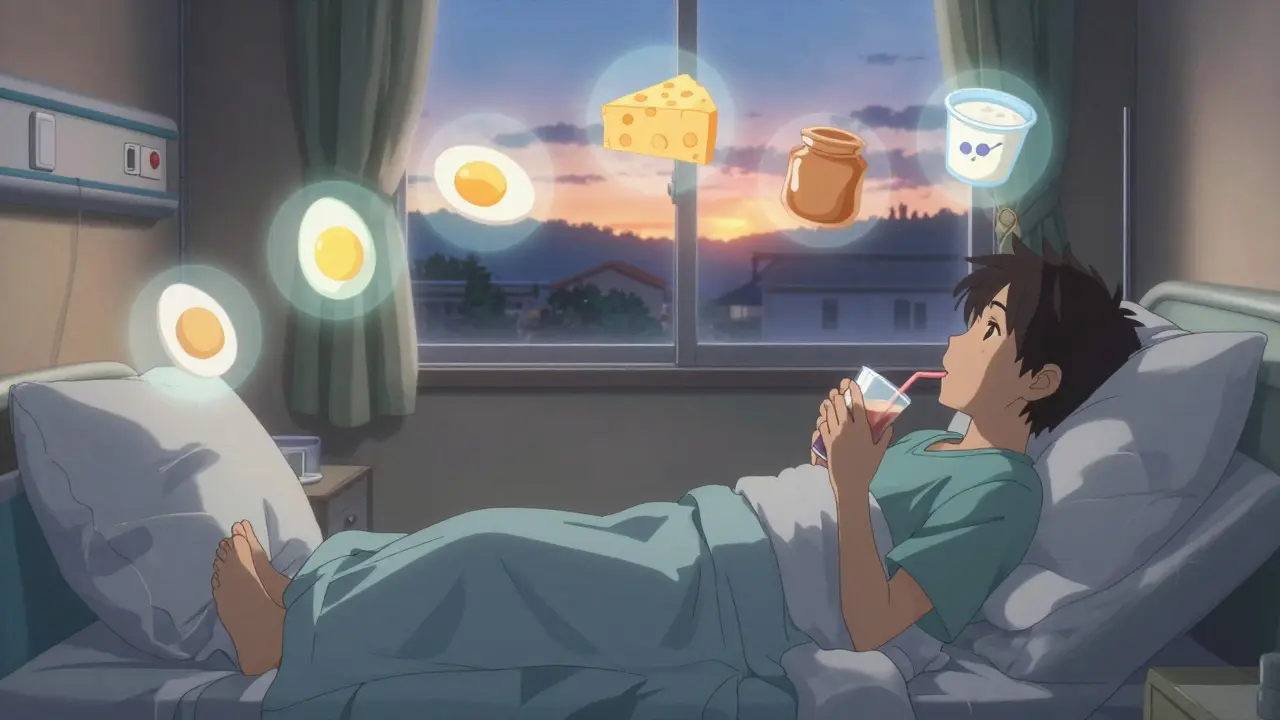
- Eggs (6g per egg-cook yolks to 160°F to avoid food safety risks)
- Peanut butter (8g per 2 tbsp)
- Chicken, fish, or tofu (20-25g per 3 oz serving)
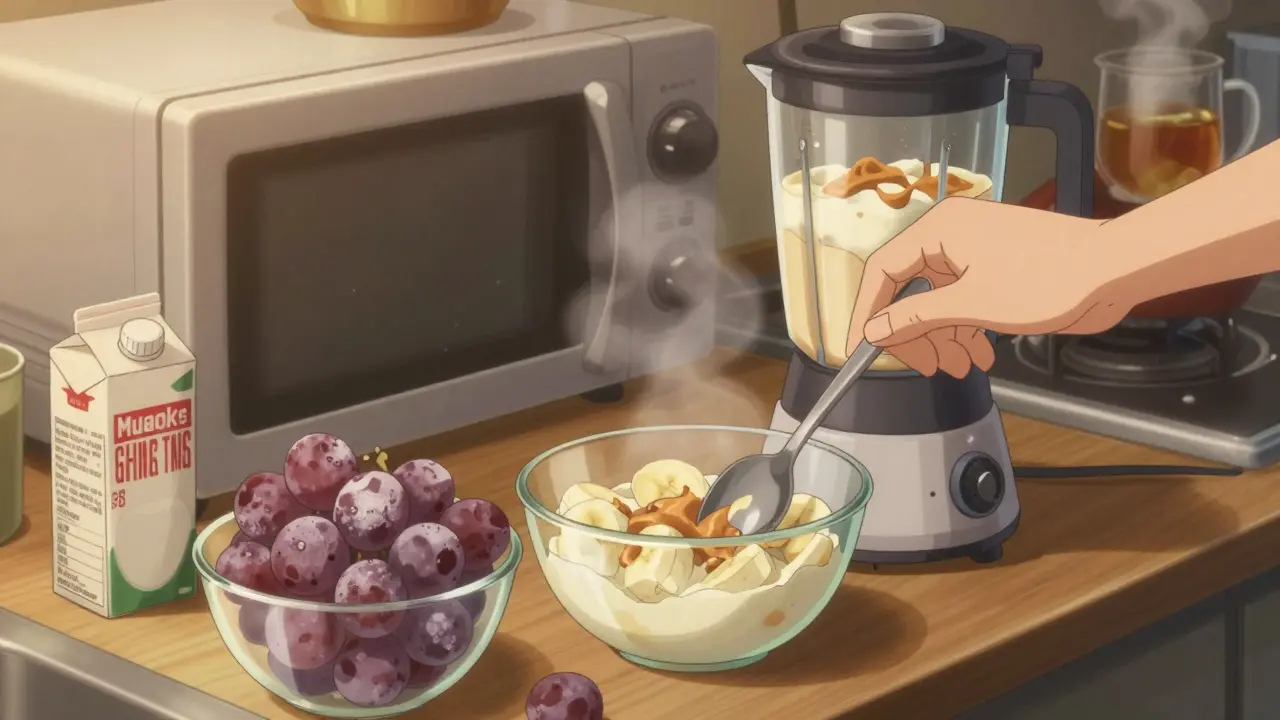
Many patients swear by homemade protein shakes. Blend full-fat Greek yogurt, a tablespoon of peanut butter, a banana, a splash of milk or orange juice, and a spoon of honey. That’s about 30g of protein and 400 calories in one drink. No fancy powders needed. If you can’t eat solid food, sip this slowly throughout the day.
Food Safety: Avoiding Infections When Your Immunity Is Low
Chemo weakens your white blood cells. That means even harmless bacteria can turn dangerous. Raw or undercooked foods become risks.
- No raw meat, sushi, or rare steak. Cook everything to safe internal temperatures.
- No runny eggs. Yolks must reach 160°F (71°C). Skip homemade Caesar dressing, mayonnaise, or cookie dough.
- Wash fruits and veggies even if they’re pre-washed. Use clean water and a brush if needed.
- Don’t eat food left out more than two hours. When in doubt, throw it out.
- Use clean utensils and wash hands before eating-even if you’re alone.
These aren’t just precautions. They’re life-saving rules. About 15-20% of immunocompromised patients get serious infections from unsafe food. Don’t take chances.
What to Do When You Just Can’t Eat
Sometimes, no matter what you try, you just can’t eat enough. That’s when you need backup.
High-calorie, high-protein drinks like Ensure Plus or Boost Plus can help. But they cost $35-$45 for a 12-pack. If that’s too expensive, make your own:
- Blend whole milk, ice cream, peanut butter, and a banana. That’s 500+ calories and 20g protein.
- Use powdered milk in soups, mashed potatoes, or oatmeal. Adds protein without changing flavor much.
- Add cheese to everything-eggs, pasta, vegetables. One ounce of cheddar adds 7g protein and 110 calories.
If you’re losing weight fast, having trouble swallowing, or dealing with mouth sores, talk to your care team about nutritional support. Some patients need tube feeding or IV nutrition. That’s not failure-it’s a tool. About 15-20% of patients on aggressive chemo need this. It’s not rare. It’s necessary.
Real Strategies That Work-From Patients Who’ve Been There
People who’ve walked this path have figured out tricks that aren’t in the textbooks:
- Freeze grapes or berries. They’re cool, sweet, and help with mouth sores. One patient called them “chemo candy.”
- Use plastic utensils. Metal can taste bitter during chemo. Plastic avoids that metallic taste.
- Keep snacks visible. Put trail mix, cheese sticks, or granola bars on the counter, bedside table, and in your purse. Out of sight = out of mind.
- Try peppermint or lemon drops. They can help reset your taste buds and reduce nausea.
- Track your intake. Write down what you eat-even if it’s just a handful of crackers. It helps you see progress and spot patterns.
On Reddit’s r/cancer community, 78% of 342 people said protein shakes were essential. 63% made their own. That’s not a coincidence. It’s practical.
When to Ask for Help
You don’t have to do this alone. Registered dietitians who specialize in oncology nutrition are trained for this exact situation. They can create a plan that fits your treatment, your tastes, and your budget.
But here’s the hard truth: only 35% of community cancer centers have one on staff. If yours doesn’t, ask. Call the American Cancer Society’s 24/7 helpline. They connect patients with local nutrition support. In 2023 alone, they helped over 8,700 people.
If you’re losing weight without trying, or if nausea is making you skip meals for days, speak up. Delaying help makes recovery harder. The goal isn’t to look good. It’s to finish treatment. And nutrition is your most powerful tool.
What’s Changing in Cancer Nutrition
Things are improving. In 2023, the National Cancer Institute launched a free app called “Nutrition During Treatment.” It’s helped over 42,000 people track meals, set reminders, and find recipes. Mayo Clinic’s nutrition program cut treatment delays due to malnutrition by 28% in just one year.
Research is moving fast. Scientists are now testing how your genes affect how you respond to certain foods during chemo. One trial at Memorial Sloan Kettering is looking at whether personalized meal plans based on DNA can reduce nausea and weight loss. AI-powered meal planners are being tested too.
The message is clear: nutrition isn’t a side note in cancer care. It’s part of the treatment. By 2028, 90% of major cancer centers plan to have formal nutrition programs. That’s because the data doesn’t lie-proper nutrition reduces treatment delays by 31% and improves survival rates by 8-12% for some cancers.
You’re not just eating to feel better. You’re eating to survive.
Can I lose weight on purpose during chemotherapy?
No. Weight loss during chemotherapy is dangerous and can lead to muscle wasting, weaker immunity, and treatment delays. The goal is to maintain or even gain weight, especially muscle mass. Calorie restriction during active treatment increases treatment toxicity by 37% and delays recovery by 14-21 days, according to ESPEN guidelines.
Should I take protein powders or supplements?
Whole foods are better, but supplements can help if you can’t eat enough. Homemade shakes with Greek yogurt, peanut butter, and fruit are cheaper and just as effective as store-bought powders. If you do use supplements, choose ones with at least 15g protein and 300+ calories per serving. Avoid those with added sugars or artificial ingredients if possible.
What if I have mouth sores and can’t eat solid food?
Stick to soft, bland, cool foods: mashed potatoes, yogurt, smoothies, scrambled eggs, oatmeal, and blended soups. Avoid acidic foods like citrus or tomatoes. Use a straw for liquids to bypass sore areas. Freezing grapes or banana slices can numb pain. If eating becomes impossible, talk to your doctor about liquid nutrition formulas or tube feeding-these are common and safe.
Is it okay to eat sugar during chemotherapy?
Yes. Sugar doesn’t feed cancer cells more than other foods. The idea that sugar makes cancer grow is a myth. What matters is getting enough calories and protein. If a small piece of cake helps you eat more, it’s worth it. Avoid sugary drinks with no nutrition, but don’t fear natural sugars in fruit, yogurt, or honey.
How do I know if I’m getting enough protein?
Track your intake for a few days. Use a free app like MyFitnessPal or write it down. Aim for 1.2-2.0 grams of protein per kilogram of body weight. For a 150-pound person, that’s 80-135 grams daily. If you’re consistently hitting that, you’re on track. If you’re falling short, add protein-rich snacks like cheese, eggs, or peanut butter between meals.
Can omega-3 supplements help with nausea and weight loss?
Yes. Studies show omega-3 fatty acids (EPA and DHA) improve appetite in 62% of patients losing weight during chemo. They help stabilize weight and improve quality of life. ESPEN recommends 1-2 grams per day. Look for fish oil supplements with at least 500mg EPA+DHA per capsule. Talk to your doctor before starting-especially if you’re on blood thinners.
Comments
Just finished my 12th cycle of chemo, and this is the most accurate, clinically grounded guide I’ve seen in years. The protein targets (1.2–2.0 g/kg) are spot-on-most oncology nurses still default to 0.8 g/kg, which is dangerously inadequate. I tracked my intake with MyFitnessPal and hit 110g/day consistently after switching to Greek yogurt + peanut butter smoothies every 3 hours. No supplements needed. Also, the plastic utensil tip? Life-changing. Metal tasted like blood for months.
Don’t underestimate ginger either. I took 1g powdered ginger capsules pre-treatment and cut nausea by 60%. Science-backed, not anecdotal.
And yes-eating sugar is fine. Cancer doesn’t ‘feed’ on glucose more than your brain does. Denying yourself a cookie just because you’re ‘supposed to eat clean’ is self-sabotage. Survival mode doesn’t care about macros.
There’s an ontological shift here that’s rarely acknowledged: chemotherapy doesn’t just disrupt physiology-it fractures the relationship between the self and the body. Eating isn’t a choice anymore; it’s a ritual of reclamation. The body becomes a contested site: the tumor, the drug, the immune response, the appetite-all vying for dominance.
When you force down a spoonful of cottage cheese not because you want to, but because your T-cells are starving, you’re not nourishing yourself-you’re performing an act of defiance against entropy.
The real revolution isn’t in the protein grams or the ginger tea. It’s in accepting that ‘healthy eating’ is a myth invented by people who don’t have to choose between vomiting and survival. We’re not optimizing. We’re resisting.
This is beautiful. I’m from Nigeria, and here, many people think chemo patients should eat only ‘light’ food-rice, porridge, no meat. They think protein is for athletes, not sick people. I shared this with my cousin who’s on treatment, and her family finally understood why she needs eggs and peanut butter at every meal.
We also use local alternatives: groundnut paste instead of peanut butter, fermented milk (kunun aya) instead of yogurt. Same protein, same calories. Culture matters, but survival doesn’t care where the nutrient comes from.
Thank you for saying it plainly: this isn’t dieting. It’s war. And we’re feeding the soldiers.
Omega-3s are underrated. I started 2g EPA/DHA daily after my third round and noticed my appetite stabilized within a week. Not a miracle, but a measurable shift. ESPEN guidelines are gold standard-most oncologists don’t mention them because they’re not trained in nutrition.
Also, the ‘freeze grapes’ tip? Genius. My mouth sores were so bad I couldn’t swallow water, but frozen blueberries gave me something cool and sweet to suck on without triggering pain. I called them ‘chemo lollipops.’
And yes-track your intake. Even if it’s just scribbling on a napkin. Progress isn’t always visible. Sometimes it’s just ‘I ate three crackers today instead of one.’ That’s a win.
It is of paramount importance to underscore the empirical validity of the caloric and protein thresholds delineated herein. The application of ESPEN guidelines, as referenced, constitutes a paradigmatic shift in oncological nutritional support, moving beyond anecdotal empiricism toward evidence-based interventionism.
Furthermore, the assertion that sugar does not preferentially fuel neoplastic proliferation aligns with the current consensus of the American Society of Clinical Oncology, which explicitly rejects the glycolytic myth in its 2022 position statement on dietary misconceptions.
One must, however, exercise caution regarding the promotion of homemade protein formulations, as unregulated macronutrient ratios may inadvertently induce metabolic derangements in patients with hepatic or renal compromise. Professional dietary consultation remains non-negotiable.
Okay but have you heard about the government’s secret chemo diet program? They don’t want you to know that the FDA actually approves *only* low-calorie diets for chemo patients because Big Pharma makes more money when you’re weak and need more drugs.
My cousin’s oncologist told her to eat ice cream and bacon every day-she’s been in remission for 4 years. Coincidence? I think not.
Also, I read on a forum that aluminum in deodorant causes cancer, so maybe your chemo nausea is from the metal spoons? Try bamboo chopsticks. And drink distilled water. I’ve been doing this for 7 years and I’ve never had chemo-I just research a lot.
You’re not alone. I cried the first time I ate a full meal after my third round-just scrambled eggs and toast. It felt like a victory.
Don’t let anyone make you feel guilty for eating a slice of cake or skipping a meal. Some days, just getting out of bed is enough. You’re doing better than you think.
And if you’re making your own protein shake? Add a banana. It’s sweet, soft, and gives you potassium. My oncology dietitian said it’s like a little hug in a glass.
Keep going. You’re stronger than you know.
Just wanted to add-powdered milk in mashed potatoes is a game-changer. I didn’t even notice the taste, but my protein intake jumped 15g per meal. I also started keeping a jar of honey and peanut butter on my nightstand. If I wake up nauseous, I eat a spoonful before I even sit up. No food smells, no trigger, just calories.
And yes, the ‘track it’ advice? I thought it was pointless. Turns out, seeing ‘I ate 40g protein today’ on paper kept me from giving up on day 17. Small wins matter.