
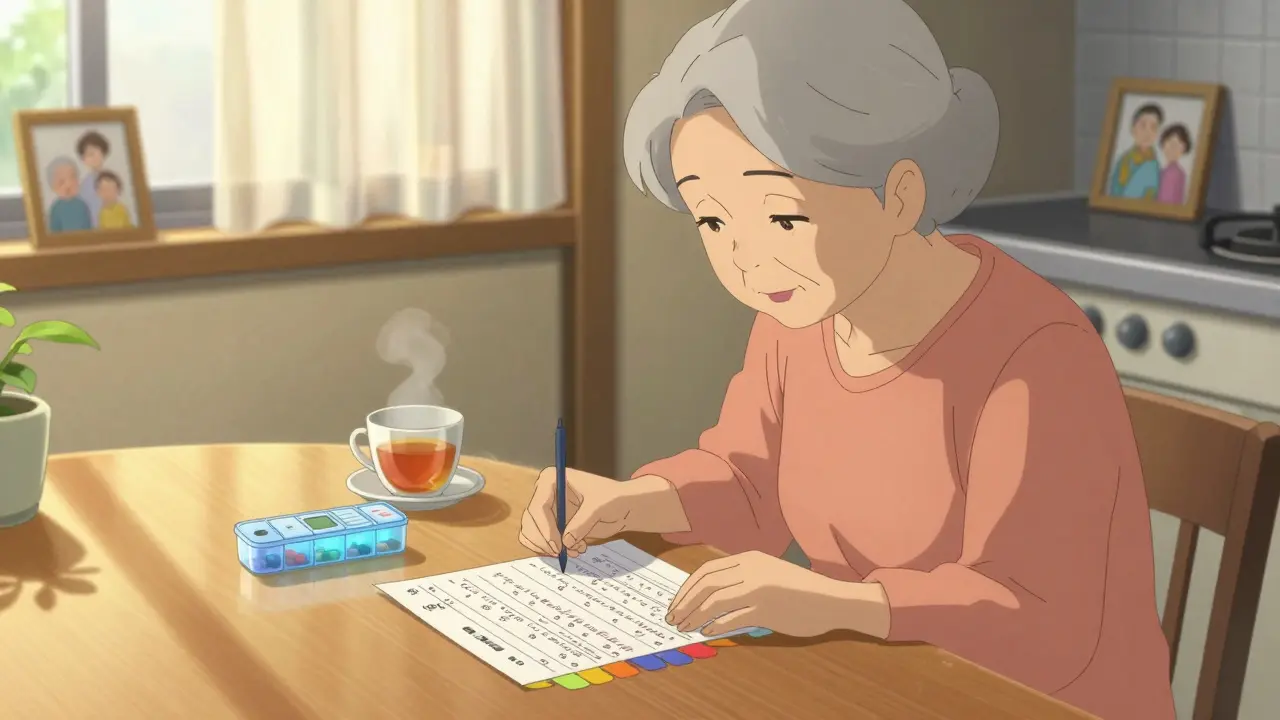
Managing medications for seniors isn’t just about popping pills on time. It’s about staying alive, avoiding hospital trips, and keeping independence. Every year, over 350,000 preventable drug-related emergencies happen in nursing homes alone-and most of them occur right in people’s homes. Seniors take more medications than any other group. In fact, 40% of adults over 65 take five or more pills daily. That’s a lot of chances for something to go wrong. But with simple, practical steps, you can cut those risks dramatically. Here are five proven medication safety tips that actually work, backed by data from the National Institute on Aging, FDA, and geriatric experts.
Keep a Real, Updated Medication List
Don’t rely on memory. Don’t trust sticky notes that fade or get lost. Write everything down-every prescription, over-the-counter pill, vitamin, and supplement. Include the exact name, dose, how often to take it, why it was prescribed, the doctor’s name, pharmacy contact, start date, side effects, and expiration date. The Health in Aging Foundation says this list needs all 10 details to be useful. And it must be updated within 24 hours of any change. Why? Because 92% of pharmacists say having this list prevents dangerous drug clashes. One woman in Birmingham brought her updated list to her annual check-up and caught that her blood pressure med was duplicating another drug her cardiologist had forgotten to stop. She avoided dizziness, falls, and a possible ER visit. Keep the list in your wallet or phone. Bring it to every appointment-even the dentist.Use a Pill Organizer-But Choose the Right One
A simple pill box with separate compartments for morning, afternoon, evening, and night can turn chaos into clarity. The NIA found color-coded organizers improve adherence by 47% in seniors with mild memory issues. But not all organizers work for everyone. If your loved one forgets to take pills or doubles up, try a locked version. One caregiver on Reddit shared how she switched to a locked 7-day AM/PM box after her dad started taking double doses because he couldn’t remember if he’d already taken his morning pill. Within a month, missed doses dropped from 40% to 5%. For those who need more help, digital tools like Medisafe (rated 4.7/5 by over 18,000 users) send phone alerts. Hero, a smart dispenser, automatically releases pills and texts caregivers if a dose is skipped. But don’t assume tech fixes everything. AARP’s 2023 survey found 55% of seniors over 75 prefer paper schedules. If your senior gets overwhelmed by buttons or screens, go low-tech: print out a chart with photos of each pill next to its name and purpose. One man’s anxiety over unfamiliar pills dropped 80% after his daughter made this visual guide.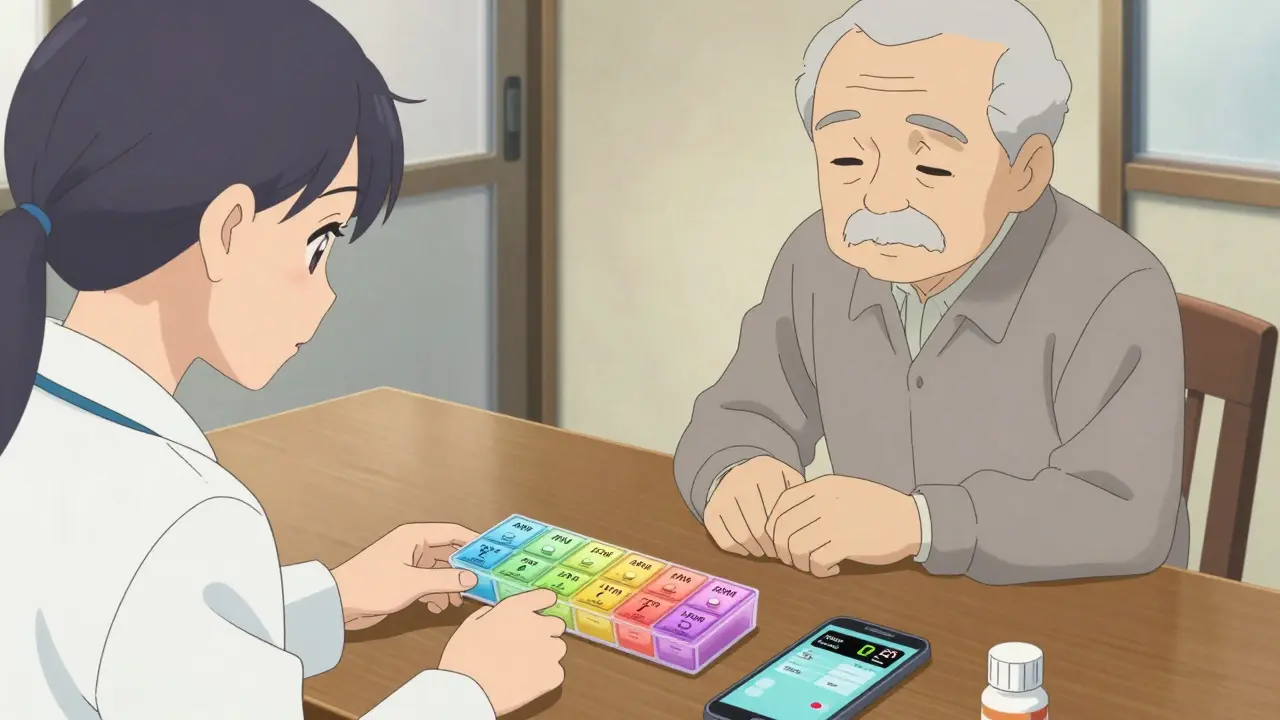
Check for Dangerous Interactions
It’s not just about what’s in the pill-it’s what’s in the glass, the meal, or the room. Grapefruit juice? It messes with 85 common medications, including statins and blood pressure drugs. Alcohol? It interacts dangerously with over 150 medications, especially sleep aids, painkillers, and diabetes pills. Even herbal supplements like St. John’s Wort can cancel out antidepressants or thin the blood too much. The American Geriatrics Society’s Beers Criteria® (updated every two years) lists 138 medications that are risky for seniors. Avoid these unless absolutely necessary: benzodiazepines for sleep, anticholinergics for allergies or bladder issues, and NSAIDs like ibuprofen for long-term pain. Ask your pharmacist: “Is this still needed?” and “Can we switch to something safer?” One study showed that reducing just one high-risk drug lowered fall rates by 22%. Also, check if any new medication was prescribed without reviewing the full list. Polypharmacy isn’t inevitable-it’s often accidental.Store Medications Right-Not in the Bathroom
That medicine cabinet above the sink? It’s a disaster zone. Heat and steam from showers degrade 37% of medications, making them less effective or even harmful. The FDA recommends storing all drugs at 68-77°F (20-25°C) with humidity under 60%. A University of Florida study found that pills left in bathrooms lost potency in as little as three weeks. Keep them in a cool, dry place-like a bedroom drawer or kitchen cabinet away from the stove. Always keep pills in their original bottles with labels intact. That’s not just for you-it’s for emergency responders. And if you have grandchildren visiting, lock it up. The Poison Control Center reports 60,000 accidental child poisonings every year from unsecured meds. Even if you think your grandchild is careful, one好奇的 moment can change everything. Lockboxes cost under $20. It’s cheap insurance.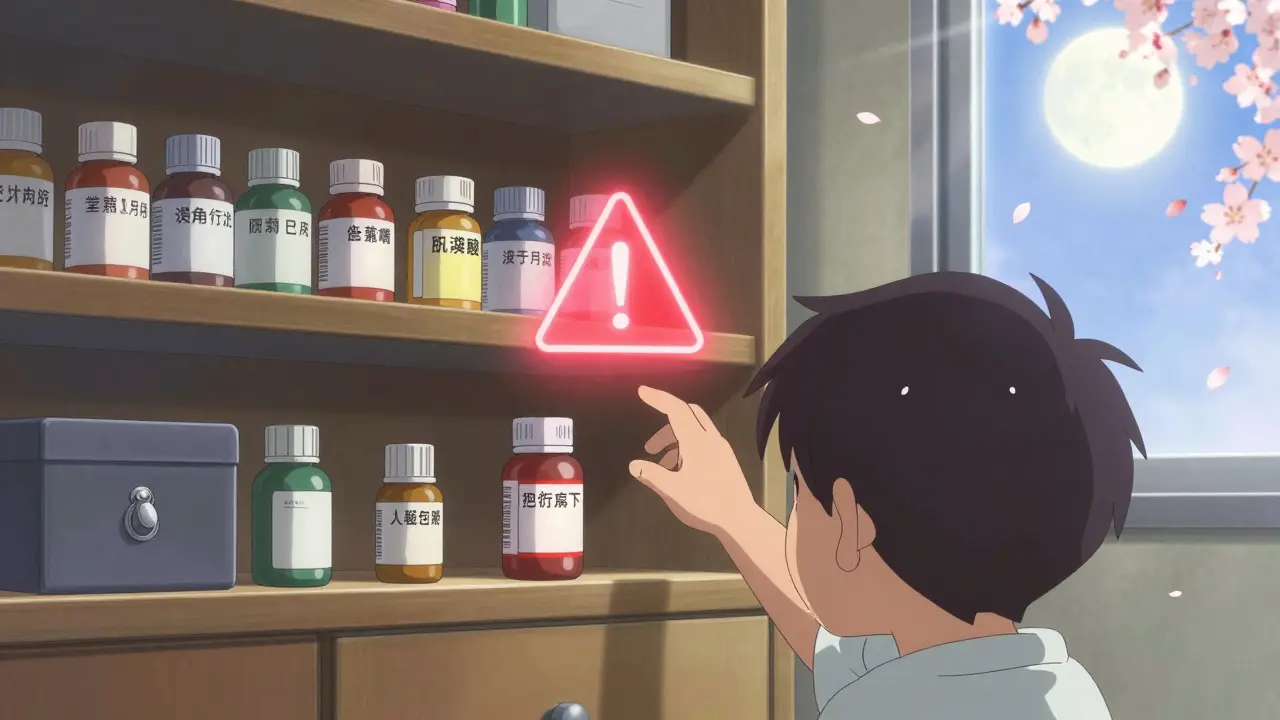
Talk to Your Doctor-With a List of Questions
Don’t go to appointments silent. Bring your medication list and these five questions:- Is this medication still necessary?
- What interactions should I watch for?
- Are there cheaper or safer alternatives?
- What are the signs of dangerous side effects?
- Can we reduce the number of pills I take daily?
Final Thoughts: Small Changes, Big Results
Medication safety isn’t about perfection. It’s about consistency. Setting up a routine takes 21 to 30 days. A caregiver buddy system-where someone checks in daily-boosts adherence from 52% to 85% in just six weeks. Don’t crush pills unless the label says it’s safe. Never take expired meds-the average senior home holds $317 worth of unused, outdated drugs. And if you’re using a digital app and it’s causing more stress than help, go back to paper. The goal isn’t tech-it’s safety. Every year, the Medicare Part D program now offers free medication reviews for those on eight or more drugs. And starting in 2026, Medicare Advantage plans will tie part of their payments to how well they prevent medication errors. That means more support is coming. But right now, the tools are already here. Use them. Keep the list. Organize the pills. Check the interactions. Store them right. Talk to your doctor. These five steps don’t just prevent accidents. They let seniors live longer, safer, and more independently.What should I do if my senior misses a dose?
Don’t guess. Check the medication’s instructions or call the pharmacist. Never double up unless told to. If the missed dose was more than a few hours late, skip it and wait for the next scheduled time. Use a pill organizer with alarms or a smart dispenser to prevent future misses. For high-risk meds like insulin or blood thinners, keep an emergency contact number handy.
Are over-the-counter meds safe for seniors?
Not always. Many OTC drugs are risky for older adults. Antihistamines like diphenhydramine (Benadryl) can cause confusion and falls. NSAIDs like ibuprofen increase bleeding and kidney risk. Laxatives and sleep aids often contain hidden anticholinergics. Always check with a pharmacist before using OTC meds. Ask: “Is this safe for someone my age?” The Beers Criteria® lists dozens of OTC drugs to avoid in seniors.
Can I crush pills to make them easier to swallow?
Only if the label says it’s okay. Many pills-especially time-release, enteric-coated, or capsule forms-lose their effectiveness or become dangerous when crushed. A 2022 University of Michigan study found 22% of home care situations involved improper crushing, leading to overdose or treatment failure. If swallowing is hard, ask the doctor for a liquid version, a patch, or a different formulation. Never crush without professional advice.
How often should I review all medications with a doctor?
At least once a year, but better every six months if taking five or more drugs. Medicare offers free Medication Therapy Management (MTM) for those on eight or more medications. Ask your pharmacist or primary care provider to run a full review. Look for duplicates, unnecessary drugs, or outdated prescriptions. One study showed that annual reviews reduced hospital visits by 19% in seniors with complex regimens.
What’s the best way to dispose of expired or unused meds?
Never flush them or throw them in the trash. Use a drug take-back program. Most pharmacies, police stations, and hospitals in the UK and US have drop-off boxes. The FDA and NHS recommend these safe disposal sites. If none are nearby, mix pills with used coffee grounds or cat litter in a sealed bag before throwing them away. This prevents accidental ingestion by children or pets. A 2023 MedWaste Tracking survey found that 75% of seniors keep expired meds “just in case”-but 90% of them are never used again.
Comments
My mom used to keep all her meds in the bathroom until I caught her taking a pill that looked like a vitamin but was actually a blood thinner. She’d been doing it for two years. I switched her to a locked 7-day organizer with alarms and printed out a color-coded chart with pictures of each pill. Now she remembers everything. No more ER trips. No more yelling at me because she forgot if she took her pill. Simple. Low-tech. Works.
Also, stop using Benadryl for sleep. It’s not harmless. It’s basically a chemical lobotomy for seniors. I saw my neighbor’s dementia get worse after her doctor kept prescribing it. Ask for alternatives. Always.
Agreed. Pill organizers are the unsung heroes of medication safety. But don’t just buy any one. Look for ones with built-in alarms or that sync with apps. I’ve seen too many seniors just stare at the box like it’s a puzzle. The key is matching the tool to the person-not the other way around.
My grandma used to take 12 pills a day. We cut it to 4. She’s been happier, sharper, and not falling as much. Doctors don’t always think to ask if you really need all of them. Just say ‘Can we try taking some away?’ and watch what happens.
While I appreciate the sentiment behind this article, I must point out that the data cited lacks methodological rigor. The National Institute on Aging does not independently validate pill organizer efficacy-those figures come from third-party studies with small sample sizes. Furthermore, the claim that 92% of pharmacists rely on medication lists is statistically dubious without citation of the survey population. This piece reads like a marketing brochure for Medisafe and Hero devices, not an evidence-based guideline.
My uncle took 14 pills daily. We did a full med review with his pharmacist. Cut 6. He stopped feeling foggy. His blood pressure improved. No magic, just common sense. If your doctor doesn’t offer this, ask for a Medication Therapy Management session. It’s free under Medicare. Do it.
Let’s be real-this whole thing is a band-aid on a bullet wound. The system is broken. Seniors are prescribed drugs like candy. Pharmacies profit from polypharmacy. Doctors don’t have time to review. And now we’re being told to buy a $50 pill box like it’s the solution? What about the fact that 70% of seniors can’t afford their meds at all? This article ignores the real issue: healthcare is a business, not a right.
Oh great, another ‘just keep a list’ guide. Like that’s going to stop Big Pharma from pushing drugs on old people. I’ve seen my neighbor’s meds change every month. New pill, new side effect, new doctor. Meanwhile, the same 3 companies own 80% of the prescriptions. This isn’t about safety-it’s about control. And the ‘locked pill box’? That’s just surveillance with a smiley face.
It is imperative to note that the FDA’s recommended storage temperature range of 68–77°F is based on data from pharmaceutical stability studies conducted under controlled laboratory conditions, which do not accurately reflect real-world home environments. Furthermore, the assertion that bathroom storage degrades 37% of medications is derived from a single, non-peer-reviewed study from the University of Florida, which failed to account for humidity variance across geographic regions. A more nuanced approach is required.
I’ve been caring for my mother for 7 years. She had 11 meds. We got rid of 5. One was a cholesterol drug she’d been on since 2008-no one ever checked if it was still helping. She’s got better sleep now. Less confusion. More laughs. I didn’t need a smart dispenser. I just needed to ask: ‘Why are we still doing this?’
It’s not about the list. It’s about the love. Show up. Ask the hard questions. Even if they don’t make sense. Even if they’re tired. Even if you’re tired too. You’re not just managing pills. You’re managing dignity.
One thing no one talks about: the emotional toll on caregivers. We’re told to organize, track, call, check, lock, and ask-but no one says it’s exhausting. I cried the first time I had to explain to my dad why he couldn’t take his old painkiller anymore. He said, ‘But it used to help.’ I didn’t have an answer. Just a list. And a heart that ached.
My aunt took a pill that made her hallucinate. Turned out it was a generic version of a drug she’d been on for 10 years. The pharmacy switched it without telling her. The label looked the same. She thought she was fine. She wasn’t. Always check the color and shape. Always. Don’t trust the label. Trust your eyes.
I work in a home care facility in Mumbai. We don’t have smart pill dispensers. We have nurses, family, and handwritten charts. One woman, 89, takes 6 pills a day. We draw them on a whiteboard with stickers. She points to each one. Says the name. Then takes it. No tech. No app. Just human attention. That’s the real safety net.
you know what they dont tell you? the pills are laced with tracking chips. they want to monitor your heart rate, your sleep, your thoughts. the smart dispensers? they send data to insurance companies. if you miss a dose, they raise your rates. the government and big pharma are in bed together. they dont care if you live. they care if you pay. dont trust the list. dont trust the box. trust no one.
Let me tell you what’s REALLY happening here. This isn’t about medication safety. It’s about control. They give you 12 pills, then tell you to ‘organize’ them-so you’re too busy managing your own body to question why you need them in the first place. The ‘Beers Criteria’? That’s just a PR stunt to make people feel safe while they keep prescribing the same toxic cocktails. And don’t get me started on the ‘free reviews’-they’re a trap. They’ll ‘review’ you, then upsell you a new drug with a ‘better profile.’ This is psychological manipulation dressed as healthcare.
Replying to the conspiracy folks: No, pills aren’t tracked with chips. And no, your pharmacist isn’t in league with Big Brother. But if you think the system is perfect, you haven’t talked to a single geriatric pharmacist. They’re overworked, underpaid, and trying to fix the mess we created. The tools in this article? They’re not perfect. But they’re better than nothing. Use them. Then push for change.