
Cranberry Interaction Risk Estimator
Your Details
Risk Assessment
Select your details and click calculate to see your personalized risk level.
--
Estimated Interaction Probability--
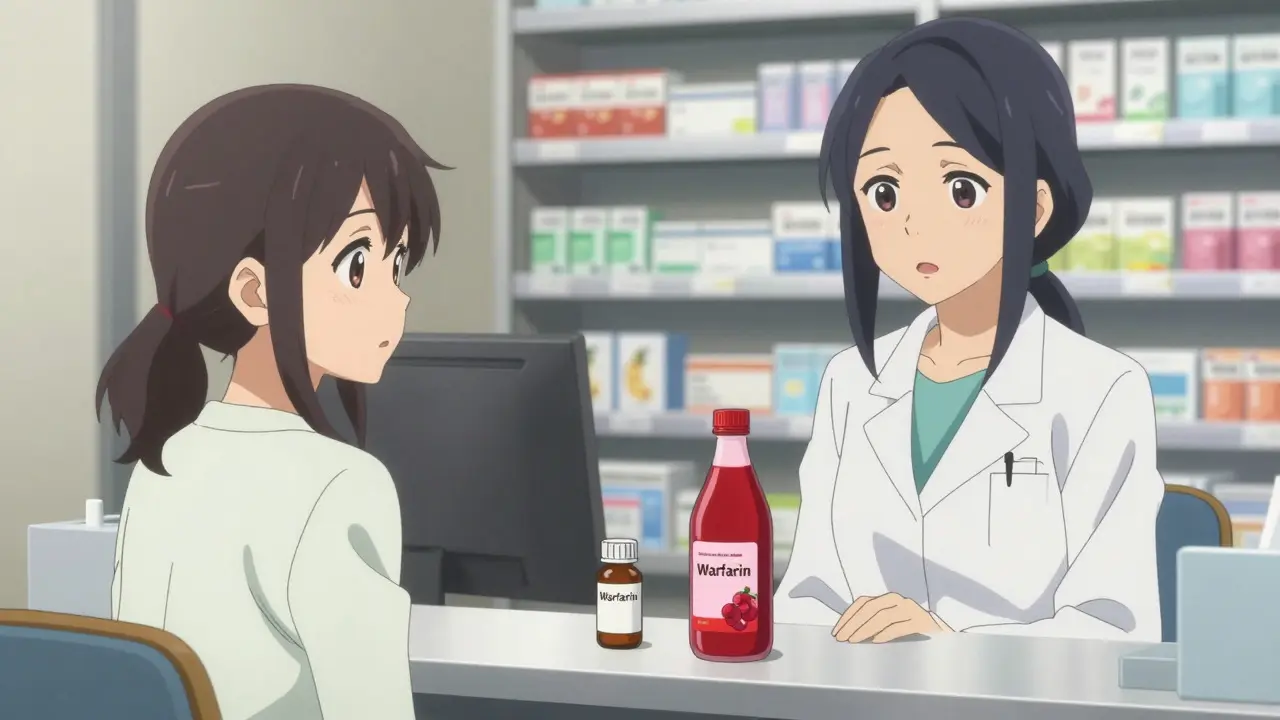
Picture this: you’re sitting in a pharmacy consultation room. The pharmacist looks at your prescription for warfarin, then glances at your grocery list which includes a bottle of cranberry juice. She hesitates. You feel that familiar knot of anxiety. Is it safe? Will it stop the blood thinner from working? Or worse, will it make you bleed?
This scenario plays out thousands of times a year. For decades, we’ve been told to avoid mixing certain foods with meds-grapefruit juice is the famous villain here. But cranberry juice occupies a weird middle ground. It’s not as strictly forbidden as grapefruit, but it’s certainly not given a free pass either. The confusion stems from a mix of old case reports, theoretical science, and genuine clinical uncertainty.
The truth is more nuanced than a simple "yes" or "no." To figure out if your morning glass of cranberry is risky, we need to separate the scary headlines from what actually happens inside your body when you take medicine.
The Warfarin Controversy: Myth vs. Reality
If there is one medication where cranberry juice matters, it’s warfarin. This anticoagulant has a narrow therapeutic index, meaning the difference between a helpful dose and a dangerous one is tiny. We measure its effectiveness using the INR (International Normalized Ratio). If your INR goes too high, you risk bleeding; too low, and you risk clots.
In 2003, a Canadian case report suggested that drinking cranberry juice caused a patient’s INR to spike dangerously. This single report sparked a wave of caution. Since then, studies have produced conflicting results. A 2010 systematic review analyzed 11 case reports suggesting an interaction, but four controlled clinical studies found no significant effect on INR values when patients drank standard amounts of cranberry juice.
| Type of Evidence | Findings | Clinical Relevance |
|---|---|---|
| Case Reports (2003-2010) | Some patients experienced elevated INR after consuming cranberry products. | High concern due to potential bleeding risks, though causality is hard to prove. |
| Controlled Studies (e.g., Edwards et al., 2009) | No significant change in warfarin pharmacokinetics or INR in healthy participants. | Suggests typical consumption may be safe for many, but individual variability exists. |
| Current Consensus (UpToDate, 2023) | Interaction remains controversial; caution advised. | Patient-specific monitoring is key rather than blanket prohibition. |
So, why the disagreement? Experts like Dr. Lisa K. Stamp argue that because the consequences of an INR spike can be life-threatening, we should assume the risk exists until proven otherwise. On the other hand, Dr. David Ang-Lee points out that lab tests showing cranberry inhibits enzymes don’t always translate to real-world effects in humans. The bottom line? If you are on warfarin, consistency is your best friend. Don’t start or stop drinking cranberry juice without talking to your doctor, and expect more frequent INR checks if you do.
Antibiotics: Why the Fear Was Unfounded
You might have heard that cranberry juice stops antibiotics from working, specifically beta-lactams like amoxicillin or cefaclor. The theory was that compounds in cranberry could block the transporters in your gut that help absorb these drugs.
However, science has largely debunked this fear. A pivotal 2009 study by Kim et al. published in Antimicrobial Agents and Chemotherapy tested this exact scenario. They gave healthy women amoxicillin and cefaclor with and without cranberry juice. The result? No statistically significant difference in how much drug entered their bloodstream. While there was a slight delay in absorption, the total amount absorbed (AUC) and peak levels (Cmax) remained unchanged.
This means if you are taking antibiotics for a urinary tract infection (UTI)-which is exactly why many people drink cranberry juice-you generally don’t need to worry about the juice making the antibiotic ineffective. In fact, since approximately 20% of women experience recurrent UTIs, avoiding cranberry juice entirely might mean missing out on a helpful preventive strategy.
The Enzyme Factor: CYP3A4 and CYP2C9
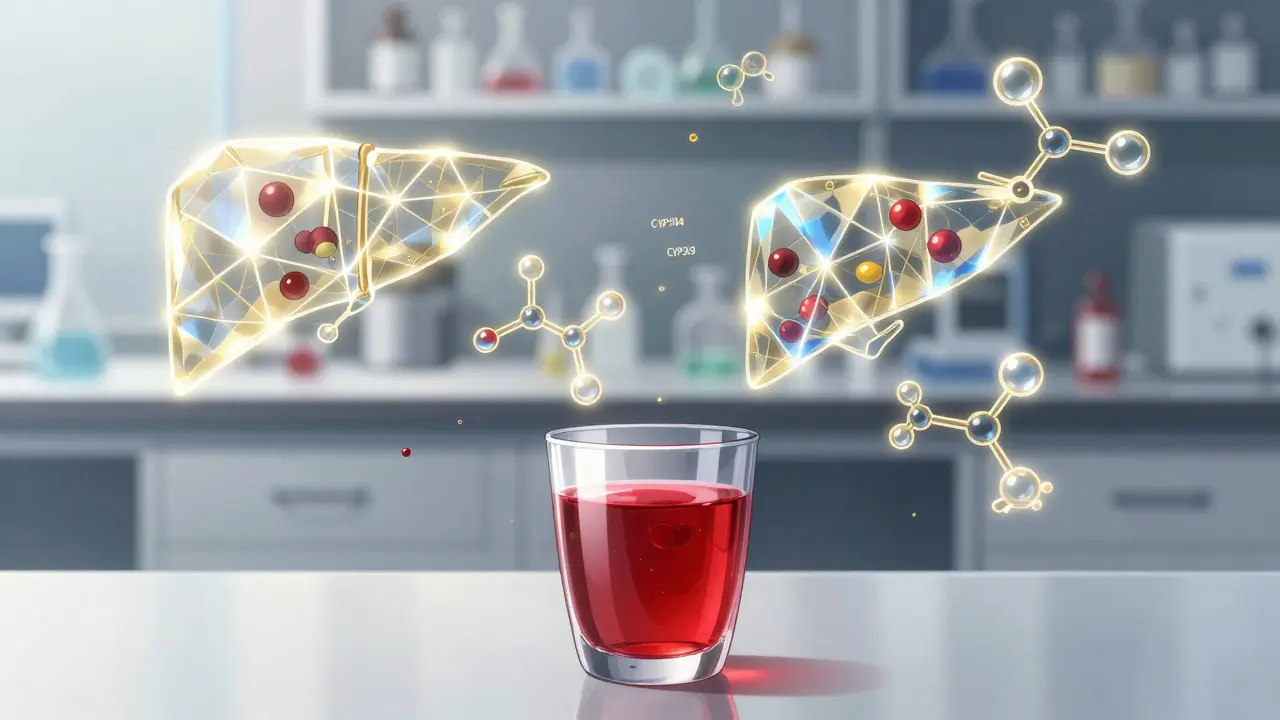
To understand why some interactions happen, we have to look at the liver’s cleanup crew: the cytochrome P450 enzyme system. Specifically, two enzymes matter most here: CYP3A4 and CYP2C9.
Cranberry juice contains proanthocyanidins and flavonoids. In a test tube (in vitro), these compounds can inhibit CYP3A4 and CYP2C9 almost as powerfully as drugs like ketoconazole or fluconazole. This sounds alarming. After all, CYP3A4 metabolizes hundreds of medications, including statins, antidepressants, and benzodiazepines like alprazolam.
But here’s the catch: a test tube isn’t a human body. When you drink juice, it gets diluted by stomach acid, mixed with food, and processed by the liver before reaching systemic circulation. Most clinical studies haven’t shown that typical servings of cranberry juice significantly alter the levels of drugs metabolized by these enzymes. However, the theoretical risk remains for concentrated extracts. If you are taking medications with a narrow therapeutic window, such as certain heart medications or immunosuppressants, it’s wise to stick to moderate juice consumption rather than high-dose supplements.
Juice vs. Supplements: The Dosage Difference
Not all cranberry products are created equal. This distinction is crucial for your safety. There is a massive difference between an 8-ounce glass of cranberry cocktail and a capsule of concentrated cranberry extract.
- Cranberry Juice Cocktail: Most store-bought juices contain only about 27% actual cranberry juice, mixed with apple or grape juice and sugar. At typical consumption levels (8-12 oz daily), the concentration of active compounds is low enough that interactions are rare.
- Pure Cranberry Juice: Contains higher levels of acids and proanthocyanidins. Drinking large quantities (more than 16 oz daily) might pose a slightly higher risk for sensitive individuals.
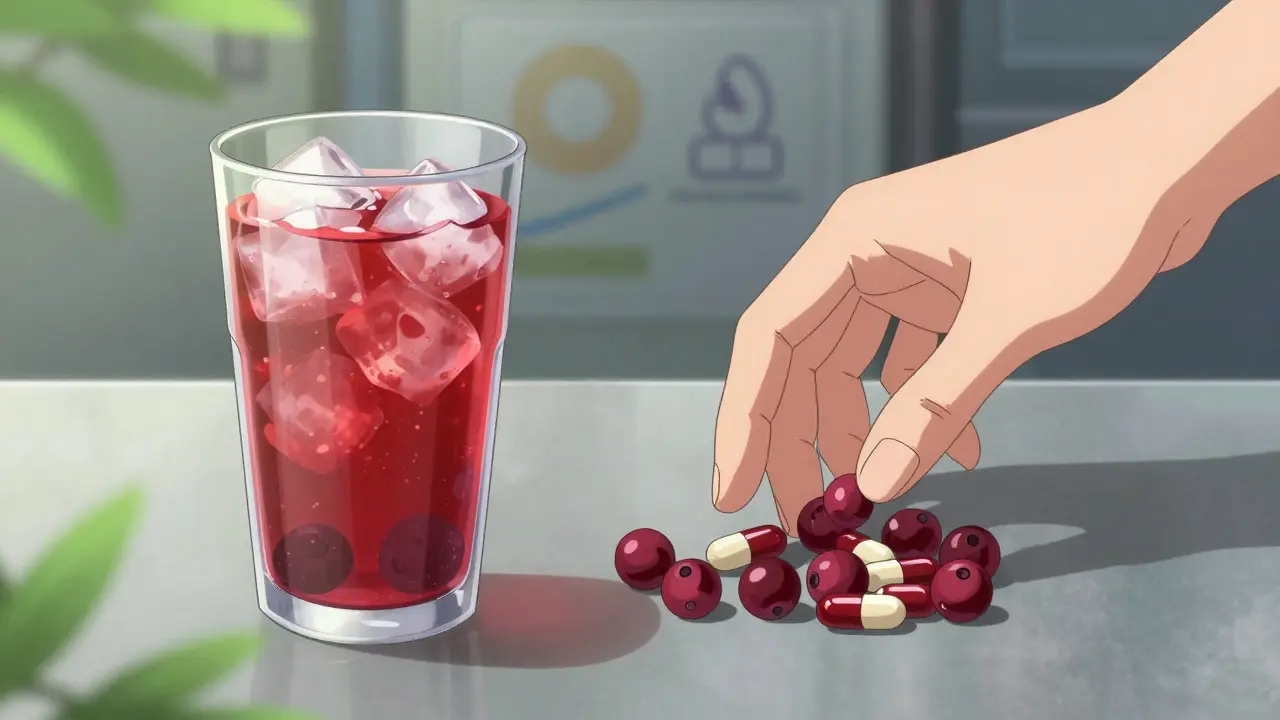
- Cranberry Extracts/Supplements: These are designed to deliver high doses of proanthocyanidins (often 36mg per serving or more) without the sugar. Because the concentration is so high, the theoretical risk of enzyme inhibition increases. This is where most experts advise caution.
If you are concerned about interactions, stick to the juice in moderation. Avoid popping multiple cranberry pills unless your healthcare provider has reviewed your full medication list.
Practical Safety Guidelines for Patients
Navigating this information can feel overwhelming. Here is a straightforward approach to keeping yourself safe while enjoying the benefits of cranberry products.
- Know Your Meds: Are you on warfarin? Digoxin? Cyclosporine? These are the high-risk categories. If yes, talk to your pharmacist before adding cranberry to your routine.
- Consistency is Key: If you decide to drink cranberry juice, try to keep your intake consistent. Don’t chug a liter one day and none the next. Fluctuating intake makes it harder for doctors to adjust your medication dosages accurately.
- Monitor for Symptoms: If you are on blood thinners, watch for signs of bleeding (bruising, nosebleeds, red urine) or clotting (swelling, pain). Report any changes immediately.
- Separate Timing: As a general precaution, some providers recommend separating medication and juice intake by two hours. While evidence for this specific timing is weak for most drugs, it doesn’t hurt and can provide peace of mind.
- Check Labels: Look for the percentage of cranberry content. Lower percentages mean lower risk of interaction but also potentially less benefit for UTI prevention.
Remember, the goal isn’t to eliminate cranberry juice from your life, but to use it intelligently. For most people taking common medications like antibiotics, antihypertensives, or statins, a daily glass of juice is perfectly safe. The risks are real but manageable, primarily affecting those on sensitive anticoagulants.
Future Research and Changing Guidelines
The landscape of drug interaction advice is constantly evolving. Recent guidelines from the American Urological Association (2021) have shifted away from recommending complete avoidance of cranberry products with all medications. Instead, they suggest cranberry may be used for UTI prevention in patients not taking warfarin, with no strict dosage restrictions for other common meds.
New research is also focusing on Direct Oral Anticoagulants (DOACs) like apixaban and rivaroxaban. Since many patients have switched from warfarin to DOACs, understanding if cranberry affects these newer drugs is critical. Current data suggests DOACs may be less susceptible to dietary interactions than warfarin, but large-scale studies are still ongoing.
As we move forward, expect to see more standardized labeling on cranberry supplements. Organizations like the Council for Responsible Nutrition are pushing for warnings on products with high proanthocyanidin concentrations. Until then, staying informed and communicating with your healthcare team is your best defense against unexpected interactions.
Can I drink cranberry juice if I am on warfarin?
You can, but with extreme caution. Evidence is mixed, with some case reports showing increased bleeding risk and others showing no effect. Consult your doctor first. If approved, maintain a consistent daily amount and monitor your INR closely. Do not start or stop suddenly.
Does cranberry juice make antibiotics less effective?
Generally, no. Clinical studies have shown that standard amounts of cranberry juice do not significantly reduce the absorption of common antibiotics like amoxicillin or cefaclor. It is safe to consume them together for most patients.
Is cranberry extract safer than cranberry juice?
Actually, it might be riskier regarding interactions. Concentrated extracts have much higher levels of proanthocyanidins, which theoretically increase the chance of inhibiting liver enzymes. Juice is diluted and poses a lower risk for most medications.
How much cranberry juice is considered safe daily?
For most people, one 8-ounce glass of standard cranberry cocktail per day is considered safe. If you are on sensitive medications, limit intake and discuss with your pharmacist. Avoid excessive consumption (more than 16-24 oz daily) without medical advice.
What are the symptoms of a cranberry-drug interaction?
Symptoms depend on the medication. For blood thinners, watch for unusual bruising, bleeding gums, or prolonged bleeding from cuts. For other drugs, you might experience increased side effects like dizziness, drowsiness, or nausea. Always report new or worsening symptoms to your doctor.
Does cranberry juice interact with statins?
Theoretical risk exists because both affect CYP3A4 enzymes, but clinical evidence of significant interaction is lacking for standard juice consumption. However, if you are on high-dose statins or concentrated cranberry supplements, consult your provider to be safe.
Why is cranberry juice different from grapefruit juice?
Grapefruit juice contains furanocoumarins that permanently disable CYP3A4 enzymes in the gut for up to 72 hours, leading to serious interactions with many drugs. Cranberry juice’s inhibition is weaker, reversible, and less clinically significant for most medications, except possibly warfarin.
Can cranberry juice help prevent UTIs while on medication?
Yes, for most medications. Cranberry’s proanthocyanidins prevent bacteria from sticking to the bladder wall. Unless you are on warfarin or another high-risk drug, continuing cranberry for UTI prevention is generally supported by urological guidelines.