
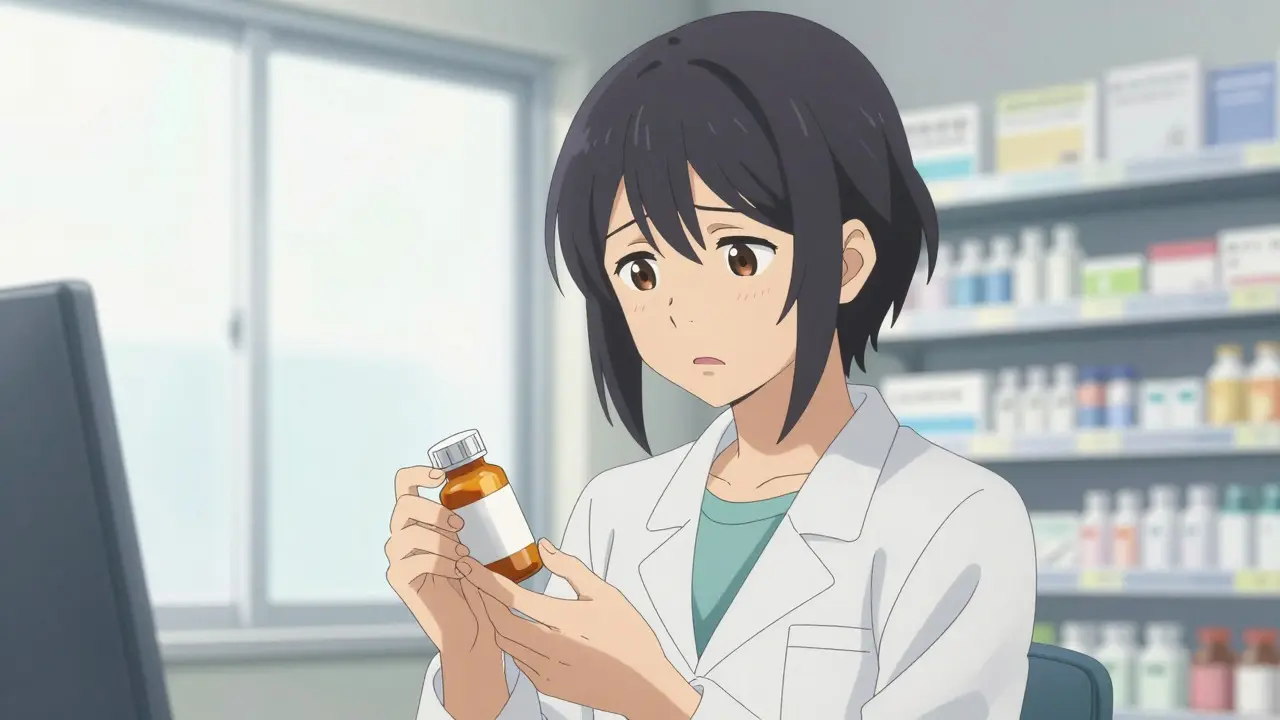
Imagine picking up your prescription at the counter, only to realize weeks later that you’ve been taking the wrong dose. It’s a scary thought, but for millions of patients in the U.S., it’s a reality. Medication errors aren’t just administrative hiccups; they are critical patient safety events that can lead to hospital readmissions, adverse drug reactions, or worse. Understanding pharmacy dispensing errors is the first step toward building a safer healthcare system, whether you’re a pharmacist looking to optimize your workflow or a patient wanting to advocate for your own health.
The scale of the problem is significant. A comprehensive 2023 systematic review found that the worldwide prevalence of dispensing errors sits at approximately 1.6%, though this number varies wildly depending on the setting and how errors are measured. In the United States alone, an estimated 7 million people are impacted by medication errors annually. Large academic medical centers report around 100 such errors per month, while the FDA receives over 100,000 annual reports related to these incidents. These statistics highlight that while most errors don’t result in harm, the potential for serious consequences makes prevention a top priority for any pharmacy operation.
What Exactly Is a Pharmacy Dispensing Error?
At its core, a pharmacy dispensing error is a preventable event that may cause or lead to inappropriate medication use or patient harm while the medication is in the control of the health care professional, patient, or consumer. This definition, widely adopted from the Institute for Safe Medication Practices (ISMP), covers everything from the moment a prescription is written to when the patient takes the last pill.
Errors don’t always look like a pharmacist handing you the wrong bottle. They can be subtle. For instance, an expired product error occurs when medication deteriorates due to improper storage, rendering it ineffective or unsafe. Incorrect duration errors happen when a patient is dispensed too many or too few days’ supply. In compounding pharmacies, incorrect preparation errors might involve using the wrong diluent, which changes the drug's stability. Even the rate of administration matters; giving vancomycin too quickly via IV can cause flushing syndrome, a painful reaction known as "Red Man Syndrome."
The Most Common Types of Mistakes
Not all errors are created equal. Some types occur far more frequently than others, and knowing them helps identify where risks lie highest. According to the Academy of Managed Care Pharmacy (AMCP), three categories dominate the landscape:
- Incorrect Medication, Strength, or Form: This accounts for about 32% of all dispensing errors. It often happens when two bottles look identical or when a pharmacist selects the wrong strength from a shelf lined with similar packaging.
- Dose Miscalculation: Representing 28% of errors, this is particularly risky in pediatric and geriatric populations where dosing is weight- or age-dependent.
- Missed Interactions or Contraindications: Making up 24% of cases, this occurs when a new prescription conflicts with a patient’s existing medications or medical history.
Beyond these top three, other frequent issues include failing to check allergy status and not adjusting doses for renal function. Data from NHS Resolution between 2015 and 2020 revealed that anticoagulants were involved in 31% of serious error cases, followed by antimicrobials (28%) and opioids (24%). When analyzing antibiotic-related claims specifically, 41% resulted simply from failing to check if the patient was allergic to penicillin or cephalosporins.
Why Do These Errors Happen? Root Causes Analysis
It’s tempting to blame individual pharmacists for slipping up, but root cause analyses tell a different story. Dr. Michael Cohen, President of ISMP, notes that errors are rarely the fault of individuals but rather result from flawed systems. Human factors play a massive role, and understanding them is key to prevention.
| Factor | Percentage of Errors Attributed | Description |
|---|---|---|
| Workload Pressures | 37% | High volume of prescriptions leading to rushed verification steps. |
| Similar Drug Names | 28% | Sound-alike or look-alike packages causing selection errors. |
| Interruptions | 22% | Phone calls or colleagues breaking concentration during checking. |
| Lack of Support Staff | 19% | Understaffing forcing pharmacists to handle non-clinical tasks. |
| Illegible Handwriting | 15% | Difficulty interpreting prescriber intent from paper scripts. |
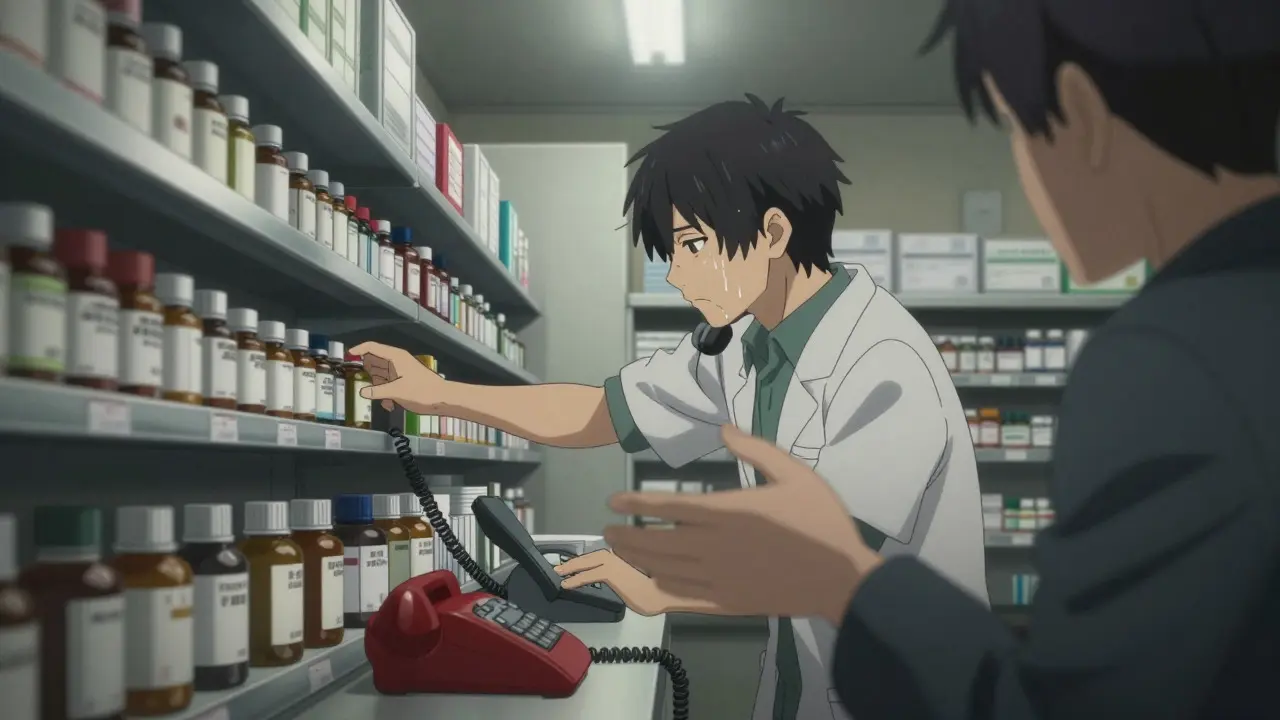
Workflow interruptions are a silent killer of accuracy. Observational studies in 47 U.S. community pharmacies found that when a pharmacist experienced more than three interruptions per prescription, the probability of an error increased by 12.7%. Similarly, oral transmission of prescriptions introduces unique risks; sound-alike names caused 22% of errors in verbal scenarios according to FDA MedWatch data. If a doctor says "Zoloft" and the pharmacist hears "Xarelto," the result can be catastrophic without a double-check mechanism.
Evidence-Based Prevention Strategies
Preventing errors isn’t about working harder; it’s about designing better systems. Several evidence-based strategies have proven effective in reducing error rates significantly.
Technology and Automation
Barcoding technology is one of the most impactful tools available. A national survey of 127 hospital pharmacies showed that implementing bar code scanning reduced overall dispensing errors by 47.3%. Specifically, wrong drug errors dropped by 52.1%, and wrong dose errors fell by 48.7%. The technology forces a match between the scanned barcode and the patient’s profile, catching mismatches before the patient leaves the counter.
Computerized Provider Order Entry (CPOE) systems also play a vital role. Research published in the Journal of Patient Safety demonstrated that CPOE with clinical decision support reduced dispensing errors by 43.2%. However, caution is needed. Dr. Gordon Schiff noted that these systems introduced new error types in 17.8% of cases, often due to "alert fatigue" where clinicians ignore warnings because there are too many. The goal is a hybrid approach where technology supports human judgment, not replaces it.
Process Improvements and Protocols
Standardizing internal processes yields impressive results. A 2022 study in JAMA Internal Medicine found that strict verification protocols for dosage reduced dose errors by 63%. Allergy verification systems cut allergy-related errors by 72%. Implementing a "Do Not Crush" list, as recommended by ISMP, reduced inappropriate tablet crushing errors by 73.2% in long-term care facilities. This simple protocol prevents damage to extended-release formulations that could lead to dangerous overdose levels.
Tall Man lettering is another clever, low-cost intervention. By capitalizing specific letters in sound-alike drug names (e.g., dOxazosin vs. doxepin), pharmacies reduced sound-alike errors by 56.8% across 214 community pharmacies. It’s a small change with a big impact on visual clarity.
Culture of Safety and Reporting
Perhaps the most important strategy is shifting the culture from blame to learning. Pharmacies that implemented comprehensive error prevention systems saw a 62.3% reduction in errors, compared to only 18.7% for those focusing on individual accountability. Systems like Pharmapod allow staff to report near-misses without fear of punishment. In 1,847 U.S. pharmacies using this system, dispensing errors dropped by 38.7% within 12 months. When staff feel safe reporting a close call, the organization learns from it before it becomes a real harm event.
Real-World Implementation Challenges
While the data looks promising, putting these strategies into practice has hurdles. Cost is the biggest barrier, cited by 67.3% of pharmacy owners in a 2023 technology survey. Robotic dispensing systems, which can reduce errors by 63.2%, require an investment of $150,000 to $500,000 per unit-prohibitive for many independent community pharmacies.
Workflow disruption is another concern. Integrating new software or hardware can slow down the line initially. One hospital pharmacist reported that a new CPOE system led to alert fatigue, causing their team to miss three critical interaction warnings in the first quarter. This underscores the need for careful training and gradual implementation. Staff must understand *why* a new protocol exists, not just *how* to follow it, to ensure buy-in and consistent adherence.
Future Outlook: AI and Global Standardization
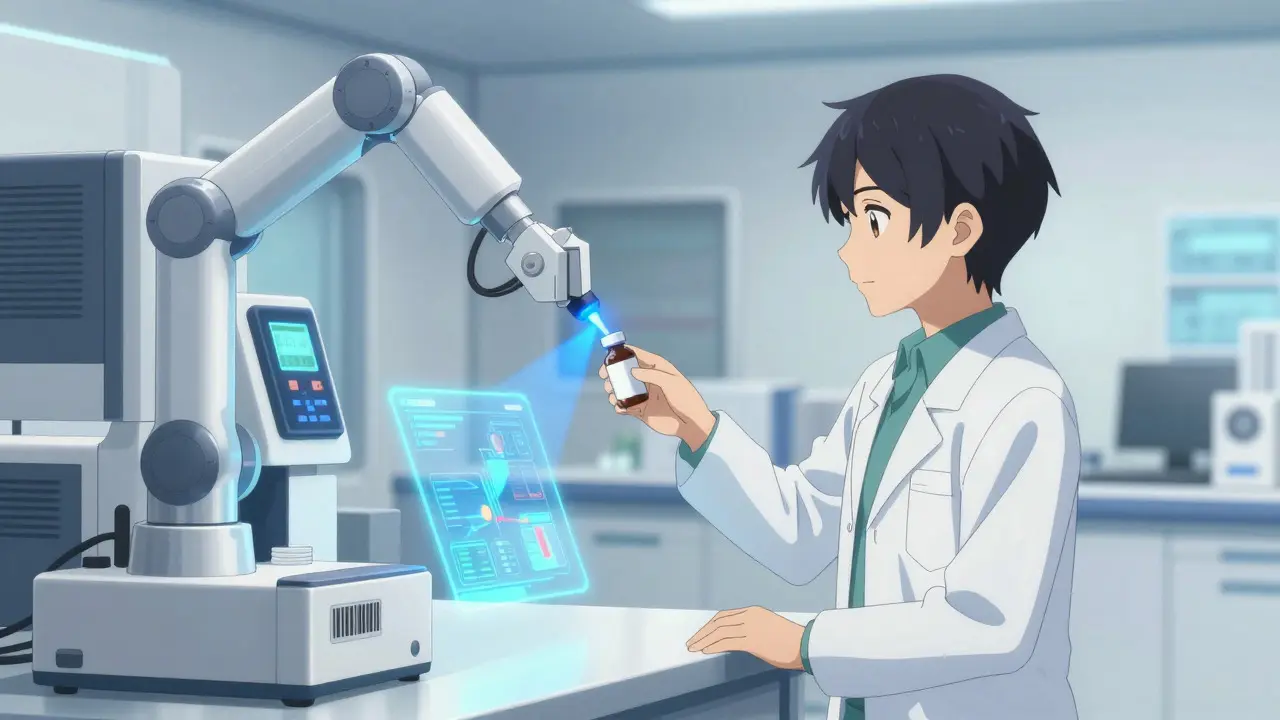
The future of medication safety lies in smarter technology and global cooperation. Artificial intelligence systems tested in 34 hospital pharmacies between 2021 and 2023 reduced dispensing errors by 52.7% through predictive analytics. These systems can flag unusual patterns, such as a dose that is slightly off for a specific patient’s weight, before a human even sees the script.
On a global scale, the World Health Organization (WHO) and ISMP are collaborating on a unified classification system for medication errors, expected for release in Q1 2025. Currently, different countries define and report errors differently, making international comparisons difficult. A standardized system is projected to reduce heterogeneity in error reporting by 42%, allowing for faster identification of global trends and best practices. By 2030, integrated electronic health record-pharmacy systems are predicted to cut dispensing errors by up to 75%, provided that adoption challenges are overcome.
Frequently Asked Questions
How common are pharmacy dispensing errors?
Globally, the prevalence is estimated at 1.6%, but this varies by setting. In the U.S., roughly 7 million patients are affected annually. Hospital settings tend to have higher reported rates due to complex polypharmacy, while community pharmacies face challenges with volume and staffing.
What is the most frequent type of dispensing error?
Dispensing the incorrect medication, dosage strength, or dosage form is the most common, accounting for about 32% of all errors. This is often caused by look-alike packaging or selecting the wrong item from a crowded shelf.
Can barcodes really prevent medication errors?
Yes. Studies show barcoding reduces overall dispensing errors by nearly half. It acts as a final checkpoint, ensuring the specific bottle matches the patient’s profile and prescription details before handoff.
Why are interruptions so dangerous in a pharmacy?
Interruptions break the cognitive flow required for accurate verification. If a pharmacist is stopped mid-check by a phone call or colleague, they may lose track of what they were verifying, leading to missed details like dose or allergy conflicts. More than three interruptions per script significantly increases error risk.
What should patients do if they suspect an error?
Contact the pharmacy immediately. Keep the original packaging and any remaining pills. Ask for the pharmacist who verified the prescription to discuss the issue. Most errors are resolved quickly, and reporting them helps improve safety for everyone.
Comments
They tell you it's a 'system failure' but we all know the FDA is just counting on the errors to keep people sick so they can sell more patents. The barcodes? Just another way for Big Pharma to track which of us are taking our meds and which ones are starting to ask too many questions. You think 1.6% is low? That's because they only report the ones that don't end up in the graveyard. The real numbers are hidden in the shadows where the truth doesn't like to live.
Oh, wonderful. Another article pretending that human error is the villain, when really, it’s just the inevitable consequence of a system designed to fail us! I mean, who do they blame? The pharmacist? The doctor? Or perhaps... *gasp*... the patient for not memorizing every single interaction? It’s laughable, truly. We are expected to trust these machines while ignoring the fact that the algorithm itself is biased towards profit over safety. Don’t get me wrong, I love my coffee, but this? This is just another layer of bureaucratic nonsense dressed up as science!
Fair point about the interruptions. I work near a pharmacy and it feels like chaos sometimes. Good read though.
yeah sure and the barcode scanner will catch the doctor who prescribes five new drugs at once without checking anything lol
really helpful info. i always double check my pills now after reading stuff like this. thanks for sharing.
In India, we often see similar issues with generic drug packaging. The look-alike names are a huge problem there too. It would be great if global standardization helped us as well. A standardized naming convention could save lives in resource-limited settings too.
Stop being so negative! Look at the progress! AI is coming to save the day! We are SO close to perfection! Just wait until 2030 and everything will be fixed! Don't let the small details ruin your optimism! The future is bright and shiny and full of automated checks! Hooray for technology! Let's cheer for the robots! They won't make mistakes! (Probably!)
Oh, you're still talking about 'systems'? How quaint. I had a bad experience last year where my blood pressure med was swapped for something else entirely. I felt like I was dying for two days before I figured it out. It wasn't a 'near miss', it was a disaster. And the pharmacy? They just shrugged. So yeah, maybe trust the 'culture of safety' a little less and start demanding better accountability. These people need to stop hiding behind statistics and start looking patients in the eye. It’s personal, you know. When your life hangs by a thread because someone got distracted by a phone call, it stops being an abstract number.
The epistemic friction inherent in the CPOE implementation paradigm suggests a non-linear degradation of cognitive load management. While the nominal reduction in variance appears statistically significant, the qualitative shift in error typology toward latent systemic failures remains under-quantified in the current literature corpus. One must interrogate the ontological status of the 'alert fatigue' phenomenon; is it merely a user interface defect or a fundamental misalignment between clinical intuition and algorithmic determinism? The jargon-heavy nature of these reports obscures the visceral reality of the practitioner's dilemma.
Simple fix: make the bottles look different. Why do they all look the same? In Canada we have some color coding but it is not enough. Easy change that saves lives.
I’ve been in healthcare logistics for years, and this hits home. The 'tall man' lettering thing is genius in its simplicity. We tried a similar visual cue system for our inventory labels last year, and the confusion dropped off a cliff. It’s not about high-tech robots; it’s about respecting the human eye. Sometimes the best tech is just good design. Keep pushing for these low-cost, high-impact wins. They’re the unsung heroes of safety protocols.
Oh, how delightful. Another list of things that 'should' work but probably won't because humans are inherently flawed. I bet the AI systems will just hallucinate a new type of error that no one has ever seen before. Can't wait to see the press release about that one. 'Breaking: Robot Dispenses Placebo Instead of Painkiller, Claims It Was a Feature.'