
When you pick up a prescription, you might assume that a generic drug is always the cheapest option. But that’s not always true. Some generic medications cost more than others - even when they do the exact same thing. And sometimes, the real savings come not from swapping one generic for another, but from switching to a combination drug that packs two medicines into one pill or inhaler. This isn’t just a trick of the system. It’s a proven way to cut costs for patients and insurers alike.
Why Some Generics Cost More Than Others
Not all generics are created equal. A 2022 study of over 1,000 top-selling generics in Colorado found that some were priced 15 times higher than others with identical clinical effects. That’s not a typo. One generic version of a common medication might cost $100 a month, while another - the same active ingredient, same dosage, same manufacturer - costs just $6. The difference? Market competition. When only one company makes a generic, they can charge more. But when five or six companies start making it, prices crash. The FDA found that with three or more generic competitors, prices drop by about 20% within three years. With more competitors, the drop gets steeper. For example, the generic version of Crestor (rosuvastatin) dropped from $5.78 per pill to just 8 cents after multiple manufacturers entered the market. That’s a 99% price drop. But here’s the catch: some high-cost generics stick around because of complex patent rules, limited manufacturer interest, or formulary restrictions. Pharmacies and insurers often don’t push cheaper alternatives unless they’re forced to. That’s why patients end up paying more - even when cheaper options exist.Combination Drugs: One Pill, Two Savings
Combination drugs - pills or inhalers that contain two active ingredients in one dose - are where the real savings show up. Take asthma treatment. Before 2019, the brand-name inhaler Advair Diskus cost around $334 per inhaler. The generic version, Wixela Inhub, came in at $115. That’s a 65% drop right there. But here’s the kicker: Wixela Inhub isn’t just a generic of Advair. It’s a generic combination of fluticasone and salmeterol, two drugs that were previously sold separately. If you bought those two drugs individually as generics, you’d pay about $140 to $160 total. But Wixela Inhub costs $115. That’s not just cheaper than the brand - it’s cheaper than buying the two generics separately. And it’s easier to take. One inhaler instead of two. Fewer pills to manage. Fewer chances to forget one. The same pattern shows up in blood pressure meds. Amlodipine and benazepril are both common generics. But when sold together as Lotrel, the combination costs less than buying each one separately. In some cases, the combo saves patients $20 to $40 a month. That’s $240 to $480 a year. For someone on a fixed income, that’s a big deal.Real Savings, Real Numbers
The numbers don’t lie. In 2023, the top 10 generic drugs saved U.S. patients $89.5 billion. That’s not a small number. It’s more than the annual budget of many small countries. And it’s not just about the big hitters like Crestor or Prilosec. Even smaller drugs add up. A 2023 study of the Mark Cuban Cost Plus Drug Company looked at 843 million prescriptions. In nearly 100 million of them, patients saved money by switching to generics - especially those without insurance. Uninsured patients saved an average of $6.08 per prescription. That might not sound like much, but if you’re filling three prescriptions a month, that’s over $200 saved in a year. Even among insured patients, the savings add up. Medicare patients saved $4.64 per prescription on average. Private insurance saved $3.69. Military patients saved $5.05. And for people with Medicaid? No savings were recorded - because their plans already covered the cheapest options. That’s the key insight: savings depend on what your plan allows.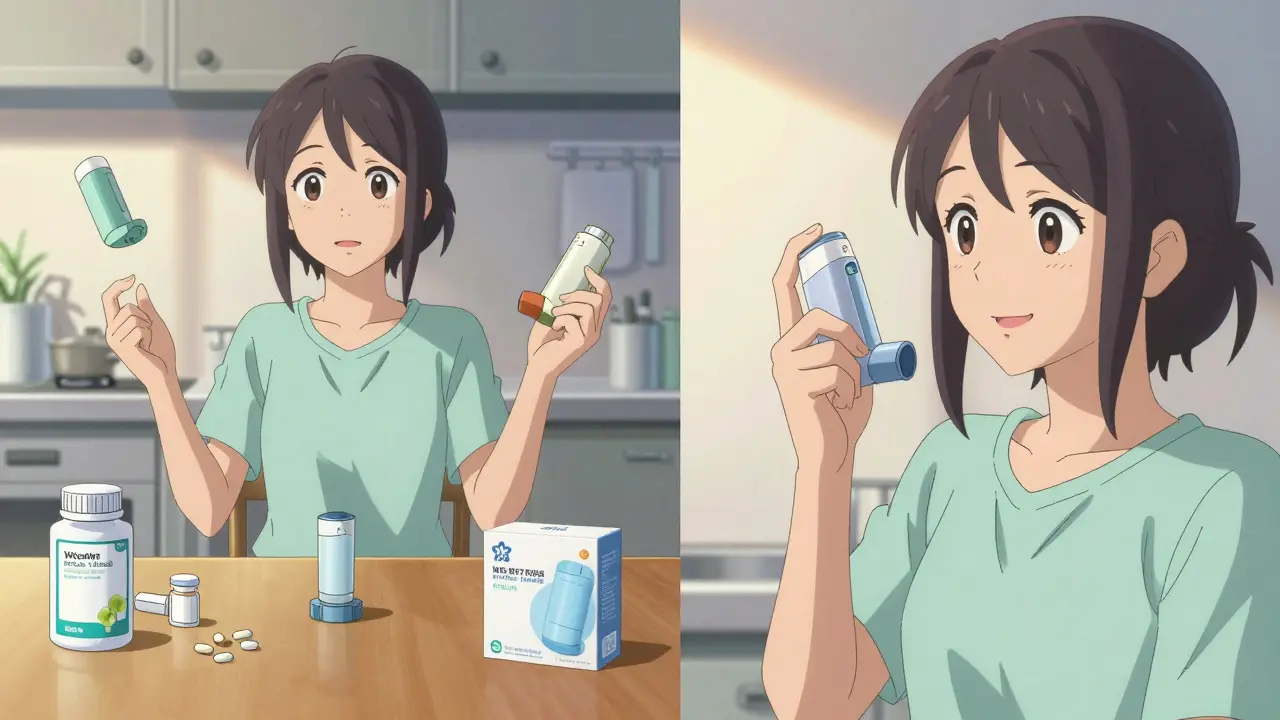
How to Find the Cheapest Option
You don’t need a pharmacy degree to save money. Here’s how to do it:- Ask your pharmacist: “Is there a cheaper combination version of these two drugs?”
- Check the FDA’s Orange Book online (or ask your pharmacist for it). Look for drugs with an “A” rating - that means they’re interchangeable.
- Use apps like GoodRx or SingleCare to compare prices at nearby pharmacies. Sometimes the same generic costs $12 at Walmart and $48 at CVS.
- If you take two separate generics, ask your doctor if a combo pill is available. It might be cheaper and easier.
- Ask your insurer: “What’s on my formulary? What’s the lowest-cost option for this condition?”
Barriers to Saving - And How to Get Past Them
It’s not always easy. Some doctors don’t know about cheaper alternatives. Some insurers block combo drugs unless you try the individual versions first. Some pharmacies won’t stock the cheapest generic because it’s not profitable. If you’re denied a cheaper option, ask for a prior authorization. That’s a formal request from your doctor asking the insurer to make an exception. Many times, it works - especially if you can show the clinical equivalence and lower cost. Also, don’t be afraid to switch pharmacies. Some chains have better generic pricing than others. Walmart, Costco, and Target often have $4 generic lists. Independent pharmacies might offer even better deals if you ask.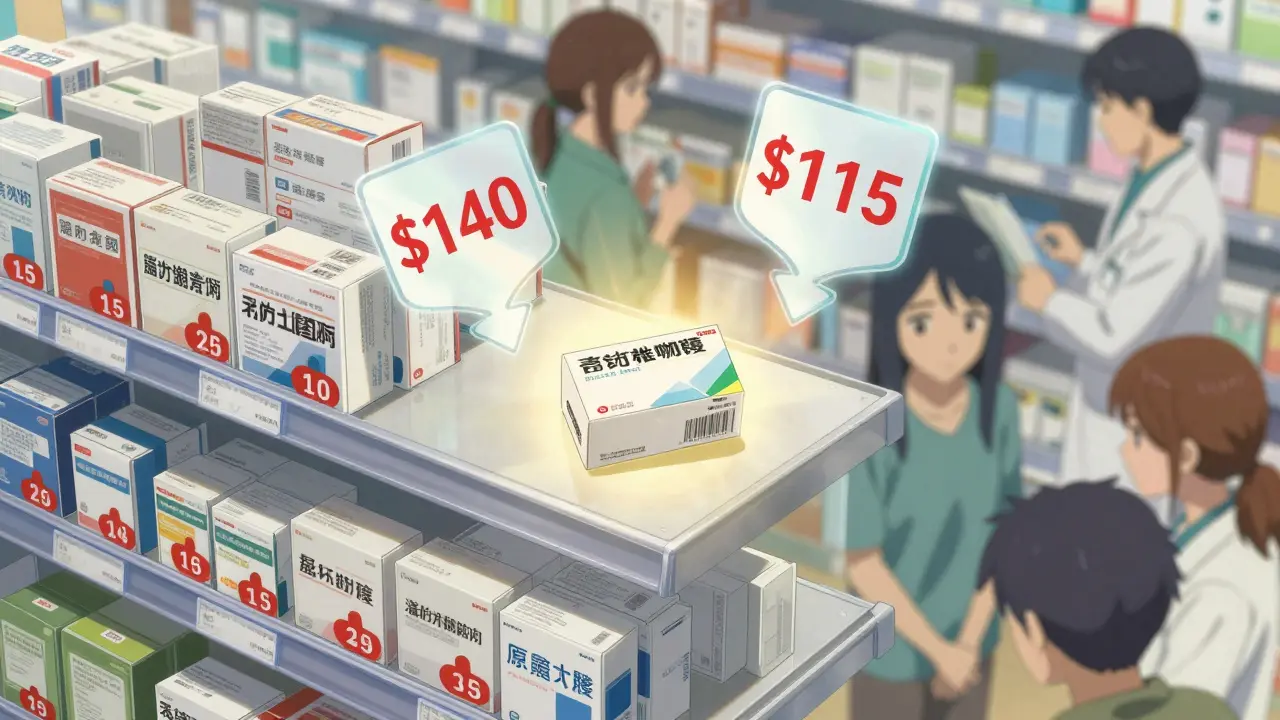
What’s Next for Generic Savings?
The future looks promising. More biosimilars - cheaper versions of complex biologic drugs like Humira - are hitting the market in 2025. These could save patients billions more. The FDA approved 724 generic applications in 2023, though that’s down from the peak in 2017. Still, the trend is clear: more competition = lower prices. But there’s a risk. A few big companies control 40% of the U.S. generic market. If they stop making certain drugs, shortages happen. That’s why it’s important to stay informed. If your medication suddenly disappears or gets more expensive, speak up. Talk to your doctor. Ask your pharmacist. Contact your insurer.Bottom Line: You’re Not Paying for Quality - You’re Paying for Market Power
The cheapest generic isn’t always the one you’re prescribed. The most expensive one isn’t better. It’s just less competitive. Combination drugs often beat individual generics in price and convenience. And the savings aren’t theoretical - they’re happening every day. If you’re on multiple generics, ask: “Could one pill replace two?” If you’re on a high-cost generic, ask: “Is there a cheaper version with the same effect?” You might be surprised how much you can save - without sacrificing your health.Are combination generics always cheaper than taking two separate generics?
Not always, but often. Combination drugs like Wixela Inhub (for asthma) or Lotrel (for blood pressure) frequently cost less than buying the two individual generics separately. This happens because manufacturers price combos to compete with brand-name versions. Always compare the total cost of two separate generics versus the combo pill - it could save you $20 to $50 a month.
Why do some generic drugs cost more than others?
It’s about competition. If only one company makes a generic, they can charge more. When five or six companies make it, prices drop fast. Some generics stay expensive because of patent tricks, limited manufacturers, or pharmacy formulary choices - not because they’re better. Always check for alternatives using tools like GoodRx or ask your pharmacist.
Can I ask my doctor to switch me to a cheaper combination drug?
Yes, and you should. Many doctors aren’t aware of the latest pricing trends. If you’re taking two separate generics, ask if a combination version exists and if it’s covered by your insurance. Most combination drugs are clinically equivalent to the individual versions, so switching is safe and often cheaper.
Do uninsured people save more with generics?
Yes, significantly. Uninsured patients saw average savings of $6.08 per prescription with generics, compared to $3.69 for those with private insurance. That’s because insurance plans often have fixed copays that don’t reflect true drug costs. Uninsured people pay the cash price, so switching to the cheapest generic or combo drug makes a bigger difference.
What’s the Orange Book, and why should I care?
The FDA’s Orange Book lists all approved generic drugs and their therapeutic equivalence ratings. Drugs marked with an “A” rating are interchangeable with the brand name. If your pharmacist suggests a generic with an “A” rating, it’s safe to switch. Use it to confirm that a cheaper generic is truly equivalent - not just cheaper.
Why does my insurance not cover the cheapest generic?
Your insurer’s formulary - the list of covered drugs - might prioritize certain generics based on deals with manufacturers, not price. Sometimes, the cheapest option isn’t on the list. Ask for a formulary exception or request a prior authorization. Many times, they’ll approve it if your doctor says it’s medically appropriate.
Comments
This is such a load of corporate propaganda. Who the hell lets Big Pharma get away with this? The FDA? The government? You think these combo drugs are for patients? Nah. They're for shareholders. One pill? More profit. Less paperwork. Less chance you'll notice the fillers they sneak in. I've seen pills that look like they were made in a garage with glitter and hope. And don't even get me started on how they game the Orange Book. It's a rigged game, folks.
Thank you for sharing this!! 🙏 I literally just switched my asthma meds last month after reading about Wixela - saved me $80/month. I was so stressed about the cost, and my pharmacist was the one who suggested the combo. I didn't even know it was possible to buy two drugs as one! It’s tiny, but this kind of info changes lives. Please keep spreading awareness 💛
Okay but let’s be real - if you’re paying full price for meds, you’re doing it wrong. GoodRx is free. Walmart’s $4 list exists for a reason. I’ve had people tell me they ‘don’t know how to check prices’ and I just… stare. It’s not rocket science. You type the drug name, you click ‘compare’, you pick the pharmacy that doesn’t want to rob you. Stop letting the system win. You have power.
so like… i just found out my blood pressure med is cheaper as a combo? i’ve been buyin’ two separate pills for 2 years. lmao. my pharmacist looked at me like i was from another planet. ‘you didn’t know?’ she said. i said ‘i thought they were different things.’ turns out i was just paying extra for confusion. thanks internet.
This is a very well-structured and informative post. The data presented is consistent with findings from Indian pharmaceutical markets as well, where combination therapies are widely adopted due to affordability and adherence benefits. In countries with limited healthcare subsidies, such formulations are not merely cost-saving - they are essential. The emphasis on patient education and pharmacist collaboration is commendable and should be replicated globally.
THEY’RE HIDING THE TRUTH. 🕵️♀️ I looked up Lotrel on a dark web forum and someone said the combo has a secret ingredient that makes you sleepy so you don’t notice your blood pressure is dropping too low. Also, the FDA is owned by Pfizer. I’m not saying it’s a conspiracy… but why won’t they let me see the full ingredient list? 🤔
OMG I JUST REALIZED I’M PAYING $120 FOR TWO PILLS WHEN I COULD’VE GOTTEN ONE FOR $70. I FEEL SO STUPID. MY DOCTOR NEVER MENTIONED THIS. I’M GOING TO CALL THEM TOMORROW. THANK YOU FOR THIS. I’M TELLING EVERYONE. THIS ISN’T JUST SAVING MONEY - IT’S SURVIVAL.
Combination drugs are a brilliant innovation if you're not a moron who doesn't know how to use GoodRx or read a prescription label. The fact that people are shocked by this proves the education system failed. Also the Orange Book is public domain. You don't need a degree. You need to Google. And stop blaming the system. Your laziness is the system.
you think this is about savings? nah. this is about the government letting big pharma control your body. i got my combo pill and now i’m tired ALL THE TIME. and my insurance won’t let me switch back. they’re drugging us. i saw a video on TikTok where a guy said the combo has lithium in it to make people docile. i’m not crazy. check the ingredients. i did. the label says ‘inactive’ but what if that’s a lie? 🤯
While the economic rationale behind combination therapies is sound, it is imperative to acknowledge that access to such formulations remains inequitable across socioeconomic strata. In developing economies, even affordable generics may be unavailable due to supply-chain inefficiencies or regulatory delays. Moreover, while the Orange Book is a valuable tool, its digital accessibility remains limited for elderly or rural populations. A holistic approach - combining policy reform, pharmacist training, and community outreach - is necessary to ensure that cost savings translate into equitable health outcomes.